


 Предпросмотр
 Поделиться
 Поделиться
 Детали произведения

 Скачать
 Похожие работы
 Рентгенография
 Слайд-шоу
 Статистика
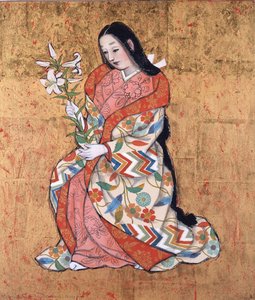
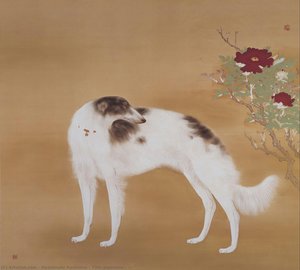
Warm Sunshine and Summer Breeze
 Nihonga
 169.0 x 198.0 cm
 Fukuoka Art Museum
 Читать далее
Приобретите цифровое изображение высокого разрешения в улучшенном качестве, которое значительно превосходит онлайн-превью.
Каждый файл тщательно подготавливается нашими специалистами с использованием передовых инструментов и экспертной ручной ретуши. Мы гарантируем исключительную четкость, точную цветопередачу и детальную проработку каждого изображения.
Финальный файл доставляется по электронной почте в течение 72 часов и оптимизирован для немедленного использования в профессиональной среде, при верстке и печати. Это тот же уровень качества, которому доверяют ведущие дизайнерские студии, издательства и галереи.
Цифровое изображение
Скачайте файл высокого разрешения для личного использования, печати и творческих проектов. ( Перейти к печати Купить картину ручной работы)
Включено в каждый заказ цифровых изображений
Гарантия экспертной цифровой доставки
Выбирая ArtsDot.com, вы получаете не просто изображение — вы приобретаете профессионально обработанное цифровое произведение искусства, созданное с безупречной точностью и под защитой гарантии качества. Вот всё, что автоматически входит в ваш заказ:

Мгновенная доставка по e-mail
Ваш цифровой файл в высоком разрешении будет отправлен вам по электронной почте в течение 72 часов после оформления заказа — и сразу станет доступен для использования.

Цифровой файл с ИИ-улучшением
Ваше произведение искусства проходит профессиональную оптимизацию с использованием передовых инструментов ИИ и ручной обработки, что гарантирует максимальную детализацию, четкость и точность цветопередачи.

Бессрочная бесплатная повторная доставка
Случайно удалили или потеряли файл? Не беспокойтесь — мы отправим его вам повторно в любое время и совершенно бесплатно.

Без импортных пошлин — навсегда
Наслаждайтесь вашим произведением искусства мгновенно без таможенных пошлин, сборов или затрат на доставку — цифровые загрузки всегда не облагаются налогом.

Гарантия точности цветопередачи
Мы гарантируем, что ваше цифровое изображение максимально точно передает оригинальные цвета благодаря использованию профессиональных инструментов и систем управления цветом.

Гарантия удовлетворенности 100 дней
Если вы не будете удовлетворены своим цифровым изображением, мы внесем правки или вернем 100% стоимости в течение 100 дней — без лишних вопросов.

100% Гарантия возврата средств
Не удовлетворены покупкой? Получите полный возврат средств в течение 100 дней после получения цифрового файла — без лишних вопросов.

Скидки на оптовые заказы
Купите 3 изображения, сэкономьте 10% — Купите 5, сэкономьте 15% — Купите 10+, сэкономьте 20%. Отличное решение для творческих проектов, галерей и агентств.
Похожие произведения
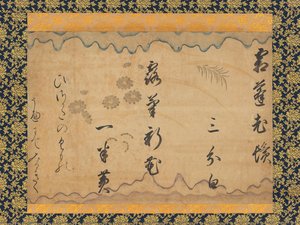
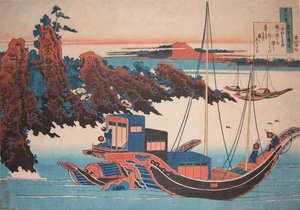
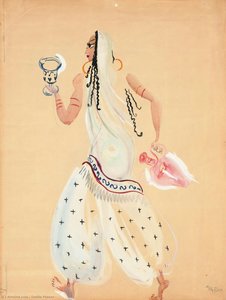
Биография художника
Maurits Cornelis Escher: The Architect of Impossible Worlds
Maurits Cornelis Escher (1898-1972) remains one of the most singularly inventive and intellectually stimulating artists of the 20th century. Though largely overlooked during his lifetime, particularly in his native Netherlands, Escher’s intricate woodcuts, lithographs, and mezzotints have since achieved global renown, captivating audiences with their mind-bending explorations of mathematics, geometry, and perception. He wasn't simply a draftsman; he was an architect of impossible worlds – spaces that defy our everyday understanding of reality, inviting us to question the very nature of perspective, space, and time.
Born in Leeuwarden, Friesland, Netherlands, Escher’s early life was marked by personal tragedy. His mother died when he was just twelve years old, a loss that profoundly shaped his artistic sensibility. He initially pursued a career as a teacher but quickly realized his true calling lay in the visual arts. He enrolled at the School of Architecture and Decorative Arts in Haarlem, where he honed his technical skills while simultaneously developing his distinctive style. It’s fascinating to note that Escher was left-handed, a detail often cited by those who studied him, suggesting an inherent inclination towards precision and intricate detail.
Escher's artistic journey began with studies of nature – insects, landscapes, and plants – meticulously rendered in woodcuts and lithographs. These early works served as a foundation for his later explorations, providing him with the observational skills and technical mastery necessary to tackle increasingly complex subjects. A pivotal moment arrived when he encountered the work of Giorgio de Chirico, whose unsettling juxtapositions of familiar objects in dreamlike settings ignited Escher’s imagination and profoundly influenced his approach to composition and symbolism. He was particularly drawn to De Chirico's ability to evoke a sense of mystery and unease through seemingly ordinary scenes.
The Mathematical Foundations of Illusion
What distinguishes Escher’s work from mere technical skill is its deep engagement with mathematics, specifically topology, geometry, and tessellations. He didn’t simply *draw* impossible objects; he *calculated* them. Escher collaborated extensively with mathematicians like George Pólya, Roger Penrose, and Donald Coxeter, seeking to understand the underlying principles that governed his creations. These intellectual exchanges fueled his artistic explorations, pushing him to develop increasingly sophisticated techniques for representing concepts such as infinity, reflection, symmetry, and perspective.
His most famous works – *Hand with Reflecting Sphere*, *Drawing Hands*, *Relativity*, *Waterfall*, and *Ascending and Descending* – are prime examples of his mathematical ingenuity. These pieces demonstrate how he could create the illusion of depth and movement on a two-dimensional surface, exploiting optical illusions and geometric principles to generate images that seem to defy logic. The concept of tessellations—the covering of a plane with repeating shapes without gaps or overlaps—was central to many of his works, allowing him to explore patterns and symmetries in an endlessly fascinating way.
Influences Beyond Mathematics
While mathematics undoubtedly played a crucial role in Escher’s work, it wasn't the sole source of inspiration. He was deeply influenced by the art and architecture of the past, particularly the Islamic mosaics of the Alhambra in Spain and the intricate carvings of the Mezquita-Cathedral of Córdoba. These works, with their complex geometric patterns and mesmerizing symmetries, provided him with a visual vocabulary that he skillfully adapted to his own artistic vision.
Furthermore, Escher’s interest extended beyond Western art traditions. He traveled extensively throughout Italy and Spain, immersing himself in the cultures and landscapes of these regions. He was particularly fascinated by the concept of “impossible objects”—visual paradoxes that challenge our perception of reality—a theme he explored with remarkable consistency throughout his career. The influence of Renaissance perspective is also evident in many of his works, albeit often subverted to create a sense of disorientation and unease.
Legacy and Enduring Appeal
Despite initial neglect by the art world, M.C. Escher’s work gained increasing recognition in the late 20th century, culminating in widespread acclaim in the 21st. His images have been reproduced countless times on posters, postcards, and merchandise, cementing his status as a global icon. Escher's enduring appeal lies not only in the beauty of his creations but also in their intellectual depth and their ability to provoke thought and wonder.
He remains a testament to the power of artistic exploration—a reminder that art can be both aesthetically pleasing and intellectually stimulating, challenging our assumptions about the world around us. Escher’s legacy continues to inspire artists, mathematicians, and anyone who dares to question the boundaries of perception and possibility.

yoshimura tadao
1898 - 1952 , Japan
Основные сведения
- Artistic Movement Or Style: Graphic art, Printmaking
- Artists Or Movements Influenced By This Artist:
- Rene Magritte
- Martin Gardner
- Artists Who Influenced This Artist:
- George Arnold Escher
- Frank Reaugh
- Date Of Birth: 17 June 1898
- Date Of Death: 27 March 1972
- Full Name: Maurits Cornelis Escher
- Nationality: Dutch
- Notable Artworks:
- Hand with Reflecting Sphere
- Drawing Hands
- Relativity
- Waterfall
- Ascending and Descending
- Place Of Birth: Leeuwarden, Netherlands