 Поделиться
 Поделиться
 Детали произведения

 Скачать
 Похожие работы
 Слайд-шоу
 Статистика
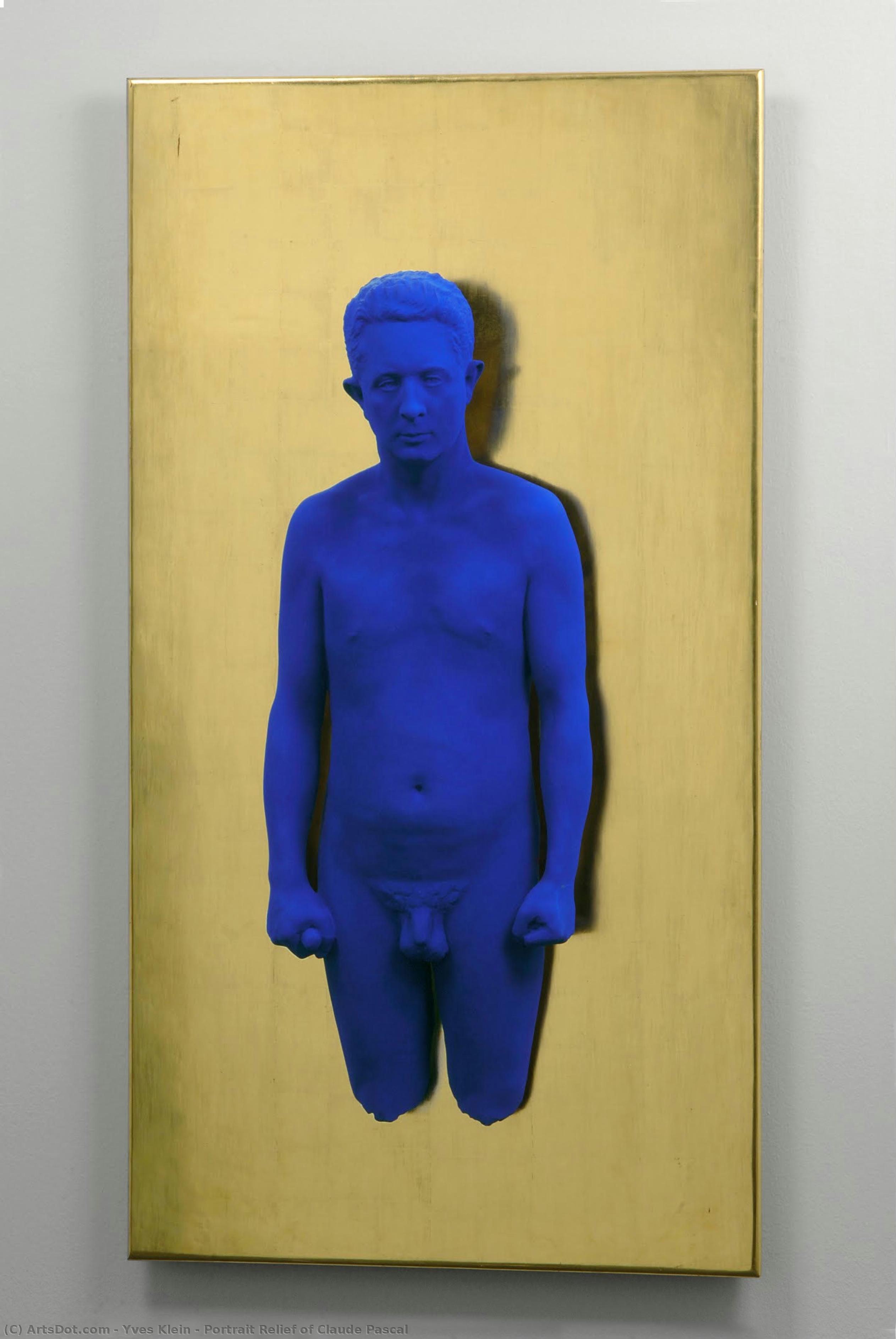
Portrait Relief of Claude Pascal


 Читать далее
Масляная репродукция ручной работы
Картина маслом на холсте в выбранном вами размере и раме, написанная на заказ нашими художниками. ( Перейти к печати Перейти к цифровым изображениям)




































Выберите один из наших стандартных размеров, соответствующих оригинальным пропорциям произведения искусства.

Вы можете указать собственные размеры, чтобы картина идеально вписалась в выбранную раму или пространство. Если выбранный вами размер не соответствует пропорциям оригинала, мы либо обрежем полотно, либо расширим его за счет дополнительных элементов, написанных вручную. Цифровой макет будет отправлен вам на утверждение перед началом производства.
Обратите внимание, что предварительный просмотр на экране не отражает фактическую обрезку или расширение. Только макет точно покажет окончательную композицию.
Хотя доступны индивидуальные размеры, мы рекомендуем выбирать вариант из предопределенного списка, чтобы сохранить исходные пропорции.
После оформления заказа команда ArtsDot.com свяжется с клиентом по электронной почте для уточнения деталей и предоставит предварительный макет
Доставка по всему миру () за 3–4 недели вместо стандартных 5 недель. (12 Сентябрь). Без компромиссов в качестве.

Бесплатная экспресс-доставка по всему миру

Высококачественный льняной холст

Полное страхование доставки

Гарантия возмещения таможенных пошлин

Гарантия точного соответствия цветов

100-дневная политика возврата (только при обнаружении дефектов)

Гарантия возврата 100% средств

Предложение оптовых скидок
 Вариант со стеклом доступен только для размеров менее 110 см

Portrait Relief of Claude Pascal
Техника репродукции
Размер репродукции
-


Итоговая стоимость
$ 263
Portrait Relief of Claude Pascal – A Study in Bronze and Blue
Yves Klein’s “Portrait Relief of Claude Pascal” (1962) isn't merely a likeness; it’s an immersive experience, a distilled essence captured in bronze and saturated with the artist’s signature International Klein Blue. Created during a pivotal period of experimentation within his New Realism movement, this piece transcends traditional portraiture, venturing into the realm of spiritual representation and challenging conventional notions of form and space. It's a work that whispers of alchemical processes, philosophical inquiry, and the profound desire to capture something beyond the purely visual – an elusive state of being.
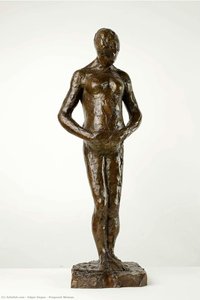
The sculpture itself is strikingly spare yet intensely evocative. Pascal, a poet and close friend of Klein’s, is rendered in a simplified, almost skeletal form, his features subtly suggested rather than meticulously detailed. The pose—hands gently resting on hips, head slightly tilted – exudes an air of quiet contemplation, inviting the viewer to engage with the figure on a deeply personal level. The deliberate lack of ornamentation and the smooth, polished surface of the bronze contribute to this sense of serene detachment, as if Pascal is suspended in a timeless void.
The Language of Blue: Klein’s Alchemical Pursuit
Klein's obsession with blue wasn’t simply aesthetic; it was rooted in a complex and deeply personal philosophy. He viewed the color as existing outside the constraints of conventional space, a pure, immaterial entity capable of encompassing all dimensions. His relentless research led him to develop International Klein Blue (IKB), a unique pigment meticulously crafted from ultramarine powder, achieving an unparalleled depth and luminosity. This wasn’t just paint; it was a solvent, a medium for capturing something beyond the tangible world – a spiritual essence.
The application of IKB to Pascal's form is particularly significant. The bronze itself is overlaid with a thin layer of the pigment, creating an almost ethereal glow that seems to emanate from within the sculpture. This layering technique, combined with the gold leaf backing, further amplifies the sense of depth and dimensionality, reinforcing Klein’s desire to create a work that transcends the limitations of two-dimensional representation. It's as if Pascal is not simply *seen* but *felt*, enveloped in this otherworldly hue.
A Dialogue Between Form and Void
“Portrait Relief of Claude Pascal” exists within a broader context of Klein’s exploration of the “void”—a concept central to his artistic practice. He viewed the void not as an absence, but as a source of infinite potential, a space brimming with spiritual energy. The sculpture embodies this philosophy through its minimalist form and the deliberate suggestion of emptiness surrounding Pascal's figure. The golden backing acts as a counterpoint to the blue, creating a dynamic tension between materiality and immateriality – a visual representation of the artist’s quest to bridge the gap between the physical world and the realm of pure consciousness.
Furthermore, the sculpture echoes Klein’s own performance art piece, “Leap into the Void,” where he famously jumped from a second-story window. The pose of Pascal—a subtle inclination of the head, hands gently resting on his hips—mirrors this act of daring and self-transcendence, suggesting a yearning for liberation and an embrace of the unknown. It’s a poignant reminder that Klein sought to capture not just a likeness but also the spirit of his subject – a spirit defined by courage, innovation, and a profound engagement with the mysteries of existence.
Collecting the Immaterial: A Reproduction Recommendation
Reproductions of “Portrait Relief of Claude Pascal” offer a remarkable opportunity to bring Klein’s visionary aesthetic into your home or collection. ArtsDot offers meticulously crafted hand-painted reproductions that faithfully capture the depth, luminosity, and emotional resonance of the original sculpture. The use of archival-quality pigments ensures that the colors remain vibrant for generations to come, while the textured brushstrokes evoke the tactile qualities of bronze. Investing in a reproduction is not simply acquiring an image; it’s embracing a piece of Klein's artistic philosophy – a celebration of immateriality and the boundless potential of human creativity.
Похожие произведения

Биография художника
A Pioneer of Immateriality: The Life and Art of Yves Klein
Yves Klein, a name inextricably linked to the mesmerizing intensity of International Klein Blue (IKB), remains one of the most profoundly influential and enigmatic figures in post-war European art. Born in Nice, France, on April 28, 1928, into a family deeply rooted in artistic tradition – his father, Fred Klein, was a respected figurative painter, while his mother, Marie Raymond, was a prominent figure within the burgeoning Art Informel movement – Klein’s early life was immersed in a vibrant creative environment. However, rather than following a conventional path of formal training, he embarked on an extraordinarily unique journey, intertwining artistic exploration with the rigorous discipline of Judo. Achieving the rank of yodan (4th-degree black belt) from the Kodokan in Japan instilled within him a remarkable sense of focus, control, and an understanding of energy – qualities that would become fundamental to his groundbreaking approach to art, emphasizing intention, dynamism, and the transcendence of limitations. This dedication wasn’t merely a parallel pursuit; it fundamentally shaped his artistic philosophy, informing his exploration of immateriality and challenging established notions of representation.The Birth of IKB and the Monochrome Revolution
Klein's artistic quest was driven by a desire to capture something beyond the tangible—the ephemeral, the infinite, the realm of pure feeling. He believed that traditional painting, bound by form, subject matter, and the constraints of visual representation, simply wasn’t equipped to express these profound concepts. This conviction led him to experiment with monochrome paintings as early as 1949, a radical departure from the dominant artistic trends of the time. These weren't mere exercises in reduction; they were deliberate attempts to distill color to its purest essence, to evoke emotion directly through hue alone, bypassing the need for recognizable imagery. The culmination of this exploration was the creation of International Klein Blue (IKB) in collaboration with Parisian paint supplier Edouard Adam. IKB wasn’t merely a pigment; it was a meticulously guarded formula – a complex blend of pigments and resins – designed to achieve an unprecedented depth, luminosity, and intensity—a blue so profoundly saturated that it seemed to radiate from within, embodying the void itself. The first public presentation of his monochrome vision occurred in 1954 with the publication of *Yves Peintures*, a self-published artist’s book featuring twelve intensely colored monochromes linked to various cities he had visited during his travels. These works were presented not as paintings but as “pure colors,” challenging viewers to engage with them on an emotional and intuitive level. Exhibitions followed, initially met with skepticism and confusion, but gradually gaining recognition as Klein relentlessly pursued his artistic vision, establishing IKB as the defining element of his identity and fundamentally altering perceptions of what painting could be.Anthropometries: The Body as a Living Brush
Klein’s relentless pursuit of immateriality led him to increasingly radical forms of expression. He moved beyond the canvas itself, seeking to incorporate the human body directly into the creative process – a move that was both daring and deeply symbolic. This culminated in his groundbreaking “Anthropometries” series, beginning in 1958. These performances were not simply spectacles; they were carefully choreographed explorations of gesture, energy, and chance. Nude female models, covered entirely in IKB paint, became "living brushes," their movements across large sheets of paper or canvas creating abstract impressions that captured the dynamism of the human form – a dance between flesh and color, body and void. The resulting works blurred the boundaries between painting and performance, challenging traditional notions of authorship, ownership, and artistic control. Klein saw these performances as a way to liberate art from the constraints of the artist’s hand, allowing for a more direct expression of primal energy and emotion – a return to a more fundamental, intuitive mode of creation. The series was not about depicting the body but utilizing it as a vehicle for manifesting pure color and movement, reflecting his belief that beauty resided in the unseen realms.Beyond Painting: Air Architecture and Spiritual Resonance
Klein’s ambition extended far beyond the confines of traditional painting and performance. He envisioned art as an all-encompassing experience—a means of transforming perception and connecting with a deeper spiritual reality. This led to projects that were both conceptually ambitious and strikingly innovative. “Air Architecture” (Architecture de l'air), for example, involved creating ethereal cyanotypes – photographic prints created by exposing sensitized paper to sunlight through sculpted armatures. These images evoked futuristic visions of architecture and technology, imbued with a sense of lightness, transparency, and an almost otherworldly quality. He also explored sound with his *Monotone Symphony*, a single sustained chord played on a specially designed instrument—an attempt to induce a meditative state in the listener and create a direct connection between sound and emotion. Throughout his career, Klein sought to create art that transcended the material world, inviting viewers to contemplate the infinite, explore their own inner landscapes, and experience a deeper sense of connection to something beyond themselves. His work was deeply influenced by Rosicrucianism, a philosophical and mystical tradition emphasizing spiritual enlightenment, the pursuit of hidden knowledge, and the interconnectedness of all things.A Lasting Legacy: Influence and Enduring Impact
Yves Klein’s tragically short life – he died in 1962 at the age of 34 – belies the profound and lasting impact of his work. He anticipated many of the key developments in post-war art, paving the way for Minimalism with his reductive aesthetic, influencing Conceptual Art through his emphasis on ideas over execution, and foreshadowing aspects of Pop Art with his bold use of color and embrace of popular culture. His innovative use of performance art expanded the definition of artistic practice, challenging traditional boundaries and inspiring generations of artists to explore new forms of expression. IKB remains a powerful symbol of artistic innovation—a testament to Klein’s visionary spirit and his unwavering commitment to pushing the limits of what art could be. His legacy is not merely one of aesthetic achievement but also of intellectual provocation—a constant reminder that art can be a vehicle for exploring the deepest questions about existence, perception, and our place in the universe. Yves Klein's work continues to inspire, challenge, and captivate audiences worldwide, solidifying his position as a pivotal figure in the history of modern art.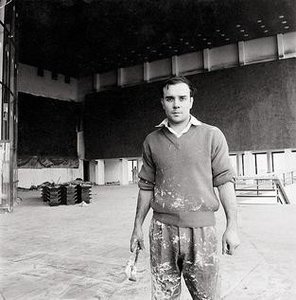
Ив Кляйн
1928 - 1962 , Франция
Основные сведения
- Artistic Movement Or Style: Новый реализм
- Artists Or Movements Influenced By This Artist:
- Минимализм
- Поп-арт
- Date Of Birth: 28 апреля 1928 г.
- Date Of Death: 6 июня 1962 г.
- Full Name: Ив Кляйн
- Nationality: Француз
- Notable Artworks:
- IKB 191
- Air Architecture
- Древо синего спрея
- Place Of Birth: Ницца, Франция
Похожие статьи
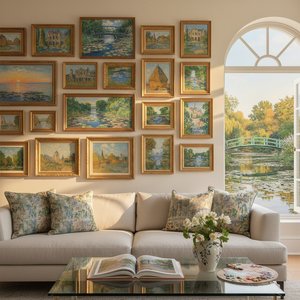
Топ-25 шедевров Клода Моне: Искусство света и импрессионизма для вашего интерьера
Погрузитесь в мир Клода Моне! 25 шедевров импрессионизма, от "Водных лилий" до знаменитых пейзажей. Узнайте историю создания картин и вдохновитесь для декора интерьера. Репродукции музейного качества на ArtsDot.com.
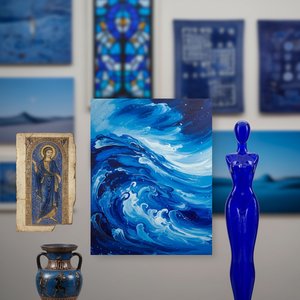
The Allure of Azure: Exploring the Symbolic & Aesthetic Depths of Blue in Art History
Explore the rich history of blue in art! Discover its symbolism, from ancient pigments to modern masterpieces by Kandinsky & Seurat. Uncover the psychological impact and cultural meanings behind this captivating hue.

Топ-10 знаменитых картин в оттенках серо-голубого: искусство и декор от ArtsDot
Погрузитесь в мир серо-голубых оттенков! От Моне до Ренуара – 10 знаменитых картин, вдохновляющих на создание уникального интерьера. Репродукции высокого качества от ArtsDot.com. Explore the full collection online!
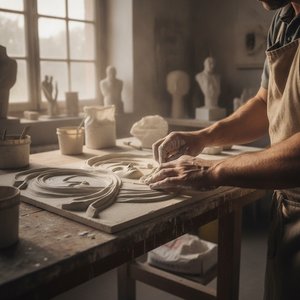
Sculpting with Soul: An Expert Guide to the Tactile Elegance of Plaster Relief Art
Discover the captivating world of plaster relief art. Our expert guide explores the history, techniques, and curation of textured bas-relief, helping collectors bring depth, light, and soulful dimension to their modern interiors through sophisticated sculptural masterpieces.
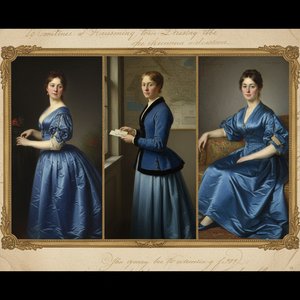
Azure Visions: Exploring Representations of the Blue Dress in Western Art History
Explore the rich history of the blue dress in Western art! Discover its symbolism, from Renaissance masterpieces to modern interpretations by artists like Martin & Schiele. Uncover cultural meanings and artistic techniques.