

 Предпросмотр
 Поделиться
 Поделиться
 Детали произведения

 Скачать
 Похожие работы
 Рентгенография
 Слайд-шоу
 Статистика
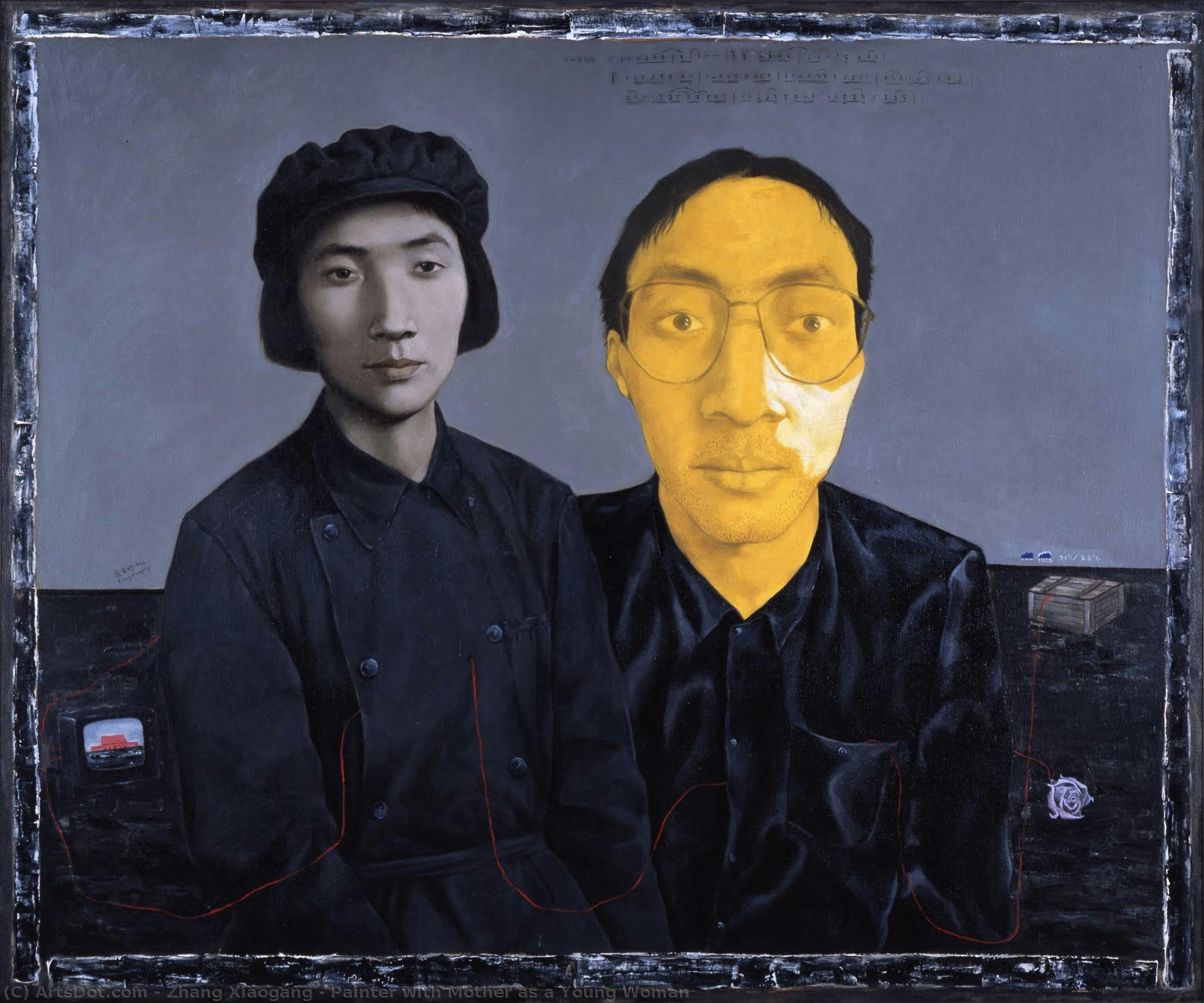
Painter with Mother as a Young Woman
 Painting
- WallArt
- Contemporary Realism
 Contemporary
 178.0 x 148.0 cm
 Fukuoka Asian Art Museum
 Читать далее
Жикле / Арт-принт
Печать (жикле) или холст музейного качества с быстрыми сроками изготовления и широким выбором вариантов отделки. ( Купить картину ручной работы Перейти к цифровым изображениям)




P118B $10

P118H $10

P118W $10

P438Z $10

P508JH $12

P508YH $12

P805H $10

P805Z $10

P919BZ $10

P919G $10

P919XJ $10

P959ZH $10

P968JZ $12

W106C $8

W218G $10

W218JH $8

W218Y $10

W307PJ $10

W316G $10

W316PJ $8

W316Y $10

W398PJ $8

W4111J $10

W500HY $15

W500JH $15

W692G $12

W849H $8

W940BG $15

W953PJ $8




Выберите один из наших стандартных размеров, соответствующих оригинальным пропорциям произведения искусства.

Вы можете указать свои собственные размеры, чтобы репродукция идеально подошла под конкретную раму или пространство. Если выбранный вами размер не будет соответствовать пропорциям оригинала, мы либо обрежем произведение, либо дополним изображение зеркальным отражением краев или однотонной заливкой. Перед началом производства вам будет отправлен цифровой макет для утверждения.
Пожалуйста, обратите внимание, что предварительный просмотр на экране не отображает фактическую обрезку или расширение изображения. Только макет точно покажет финальную композицию.
Несмотря на возможность заказа индивидуальных размеров, мы рекомендуем выбирать размер из предопределенного списка, чтобы сохранить оригинальные пропорции.
Доставка по всему миру () за 2 недели вместо стандартных 4/5 недель. (12 Сентябрь)

Бесплатная экспресс-доставка по всему миру

Высококачественный льняной холст

Полное страхование доставки

Гарантия возмещения таможенных пошлин

Гарантия точного соответствия цветов

100-дневная политика возврата (только при обнаружении дефектов)

Гарантия возврата 100% средств

Предложение оптовых скидок
 Вариант со стеклом доступен только для размеров менее 110 см

Painter with Mother as a Young Woman
Жикле / Арт-принт
Размер репродукции
-


Итоговая стоимость
$ 62
A Haunting Encounter with Memory
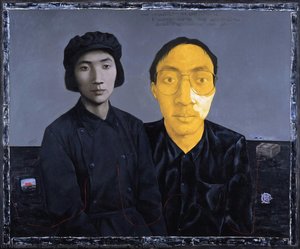
In the quiet, evocative realm of contemporary Chinese art, few works possess the psychological depth and historical resonance of Zhang Xiaogang’s Painter with Mother as a Young Woman. This masterpiece serves as a profound window into the soul of a nation, blending the intimate sanctity of family portraiture with the heavy, lingering shadows of China's turbulent twentieth century. At first glance, the viewer is met with a composition that feels like a rediscovered relic—a sepia-toned memory brought to life on canvas. The painting presents a dual presence: a self-portrait of the artist and a spectral image of his mother in her youth, both captured within a rustic, almost claustrophobic frame that suggests the weight of time itself.
The subject matter is deeply personal yet universally poignant. As the eye wanders across the canvas, one encounters the artist’s face, glowing with an eerie, yellowish light that feels both morbid and transcendent. Beside him, his mother gazes out from a bygone era, dressed in the iconic Mao suit, her expression veiled by a nostalgic, monochromatic haze. This juxtaposition of the living artist and the historical figure of his mother creates a bridge between the present and a past that is both cherished and traumatic. It is not merely a portrait of two individuals; it is an encounter with the ghosts of the Cultural Revolution, rendered with a delicate, surrealist touch.
Symbolism and the Threads of Connection
Zhang Xiaogang’s brilliance lies in his ability to weave complex political and social narratives into the fabric of domestic imagery. In this work, every element serves as a symbolic vessel. A thin, crimson thread—a recurring motif in his celebrated Bloodline series—delicately connects the figures, representing the inescapable biological and emotional bonds of kinship. Yet, this connection is fraught with tension, as the thread also alludes to the way individual lives are inextricably tied to the larger, often overwhelming, movements of the state.
The inclusion of seemingly disparate objects—a mysterious wooden box, a mournful rose, and even the suggestion of a television projecting Tiananmen Square—transforms the painting from a simple family portrait into a complex allegory. These elements speak to the "Big Family" concept, where the private history of a single household is inseparable from the collective destiny of the nation. The artist uses these symbols to explore the vicissitudes of time and the way memory is constructed, filtered through the lens of political upheaval and social change.
A Masterpiece for the Discerning Collector
For art collectors and interior designers, Painter with Mother as a Young Woman offers an unparalleled opportunity to possess a piece of contemporary history. The technique, characterized by its smooth, almost photographic precision blended with surrealist distortions, creates a visual texture that is both captivating and meditative. The monochromatic palette, punctuated by strategic bursts of color like the haunting yellow glow or the singular red thread, allows the work to integrate seamlessly into sophisticated, modern environments while serving as a powerful conversational centerpiece.
Whether displayed in a minimalist gallery setting or within a richly textured study, this painting commands attention. It invites contemplation, prompting viewers to reflect on their own lineages and the historical currents that shape their identities. A high-quality reproduction of this work allows the profound emotional impact and the intricate symbolic language of Zhang Xiaogang to reside within your space, offering a permanent connection to one of the most significant artistic voices of our time.
Похожие произведения
Биография художника
A Surrealist Echo of Chinese History
Zhang Xiaogang stands as one of China’s most prominent contemporary artists, renowned for a distinctive blend of surrealism and symbolism that explores the profound depths of familial history and the heavy legacy of the Cultural Revolution. Born in 1958 in Kunming, Yunnan Province, his artistic journey was shaped by the quiet domesticity of his early years. The son of Qi Ailan and Zhang Jing, both government officials, Xiaogang was raised in an environment where art was encouraged as a way to foster focus and discipline. As his mother often recounted, her primary goal in providing him with paper and crayons was to keep him out of trouble, yet this simple childhood remedy blossomed into a lifelong addiction to the creative process. He would later reflect that once one becomes addicted to art, there is no turning back.
The turbulent landscape of mid-century China profoundly etched itself into Xiaogang's worldview. The 1960s and 1970s were defined by significant social upheaval, particularly the Cultural Revolution, which cast a long shadow over his formative years. In 1976, as part of the “down to the countryside movement,” Xiaogang was sent to work on a farm, a period of displacement that would later inform the themes of loss and collective memory in his work. It was during this era of transition that he encountered Lin Ling, a watercolor painter who provided him with essential training in formal composition and sketching techniques. This early mentorship solidified his technical foundation and fueled an ambition to transform his personal observations into a universal visual language.
The Haunting Beauty of the Bloodline
Zhang Xiaogang’s artistic style is instantly recognizable, characterized by predominantly monochromatic portraits that possess a ghostly, ethereal quality. His most celebrated achievement, the Bloodline series, serves as a poignant commentary on the shared identity and fractured memories of the Chinese people. These works often feature stylized depictions of individuals—frequently siblings or family members—posed in a stiff, formal manner that deliberately mimics the studio photography of the 1950s and 60s. By utilizing large, dark-pupiled eyes and meticulous oil paint applications with textural impasto, he creates a sense of intense, silent scrutiny that draws the viewer into the psychological space of the subjects.
The symbolism within his work is both subtle and striking. In pieces such as Painter with Mother as a Young Woman, Xiaogang weaves together personal nostalgia and historical weight, using sepia-colored veils and rustic frames to seal the past within the present. His ability to translate the rigid aesthetics of a bygone political era into a surrealist masterpiece allows him to explore themes of:
- Collective Memory: Reconstructing the shared experiences of a generation shaped by political shifts.
- Familial Bonds: Examining the threads of lineage and the emotional weight of ancestry.
- Identity and Loss: Navigating the tension between individual existence and the overwhelming force of history.
In recent years, Xiaogang has expanded his creative reach beyond the two-dimensional plane, translating the iconic characters from his Bloodline: Big Family series into three-dimensional sculptures. This evolution demonstrates his enduring commitment to exploring the human condition through various mediums. As a leading figure in contemporary Chinese art, his work continues to resonate globally, offering a hauntingly beautiful window into the soul of a nation navigating the complexities of its own history.
Zhang Xiaogang
1958 -
Основные сведения
- Artistic Movement Or Style: Surrealism; Symbolist painting
- Artists Who Influenced This Artist: Lin Ling
- Date Of Birth: 1958
- Full Name: Zhang Xiaogang
- Nationality: Chinese
- Notable Artworks:
- Untitled
- Bloodline: Big Family
- Place Of Birth: Kunming, Yunnan Province
Похожие статьи
10 Шедевров Сюрреализма: Искусство Подсознания для Вашего Интерьера
Погрузитесь в мир сюрреализма! Откройте 10 шедевров Дали, Магритта и других гениев. Узнайте истории создания культовых картин и найдите идеальное произведение для вашего интерьера на ArtsDot.com – музейное качество, вдохновение и декор.

Monochrome Visions: Exploring the Aesthetic & Historical Significance of Black & White Photography
Explore the rich history & artistic power of black and white photography. From early techniques to iconic masters like Ansel Adams, discover why monochrome continues to captivate art lovers today. Expert insights for collectors.
10 Шедевров Сюрреализма: Искусство Подсознания для Вашего Интерьера
Погрузитесь в мир сюрреализма! Откройте 10 шедевров Дали, Магритта и других гениев. Узнайте истории создания культовых картин и вдохновитесь для декора интерьера. Репродукции высокого качества на ArtsDot.com.

Топ-10 знаменитых картин в черных тонах: шедевры искусства для вашего интерьера
Погрузитесь в мир темных шедевров! Топ-10 знаменитых картин в черных тонах от Гойи, Рембрандта и Мунка. История искусства, техники живописи и вдохновение для вашего интерьера. Купите репродукции высокого качества на ArtsDot.com
Surrealist Dreamscapes: A Curated Guide to Integrating Breathtaking Surrealism into Sophisticated Home Decor
Transform your home into a breathtaking dreamscape with expert surrealist decor tips. Discover how to curate Salvador Dalí-inspired masterpieces, integrate symbolic textures, and commission bespoke hand-painted oil reproductions that bring the magic of the subconscious to your walls.