


 Предпросмотр
 Поделиться
 Поделиться
 Детали произведения

 Скачать
 Похожие работы
 Рентгенография
 Слайд-шоу
 Статистика
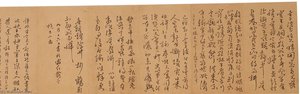
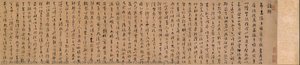
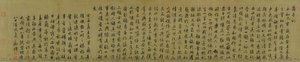
“The Epitaph of Tang Yan” in Cursive Script (handscroll)


 Читать далее
Масляная репродукция ручной работы
Картина маслом на холсте в выбранном вами размере и раме, написанная на заказ нашими художниками. ( Перейти к печати Перейти к цифровым изображениям)




































Выберите один из наших стандартных размеров, соответствующих оригинальным пропорциям произведения искусства.

Вы можете указать собственные размеры, чтобы картина идеально вписалась в выбранную раму или пространство. Если выбранный вами размер не соответствует пропорциям оригинала, мы либо обрежем полотно, либо расширим его за счет дополнительных элементов, написанных вручную. Цифровой макет будет отправлен вам на утверждение перед началом производства.
Обратите внимание, что предварительный просмотр на экране не отражает фактическую обрезку или расширение. Только макет точно покажет окончательную композицию.
Хотя доступны индивидуальные размеры, мы рекомендуем выбирать вариант из предопределенного списка, чтобы сохранить исходные пропорции.
После оформления заказа команда ArtsDot.com свяжется с клиентом по электронной почте для уточнения деталей и предоставит предварительный макет
Доставка по всему миру () за 3–4 недели вместо стандартных 5 недель. (12 Сентябрь). Без компромиссов в качестве.

Бесплатная экспресс-доставка по всему миру

Высококачественный льняной холст

Полное страхование доставки

Гарантия возмещения таможенных пошлин

Гарантия точного соответствия цветов

100-дневная политика возврата (только при обнаружении дефектов)

Гарантия возврата 100% средств

Предложение оптовых скидок
 Вариант со стеклом доступен только для размеров менее 110 см

“The Epitaph of Tang Yan” in Cursive Script (handscroll)
Техника репродукции
Размер репродукции
-


Итоговая стоимость
$ 263
Похожие произведения

Биография художника
Domenico Veneziano: A Pioneer of Florentine Color and Light
Domenico Veneziano, a name often shrouded in mystery, stands as a pivotal figure bridging the late Gothic and early Renaissance artistic landscapes of Italy. Born around 1410 – though the precise details of his birth remain elusive – he emerged from Venice, a city renowned for its vibrant glasswork and burgeoning mercantile spirit, to become one of Florence’s most influential painters. His life was marked by constant movement, a reflection perhaps of the turbulent political climate of the era, as he drifted between Perugia, Florence, Rome, and eventually settling in London before his untimely death in 1461. While often overshadowed by contemporaries like Fra Angelico and Piero della Francesca, Domenico’s contributions were profoundly significant, particularly for his innovative approach to color and his role in introducing new techniques to the Florentine school. Domenico's early training is believed to have occurred under Gentile da Fabriano in Florence, a master known for his lavish detail and opulent use of gold. This influence is readily apparent in his early works, characterized by intricate patterns and a meticulous attention to surface decoration. However, Domenico quickly developed his own distinct style, diverging from the purely decorative tendencies of his teacher. He spent time in Rome around 1423-1430, absorbing the influences of Benozzo Gozzoli, whose frescoes celebrated Medici patronage with vibrant color palettes and dynamic compositions. This period proved crucial in shaping Domenico’s artistic vision, laying the groundwork for his later innovations. A letter penned by him to Piero di Cosimo de' Medici in 1438 reveals a long-standing connection with the powerful Florentine family, highlighting his ambition and desire to secure prestigious commissions – a testament to his growing reputation.Key Works and Artistic Innovations
Domenico’s artistic legacy rests primarily on a handful of surviving masterpieces that showcase his evolving style and technical prowess. The *Adoration of the Magi* (c. 1439-1441), now housed in Berlin, stands as perhaps his most celebrated work. While often debated for its stylistic complexities – Vasari famously suggested he employed oil paint, a claim largely dismissed by modern scholars – it undeniably represents a significant departure from traditional tempera techniques. Domenico’s use of layered glazes and subtle color transitions created an unprecedented sense of luminosity and depth, foreshadowing the developments in Renaissance painting that would follow. The *Santa Lucia de' Magnoli Altarpiece* (c. 1445-1447), currently residing in the Uffizi Gallery in Florence, further exemplifies this innovation. The altarpiece’s unusual palette – dominated by rich reds and blues – was considered strikingly modern for its time, prompting Vasari to remark on its unconventional nature. Other notable works include the *Madonna del Roseto* in Romania and the *Madonna Berenson* in Florence, each offering a glimpse into Domenico's evolving mastery of composition and color.Influences and Artistic Connections
Domenico Veneziano’s artistic journey was shaped by a diverse range of influences. As previously mentioned, Gentile da Fabriano provided the initial foundation for his training, instilling in him a meticulous attention to detail and an appreciation for decorative elements. Benozzo Gozzoli's influence is evident in Domenico’s embrace of vibrant color palettes and dynamic compositions. However, Domenico also demonstrated a keen awareness of contemporary artistic trends, engaging with the work of artists like Fra Angelico and Fra Filippo Lippi, whose frescoes at Perugia he admired. Notably, he collaborated with Piero della Francesca on the decoration of the Portinari Chapel in Florence’s Santa Maria Nuova, where his use of oil paint was documented, solidifying his role as a pioneer in this revolutionary medium. The influence of Andrea Mantegna is also discernible in Domenico's later works, particularly in their dramatic lighting and spatial arrangements.Legacy and Historical Significance
Despite the controversies surrounding his life and work – including the unsubstantiated claim of murder by Andrea del Castagno – Domenico Veneziano’s impact on the development of Renaissance painting is undeniable. He served as a crucial link between the late Gothic style and the burgeoning realism of the early Renaissance, introducing new techniques and approaches that would be adopted and refined by subsequent generations of artists. His innovative use of color, his exploration of light and shadow, and his willingness to experiment with new materials – particularly oil paint – paved the way for the groundbreaking achievements of artists like Leonardo da Vinci and Raphael. Domenico Veneziano’s legacy lies not only in his individual masterpieces but also in his role as a catalyst for artistic innovation, shaping the course of Italian painting for decades to come. His work continues to fascinate art historians and enthusiasts alike, reminding us of the often-unheralded contributions of artists who quietly pushed the boundaries of their craft.
zhu zhishan
1461 - 1527 , China
Основные сведения
- Artistic Movement Or Style: Early Renaissance
- Artists Or Movements Influenced By This Artist:
- Andrea Mantegna
- Fra Angelico
- Artists Who Influenced This Artist:
- Gentile da Fabriano
- Pisanello
- Benozzo Gozzoli
- Date Of Birth: c. 1410
- Date Of Death: 1461
- Full Name: Domenico Veneziano
- Nationality: Italian
- Notable Artworks:
- Adoration of the Magi
- Santa Lucia de' Magnoli Altarpiece
- Madonna del Roseto
- Madonna Berenson
- Place Of Birth: Venice, Italy
Похожие статьи
Ephemeral Expressions: Exploring the Nuances of Ink on Paper Through History & Contemporary Art
Explore the captivating world of ink wash painting – from its ancient origins to contemporary masters. Discover techniques, symbolism & conservation insights with ArtsDot.com.
Pu Xinyu's 'Puru': A Legacy of Literati Painting & Emotional Resonance
Explore the captivating world of Pu Xinyu (Puru), the last great literati painter. Discover his imperial heritage, masterful ink wash techniques & enduring legacy – a valuable addition to any discerning art collection.
Xie Zhiliu: A Legacy of Ink Wash Painting & Modern Chinese Literati Tradition
Explore the legacy of Xie Zhiliu, a master of Chinese ink wash painting & prominent figure in modern art. Discover his techniques, influences, and contributions to literati tradition. A guide for discerning collectors.
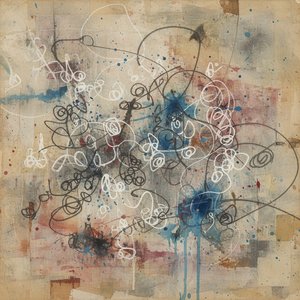
Cy Twombly: Scribbles of Emotion – Deconstructing Post-War Expressionism Through Calligraphy & Abstraction
Explore the captivating world of Cy Twombly with ArtsDot. Discover the emotional depth & artistic significance behind his abstract calligraphy. Expert insights for collectors.