The Age of Enlightenment: The Rational Foundations of Neoclassicism
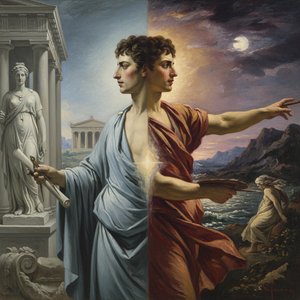
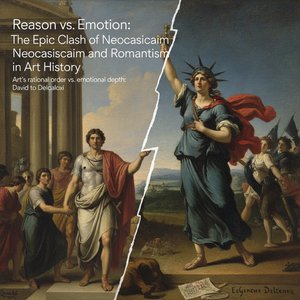 Reason vs. Emotion: The Epic Clash of Neoclassicism and Romanticism in Art History
The Age of Enlightenment: The Rational Foundations of Neoclassicism French Revolutionary Army The French Revolutionary Army (French: Armée révolutionnaire française) was the French land force that fought the French Revolutionary Wars from 1792 to 180...
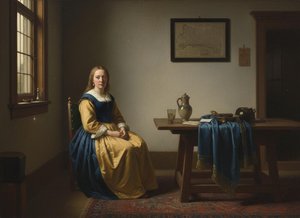
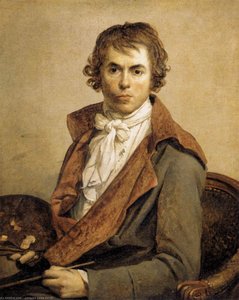
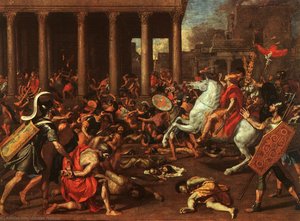
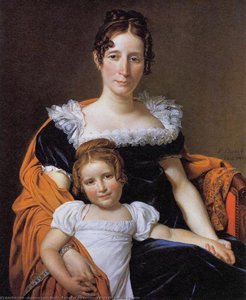
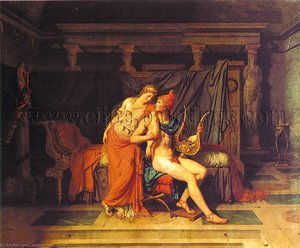
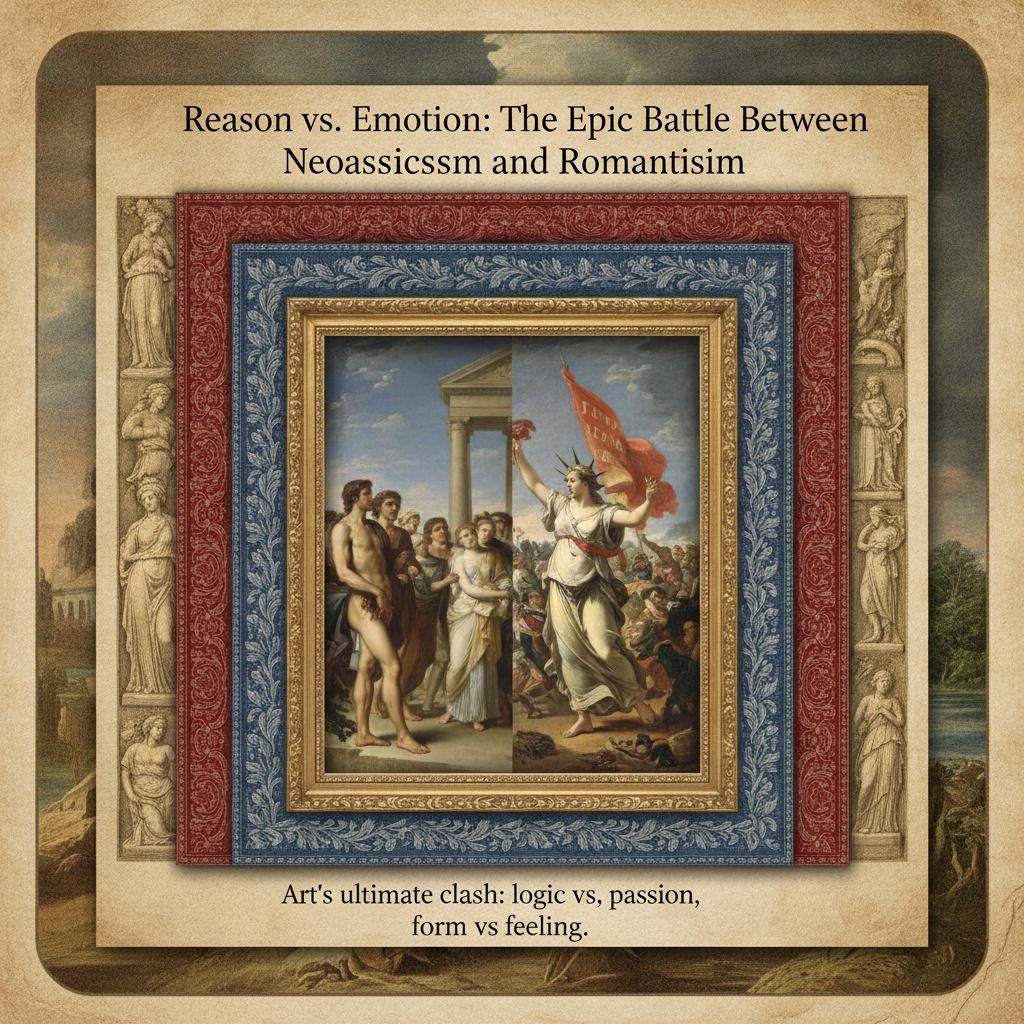
To understand the seismic shift that occurred in the late 18th century, one must first contemplate the profound stillness of the Enlightenment. This was an era defined by the triumph of human reason, a period where the intellect sought to categorize, illuminate, and bring order to the perceived chaos of the natural world. In the realm of visual arts, this philosophical rigor manifested as Neoclassicism, a movement that looked backward to the disciplined grandeur of Greco- and Roman antiquity to find a language for contemporary virtue. It was an age of clarity, where the intellect sought to strip away the frivolous ornamentation of the preceding Rococo period, replacing it with a sense of moral gravity and civic duty.
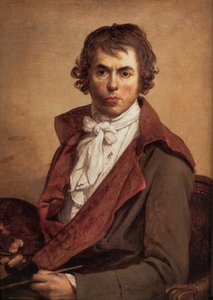
The Neoclassical aesthetic was one of restraint and almost mathematical precision in composition. Painters sought to create windows into a world where logic reigned supreme, utilizing smooth, almost invisible brushwork and a controlled palette to achieve an ideal of beauty found in the harmonious balance of structure and truth. Every line was intended to be purposeful; every form, anatomically perfect. This movement mirrored the political upheavals of the French Revolution, where themes of heroism, self-sacrifice, and the bon patriot (good patriot) became central to the visual narrative. Through works that emphasized clarity and form, Neoclassicism provided a stable, dignified foundation for an era grappling with the birth of modern democracy.
The Romantic Rebellion: Embracing Subjectivity and the Sublime
 Romanticism
Romanticism (also known as the Romantic movement or Romantic era) was an artistic and intellectual movement that originated in Europe towards the end of the 18th century. The purpose of the movement was to advocate for the importance of subjectivity,...
As the smoke cleared from the battlefields of the Napoleonic Wars and the gears of the Industrial Revolution began to turn, a new, more turbulent spirit emerged. Romanticism arose as a profound response to the Age of Enlightenment, advocating for the importance of subjectivity, imagination, and an unbridled appreciation of nature. Where Neoclassicism sought order, Romanticism embraced the wild, the mysterious, and the unpredictable. This was not merely a change in style, but a fundamental shift in how humanity perceived its place in the universe—moving away from the cold calculations of reason toward the warmth of passion and intuition.
The Romanticists argued that beauty is more than an affair of form; it is something that evokes a powerful emotional response. They elevated themes of the supernatural, the exotic, and the sublime—that breathtaking moment where the grandeur of nature overwhelms the human soul. This movement celebrated individualism and rejected the rigid social conventions of the time in favor of a more organic relationship between humans and their environment. In the works of this era, we see a fascination with the Middle Ages, an idealization of the past as a nobler era, and a deep reverence for the untamed landscapes that stood in stark contrast to the encroaching industrial landscape.
A Clash of Techniques: Precision vs. Expressive Brushwork
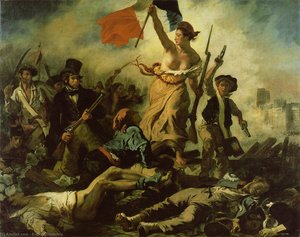 Liberty Leading the People, Louv
A Revolution Embodied: Delacroix’s Liberty Leading the People Eugène Delacroix’s 1830 masterpiece, Liberty Leading the People , is far more than a historical depiction; it's an enduring and visceral allegory of freedom. Measuring an imposing 260 x 32...
The battle between Reason and Emotion was most visibly fought upon the surface of the canvas itself. In Neoclassical works, the artist’s hand often disappears, leaving behind a polished, marble-like finish that emphasizes the permanence of the subject. The technique is characterized by sharp outlines, a smooth texture, and a meticulous attention to detail that demands respect for the physical reality of the figure. This controlled approach was designed to direct the viewer's mind toward the moral lesson or historical truth being presented, preventing any "distraction" from the emotional weight of the narrative.
In contrast, the Romantic brushstroke is a testament to movement and vitality. Artists like Eugène Delacroix rejected the cool, calculated precision of their predecessors, opting instead for loose, expressive brushwork and a vibrant, often dramatic color palette. In masterpieces such as Liberty Leading the People, we are not offered a detached observation but are plunged directly into the heart of conflict, amidst smoke, rubble, and determined revolutionaries. The use of light becomes more dynamic, guiding the eye through chaotic scenes that prioritize emotive impact over strict realism. This era introduced a tactile depth to painting, where the visible texture of the paint—the impasto—serves as a direct conduit for the artist's passion.
Bridging the Divide: Artists Who Navigated Two Worlds
 Anne-Louis Girodet: Bridging Neoclassicism & Romanticism with Emotional Truth
Early Life & David’s Atelier: The Foundation of a Unique Style Anne-Louis Girodet de Roussy-Trioson Discover Anne-Louis Girodet (1767-1824), a French painter bridging Neoclassicism & Romanticism. Explore his dramatic portraits, literary scenes & subt...
While history often presents these two movements as opposing forces, the reality of the art world is frequently more nuanced and interconnected. Some of the most intriguing figures in art history were those who stood at the crossroads, blending the rigorous training of Neoclassicism with a burgeoning Romantic sensibility. A prime example is Anne-Louis Girodet, a student of the great Neoclassical master Jacques-Louis David. While Girodet maintained David's commitment to clarity of form and precise anatomy, he infused his work with dramatic compositions and psychological complexity that hinted at the emotional depth of the coming Romantic era.
Similarly, artists like Jean-François Léauté navigated the shifting landscapes of late 18th and early 19th-century France, capturing the elegance of aristocratic society while simultaneously reflecting the changing aesthetic sensibilities of a world in flux. These "bridge" artists remind us that art history is not a series of abrupt breaks, but a continuous, flowing evolution. They proved that one could honor the disciplined grandeur of the past while still exploring the profound, often unsettling truths of the human heart.
Legacy in the Modern Home: Bringing Historical Drama to Contemporary Interiors
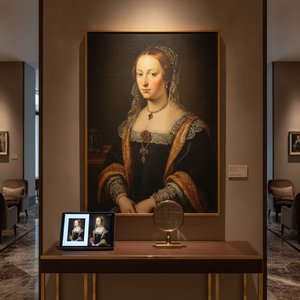
Today, the tension between Neoclassicism and Romanticism continues to inspire how we curate our personal spaces. The timeless elegance of a Neoclassical-inspired piece—with its focus on symmetry and dignity—can provide a sense of calm and structural permanence in a modern room. Conversely, a Romantic work, with its rich textures and dramatic energy, serves as a powerful focal point, injecting soul and storytelling into an interior design.
At ArtsDot.com, we believe that every home deserves the opportunity to host these epic narratives. Whether you are drawn to the disciplined beauty of a classical portrait or the visceral energy of a landscape, our collection offers a way to bring museum-quality history into your daily life. From hand-painted oil reproductions that capture every visible brushstroke to custom commissions that transform your own memories into historical masterpieces, we invite you to discover art that resonates with your unique spirit. Explore our curated selections by color or mood, and let us help you find the piece that speaks to your own balance of reason and emotion.