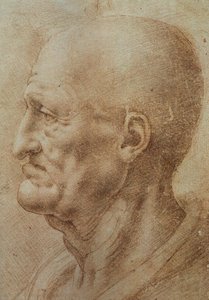

Introduction
Imagine standing in a quiet, sun-drenched studio, the only sound being the rhythmic, soft scratch of graphite dancing across textured paper. There is a profound intimacy in this sound—a whisper of creation that requires no heavy oils or sweeping brushes, only the delicate tip of a pencil and the boundless reach of an artist's imagination. While we often gravitate toward the grand, sweeping textures of oil paintings, there exists a silent, powerful magic in the world of monochrome. The works we are about to explore are not merely sketches; they are profound architectural feats of light and shadow, where every fine line carries the weight of a heartbeat.
Throughout history, the humble pencil has served as the bridge between raw thought and permanent legacy. From the meticulous anatomical studies that unlocked the mysteries of the human form to the expressive, turbulent strokes that captured the very essence of modern anxiety, these masterpieces have fundamentally shifted our cultural lens. These artists took a tool often relegated to the margins of preparation and elevated it to the center of the stage, proving that depth, emotion, and soul do not require a spectrum of color to be felt deeply.
Today, these legendary works remain as vital as ever. In an era of fleeting digital images, the tactile permanence of a pencil stroke offers a grounding connection to the human hand. They remind us that beauty often lies in the nuance—in the subtle gradient of a shadow or the sharp precision of a single, decisive mark. As we walk through this curated selection, prepare to see the world redefined by graphite. We will journey through ten transformative masterpieces that stripped away the distraction of color to reveal the raw, breathtaking truth beneath, forever changing the way we perceive the power of a simple line.
Head of a Woman - vincent willem van gogh
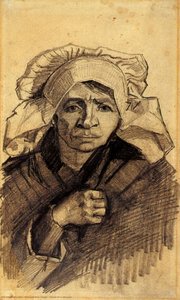 Head of a Woman - vincent willem van gogh
In the delicate, graphite strokes of Head of a Woman by Vincent van Gogh , we encounter a masterclass in raw, monochromatic emotion. Created in 1885, this work transcends simple sketching; the way the pencil presses into the paper creates a rhythmic texture that captures the heavy, soulful gaze of its subject. Every smudge and sharp line contributes to a sense of profound melancholy, showcasing how Van Gogh used the humble medium of pencil to sculpt light and shadow with unprecedented psychological depth.
This piece earns its place among the top 10 legendary pencil masterpieces because it proves that true artistry lies not in vibrant color, but in the ability to convey the human condition through texture and tone. At ArtsDot.com, we believe this tactile intimacy should be felt in your own home. Our hand-painted oil reproductions are meticulously crafted to honor this very materiality, using thick, expressive brushstrokes that recreate the three-dimensional energy and soulful weight of Van Gogh’s original vision, bringing a museum-quality connection to your personal sanctuary.
Cannes Sketchbook - Pablo Picasso
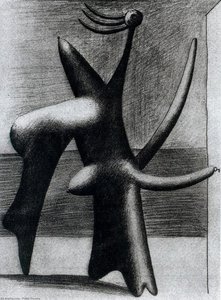 Cannes Sketchbook - Pablo Picasso
In the Cannes Sketchbook by Pablo Picasso, the magic lies not in a radiant sunburst, but in the masterful command of monochrome chiaroscuro. Through rhythmic hatching and bold, expressive pencil strokes, Picasso manipulates light and shadow to sculpt volume out of a flat plane. This interplay of deep blacks and soft grays breathes life into an abstracted figure, creating a sense of movement that feels both grounded and ethereal. It is this sophisticated use of tonal contrast—the way light seems to catch the edge of a geometric limb or fade into the shadows of a simple chair—that secured its place among the top 10 legendary pencil masterpieces .
For the modern collector, bringing this piece into your home offers more than just a nod to Cubism; it introduces a profound architectural depth. When reproduced as a high-quality canvas, the visible textures and dramatic light play act as a sophisticated anchor for a room, adding a layer of intellectual luxury and timelessness to any contemporary wall. It is a window into a moment of pure, fragmented brilliance.
Minotaur and horse - Pablo Picasso
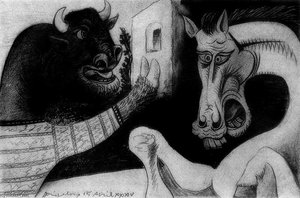 Minotaur and horse - Pablo Picasso
What if I told you that "Minotaur and Horse" by Pablo Picasso was born from a moment of rebellion—a stroke of defiance against the ordinary? In this monochrome masterpiece, Picasso strips away the distractions of color to reveal a visceral confrontation between elemental forces. Through heavy, assertive pencil lines and the fragmented planes of Cubism , he captures the raw tension between the grounded, primal strength of the Minotaur and the fluid, spirited grace of the horse.
This work earns its place in our Top 10 not merely as a drawing, but as a psychological landscape that redefined how we perceive form and movement. It is a masterclass in using texture and shadow to create a sculptural presence on paper. At ArtsDot.com, we believe such profound energy shouldn't be confined to museum archives. Imagine this striking interplay of light and shadow hanging in your study or living space, turning every glance into a reminder: your space is not just a room; it’s a statement. Bringing this legendary pencil work into your home allows you to surround yourself with the very rebellion that changed art history forever.
The Oath in the Tennis Court - Jacques-Louis David
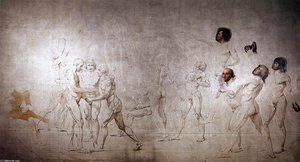 The Oath in the Tennis Court - Jacques-Louis David
Imagine standing in the shadows of 1791, feeling the electric tension of a nation on the brink of transformation. In his preparatory study for The Oath in the Tennis Court , Jacques-Louis David does not just sketch a scene; he captures the very pulse of the French Revolution. This is not the polished, finished oil painting you might see in a museum, but something far more intimate—a raw, visceral glimpse into the heart of a movement through the medium of dry pencil on paper.
The artwork breathes with an unfinished vitality. David uses masterful hatching and cross-hatching to sculpt light and shadow, giving weight to the wrestling, gesturing bodies that surge across the page. The monochromatic palette of greys and beiges creates a somber, dignified atmosphere, where every energetic line suggests a moment of profound conviction. For the modern collector, bringing a reproduction of this Neoclassical masterpiece into your home offers more than just decor; it introduces a narrative of liberty and resilience . It is a sophisticated anchor for a study or living space, inspiring a sense of intellectual purpose and timeless strength.
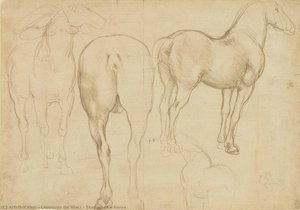
Recto: A study for the Trivulzio monument. Verso: A study for an equestrian monument - Leonardo da Vinci
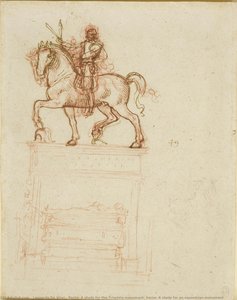 Recto: A study for the Trivulzio monument. Verso: A study for an equestrian monument - Leonardo da Vinci
To gaze upon Recto: A study for the Trivulzio monument. Verso: A study for an equestrian monument by Leonardo da Vinci is to witness a profound moment of quiet intensity, where the restless energy of a rearing horse meets the delicate, searching lines of a master’s hand. In these charcoal and chalk strokes, we feel the pulse of a dream caught in transition—a fleeting glimpse into the psychological depth of a creator obsessed with capturing life's kinetic spirit. The rider, armored and poised, carries an air of monumental ambition that transcends the paper itself.
As one of our Top 10 Legendary 'Pencil' Masterpieces , this work serves as a universal mirror for anyone who has ever balanced grand vision with meticulous preparation. For those looking to curate a meaningful home, bringing the soft, atmospheric shadows and rhythmic precision of Leonardo’s sketches into your space can transform a quiet corner into a sanctuary for deep reflection. It is more than a sketch; it is an invitation to find stillness amidst the movement of life.
Female Nude, Standing - vincent willem van gogh
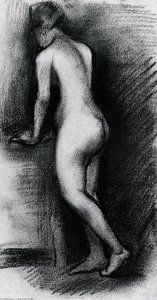 Female Nude, Standing - vincent willem van gogh
In the vast, vibrant tapestry of Vincent van Gogh’s oeuvre, where swirling sunflowers often command our attention, there exists a more hushed, contemplative corner of his genius. Female Nude, Standing (1886) invites us into the artist's private laboratory of form and feeling. Created during his transformative years in Paris, this delicate pencil work captures a moment of profound stillness. Unlike his later explosive color palettes, this piece relies on the raw, unadorned power of monochrome to convey its message.
The subject—a nude figure leaning softly against a vertical wall—is an exploration of vulnerability and quietude . Through meticulous hatching and cross-hatching , Van Gogh builds a subtle topography of light and shadow across the skin. These rhythmic, gestural lines do not seek a photographic likeness; instead, they breathe life into the paper, creating a sense of movement and weight. To look upon this drawing is to witness a pivotal moment in art history, where the artist began to embrace the fluid language of the Impressionists. This masterpiece doesn't just reflect light; it invents it through texture, turning a simple sketch into a portal of deep introspection.
Portrait of Sylvette David - Pablo Picasso
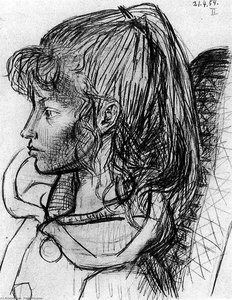 Portrait of Sylvette David - Pablo Picasso
In the Portrait of Sylvette David , Pablo Picasso captures a gaze so steady and profound that it seems to pull the viewer into a shared moment of quiet intimacy. Created in 1954, this masterpiece moves away from the fractured complexity of Cubism toward a raw, Naive Art aesthetic, using nothing but the expressive power of pencil on paper. Through masterful hatching and bold, rhythmic lines, Picasso renders his muse with a striking, stripped-back intensity that feels both modern and timeless.
There is a psychological depth here that transcends the simple likeness of a companion; it is a study in stillness and introspection. The monochromatic palette and simplified forms create a sense of serene gravity, making this one of the top 10 legendary pencil masterpieces for its ability to evoke deep emotion through minimalism. Integrating such a powerful work into your home can transform a personal sanctuary into a space for profound reflection. Whether placed in a quiet reading nook or a minimalist study, the portrait’s contemplative energy invites a sense of calm and soulful connection to the history of art.
Peasant Woman with Buckets - Kazimir Malevich
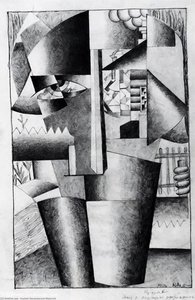 Peasant Woman with Buckets - Kazimir Malevich
In Peasant Woman with Buckets , the lines of Kazimir Malevich aren’t merely drawn; they are choreographed . This 1913 masterpiece acts as a bridge between the soulful traditions of rural Russia and the radical energy of Cubo-Futurism. At first glance, you see the rhythmic pulse of labor, but look closer: the familiar scene dissolves into a captivating dance of interlocking planes, squares, and triangles. It is not just a composition; it is a dance frozen in time .
Using the precision of pencil and charcoal, Malevich deconstructs reality, replacing soft textures with sharp, angular geometry and dramatic tonal contrasts. The weight of the buckets and the presence of the woman are translated into a dynamic arrangement of light and shadow that makes chaos feel like harmony. For the modern decorator, this piece offers an incredible way to introduce sophisticated tension into a room. What if your walls could breathe rhythm ? By bringing this avant-garde energy into your home, you invite that same perfect balance of structure and movement into your living space.
Woman Sien with Baby on her Lap, Half-Figure - vincent willem van gogh
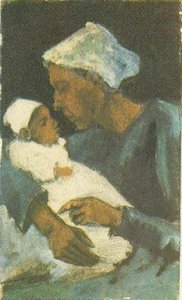 Woman Sien with Baby on her Lap, Half-Figure - vincent willem van gogh
In "Woman Sien with Baby on her Lap, Half-Figure," the raw, tactile energy of Vincent van Gogh’s pencil and chalk work takes center stage. Before his famous swirls of color, Van Gogh mastered the rhythmic intensity of hatching and cross-hatching , using precise, repetitive strokes to sculpt light and shadow from a monochromatic world. Each line carries a heavy, emotional weight, creating a textured landscape of skin, fabric, and maternal devotion that feels almost sculptural in its depth.
This piece stands as a pillar among the Top 10 Legendary 'Pencil' Masterpieces because it captures the profound transition from gritty Realism to expressive modernism. At ArtsDot.com, we believe such emotional depth should be felt, not just seen. Our hand-painted oil reproductions are meticulously crafted to honor this very materiality; our artists use thick, visible brushstrokes and layered pigments to recreate that three-dimensional, soulful quality of the original pencil work. We bring the museum experience into your home, ensuring the tender, textured spirit of Van Gogh’s early mastery remains a tactile centerpiece in your personal collection.
Digger - vincent willem van gogh
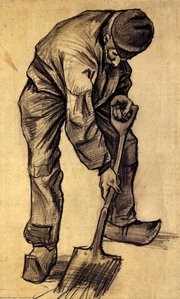 Digger - vincent willem van gogh
Before the world fell in love with his swirling skies and vibrant sunflowers, Vincent van Gogh was a master of the quiet, monochromatic truth. Digger (1882) stands as a profound testament to this early period, capturing the raw, unvarnished dignity of manual labor through nothing more than graphite and paper. This piece earns its place among the top legendary pencil masterpieces because it reveals the soul of an artist learning to find beauty in the grit of everyday existence.
Through meticulous hatching and deep, velvety shadows, Van Gogh transforms a simple laborer into a monumental figure of resilience. The texture of the earth and the heavy folds of clothing feel almost tactile, inviting us to contemplate the weight of human perseverance. In a modern home, the somber elegance of this work offers a moment of grounded reflection—a sophisticated anchor for a curated collection that celebrates strength and historical depth. It reminds us that even in the simplest strokes, there is an eternal, breathing humanity.
Conclusion
As we draw the curtain on this journey through graphite and lead, we find that these legendary pencil masterpieces are far more than mere relics of a bygone era or historical footnotes in an art textbook. They are living, breathing presences that continue to pulse with the energy of their creators. Each delicate line and soft shadow serves as a bridge across centuries, connecting the quiet intensity of the artist’s hand to the modern soul seeking beauty in a busy world. When we gaze upon these works, we aren't just observing technique; we are participating in a timeless conversation that transcends time, language, and space.
Whether it is the profound depth of a Renaissance sketch or the bold, expressive strokes of a modern study, these works possess a unique ability to transform a house into a home, infusing our personal sanctuaries with layers of meaning and quiet wonder. They remind us that art is not something to be kept behind glass in a distant museum, but something to be lived with, breathed with, and cherished every day. As you look for that perfect piece to anchor your space, we invite you to continue your discovery within our full collection , where the whispers of history meet the warmth of your contemporary life.
In the end, every stroke of the pencil carries a fragment of human emotion—a heartbeat captured in monochrome—waiting to find its place in your story and inspire your own creative journey.