

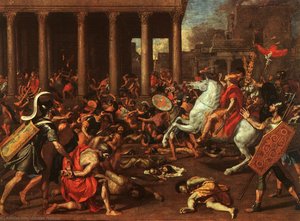

The Visual Chronicle: How Paintings Capture the Spirit of Eras
 Heritage Through Paintings: A Cultural Memory of Civilizations – From Ancient Murals to Modern Expressions
The Enduring Legacy: How Paintings Preserve Cultural Memory From the ochre handprints pressed onto cave walls millennia ago to the vibrant canvases of contemporary artists, paintings have served as humanity’s most enduring visual chronicle. They are ...
To gaze upon a canvas is to peer through a window into a time long since passed, where every brushstroke acts as a heartbeat from a bygone era. Paintings are far more than mere aesthetic objects; they are humanity’s most enduring visual chronicles, capturing the very essence of existence before the written word could even begin to document it. From the primal ochre handprints pressed onto cave walls millennia ago to the sophisticated oil landscapes of the nineteenth century, art has functioned as a vessel for the spirit, beliefs, and anxieties of entire civilizations. These works do not simply depict moments in time; they freeze the atmosphere of an age, allowing us to feel the weight of history through color and form.
When we study the evolution of artistic expression, we witness a profound dialogue between the artist and their environment. A landscape is never just a collection of trees and sky; it is a reflection of how a society perceived its relationship with nature, power, and divinity. Through the meticulous application of pigment, artists have documented the rise and fall of empires, the shifting tides of religious devotion, and the subtle nuances of social hierarchy. This visual narrative provides an intimacy that even the most detailed historical texts often lack, offering a sensory connection to the past that remains vibrantly alive in every textured layer of paint.
Tangible Legacies: From Ancient Murals to Renaissance Masterpieces
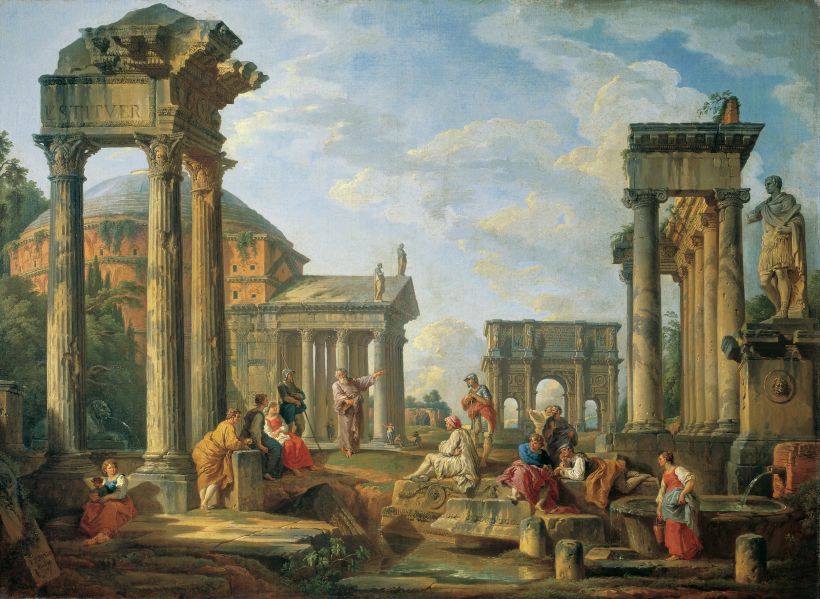 Cultural heritage
Cultural heritage is the tangible and intangible legacy of a group or society that is inherited from past generations. Not all legacies of past generations are "heritage". Rather, heritage is a product of selection by society. Cultural heritage inclu...
The concept of cultural heritage is deeply rooted in both the tangible and the intangible. While we often think of heritage as monuments or architecture, it is the movable art—the paintings, tapestries, and artifacts—that provides the most portable and precious link to our ancestors. Consider the breathtaking frescoes unearthed from the ruins of Pompeii; these are not merely decorations but frozen glimpses into Roman daily life, offering a poignant intimacy that brings the ancient world into sharp, colorful focus. Similarly, the elaborate murals adorning Egyptian tombs were designed as eternal gateways, meticulously crafted to ensure the continuity of the soul in the afterlife.
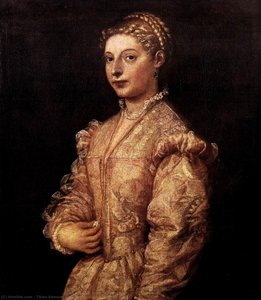
As we transitioned through the centuries, this legacy evolved with increasing complexity. The Renaissance brought a revolution in perspective and humanism, where the mastery of light and shadow allowed for a new level of realism that celebrated the individual. In these works, we see the tangible manifestation of societal shifts toward scientific inquiry and classical revival. Whether it is the delicate beauty of a Georgian gem like Marble Hill House or the imposing presence of medieval castles, art provides the visual texture that completes our understanding of these historic sites. It is through these artistic legacies that we recognize the continuity of human achievement across disparate cultures and geographies.
The Alchemy of Preservation: Materials, Pigments, and Longevity
 The Chemistry of Permanence: Why Fine Art Survives the Test of Time
The Alchemy of Pigment: The Molecular Foundation of Color Mastering the Brush: The Timeless Secrets of Old Master Oil Painting Techniques The Alchemy of Pigment: Understanding the Chemistry and Longevity of Oil Media To understand the enduring brilli...
The survival of these historical treasures is no accident; it is a triumph of chemistry and craftsmanship. The endurance of a masterpiece relies heavily on the molecular foundation of its creation. In the ancient technique of fresco, for instance, pigments are applied to freshly laid, wet lime plaster. As the plaster dries and hardens, a chemical reaction transforms the calcium hydroxide into calcium carbonate, effectively binding the colors permanently within the very structure of the wall. This process creates an artwork that is not merely on the surface but becomes an integral part of the architecture itself.
In later eras, the development of oil media introduced a new dimension of longevity and depth. The use of specific oils, such as safflower for whites to prevent yellowing, and the application of flexible gesso to prevent cracking, demonstrate a sophisticated understanding of materials science long before the advent of modern laboratories. To protect these surfaces from the ravages of dust, moisture, and atmospheric pollutants, artists have traditionally finished their works with a coat of Damar varnish. This protective layer ensures that the brilliance of the pigments remains vibrant for generations, allowing the heavy impasto and deep tonal ranges to withstand the test of time.
Art as a Living Narrative: The Role of Museums and Cultural Institutions
 Netherlands Institute of Cultural Heritage
About the Netherlands Institute of Cultural Heritage The Netherlands Institute of Cultural Heritage (ICN) stands as a beacon of scholarly dedication to safeguarding Dutch artistic legacy and historical memory. Situated in Rijswijk, a charming municip...
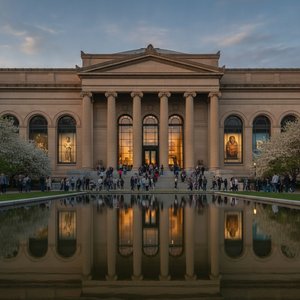
The preservation of our collective memory requires more than just the durability of paint; it demands active stewardship. Organizations such as the English Heritage Trust and the Netherlands Institute of Cultural Heritage serve as vital guardians of our shared past. These institutions do not merely act as repositories for artifacts; they are centers of scholarly dedication, employing rigorous scientific research and conservation science to safeguard both movable and immovable heritage. Through meticulous documentation, restoration, and public engagement, they ensure that the stories woven into our buildings and artworks remain accessible to the modern world.
True preservation is a dynamic process that involves both the protection of the physical object and the revitalization of its meaning. It requires the work of conservators who specialize in the delicate treatment of pigments and the historians who interpret the context of each piece. By maintaining the integrity of these works, cultural institutions allow us to engage in a continuous dialogue with history. They transform static museum collections into living narratives, fostering a connection between people and places that spans from prehistoric monuments like Stonehenge to the grand galleries of contemporary art centers.
Reimagining History: Modern Techniques in Preserving Classical Aesthetics
 The Fresco as Family Legacy: Preserving Heritage Through Wall Art
A Timeless Art Form: Understanding Fresco Painting Wikipedia: Fresco (pl. frescos or frescoes) is a technique of mural painting executed upon freshly laid ("wet") lime plaster. Water is used as the vehicle for the dry-powder pigment to merge with the...
In our contemporary era, the preservation of historical aesthetics has moved beyond the laboratory and into the realm of creative innovation. We now possess the ability to "remix" art history, using modern tools to bridge the gap between ancient styles and modern sensibilities. This can be seen in the way digital technologies allow us to visualize historical reconstructions or how artists use new media to replicate the profound textures of Old Master techniques. The ability to transform a modern image into a 17th-century masterpiece in the style of Rembrandt is a testament to our enduring fascination with the classical aesthetic.
Furthermore, large-format innovations such as painted murals and ceiling frescoes allow for the recreation of historical grandeur in modern architectural spaces. By painting on massive canvas rolls that can be installed similarly to high-end wallpaper, professionals can bring the splendor of a Renaissance palace or a Sistine Chapel-inspired ceiling into hotels, corporate spaces, and private homes. This intersection of traditional craftsmanship and modern logistics ensures that the visual language of the past remains a functional and inspiring element of our contemporary built environment.
The Future of Heritage: Digital Innovation and the Continuity of Art
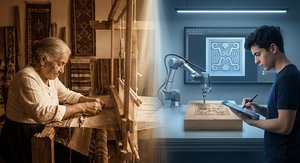 Echoes of Heritage: Continuity & Innovation in Traditional Art Forms
Defining Cultural Heritage: Tangible & Intangible Legacies Wikipedia: Cultural heritage Cultural heritage is the tangible and intangible legacy of a group or society that is inherited from past generations. Not all legacies of past generations are "h...
As we look toward the future, the boundary between the physical and the digital continues to blur, offering new frontiers for the preservation of cultural memory. AI-driven tools now allow us to reconstruct lost styles—such as Cubism or Surrealism—from contemporary photographs, providing a way to experience historical movements through a personal lens. While these technological advancements offer incredible opportunities for exploration and customization, they do not replace the irreplaceable value of the hand-painted original. The tactile depth of real oil paint, with its visible brushstrokes and physical texture, remains the ultimate connection to the human hand.
The continuity of art lies in our ability to adapt while respecting the foundations of the past. Whether through the high-tech precision of digital mockups for custom commissions or the global logistics that allow a hand-painted reproduction to travel from a studio to a collector halfway across the world, the mission remains the same: to ensure that the beauty and history of our civilizations are never lost. As we continue to innovate, we carry with us the responsibility of being the next generation of custodians, ensuring that the visual chronicle of humanity remains vibrant, textured, and eternally profound.