



The Philosophy of Permanence: Why Oil Painting Transcends Digital Ephemerality
 Handcrafted Heritage: Sustainability and Artistic Longevity in the Age of Custom Oil Paintings
The Enduring Appeal of Handcrafted Oil Paintings: A Legacy of Skill and Beauty Bridging Art & Ecology: Sustainable Practices at Discover how blends artistic excellence with environmental responsibility. Explore our sustainable practices, custom repro...
In an era increasingly defined by the fleeting nature of digital existence, where images flicker across screens for mere seconds before vanishing into the ether, there exists a profound longing for something substantial. We find ourselves surrounded by a culture of the ephemeral—high-definition pixels that, while visually striking, lack the physical weight of history. This is why the allure of the Old Masters remains undiminable. When one stands before a hand-painted oil reproduction, one is not merely observing a depiction of a subject; one is engaging with an embodiment of time, skill, and intention. Unlike the sterile perfection of a digital print, an oil painting possesses an inherent quality of permanence, a tangible connection to the centuries that have passed since the original brushstroke was laid upon canvas.
The true value of such works lies in their ability to transcend trends. While contemporary decor often favors the transient and the mass-produced, a masterpiece—whether it be the enigmatic gaze of the Mona Lisa or the dramatic chiaroscuro of a Caravaggio—offers a narrative depth that digital media cannot replicate. This permanence is not merely about physical durability, but about emotional resonance. A hand-painted work invites the viewer to linger, to trace the subtle variations in texture and light, and to find a sense of continuity in an ever-changing world. It is a rejection of the disposable, a deliberate choice to surround oneself with objects that possess a soul.
Material Integrity: The Ecological Advantages of Natural Pigments and Traditional Mediums
 Sustainable art
Sustainable art is art in harmony with the key principles of sustainability, which include ecology, social justice, non-violence and grassroots democracy. Through the combination of artistic expression, creativity, and eco-friendly approach, sustaina...
To discuss the sustainability of art is to return to the very essence of its creation: the materials. True sustainable art is found in harmony with ecological principles, prioritizing substances that are as enduring as they are environmentally responsible. For centuries, the scent of linseed oil and turpentine has been synonymous with the master’s studio, evoking an era where the artist’s palette was derived directly from the earth. The use of natural pigments, minerals, and organic oils represents a fundamental connection to the natural world, far removed from the chemical-heavy, synthetic processes found in modern industrial printing.
When we choose hand-painted reproductions, we are supporting a lineage of craftsmanship that values material integrity. The process involves much more than mere color application; it is an exercise in chemistry and ecology. By utilizing specific oils, such as safflower for whites to prevent the dreaded yellowing over time, and finishing each work with a protective coat of Damar varnish, artists create a barrier against atmospheric pollutants and moisture. This careful management of materials ensures that the artwork does not merely exist, but thrives, resisting the degradation that often plagues mass-produced goods. In this way, the traditional medium becomes an eco-friendly choice, favoring natural longevity over the high-impact waste of modern manufacturing.
Artistic Longevity vs. Mass Production: The Sustainability of Handcrafted Heritage
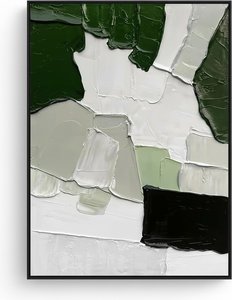 Handpainted Abstract Oil Canvas in Black Frame
Embrace Abstract Expressionism: A Handpainted Oil Canvas Masterpiece This striking oil canvas painting introduces a captivating abstract design to your living space. Layers of rich green hues – from deep forest shades to subtle olive and pale sage – ...
The modern consumer landscape is dominated by a cycle of rapid production and even more rapid obsolescence. Mass-produced art prints and posters are often the result of high-volume, low-quality processes that contribute significantly to environmental waste. These items, while accessible, lack the "soul" of a unique creation; they are flat, two-dimensional echoes of an original idea, lacking the tactile depth of real paint. In contrast, the tradition of handcrafted heritage offers a much more sustainable model of consumption. A hand-painted oil reproduction is a bespoke creation, meticulously layered over weeks to achieve a level of complexity that no machine can mimic.
The sustainability of this approach lies in its resistance to the "throwaway" culture. Because these works are crafted on 100% cotton canvas with visible brushstrokes and rich impasto textures, they are designed to be heirlooms rather than temporary decorations. The act of commissioning a reproduction is a return to the traditions of patronage, where value is placed on the artist's unique interpretation and the physical manifestation of their expertise. By investing in works that are built to last for generations, we reduce the demand for the constant replacement of inferior goods, thereby fostering a more conscious and ecologically responsible way of curating our personal spaces.
The Chemistry of Preservation: Protecting Your Investment through Timeless Techniques
 Conservation and restoration of paintings
The conservation and restoration of paintings is carried out by professional painting conservators. Paintings cover a wide range of various mediums, materials, and their supports (i.e. the painted surface made from fabric, paper, wood panel, fabricat...
A profound understanding of art conservation reveals that the longevity of a masterpiece is as much about science as it is about aesthetics. The preservation of a painting requires a deep knowledge of its constituent parts—the pigments, the binders, and the support structures. Professional conservators understand that every component reacts differently to its environment. This is why the technical execution of a high-quality reproduction is so critical. For instance, the use of flexible gesso is essential to prevent the cracking that can occur with more brittle, modern alternatives, ensuring the canvas remains supple through changes in humidity.
<_p>True preservation also involves proactive care. To protect an investment in fine art, one must consider the environmental variables of the home. Avoiding direct sunlight and excessive moisture, and utilizing acid-free matting to create a necessary air gap between the artwork and its glass, are practices rooted in the principles of preventive conservation. When an artist employs traditional techniques—such as reinforcing stretcher bars to prevent warping or using high-quality varnishes to shield against dust—they are performing an act of environmental stewardship, ensuring that the beauty of the work remains vibrant and untarnished for decades to come.Curating a Conscious Collection: Integrating Masterpieces into the Modern Eco-Friendly Home
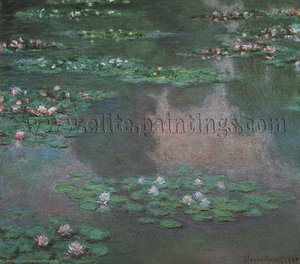
Integrating classical masterpieces into a contemporary interior allows for a sophisticated dialogue between history and modernity. A well-curated collection does not merely decorate a room; it provides an intellectual and emotional anchor for the space. Whether one is looking to introduce the light-drenched atmosphere of a Monet landscape or the commanding presence of a large-format mural, the goal is to create an environment that reflects both personal taste and a commitment to quality. This can be achieved through thoughtful placement, such as using multi-panel layouts to span wide walls or staircases, creating a cohesive architectural flow.
Ultimately, choosing hand-painted reproductions is an invitation to live more intentionally. It is about selecting pieces that offer a deeper tonal range and a tactile presence—works where you can almost feel the energy of each brushstroke. By prioritizing works that celebrate craftsmanship, natural materials, and historical continuity, we transform our homes into sanctuaries of culture and sustainability. In doing so, we ensure that the great legacies of the past continue to breathe life into the spaces of the future, creating a home that is as ecologically mindful as it is aesthetically profound.