



Strategic Art Selection: Establishing Brand Identity through 19th-Century Masterpieces
 Elevating Hospitality: A Designer's Guide to Sourcing Seamless Impressionist Art for Luxury Hotel Interiors
The Silent Ambassador: Establishing Brand Heritage through Impressionist Narratives Timeless 19th Century Art Reproductions: A Strategic Procurement Guide for Hotel and Hospitality Interior Designers The Strategic Role of 19th Century Art in Hospital...
In the high-stakes arena of luxury hospitality design, the selection of artwork transcends mere decoration; it serves as a fundamental pillar of brand storytelling and spatial atmosphere. For the discerning designer, every corridor and lounge is an opportunity to weave a narrative of permanence and prestige. When we look toward the Impressionist movement—the luminous worlds of Monet, Renob, and Pissarro—we find a profound tool for establishing a brand's soul. These works do not simply occupy space; they anchor a property in an era of perceived elegance, transforming transient guest quarters into curated journeys of historical continuity.
Integrating 19th-century aesthetics allows a hotel to move beyond the ephemeral nature of modern trends and into the realm of emotional resonance. The soft, light-drenched landscapes of American Impressionism or the dignified presence of classical portraiture provide a psychological anchor for the guest. Unlike contemporary abstraction, which can sometimes feel detached, the Impressionist focus on light, color, and atmosphere suggests that the establishment is part of a much larger, more enduring cultural tapestry. By utilizing works reminiscent of masters like William Merritt Chase, designers can evoke an immediate sense of established authority and sophisticated calm.
Zonal Procurement Strategies: Tailoring Visual Narratives for Lobbies, Suites, and Restaurants
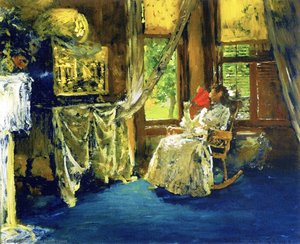 Interior
William Merritt Chase, an American artist known for his Impressionist works, created a captivating piece titled Interior, which is now housed at the Sheldon Memorial Art Gallery in the United States. This painting, dated 1912, showcases Chase's maste...
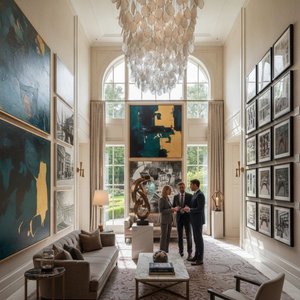
A successful art program requires a nuanced approach to different hospitality zones, recognizing that each space demands a unique emotional frequency. The hotel lobby, as the primary point of contact, sets the expectation for the entire guest experience. Here, art must act as a silent ambassador, creating an unforgettable first impression through scale and impact. Large-format pieces or multi-panel compositions can transform a grand entrance into a monumental statement of luxury.
In contrast, the transition to guest suites requires a shift toward intimacy and tranquility. The strategic use of Impressionist interiors—such as the serene, domestic scenes found in Chase’s Interior works—invites a moment of peaceful contemplation. These pieces utilize light and texture to create a sanctuary within the room. For restaurant environments, the procurement focus often shifts toward warmth and appetite-stimulating palettes. Utilizing warm earth tones, ochres, and rich textures can foster an environment of convivial luxury, ensuring that the visual narrative remains cohesive yet appropriately scaled to the specific function of each room.
Scaling Aesthetics: Implementing Multi-Panel Solutions and Large-Format Murals
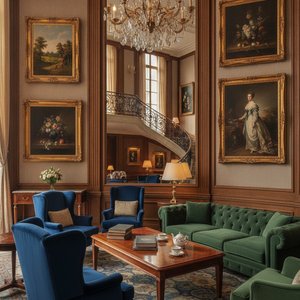 Timeless 19th Century Art Reproductions: A Strategic Procurement Guide for Hotel and Hospitality Interior Designers
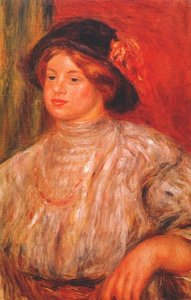
The Strategic Role of 19th Century Art in Hospitality Brand Identity Timeless Female Portraits: A Procurement Guide to Premium Oil Reproductions for Luxury Hospitality & Commercial Interiors Strategic Selection: Integrating Classic Female Portraiture...
To address the architectural challenges of grand hotel lobbies and expansive staircases, modern procurement must look toward scalable solutions. The multi-panel trend—splitting a single masterpiece across three, four, or five panels—is an essential tool for designers managing wide walls or significant vertical spans. This technique ensures that the colors and brushstrokes flow seamlessly across the architectural plane, creating a cohesive, modern aesthetic that maintains the integrity of the original composition while adapting to contemporary structural requirements.
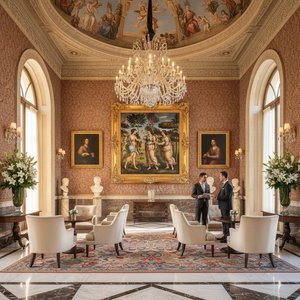
For even more ambitious projects, the use of large-format murals and ceiling frescoes offers an unparalleled way to redefine a space. These works, painted on massive canvas rolls, allow designers to recreate historical grandeur, such as the intricate ceilings of classical estates, within a modern hotel framework. This level of architectural art allows for a total immersion in history, turning a standard ceiling into a breathtaking focal point that commands attention and elevates the property's perceived value.
Operational Efficiency in Bulk Procurement: Managing Timelines, Budgets, and Logistics
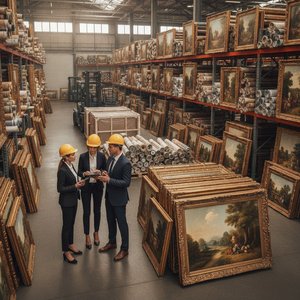
For procurement managers and hospitality chains, the aesthetic beauty of art must be balanced with rigorous operational efficiency. The challenges of designing for thousands of diverse guests involve managing corporate brand standards, commercial budgets, and strict procurement timelines. Effective sourcing requires a reliable partner capable of handling high-volume orders—often by the dozen—with consistent quality and transparent documentation, including VAT-compliant invoices for corporate accounting.
Reliability in logistics is non-negotiable. A professional procurement flow must include clear communication channels, such as order management systems that provide real-time status updates via email or SMS. From the initial confirmation to the final delivery via trusted carriers like DHL Express or FedEx, every step must be documented and predictable. This includes managing the complexities of international shipping, such as customs support and the provision of necessary identification documents for regions like Brazil, Mexico, or Turkey, ensuring that the art arrives on schedule and without administrative friction.
Customization and Bespoke Commissions: Integrating Brand Heritage through Personalized Artworks
 Elevate Hospitality: How Impressionist Art Drives Luxury Value and Guest Loyalty
The Silent Ambassador: Establishing Brand Heritage through Impressionist Narratives Elevating Hospitality: A Designer's Guide to Sourcing Seamless Impressionist Art for Luxury Hotel Interiors The Silent Ambassador: Establishing Brand Heritage through...
The modern guest demands authenticity and experiences that feel uniquely tailored. This presents a significant opportunity for designers to move beyond stock selections into the realm of bespoke commissions. Through advanced customization, it is possible to "remix" art history to align perfectly with a hotel's specific color palette or brand story. One might request a contemporary photograph be reimagined in the impasto style of Van Gogh, or even undergo a "period shift," where modern imagery is transformed into a 17th-century masterpiece in the style of Rembrandt.
Furthermore, the ability to commission custom portraits or restorative works allows a hotel to integrate its own heritage into its walls. Whether it is a group portrait celebrating a property's anniversary or a custom-painted mural that reflects local landmarks, these personalized elements transform transient spaces into curated journeys. The use of professional digital mockups during this process removes uncertainty, allowing designers to approve the composition and color matching before the artist ever touches the canvas, ensuring the final product meets exact architectural specifications.
Technical Specifications and Maintenance: Ensuring Longevity for High-Traffic Hospitality Interiors
In high-traffic commercial zones, the durability of an art program is as critical as its beauty. Unlike residential settings, hotel art must withstand environmental fluctuations and the rigors of frequent maintenance. True quality in reproduction lies in the medium; 100% hand-painted oils on cotton canvas offer a depth of tonal range and physical texture—visible brushstrokes and impasto—that digital prints simply cannot replicate. The use of professional-grade materials, such as flexible gesso to prevent cracking and specific oils like safflower to prevent yellowing, ensures that the artwork remains vibrant for decades.
To protect these investments, a complete procurement strategy must include guidance on preservation. Finishing works with a coat of Damar varnish provides a vital shield against dust, moisture, and atmospheric pollutants. For designers managing large-scale installations, understanding the engineering of stretched canvases—using braced stretcher bars to prevent warping—is essential for long-term stability. By prioritizing academic excellence in craftsmanship and robust material science, hotel designers can ensure that their curated collections remain a lasting testament to the property's enduring quality.
ArtsDot.com provides the professional infrastructure required for large-scale hospitality art procurement, offering everything from bulk 19th-century reproductions to bespoke custom commissions with global logistics support.