The Fundamentals of Planographic Printing: Understanding Surface vs. Relief
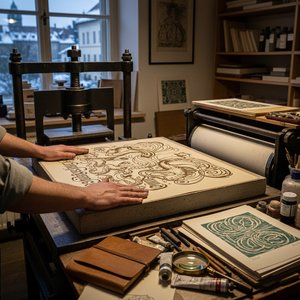 The Alchemy of Stone and Ink: A Collector's Definitive Guide to the Art of Lithography
The Planographic Revolution: Understanding the Essence of Lithography Lithography stands apart from the ancestral traditions of relief and intaglio printing, offering a profound departure from the physical labor of carving wood or incising metal. In ...
To the discerning eye of a hotel designer or a procurement manager, the distinction between various printmaking techniques is not merely academic; it is fundamental to the tactile and visual success of a curated space. While much of the art world is familiar with the aggressive, physical presence of relief printing—where woodcuts demand the carving away of material to leave a raised image—or the deep, incised trenches of intaglio etching, lithography operates on an entirely different plane. It is a planographic process, a term derived from the Greek
lithos for stone and
graphō to write, which exists upon a flat surface much like the very paper it eventually graces. There is no structural struggle against the resistance of wood or metal here; instead, there is a profound departure from physical depth toward a medium of surface tension and chemical equilibrium. For large-scale hospitality projects, understanding this flatness is crucial, as it allows for a level of spontaneity and fluid detail that can mimic the delicate nuances of a sketch or a painting, providing an effortless elegance to expansive walls.
The Chemical Alchemy: The Science of Oil and Water Repulsion
 Lithography
Lithography (from Ancient Greek λίθος (líthos) 'stone' and γράφω (gráphō) 'to write') is a planographic method of printing originally based on the immiscibility of oil and water. The printing is from a stone (lithographic limestone) or a metal plate ...
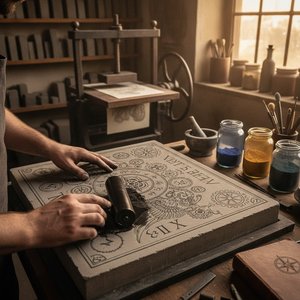
At the very heart of this beautiful medium lies a fundamental, eternal tension: the natural refusal of oil and water to mix. This scientific principle, known as immiscibility, is the true soul of the lithographic process. The alchemy begins when an artist applies a design to a prepared limestone or metal plate using greasy materials, such as oil-based crayons or inks. Through a meticulous chemical treatment involving a mixture of weak acid and gum arabic, the non-image areas of the stone are made hydrophilic, or water-attracting. When the stone is subsequently moistened, the water adheres only to these etched, untreated areas, creating a barrier that repels oil. Consequently, when an oil-based ink is rolled across the surface, it finds purchase only upon the original greasy drawing. This chemical romance allows for an unparalleled fidelity in reproduction, capturing the softest smudge of a crayon or the most delicate wash of ink, ensuring that the final print retains the raw, emotive energy of the artist's immediate, unmediated thought process.
From Limestone to Metal Plates: Evolution of the Lithographic Matrix
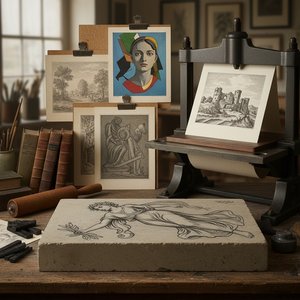 Lithography: A Historical Survey of Technique, Artistic Expression & Enduring Legacy
The Genesis of Lithography: Senefelder’s Innovation & Early Development History of printing Printing emerged as early as the 4th millennium BCE in the form of cylinder seals used by the Proto-Elamite and Sumerian civilizations to certify documents wr...
The history of lithography is a narrative of practical innovation born from necessity. The story began in 1796 with Alois Senefelder, a Bavarian playwright who sought an efficient, inexpensive way to reproduce his musical scores and plays. His discovery was not driven by grand artistic ambition but by the financial hardship of a creator needing a more accessible technique than the costly and time-consuming methods of engraving. While early lithography relied heavily on the use of heavy, porous slabs of Bavarian limestone, the evolution of technology eventually introduced metal plates and the revolutionary concept of the offset process. This transition from the venerable stone to flexible metal plates allowed for much greater scalability and speed. In modern commercial applications, this has evolved into offset lithography, where the inked image is transferred from a plate to a rubber blanket before reaching the final printing surface. For the professional decorator, recognizing this evolution helps in distinguishing between the traditional, textured character of fine art stone lithographs and the high-volume, precise efficiency of modern plate-based printing.
Artistic Versatility: Capturing Fluidity, Texture, and Fine Detail
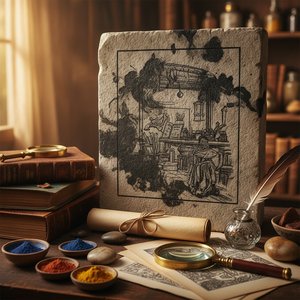 The Alchemy of Stone and Ink: A Collector's Guide to the Timeless Magic of Lithography
The Alchemy of Stone: Understanding the Planographic Soul of Lithography To truly appreciate the magic of a print, one must first understand the quiet, chemical miracle that occurs upon a slab of limestone. Unlike the aggressive carvings of woodcuts ...
One of the most compelling reasons for integrating lithographic works into high-end interior design is the medium's extraordinary capacity for gestural freedom. Because the artist is not fighting against the physical resistance of a carved block, they can engage in a subtle, surface-level dialogue with the stone itself. This allows for a level of fluidity that is rarely found in other traditional printmaking techniques. A lithograph can capture the heavy, impasto-like weight of a thick crayon stroke or the ethereal transparency of a light wash, much like a master's painting. For designers working on multi-panel installations or large-format murals, this versatility is indispensable. The ability to maintain the "breath" of the original drawing—the subtle textures and tonal ranges—ensures that even in a repeated edition, the artwork possesses a sense of life and movement. This makes lithography an ideal choice for creating cohesive, modern architectural looks across wide staircases or expansive lobby walls where visual depth and detail are paramount.
Commercial Applications: From Fine Art Editions to Modern Offset Printing
 Shunk Manufacturing Company
The Enduring Legacy of Shunk Manufacturing Company: Chromolithography and the Democratization of Art The name “Shunk Manufacturing Company” might not immediately conjure images of artistic mastery, yet this Philadelphia-based firm played a pivotal ro...
The legacy of lithography is inextricably linked to the democratization of art. In the 19th century, companies like the Shunk Manufacturing Company utilized chromolithography—a sophisticated, multi-colored process—to bring vibrant, high-quality imagery into the homes of the growing middle class. This era proved that lithographic technology could bridge the gap between ephemeral printed broadsides and enduring museum masterpieces. Today, this legacy continues in two distinct directions: the fine art edition and the commercial offset print. While the former focuses on limited runs of high-quality prints intended for collectors, the latter powers much of our modern visual culture. For procurement managers, it is vital to understand that while both utilize the principle of oil and water repulsion, the scale and intent differ. The professional must balance the desire for the unique, textured character of fine art lithographs with the logistical requirements of large-scale, cost-effective decor, ensuring that every piece contributes to the intended atmosphere of the space.
Procurement Guide: Identifying Authentic Lithographs for Large-Scale Projects
 Offset printing
Offset printing (offset lithography) is a common printing technique in which the inked image is transferred (or "offset") from a plate to a rubber blanket and then to the printing surface. When used in combination with the lithographic process, which...
When sourcing artwork for hotels, restaurants, or corporate environments, a professional must be able to navigate the nuances of print quality and medium. It is essential to distinguish between a true lithograph—a work where the image is created through the chemical process on stone or plate—and simple computer-printed posters. While modern offset printing is an evolution of this technology, the term "lithograph" in a fine art context implies a level of craftsmanship and intentionality that goes beyond mere reproduction. For large-scale projects, consider the following when evaluating your selection:
- Texture and Depth: Look for the presence of subtle surface variations and tonal richness that characterize traditional lithographic methods.
- Consistency in Editions: In multi-panel or group set paintings, ensure that the ink density and color saturation remain uniform across all pieces to maintain a cohesive architectural look.
- Durability and Longevity: For high-traffic hospitality areas, prioritize works produced with archival inks and stable substrates to prevent fading or degradation over time.
- Scale and Customization: Evaluate whether the chosen print can be scaled or "remixed" into larger formats, such as canvas wraps or murals, to fit specific wall dimensions.
By understanding these technical foundations, designers can confidently select artworks that offer both aesthetic prestige and operational reliability for their global projects. All your professional art needs, from custom reproductions to large-scale installations, are supported by the expertise found at ArtsDot.com.