
The Great Rebellion: Breaking Free from Enlightenment Logic
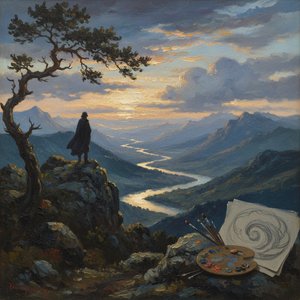 The Evocative Brushstroke: Exploring Emotion, Individuality & the Sublime in Romanticism's Artistic Landscape
The Dawn of Feeling: Romanticism's Rejection of Enlightenment Rationality The late 18th century witnessed a seismic shift in intellectual and artistic currents, a turning away from the cool precision of the Enlightenment towards a fervent embrace of ...
To understand the seismic shift of Romanticism, one must first envision the rigid, sunlit world that preceded it. For decades, European thought was anchored in the cool precision of the Enlightenment—an era that celebrated the measurable, the observable, and the strictly rational. It was a time of scientific inquiry and structured symmetry, where logic reigned supreme and the universe felt like a clockwork mechanism waiting to be decoded. However, as the Industrial Revolution began to reshape the landscape with burgeoning factories and crowded, alienating cities, this clinical order started to feel insufficient for capturing the true complexity of the human experience. A profound sense of spiritual discontent took root, prompting a fundamental re-evaluation of what it and meant to be human.
The birth of Romanticism was not merely an aesthetic alternative; it was a passionate rebellion against the perceived coldness of modernity. Influenced by thinkers like Jean-Jacques Rousseau, who championed subjectivity and argued that genuine understanding stems from personal feeling rather than objective analysis, artists began to reclaim the soul from the grip of pure intellect. This movement sought refuge in the past—particularly a reimagined medieval era characterized by chivalry and organic community—and in the untamed reaches of the human psyche. It was an era where the heart finally dictated the narrative, prioritizing intuition over instruction and embracing the shadows as much as the light.
The Sublime Aesthetic: Finding Beauty in Terror and the Infinite
The violent and terrifying images of nature conjured by Romantic artists recall the eighteenth-century aesthetic of the Sublime. stuns the soul ...
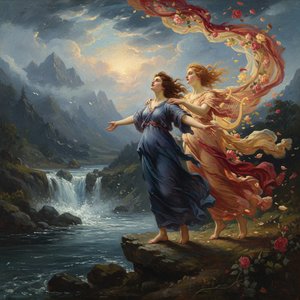
At the very core of the Romantic spirit lies the concept of the Sublime—that overwhelming, visceral sensation of awe mixed with a paralyzing sense of terror when confronted by the infinite. Unlike the classical pursuit of beauty through harmony and proportion, the Romantic artist sought to capture the sensational. The Sublime is found in the moment where the human ego dissolves against the backdrop of something much larger, more powerful, and utterly indifferent to our existence. It is an aesthetic that does not merely seek to depict beauty but aims to evoke emotion in its most raw and unadulterated forms.
This fascination with the irrational and the mysterious allowed artists to explore the profound vulnerability of the human condition. By embracing the chaotic, they invited viewers to experience the tension of standing on the precipice of the unknown. Whether through the depiction of a storm-tossed sea or the agonizing weight of a historical tragedy, the goal was to move the soul. This era prioritized the intensity of individual feeling, turning the canvas into a stage for spiritual yearning and the exploration of the vast, unpredictable universe that surrounds us.
Nature Unbound: The Untamed Landscapes of Friedrich and Turner
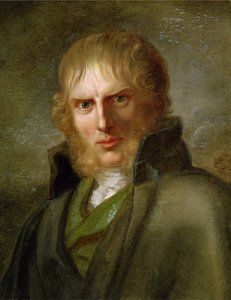 Caspar David Friedrich
A Solitary Vision: The Life and Art of Caspar David Friedrich Born in the Baltic port city of Greifswald in 1774, Caspar David Friedrich’s life was steeped in a melancholic atmosphere that would profoundly shape his artistic vision. His early years w...
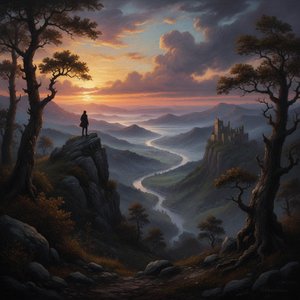
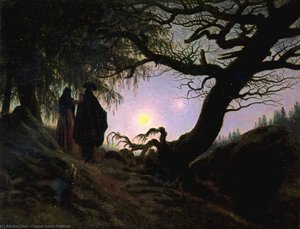
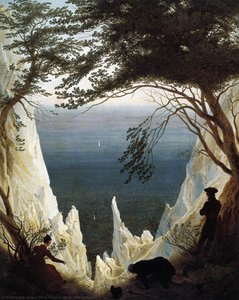
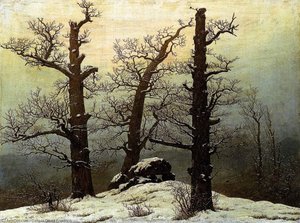
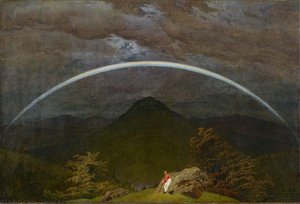
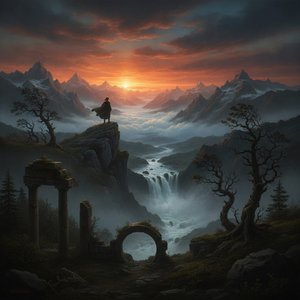
In the hands of masters like Caspar David Friedrich, nature ceased to be a mere backdrop and became a potent symbol of the divine and the mortal. Friedrich’s work, often steeped in a melancholic atmosphere, utilized landscapes to convey deep spiritual questioning. His paintings are characterized by an emphasis on the sublime, using elements such as ancient trees, towering mountains, and swirling fog to represent life’s cycles and the weight of history. A signature element of his technique was the use of Rückenfiguren—figures seen from behind—which served as a bridge, inviting the viewer to step into the scene and share in the contemplative, often lonely, experience of facing the infinite.
While Friedrich explored the introspective side of nature, others captured its sheer, kinetic power. The landscapes of this era moved away from meticulous, photographic detail toward an expressive language of light and atmosphere. Mountains were no longer just geological features; they were sacred spaces, revered and feared for their untamed strength. This period saw a shift where the physical world was viewed as a complex, living organism, a gateway to understanding both the human psyche and the eternal mysteries of the cosmos. The brushstrokes became more fluid, capturing the shifting mists of a riverbank or the dramatic light of a setting sun with a sense of profound reverence.
The Pulse of Passion: Delacroix and the Mastery of Motion
 Unleashing Emotion: A Sophisticated Guide to the Sublime Power of Romanticism Art
The Sublime and the Sensational: Defining the Romantic Spirit To understand the essence of Romanticism is to step away from the rigid constraints of reason and enter a realm where the heart dictates the narrative. Emerging as a profound reaction agai...
If Friedrich provided the soul of Romanticism, Eugène Delacroix provided its pulse. A titan of French Romanticism, Delacroix revolutionized the use of color and texture to create a sense of kinetic energy that feels almost palpable on the canvas. Moving away from the clean, controlled lines favored by his Neoclassical contemporaries, Delacroix utilized a more expressive brushwork that breathed life into the concept of movement. In masterpieces such as The Death of Sardanapalus, one witnesses a deliberate descent into chaos, where every stroke contributes to a narrative of tragic excess and overwhelming sensory input.
Delacroix’s ability to manipulate light and pigment allowed him to depict biblical and historical scenes with a new level of emotional intensity. His work embodies the Romantic fascination with the exotic, the dramatic, and the turbulent. Through his mastery of motion, he captured the very essence of the movement: the idea that art should not just be seen, but felt. The swirling compositions and vibrant palettes served to remind the viewer of the untamed power of human passion and the inescapable drama of existence.
Legacy of the Soul: How Romanticism Redefined Human Expression
--- title: Romanticism - Wikipedia author: Authority control databases url: https://en.wikipedia.org/wiki/Romanticism hostname: wikipedia.org sitename: Wikimedia Foundation, Inc. date: 2001-10-11 --- # Romanticism This article needs . (August 2025) |...
The legacy of Romanticism extends far beyond the 19th century, having fundamentally altered the trajectory of Western art. By elevating subjectivity, imagination, and the importance of individual experience, the movement paved the way for nearly every expressive movement that followed. It broke the shackles of rigid academic tradition, proving that the artist's internal landscape is just as significant as the external world. The movement’s emphasis on the power of raw emotion and the beauty found in the imperfect and the overwhelming continues to resonate in our contemporary understanding of creativity.
Today, we see the echoes of Romanticism in our fascination with the cinematic, the dramatic, and the deeply personal. It taught us that art is not merely an affair of form or a reproduction of reality, but a vehicle for profound spiritual connection. The movement’s celebration of the individual spirit and its reverence for the untamed natural world remain vital touchstones for anyone seeking to find meaning in the beautiful chaos of life.
At ArtsDot.com, we celebrate this enduring legacy of human creativity. Our mission is to make these profound historical moments accessible to a modern audience through exquisite, hand-painted reproductions. Whether you are drawn to the melancholic beauty of a Friedrich landscape or the vibrant drama of a Delacroix masterpiece, our master artists use traditional techniques on 100% cotton canvas to bring the soul of Romanticism into your home. We invite you to explore our vast library and discover a piece of history that speaks directly to your own emotional landscape.