
The Rejection of Reason: From Enlightenment Order to Romantic Emotion
 Capturing the Sublime: A Guide to Romantic Landscape Art & Its Emotional Power
The Rejection of Reason: The Intellectual Dawn of Romanticism The Power of Emotion: A Definitive Guide to the Sublime and Soulful Art of Romanticism The Rejection of Reason: The Intellectual Origins of Romanticism The Evocative Brushstroke: Exploring...
To truly appreciate the breathtaking vistas of the Romantic era, one must first understand the world that preceded it—a world defined by the cool, structured precision of the Enlightenment. For decades, European thought was anchored in the measurable and the observable, a period where logic, scientific inquiry, and mathematical symmetry celebrated the clarity of human reason. It was an age of light, yet it was a light that often felt clinical, leaving little room for the shadows of the human heart. As the Industrial Revolution began to reshape the continent with its burgeoning factories and increasingly crowded, alienable cities, a deep spiritual discontent took root among those who felt the pulse of something more profound.
The dawn of Romanticism was not merely an aesthetic shift; it was a passionate rebellion against this perceived coldness of modernity. Influenced by thinkers like Jean-Jacques Rousseau, who championed subjectivity and argued that genuine understanding stems from personal feeling rather than objective analysis, the movement sought to reclaim the soul from the grip of pure intellect. Artists began to turn away from the rigid social conventions and the mathematical perfection of Neoclassicism, seeking refuge in a reimagined past and in the untamed reaches of the human psyche. This was the birth of an era where passion and intuition were recognized as the true keys to understanding our existence, moving us toward a belief that beauty is far more than an affair of form—it is an evocative experience that stirs the very depths of our being.
The Art of the Sublime: Encountering Nature's Untamed Majesty
--- title: The Sublime in Crisis: Landscape Painting after Turner author: Alison Smith url: https://www.tate.org.uk/art/research-publications/the-sublime/alison-smith-the-sublime-in-crisis-landscape-painting-after-turner-r1109220 hostname: tate.org.u...
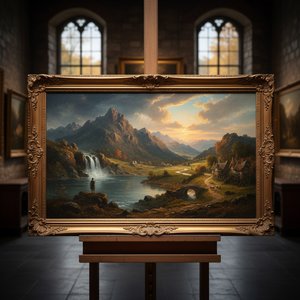
At the heart of this movement lies one of the most captivating concepts in art history: the sublime. Unlike mere beauty, which offers comfort and harmony, the sublime presents us with something much more formidable. It is found in the uncontrollable power, the unpredictability, and the cataclysmic extremes of the natural world. When we stand before a Romantic landscape, we are often confronted with the terrifying grandeur of a storm-tossed sea or the dizzying heights of an alpine peak. This encounter creates a unique emotional tension—a mixture of awe and fear, of insignificance and spiritual expansion.
The Romanticists viewed nature as an alternative to the ordered world of human industry. They sought to capture the drama of lightning strikes, the mystery of dense forests, and the overwhelming weight of ancient mountains. In these works, nature is never a passive backdrop; it is a living, breathing protagonist capable of both immense serenity and devastating destruction. This fascination with the untamed allowed artists to explore the limits of human endurance and the profound realization that, despite our technological progress, we remain subject to the magnificent, often frightening, whims of the natural universe.
Windows to the Soul: Landscapes as Mirrors of Human Intuition
 Landscape painting
Landscape painting, also known as landscape art, is the depiction in painting of natural scenery such as mountains, valleys, rivers, trees, and forests, especially where the main subject is a wide view—with its elements arranged into a coherent compo...
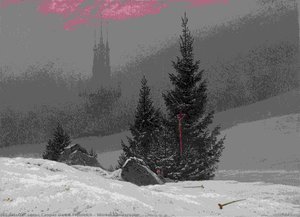
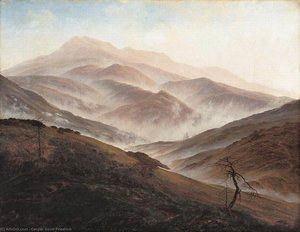
In the centuries prior to Romanticism, landscape painting was frequently relegated to a secondary role, serving as little more than a scenic stage for historical or mythological dramas. However, during this transformative period, the landscape surged into prominence, becoming the primary vessel for individual expression. The external world became a mirror for the internal landscape of the artist and the viewer alike. A lonely, mist-covered valley was no longer just a geographical location; it was a symbol of melancholy, solitude, and the quiet introspection of the human spirit.
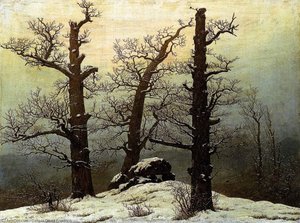
This shift allowed for a deeply personal form of storytelling through scenery. Artists utilized elements like twilight, shadows, and vast, empty horizons to evoke specific emotional resonances. The landscape became a language of symbols, where a single, ancient tree might represent resilience, or a crumbling ruin might serve as a poignant reminder of the passage of time and the transience of human achievement. By focusing on how a scene felt rather than just how it looked, Romantic painters bridged the gap between the physical world and the intangible emotions of the soul, inviting us to find our own reflections within the clouds and the crags.
Masters of Atmosphere: The Evocative Brushwork of Turner and Friedrich
 Romantic Landscapes: 10 Masterpieces for Your Home | ArtsDot
Introduction Imagine standing before a vista so breathtaking it stills your breath, a scene imbued with not just visual beauty but also a profound sense of emotion – the sublime power of nature, the weight of history, and the stirrings of the human s...
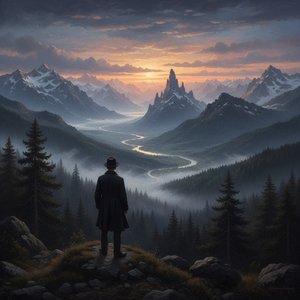
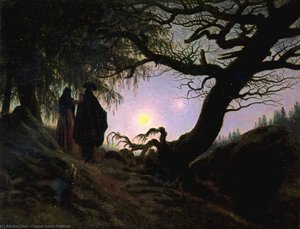
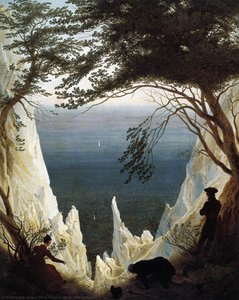
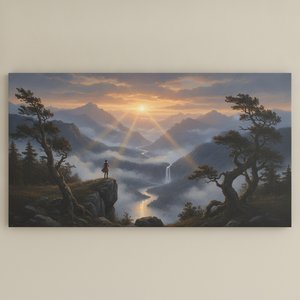
When we speak of the masters who defined this era, the names Caspar David Friedrich and J.M.W. Turner inevitably rise to the forefront, each approaching the landscape with a distinct yet equally soulful perspective. Friedrich, the quintessential German Romantic, often utilized a more contemplative and spiritual approach. His works, such as the iconic Wanderer above the Sea of Fog, frequently feature solitary figures gazing into vast, ethereal vistas. His technique relies on a profound sense of stillness and a mastery of light that suggests a divine presence within the natural world, inviting a quiet, meditative connection to the infinite.
In contrast, the British master J.M.W. Turner pushed the boundaries of the medium toward the very edge of abstraction. Turner was the poet of atmosphere, a painter who could dissolve solid forms into swirling vortexes of light, steam, and spray. His brushwork was energetic and transformative, capturing the kinetic energy of a tempest or the blinding brilliance of a setting sun. While Friedrich offered us the silence of the soul, Turner provided the roar of the elements. Together, these artists demonstrated the incredible versatility of the landscape as a medium for expressing the full spectrum of human experience, from the most delicate whisper of light to the most thunderous roar of the sea.
A Legacy of Feeling: How Romanticism Prefigured the Impressionist Light
--- title: Romanticism - The Metropolitan Museum of Art author: Kathryn Calley Galitz url: https://www.metmuseum.org/essays/romanticism hostname: metmuseum.org description: In Romantic art, nature—with its uncontrollable power, unpredictability, and ...
As we look back through the lens of art history, we can see how the seeds of Romanticism eventually blossomed into the luminous world of Impressionism. While the later movement would move away from the heavy drama and the pursuit of the sublime in favor of capturing fleeting moments of light and color, the fundamental connection remains: a devotion to the sensory experience of the world. The Romantic fascination with atmosphere, weather, and the emotional impact of light laid the essential groundwork for artists like Monet and Renoir to later explore the ephemeral beauty of a sun-drenched garden or a shimmering river.
The transition from the intense, often dark emotionality of the Romantics to the soft, light-drenched joy of the Impressionists represents a beautiful evolution in our relationship with nature. Yet, the core impulse remains unchanged—the desire to capture not just a literal depiction of scenery, but the very essence of an experience. Whether through the dramatic shadows of a Romantic storm or the delicate pastel hues of an Impressionist afternoon, these movements remind us that art is, and has always been, our most profound way of documenting the enduring dance between the world around us and the spirit within us.
At ArtsDot.com, we share this lifelong passion for the masters who captured the soul of the world. Our mission is to make these breathtaking moments of history accessible to every home. We specialize in exquisite, hand-painted oil reproductions that preserve the very texture and emotion of the original works. From the dramatic, atmospheric depths of a Turner to the delicate light of the Impressionists, our master artists use traditional techniques on fine cotton canvas to ensure that every brushstroke resonates with authenticity. Whether you are looking to adorn a grand hall with a multi-panel landscape or seeking a custom transformation of a personal memory, we invite you to explore our collection and bring the enduring majesty of art history into your own living space.