The Academy Blueprint: Decoding the Rules of Fine Art Mastery
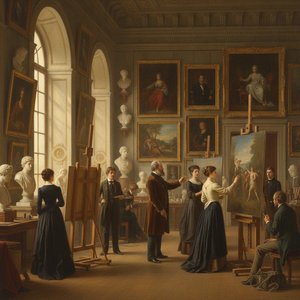
Greatness in the visual arts was never an accident; it was a calculated, disciplined architecture. To understand the heavy-hitting impact of the masters, one must look past the canvas and into the blueprint of the Academy. For centuries, institutions like the Royal Academy and the Academy of Fine Arts Vienna functioned as the ultimate gatekeepers of taste, establishing a rigorous curriculum that moved beyond mere talent into the realm of technical science. This was not just about learning to paint; it was about mastering a universal language of proportion, structure, and prestige. The Academy provided a framework where every stroke served a purpose, creating a standard of excellence that turned artists into legends. At its core, this blueprint relied on several non-negotiable pillars:
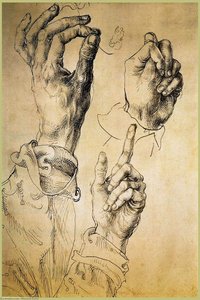
- The Mastery of Line: The foundational ability to use precise draughtsmanship to define form and space.
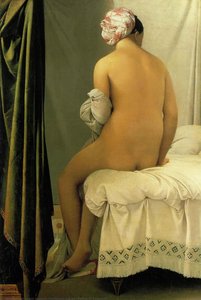
- Anatomical Precision: A deep, scientific understanding of the human figure to ensure realism and grace.
- Compositional Hierarchy: The strategic arrangement of elements to guide the viewer’s eye toward a central narrative or emotional peak.
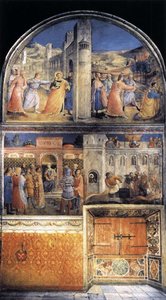
By adhering to these strictures, artists could create works that felt permanent, much like the architectural marvels they often depicted.
From Rococo Chaos to Neoclassical Order: The Great Aesthetic Shift
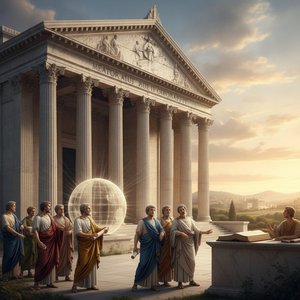 Neoclassicism Explained: The Enlightenment’s Return to Order, Reason, and Classical Grandeur
The Enlightenment's Aesthetic Response: Moving Beyond Rococo Excess Illuminating the Enlightenment: Art & Sociopolitical Context of the 18th Century The Rococo Spirit: Aristocratic Indulgence & Artistic Playfulness Wikipedia: Rococo Rococo, less comm...
To appreciate the power of the Academic style, you have've to understand the rebellion that birthed it. Before the era of order, the European art scene was dominated by the Rococo spirit—an era of aristocratic indulgence characterized by swirling pastel flourishes, asymmetrical whimsy, and a breathless preoccupation with the ornamental. It was an art of the salon: intimate, decorative, and often intentionally frivolous. However, as the intellectual currents of the Enlightenment began to surge, this perceived decadence faced a rigorous critique. Thinkers like Voltaire and Rousseau demanded a return to natural law and civic virtue, viewing the Rococo’s "unscripted energy" as a symptom of moral decay. This sparked a profound philosophical realignment. The world was moving away from the chaotic emotions of the moment toward something more permanent and disciplined. Neoclassicism emerged as the aesthetic response, stripping away the frivolous gold leaf to reveal a sanctuary of logic, clarity, and much-needed restraint. It was a visual reset that traded the "playful" for the "powerful."
The Pillars of Perfection: Anatomy, Light, and the Pursuit of Ideal Beauty
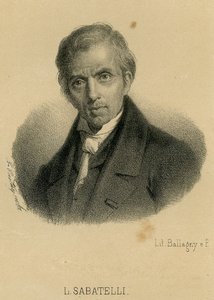 Luigi Sabatelli
Luigi Sabatelli: A Neoclassical Vision of Antiquity Luigi Sabatelli (1772-1850) stands as a pivotal figure in Italian neoclassicism, an artistic movement that sought to revive the grandeur and moral ideals of ancient Greece and Rome. Born in Florence...
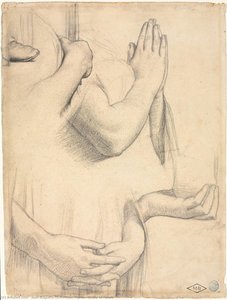
The true magic of the Academic tradition lies in its obsession with the technical details that define "perfection." This wasn't just about copying reality; it was about refining it through the lens of classical ideals. Artists like Luigi Sabatelli and John William Godward mastered the art of capturing the monumental and the exquisite simultaneously. They utilized a meticulous attention to anatomical precision and linear detail, often employing masterful hatching and pen-and-ink work to create depth. The pursuit of beauty was found in the interplay of light and texture—the way sunlight hits a marble bust or the way heavy silk drapes over a classical figure. This dedication to texture is something we still celebrate today in our hand-painted oil reproductions. When an artist works on 100% cotton canvas, they aren't just applying pigment; they are recreating that same historical pursuit of depth and tonal range. They use visible brushstrokes and specific oils, like safflower for whites to prevent yellowing, ensuring that the light captured in the painting remains as vibrant as it was in the original masterpiece. It is this technical rigor—the ability to render the tactile reality of stone, skin, and fabric—that gives Academic art its enduring, high-impact soul.
Legacy in Motion: How Academic Precision Drives Modern Visual Impact
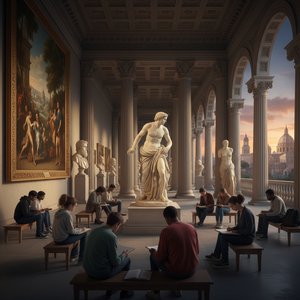 The Enduring Legacy of Classicism: Principles, Evolution & Influence in Western Art
The Foundations of Classicism: Ancient Greece & Rome Wikipedia: Classicism Classicism, in the arts, refers generally to a high regard for a classical period, classical antiquity in the Western tradition, as setting standards for taste which the class...
While some might see the Academy as a relic of the past, its DNA is actually embedded in the very fabric of modern visual culture. The principles of composition, hierarchy, and "the line" are the same tools used by today’s most impactful designers, illustrators, and even street artists. When we talk about "visual impact," we are talking about the ability to command attention through structured storytelling. The way a Renaissance master placed a figure to create tension is not so different from how a contemporary graphic artist uses negative space to create a punchy, high-energy design. This legacy of precision allows us to bridge the gap between the old world and the new. We see this in our ability to "remix" history—taking the light-drenched style of Monet or the thick, impasto textures of Van Gogh and applying them to modern subjects. The blueprint remains the same; only the subject matter has evolved. Whether it is a large-format mural for a luxury hotel or a custom portrait that transforms a personal milestone into a classical epic, the goal is still to use the rules of the masters to create something that feels timeless.
Remixing History: Bringing Classical Grandeur into the Contemporary Era
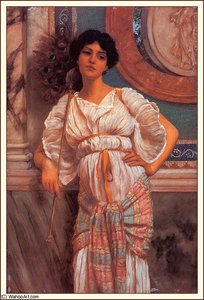 a classical beauty with a peacock fan
Admire 'A Classical Beauty,' a stunning Victorian Neo-Classical painting by John William Godward. Experience exquisite detail & timeless elegance. Hand-painted reproductions available.
We live in an era where technology and tradition collide to create something entirely new. At ArtsDot.com, we believe that art should be a living, breathing experience, not something locked behind museum glass. We take the profound reverence for antiquity found in Neoclassicism and inject it with contemporary energy. Our most exciting frontier is the intersection of tech and craft: using AI tools to reconstruct personal photos into Cubist or Surrealist masterpieces, which can then be commissioned as real, hand-painted oil canvases. This is the ultimate "period shift"—transforming a modern selfie into a 17th-century masterpiece in the style of Rembrandt. We offer the ability to customize every element, from color matching to combining people from different photos into one cohesive group portrait. It is about taking the high-impact blueprint of the masters and making it personal. Whether you are looking for an exquisite reproduction of a Godward classic or a bespoke creation that turns your pet into a historical general, we are here to ensure that the grandeur of the past continues to define the aesthetic of your future. For more insights into the world of fine art and curation, stay tuned to ArtsDot.com.



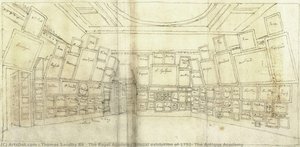 The Royal Academy annual exhibition of 1792: The Antique Academy