


The Digital Renaissance: Recognizing Gaming Aesthetics as Modern Fine Art
 Beyond Pixels and Play: The Aesthetic and Identity Significance of Gaming Art for the Modern Collector
The Rise of Gaming as Fine Art: From Pixels to Prestige From Digital Dreams to Tangible Treasures: The Rise of Modern Fan Art Explore the vibrant world of modern fan art! Discover its evolution, cultural impact, and growing market. From digital creat...
For centuries, the canon of art history has been defined by the heavyweights of established movements—the divine proportions of the Renaissance masters, the light-drenched landscapes of the Impressionists, and the jarring abstractions of the Modernists. Yet, a quiet revolution is unfolding within the digital realm, birthing worlds of breathtaking beauty that exist far beyond the traditional boundaries of the gallery. We are currently witnessing what many scholars call the Digital Renaissance, an era where the vibrant universes conjured by our favorite consoles are being reclaimed from the ephemeral nature of light and code. For decades, these interactive experiences were often dismissed by traditionalists as mere entertainment—a realm of fleeting pixels and disposable assets. However, beneath the surface of 8-bit sprites and complex polygon landscapes lies a burgeoning visual language that captures the collective imagination of a new generation.
This shift is not merely about technical prowess or hyperrealistic graphics; it is about recognizing the profound aesthetic and cultural significance embedded within these interactive narratives. From the haunting, melancholic landscapes found in indie titles to the nostalgic, saturated palettes of retro classics, gaming has developed a sophisticated visual vocabulary. As these digital worlds become more culturally pervasive, they are beginning to challenge our very definition of what constitutes a masterpiece. The artistry inherent in these creations is no longer viewed as merely functional; it is being recognized as a legitimate form of modern fine art, capable of provoking thought and eliciting deep emotional responses much like the works of the Old Masters.
From Pixels to Pigment: The Alchemy of Translating Code onto Canvas
 Pixels to Paint: The Artistic Evolution of Indie Game Universes into Hand-Painted Masterpieces
The Digital Renaissance: Recognizing Indie Game Aesthetics as Modern Fine Art Beyond Pixels and Play: The Aesthetic and Identity Significance of Gaming Art for the Modern Collector The Rise of Gaming as Fine Art: From Pixels to Prestige From Digital ...
The transition from a digital landscape to a physical masterpiece requires far more than mere technical skill; it demands a deliberate embrace of tradition that eschews algorithmic perfection for the nuanced touch of the human hand. When we speak of translating pixels to pigment, we are discussing a profound alchemy. In the digital realm, an image is composed of mathematical precision—fixed points of light and color rendered on a screen. To bring this into the physical world through oil on canvas is to breathe life into the static. It involves moving beyond the flat, backlit glow of a monitor to find depth, texture, and soul within the medium of paint.
This process is an exercise in artistic translation. An artist does not simply copy a screenshot; they interpret the essence of the digital world. This might involve utilizing the impasto technique—a method where paint is laid thickly upon the surface, making the brushstrokes or palette knife marks visible to the eye. Much like the expressive works of Vincent van Gogh, an impasto approach to a gaming landscape can provide a tactile energy that a screen simply cannot convey. By adding physical weight and texture to a digital scene, the artist creates a sense of permanence, transforming a fleeting moment of gameplay into a tangible treasure that possesses its own light, shadow, and physical presence.
Beyond the Screen: Curating a Gallery-Grade Gaming Sanctuary
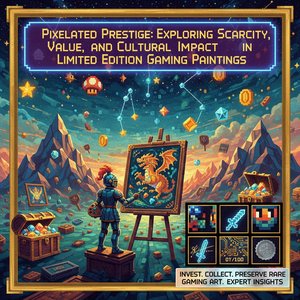 Pixelated Prestige: Exploring Scarcity, Value, and Cultural Impact in Limited Edition Gaming Paintings
The Genesis of Pixels: From In-Game Assets to Collectible Art Video game culture Video game culture or gaming culture a worldwide subculture formed by video game enthusiasts. As video games have grown more sophisticated, accessible, and popular over ...
For the modern collector, the goal is often to transcend the standard aesthetic of the "gaming setup." While posters and mass-produced prints have long been the staple of enthusiast decor, they often lack the prestige and depth required to create a truly sophisticated sanctuary. A room filled with glossy paper lacks the tonal range and character of an authentic oil painting. To curate a space that reflects true passion and connoisseurship, one must look toward pieces that offer prestige and scarcity. Integrating hand-painted reproductions allows a collector to bridge the gap between pop culture and high art, creating a room that feels less like a hobbyist's den and more like a private gallery.
True curation involves thoughtful placement and a consideration of architectural harmony. Imagine a wide, feature wall adorned with a multi-panel group set, where a single iconic landscape is split across three or five canvases, allowing the brushstrokes to flow seamlessly around the room's architecture. This approach creates a modern, cohesive look that commands attention. Whether it is the subtle elegance of a monochrome character study or the vibrant, sweeping vistas of an epic fantasy world, the presence of real oil on cotton canvas introduces a level of sophistication that elevates the entire environment, turning a personal space into a curated exhibition of one's identity and values.
The Tactile Revolution: Why Hand-Painted Impasto Outshines Digital Prints
 Impasto
Impasto is a technique used in painting where paint is laid on an area of the surface thickly, usually thick enough that the brush or painting-knife strokes are visible. Paint can also be mixed right on the canvas. When dry, impasto provides texture;...
In an age dominated by digital reproduction, there is a growing hunger for the tactile. This is the fundamental difference between a computer-printed poster and a handmade oil reproduction. A print, no matter how high the resolution, remains fundamentally flat; it is a layer of ink on paper, lacking the three-dimensional soul of real paint. In contrast, a hand-painted work offers a deeper tonal range and a physical texture that invites the viewer to lean in. When you look at an oil painting, you are seeing the history of its creation—the layers of gesso, the careful blending of pigments, and the final protective coat of Damar varnish that preserves the artist's intent.
The beauty of the handmade lies in its subtle imperfections and the "human" element. Each stroke of the brush carries a unique energy that an algorithm cannot replicate. This is particularly evident in works that utilize heavy textures, where the paint appears to be emerging from the canvas itself. For the discerning eye, these variations are not flaws but hallmarks of authenticity. Furthermore, the longevity of such pieces is vastly superior; while prints may fade or degrade under light, a professionally executed oil painting, treated with specific oils like safflower to prevent yellowing, is designed to endure for generations, becoming a lasting legacy within a home.
Legacy and Lore: Commissioning Custom Portraits of Iconic Heroes
 Brushstrokes & Boss Fights: The Mastery of Transforming Iconic Video Game Universes into Hand-Painted Fine Art
The Digital Renaissance: Bridging the Gap Between Pixels and Oil on Canvas Pixels to Paint: The Artistic Evolution of Indie Game Universes into Hand-Painted Masterpieces The Digital Renaissance: Recognizing Indie Game Aesthetics as Modern Fine Art Be...
Perhaps the most intimate way to celebrate gaming culture is through the medium of custom portraiture. Every great game is built upon the foundation of legendary characters—heroes whose journeys resonate with us long after the console is turned off. Through the service of custom commissions, collectors can move beyond existing art to create something entirely unique. This allows for a "remixing" of art history, where one might request a modern character to be painted in the dramatic, chiaroscuro style of Rembrandt, or perhaps reimagined with the soft, light-drenched aesthetics of Monet.
This level of personalization extends even to our own lives. The ability to transform personal milestones—a wedding photo, a pet portrait, or even a "period shift" of a modern selfie into a 17th-century masterpiece—allows the collector to weave their own narrative into the fabric of art history. By working with professional Project Coordinators and highly skilled artists from prestigious academies, the boundary between the player and the protagonist dissolves. The result is more than just decor; it is a bespoke piece of fine art that serves as a permanent monument to the stories, characters, and memories that define our lives.
This article was originally published on ArtsDot.com, where we celebrate the intersection of contemporary passion and classical mastery.