The Philosophy of the Masterpiece: Understanding Art History through Iconic Works
 The Work of Art in the Age of Mechanical Reproduction
"The Work of Art in the Age of Mechanical Reproduction" (German: Das Kunstwerk im Zeitalter seiner technischen Reproduzierbarkeit; 1935), by Walter Benjamin, is an essay of cultural criticism which proposes and explains that mechanical reproduction d...
To step into the world of art collecting is to embark on a profound dialogue with the past. For the student and the enthusiast alike, a masterpiece is never merely an object of aesthetic pleasure; it is a vessel of human experience, a frozen moment of cultural evolution. When we contemplate the luminous layers of Jan van Eyck or the visceral, emotive brushwork of Vincent van Gogh, we are not just observing pigment on canvas, but witnessing the very pulse of history. Every iconic work carries an
aura—a term famously explored by Walter Benjamin—which speaks to its unique presence in time and space. While the original works may reside behind the protective glass of the Louvre or the Upson, their stories remain accessible to those who seek to understand the movements that shaped our visual language.
The true collector understands that art is a narrative of tension and triumph. Consider the way Alexej von Jawlensky utilized the Expressionist movement to explore the raw depths of human isolation through his
Two Superimposed Oil Studies, or how Banksy utilizes the juxtaposition of traditional landscape aesthetics with modern stencil art in
Corrupted Oil Jerry to critique our contemporary ecological anxieties. By studying these canonical works, we learn to decode the language of color, form, and symbolism. This intellectual foundation is what transforms a mere decoration into a curated collection, allowing one to invite fragments of art history into their personal sanctuary, fostering a deep, scholarly connection with the masters who preceded us.
Bridging the Gap: The Artistic Value and Technique of Hand-Painted Reproductions
 The Enduring Appeal of Oil Reproduction: Bridging Access, Affordability & Artistic Appreciation
The Allure of the Masters: Why Oil Painting Reproduction Remains Popular For centuries, the power of oil paint has captivated artists and audiences alike. From the luminous layers of Jan van Eyck to the bold strokes of Vincent van Gogh, the medium’s ...
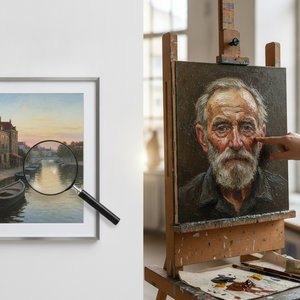
A common misconception among new collectors is that a reproduction is merely a secondary shadow of the original. However, there is a significant distinction between a mechanical print and a hand-painted oil reproduction. While digital prints may offer visual likeness, they lack the tactile soul of the medium. A true hand-painted reproduction, executed by artists holding degrees from prestigious Fine Arts academies, seeks to replicate the physical essence of the master’s touch. This involves the meticulous application of oil paint on 100% cotton canvas, where the depth of color and the interplay of light are achieved through traditional layering techniques rather than computer-generated pixels.
The magic of a high-quality reproduction lies in its texture. When an artist employs
impasto—the thick, visible application of paint—they recreate the three-dimensional energy found in works like those of the Expressionists. Unlike flat Giclée prints, which can lack character, hand-painted oils offer a richer tonal range and a palpable sense of movement. At ArtsDot.com, our artisans utilize specific chemistries, such as flexible gesso to prevent cracking and safflower oils to ensure whites remain pure and free from yellowing. This commitment to academic excellence ensures that the reproduction is not just a copy, but a continuation of the tradition of artistic reverence, offering a window into the sublime beauty of the natural world and the human spirit.
Curating Your Space: A Guide to Selecting Movements, Scales, and Color Palettes
 Refining Oil
Refining Oil by Charles Webster Hawthorne: A Portrait of Coastal Collaboration The painting “Refining Oil” by Charles Webster Hawthorne is more than just an image; it’s a distillation of New England Luminism—a movement dedicated to capturing the subl...
Curating a collection requires a delicate balance between personal passion and architectural harmony. For the burgeoning collector, selecting a piece is an exercise in interior design as much as art history. One must consider how the movement of a painting interacts with the atmosphere of a room. A work rooted in New England Luminism, characterized by its atmospheric perspective and soft tonal gradations, might bring a sense of tranquil light to a sun-drenched study. Conversely, a bold, multi-panel contemporary arrangement can serve as a modern architectural statement in a wide hallway or grand staircase.
Color palette is the silent conductor of a room's emotional tone. A collector might choose to browse by specific color themes, seeking the warm ochres and siennas of a classical landscape to complement earth-toned furnishings, or perhaps opting for the striking, defiant reds found in Expressionist works to create a focal point. Scale is equally vital; large-format murals and frescoes can transform a hotel lobby or a private residence into a cathedral of culture, while smaller, framed studies offer intimate moments of contemplation. By utilizing professional art consultations, collectors can even digitally "place" potential works on their walls, ensuring that the chosen masterpiece harmoniously integrates with their existing aesthetic.
Beyond the Canvas: Customizing History through 'Period Shifts' and Stylistic Remixes
 Oil painting
Oil painting is a painting method involving the procedure of painting with pigments combined with a drying oil as the binder. It has been the most common technique for artistic painting on canvas, wood panel, or copper for several centuries. The adva...
One of the most exhilarating frontiers in modern collecting is the ability to reimagine history through customization. We are no longer bound by the rigid boundaries of what was painted centuries ago; we now possess the tools to "remix" the past. This allows for a breathtaking intersection of technology and tradition. Through our advanced digital services, a collector can request a
Period Shift, where a contemporary photograph is transformed into a 17th-century masterpiece in the style of Rembrandt, or perhaps reimagined with the swirling, energetic impasto of Van Gogh.
This creative freedom extends to the very composition of the art itself. The modern collector can commission group portraits that blend individuals from different eras or even use AI tools to reconstruct personal memories into Cubist or Surrealist forms, which are then meticulously hand-painted by a human artist onto real canvas. This process removes the uncertainty of customization through professional digital mockups, allowing for unlimited revisions until the vision is perfect. It is an era where art history becomes a living, breathing medium, capable of reflecting not just the triumphs of the past, but the personal milestones and identities of the present.
Preservation and Provenance: Ensuring the Longevity of Your Art Collection
 Acrylic painting techniques
Acrylic painting techniques are different styles of manipulating and working with polymer-based acrylic paints. Acrylics differ from oil paints in that they have shorter drying times (as little as 10 minutes) and are soluble in water. Since acrylic p...
To collect art is to become a steward of beauty, a responsibility that requires knowledge of preservation. The longevity of an oil painting depends heavily on the chemistry of its creation and the environment in which it resides. To protect your investment, it is essential to understand the importance of materials; for instance, the use of Damar varnish serves as a vital shield against dust, moisture, and atmospheric pollutants. Collectors should also be mindful of placement, avoiding direct sunlight and utilizing acid-free matting to create an air gap between prints and glass, thereby preventing the degradation of pigments over decades.
Furthermore, true collecting involves an appreciation for the logistics of acquisition and the integrity of the artwork's journey. Whether you are acquiring a bespoke reproduction or participating in a global auction for a collectible piece, understanding the provenance and the care taken during transit is paramount. From the use of reinforced, double-walled boxes for framed pieces to the specialized industrial tubes for rolled art, the goal is to ensure that the artwork arrives in a state of pristine perfection. As you build your collection, remember that every brushstroke is a testament to craftsmanship, and every well-preserved piece is a legacy prepared for future generations to admire.
For more information on acquiring museum-quality reproductions or to explore our curated collection of masterpieces, visit ArtsDot.com.