
Introduction
To enter the Kunsthistorisches Museum in Vienna is to step into a grand architectural dialogue between the splendor of the Habsburg Empire and the eternal pulse of human creativity. As you cross the threshold of Gottfried Semper’s monumental masterpiece, the air seems to thicken with the weight of centuries. This is not merely a museum; it is a palace of echoes, where the Roman-inspired grandeur of the halls serves as a stage for the most profound achievements of Western civilization. Every corridor and rotunda was designed to breathe alongside its collection, creating a sanctuary where the triumphs of the Renaissance, the drama of the Baroque, and the mysteries of antiquity converge.
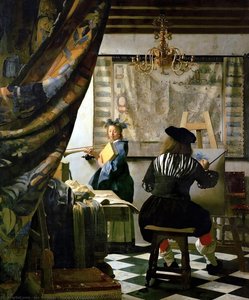
The treasures housed within these walls—ranging from the intimate, light-drenched canvases of the Dutch Masters to the imposing, divine presence of High Renaissance icons—represent more than just historical milestones. They are windows into the very evolution of the human soul. When we stand before a Vermeer or a Rembrandt in this sacred space, we are not just observing paint on canvas; we are witnessing an obsessive pursuit of truth, light, and emotion that remains strikingly relevant in our modern, fragmented world. These works continue to resonate because they capture the universal: the quietude of a single moment, the terrifying beauty of mortality, and the transcendent grace of the divine.
In the pages that follow, we shall embark on a curated journey through this vast, luminous treasury. We have selected twenty-five essential masterpieces that define the spirit of the Kunsthistorisches Museum—works that demand your attention, stir your intellect, and invite you to lose yourself in the artistry of the ages. Whether you are a seasoned scholar or a curious traveler, let these works guide you through the heart of Vienna’s artistic soul.
Adoration of the Trinity (Landauer Altar) - Albrecht Dürer
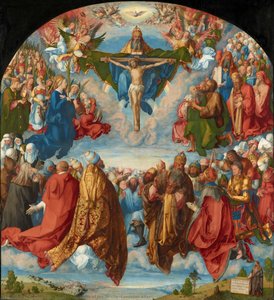 Adoration of the Trinity (Landauer Altar) - Albrecht Dürer
In Albrecht Dürer’s Adoration of the Trinity , a profound sense of regal gold and luminous warmth dominates the canvas, establishing an atmosphere of divine majesty and eternal peace. This masterful use of light and gilded tones is precisely why this monumental work remains one of the top 25 artworks in Kunsthistorisches Museum, Vienna . Dürer moves beyond Gothic heaviness, using a vibrant, sun-drenched palette to bridge the gap between the earthly Nuremberg and the celestial realm. The interplay of rich pigments and ethereal light creates a sensory experience that feels both monumental and intimate.
For the discerning collector, this specific color scheme offers unparalleled inspiration for interior curation. The warm, amber-hued light of the Landauer Altar can be used to anchor a dining room or study, providing an emotional foundation of stability and grandeur. Whether you are admiring the original or seeking a hand-painted oil reproduction to bring this historical brilliance into your home, Dürer’s ability to manipulate light serves as a timeless guide for creating spaces filled with dignity and warmth.
Portrait of a Young Venetian Woman - Albrecht Dürer
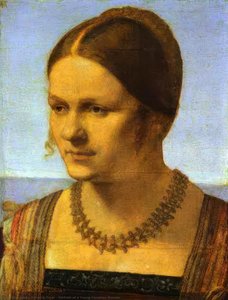 Portrait of a Young Venetian Woman - Albrecht Dürer
In the Portrait of a Young Venetian Woman by Albrecht Dürer, a profound sense of warmth is established through a palette dominated by deep ochres, rich golds, and soft umbers. These earthy tones create an atmosphere of quiet melancholy and timeless grace, setting a mood of introspective stillness that captivates anyone wandering through the Kunsthistorisches Museum, Vienna. This mastery of light and color—bridging Northern European precision with the atmospheric softness of the Venetian school—is precisely why this work remains one of the top 25 artworks in the museum's prestigious collection.
For the discerning collector, integrating a high-quality oil reproduction of this masterpiece into a modern interior can transform a room's emotional landscape. The painting’s warm, diffused lighting and organic textures serve as an exquisite anchor for a dining room or study, providing a sophisticated focal point that evokes classical elegance. Whether you are drawn to the subtle modeling of the subject's skin or the rich, layered shadows, this piece offers a way to curate a space defined by historical depth and serene, academic beauty.
Peasant wedding - Pieter Bruegel the Elder
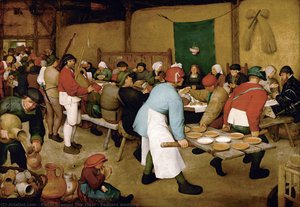 Peasant wedding - Pieter Bruegel the Elder
In the crowded, boisterous halls of the Kunsthistorisches Museum, few works pulse with as much raw, human vitality as Pieter Bruegel the Elder’s Peasant Wedding . To stand before this 1568 masterpiece is to be swept into a whirlwind of 16th-century Flemish life. Bruegel does not merely depict a feast; he composes a symphony of social chaos, where the earthy palette of ochre, muted reds, and deep browns anchors a scene teeming with movement.
The light in this work does not simply illuminate the rustic interior; it breathes life into the textures of rough wooden beams, coarse linen aprons, and the glint of humble pottery. Every brushstroke serves to guide your eye through the dense, overlapping figures, capturing the profound joy and communal spirit of a celebration frozen in time. It is a masterful study of Northern Renaissance naturalism, finding monumental dignity in the everyday. For those seeking to bring this sense of historical warmth into a modern space, our hand-painted oil reproductions capture every meticulous detail and tactile impasto stroke, allowing this window into the past to become a vibrant centerpiece in your own collection.
Summer 1 - Giuseppe Arcimboldo
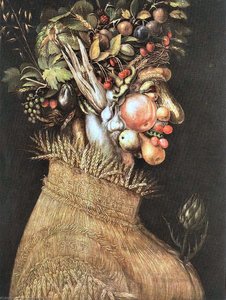 Summer 1 - Giuseppe Arcimboldo
To encounter Giuseppe Arcimboldo’s Summer 1 within the halls of the Kunsthistorisches Museum is to witness a profound dissolution of boundaries between the human form and the natural world. As part of his celebrated series created for the Habsburg court, this Mannerist marvel defies traditional portraiture; here, the face is not rendered in flesh, but through a meticulous, surreal assembly of ripe plums, heavy grapes, and sun-drenched grains. The painting serves as a visual symphony of the harvest, where the textures of organic life—the smooth skin of fruit and the rough stalks of wheat—coalesce into a singular, enigmatic identity.
Beyond its whimsical appearance, the work carries a poignant philosophical weight, reflecting on the cyclical nature of life and the inevitable decay that follows seasonal abundance. In an era increasingly preoccupied with the relationship between humanity and ecology, Arcimboldo’s vision remains strikingly modern, offering a precursor to contemporary surrealism. For those seeking to bring this sense of intellectual wonder into their own collections, our hand-painted oil reproductions capture every intricate detail and vibrant hue of this masterpiece, preserving its historical soul for the modern home.
The Hunters in the Snow (Winter) - Pieter Bruegel the Elder
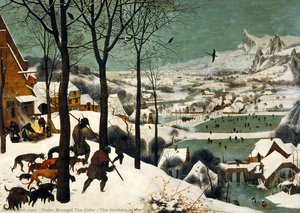 The Hunters in the Snow (Winter) - Pieter Bruegel the Elder
In Pieter Bruegel the Elder’s The Hunters in the Snow , the light does not merely illuminate; it defines the very atmosphere of the Little Ice Age. The artist employs a masterful, diffused light characteristic of an overcast winter day, where soft, cool tones of grey, blue, and bone-white merge to create a palpable sense of chill. This subtle command of illumination avoids harsh shadows, instead using a delicate atmospheric perspective that allows the distant, hazy mountains to recede into a pale horizon, securing this work's prestigious place among the top 25 artworks in the Kunsthistorisches Museum, Vienna.
The way light catches the textured snowdrifts and the weary silhouettes of the hunters creates a profound emotional depth, capturing the resilience of human life amidst environmental hardship. For the modern collector, owning a high-quality, hand-painted oil reproduction of this masterpiece brings more than just history into a room; the visible brushstrokes and the rich, tonal range of the oil pigments allow Bruegel’s wintry light to cast a sophisticated, tranquil glow across a contemporary wall, adding an unparalleled layer of museum-grade luxury to any interior.
The Tower of Babel - Pieter Bruegel the Elder
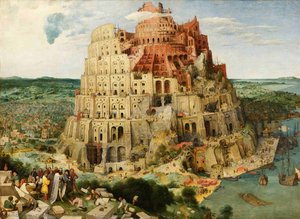 The Tower of Babel - Pieter Bruegel the Elder
To possess a study of The Tower of Babel by Pieter Bruegel the Elder is to invest in a profound legacy of human narrative and unparalleled taste. As one of the crown jewels within the Kunsthistorisches Museum, Vienna, this 1563 masterpiece stands as a titan among the top 25 artworks in the museum's collection, commanding immense historical prestige and market reverence. Bruegel’s meticulous Northern Renaissance technique—characterized by earthy ochres, deep shadows, and an almost dizzying architectural complexity—captures the frantic energy of human hubris attempting to scale the heavens.
The painting is a sensory marvel; one can almost hear the clatter of scaffolding and feel the weight of every stone being hauled toward an impossible height. Its layered glazes create a luminous, atmospheric depth that draws the viewer into a world of divine judgment and monumental ambition. For the discerning collector, bringing a high-quality, hand-painted oil reproduction of this work into a modern luxury interior provides more than mere decoration; it introduces an unparalleled aesthetic authority and a timeless conversation piece that anchors a room with historical gravity and intellectual depth.
Judith with the head of Holofernes - Lucas Cranach the Elder
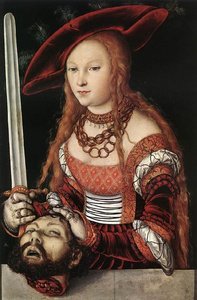 Judith with the head of Holofernes - Lucas Cranach the Elder
While many view the biblical tale of Judith as a mere spectacle of violence, Lucas Cranach the Elder utilized this 1530 masterpiece to navigate the treacherous political waters of Reformation Germany. As a close confidant of Martin Luther, Cranach imbued the figure of Judith with a chilling, stoic composure that mirrored the era's spirit of religious resistance against tyranny. In this pivotal work among the top 25 artworks in Kunsthistorisches Museum, Vienna , the artist achieves a profound psychological tension; the warmth of Judith’s radiant skin and the rich, crimson drapery contrast sharply with the grim, textured reality of Holofernes’ severed head.
The technical brilliance lies in his Northern Renaissance precision—the way light catches the fine lines of her gown, creating a sense of solemn beauty amidst carnage. This mastery of dramatic lighting and symbolic depth offers more than historical insight; it provides a focal point of intellectual gravity. Displaying such a powerful study of resolve and historical weight can transform a modern home office or study into a space of profound focus and sophisticated contemplation.
Lucretia - Paolo Veronese
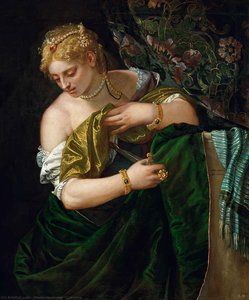 Lucretia - Paolo Veronese
While many associate the Venetian Renaissance with grand, sprawling feasts, Paolo Veronese’s 1580 masterpiece, Lucretia , achieves its power through a profound, localized intimacy. Within the hallowed halls of the Kunsthistorisches Museum, Vienna, this portrait stands as a testament to the artist's ability to compress the grandeur of Venice into a single, soulful gaze. Veronese utilizes a masterful application of chiaroscuro , where soft, diffused light dances across heavy, opulent silks and intricate jewelry, emerging from a dark, enigmatic background that suggests a world of hidden emotion.
The technical brilliance lies in his layering; through meticulous glazing, he captures the tactile weight of luxurious fabrics and the delicate, melancholic contours of the subject's face. This painting is not merely a depiction of wealth, but an exploration of dignity amidst inner turmoil. For the modern collector, bringing such a work into a private study or home office provides more than just decoration; it introduces a sense of historical gravity and intellectual depth. Much like the focused ambition required to execute such fine detail, a high-quality oil reproduction of this Venetian treasure can cultivate an atmosphere of sophisticated contemplation and enduring prestige in any professional space.
Christ Carrying the Cross - Pieter Bruegel the Elder
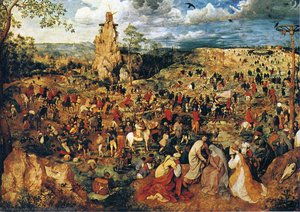 Christ Carrying the Cross - Pieter Bruegel the Elder
To stand before Christ Carrying the Cross by Pieter Bruegel the Elder is to be swept into a whirlwind of 16th-century Flemish life, where the divine and the mundane collide in a breathtaking display of Mannerist tension. As one of the most profound highlights among the top 25 artworks in Kunsthistorisches Museum, Vienna, this 1564 masterpiece transcends simple religious iconography. Bruegel does not merely depict a biblical event; he constructs a dense, panoramic tapestry of human emotion. The composition is a dizzying labyrinth of figures—some mourning, others indifferent or even mocking—set against a backdrop of earthy ochres, deep reds, and atmospheric blues.
The artist’s meticulous brushwork captures the heavy textures of fabric and the chaotic movement of the crowd, creating a sense of overwhelming density. Through sharp angles and dramatic light, Bruegel invites us to witness the universality of suffering and the complexity of faith. This painting remains a cornerstone of the museum's collection because it transforms a historical moment into a timeless reflection on the human condition, offering a powerful presence that continues to command any space it inhabits.
Pathway in Monet's Garden at Giverny - Claude Monet
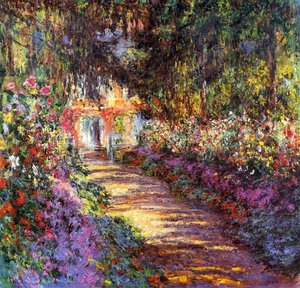 Pathway in Monet's Garden at Giverny - Claude Monet
In Pathway in Monet's Garden at Giverny , Claude Monet achieves a breathtaking mastery of light, where the sun does not merely illuminate the scene but seems to dissolve the very boundaries of form. As one wanders through this selection of the top 25 artworks in 'Kunsthistorisches Museum, Vienna', this 1902 masterpiece stands out for its ability to capture the ephemeral glow of a late afternoon. The light filters through lush foliage in a rhythmic dance of gold, pink, and violet, creating a soft, dappled effect that breathes life into every thick, impasto brushstroke.
Monet’s command over this atmospheric illumination was revolutionary, moving away from rigid structure toward a sensory experience of pure color. This interplay of light and shadow creates a profound sense of depth and tranquility, making the garden feel like an immersive sanctuary. For the discerning collector, owning a high-quality oil reproduction of this work allows one to bring that same luminous energy into a modern interior. The visible texture and vibrant tonal range of a hand-painted canvas can add an unparalleled layer of luxury and sophisticated warmth to any contemporary wall.
Miracle of St. Ignatius of Loyola - Peter Paul Rubens
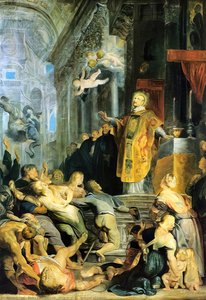 Miracle of St. Ignatius of Loyola - Peter Paul Rubens
To stand before Peter Paul Rubens' Miracle of St. Ignatius of Loyola is to be swept into a whirlwind of divine fervor and human desperation. The canvas vibrates with the raw energy of the Counter-Reformation, capturing that breathless moment where the earthly and the celestial collide. Rubens employs his signature Baroque mastery—dramatic chiaroscuro, swirling compositions, and a rich, warm palette of golds and deep reds—to guide the eye toward the central figure of sanctity amidst a sea of emotional chaos.
This work earns its place among the top 25 artworks in the Kunsthistorisches Museum, Vienna, not merely for its scale, but for its profound ability to evoke awe through movement and light. It is a masterclass in storytelling through paint. For those seeking to capture this same sense of grandeur and theatrical beauty within their own interiors, our hand-painted oil reproductions offer a way to bring the museum experience home. Each stroke on our 100% cotton canvas preserves the tactile depth and vibrant emotional resonance that makes Rubens' legacy an eternal inspiration.
Children's Games - Pieter Bruegel the Elder
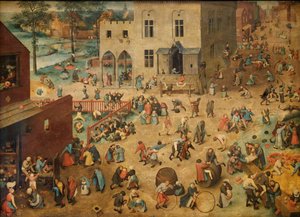 Children's Games - Pieter Bruegel the Elder
A symphony of laughter and movement, Children's Games by Pieter Bruegel the Elder captures a world where time seems to stand still amidst the joyous chaos of 16th-century Flemish life. This masterpiece earns its place among the top 25 artworks in the Kunsthistorisches Museum through its unparalleled ability to document the human spirit; it is not merely a painting, but a panoramic window into the innocence of childhood and the social cohesion of a community.
Bruegel’s Northern Renaissance mastery is evident in every meticulous detail, from the earthy ochres and vibrant reds of the village attire to the complex network of figures engaged in hoop rolling and stilt walking. The work serves as a profound symbol of social harmony, where the vitality of play mirrors the stability of civic life. This enduring emotional power makes the piece a timeless inspiration for modern living. By choosing a high-fidelity oil reproduction, you can bring this transformative presence into your own home or office, infusing your personal gallery with the warmth, history, and exuberant energy of Bruegel’s legendary vision.
Stormy Landscape - Peter Paul Rubens
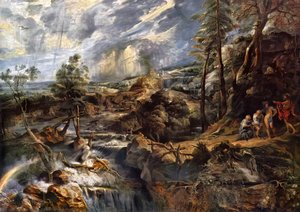 Stormy Landscape - Peter Paul Rubens
To stand before Peter Paul Rubens’ Stormy Landscape is to witness the raw, unbridled pulse of the Baroque era. Painted in 1625, this monumental work transcends mere scenery; it is a visceral encounter with the sublime. Rubens masterfully orchestrates a symphony of chaos and grace, where a cascading waterfall thunders over rugged cliffs beneath a tumultuous, darkening sky. Through his legendary use of chiaroscuro , light pierces through heavy clouds to illuminate figures caught in a moment of profound spiritual drama, their vibrant garments contrasting against the earthy, textured terrain.
The painting is a masterclass in movement, utilizing thick, expressive impasto brushstrokes to give life to the churning water and windswept foliage. A subtle rainbow emerges—a symbol of divine promise amidst the tempest—inviting deep contemplation on human resilience. Owning a piece of this legacy isn’t merely a purchase; it is an inheritance of taste. At ArtsDot.com, we allow you to bring this lineage into your own home through our museum-grade, hand-painted oil reproductions, capturing every dramatic shadow and luminous highlight of Rubens' incomparable genius.
Susanna and the Elders - Jacopo Tintoretto
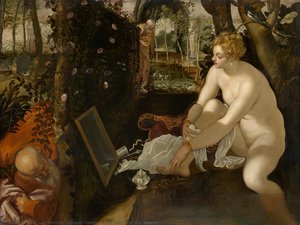 Susanna and the Elders - Jacopo Tintoretto
To stand before Jacopo Tintoretto’s Susanna and the Elders is to feel the sudden, sharp intake of breath that accompanies a moment of profound vulnerability. The air in the gallery seems to thicken with the tension of 1557, as the Venetian master, known as Il Furioso , orchestrates a dramatic collision between innocence and predatory intent. Through his signature use of chiaroscuro, light dances across Susanna’s soft, luminous skin, contrasting painfully against the shadowed, grasping presence of the elders lurking within the lush, overgrown foliage.
This masterpiece earns its place among the top 25 artworks in the Kunsthistorisches Museum, Vienna, not merely for its technical brilliance, but for its ability to provoke deep moral reflection. Tintoretto’s swift, energetic brushwork captures a fleeting sense of crisis, turning a biblical narrative into a visceral human experience. Such profound emotional depth reminds us that great art is never static; it breathes life into our modern spaces. Bringing a high-quality oil reproduction of this Venetian treasure into your home allows you to surround yourself with this timeless dialogue of light and shadow, inviting a sense of historical gravity and contemplative beauty into your daily environment.
Jupiter and Io - Antonio Allegri da Correggio
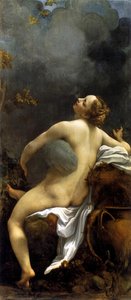 Jupiter and Io - Antonio Allegri da Correggio
In the hallowed halls of the Kunsthistorisches Museum, few works command the senses as viscerally as Jupiter and Io by Antonio Allegri da Correggio . This 1531 masterpiece is a breathtaking study in High Renaissance sensuality and the precursor to Baroque theatricality. The painting captures a moment of divine, clandestine encounter: the nymph Io, enveloped in a soft, luminous glow, reacts to the god Jupiter, who has descended upon her in the form of a swirling, atmospheric cloud.
Correggio’s technical mastery is evident in his use of chiaroscuro , where dramatic shadows melt into tender, fleshy highlights, creating a three-dimensional vitality that seems to breathe within the frame. The fluid, organic lines and the soft, almost tactile rendering of skin evoke a profound sense of intimacy and mystery. To possess a reproduction of this work is to invite a transformative energy into your home; it is not merely an addition to a wall, but a gateway to the sublime. Whether through a hand-painted oil reproduction or a museum-quality print, this piece serves as a timeless focal point for any collector seeking to surround themselves with the profound emotional depth of the Italian Renaissance.
The Large Forest - jacob isaackszoon van ruisdael
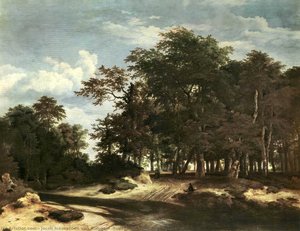 The Large Forest - jacob isaackszoon van ruisdael
In The Large Forest by Jacob van Ruisdael, there is a presence that follows you—not with judgment, but with profound understanding . This isn’t merely a landscape; it is a mirror reflecting the quiet resilience of the natural world. As one of the most significant works within the Kunsthistorisches Museum's collection, it captures the very essence of the Dutch Golden Age through a masterfully rendered woodland scene.
The composition invites you to wander along a winding path, where muted greens and earthy browns dissolve into an atmospheric perspective that feels almost tactile. Ruisdael’s technique—utilizing layered glazes and soft, diffused light—creates a somber yet serene mood, where a solitary figure serves as a poignant reminder of humanity's place within the vastness of nature. The textures of rough bark and soft foliage evoke a sense of peaceful solitude that lingers long after you turn away.
Imagine bringing this sense of natural elegance into your own home. Whether through a museum-quality hand-painted oil reproduction or a detailed Giclée print, owning such a masterpiece allows the tranquil majesty of the Dutch masters to become a permanent, contemplative focal point in your personal space.
Madonna del Rosario (detail) - Caravaggio
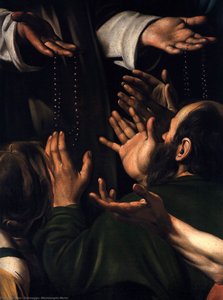 Madonna del Rosario (detail) - Caravaggio
In the Madonna del Rosario (detail) by Caravaggio, light does not merely illuminate; it pierces through a profound, velvet darkness to reveal the very essence of divinity meeting humanity. As one of the most arresting highlights among the top 25 artworks in the Kunsthistorisches Museum, Vienna, this masterpiece stands as a definitive pillar of the Baroque era. Caravaggio utilizes his signature tenebrism —a dramatic interplay of intense shadows and radiant focal points—to sculpt the faces of the Virgin and Child with startling, tactile realism.
The textures of the fabric and the weathered skin of the onlookers breathe life into the canvas, creating a sensory experience that feels both ancient and immediate. This mastery of chiaroscuro does more than tell a religious story; it creates an atmosphere of quiet, heavy tension that continues to captivate the modern soul. For the discerning collector, bringing a high-quality oil reproduction of this work into a contemporary space introduces a sophisticated depth, where the dramatic shadows provide a timeless anchor of elegance and intellectual gravity to any curated interior.
The Fight between Carnival and Lent - Pieter Bruegel the Elder
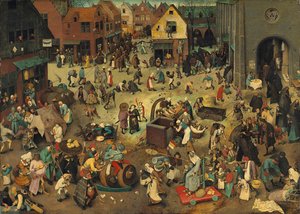 The Fight between Carnival and Lent - Pieter Bruegel the Elder
In The Fight between Carnival and Lent , the lines of Pieter Bruegel the Elder are not merely drawn; they are choreographed . This is not a simple composition; it is a dance frozen in time , where the chaotic energy of a Flemish town square finds a profound, rhythmic harmony. As you stand before this 1559 masterpiece in the Kunsthistorisches Museum, Vienna, you witness a visual dichotomy: on one side, the boisterous, colorful indulgence of Carnival; on the other, the somber, ascetic piety of Lent.
Bruegel masterfully weaves a tapestry of human experience, using a panoramic "world landscape" to guide your eye through drunken revelry and solemn prayer. The painting breathes with the tension between earthly pleasure and spiritual discipline. What if your own living room could hold that same exquisite balance? If you seek to bring this sense of historical rhythm to your home, our hand-painted oil reproductions capture every textured brushstroke and symbolic detail of Bruegel’s genius, allowing these legendary moments of the Northern Renaissance to breathe life into your walls.
Kardinal Niccolò Albergati (?) - Jan van Eyck
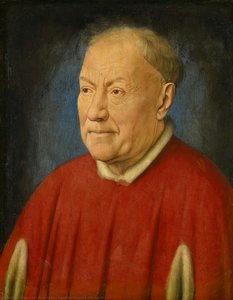 Kardinal Niccolò Albergati (?) - Jan van Eyck
In the Kardinal Niccolò Albergati (?) by Jan van Eyck, we encounter a masterclass in structural equilibrium. The composition is anchored by the powerful, central verticality of the Cardinal, whose dignified presence is framed against a deep, ethereal blue background. This stark contrast between the vibrant, saturated reds of his ecclesiastical robes and the infinite void behind him creates a geometric stability that feels both monumental and serene. Van Eyck utilizes a precise balance of shapes—the soft curves of the cardinal's hood juxtaposed against the sharp, meticulous folds of his drapery—to guide the viewer’s eye toward the subject's piercing gaze.
This internal harmony possesses an enduring appeal that resonates within the top 25 artworks in Kunsthistorisches Museum, Vienna. There is a profound connection to modern minimalist design found here; the reduction of the background to a singular, atmospheric plane mirrors contemporary aesthetics that value clarity and negative space. For collectors seeking to bring this sense of timeless perfection into a modern home, our hand-painted oil reproductions capture every luminous glint of Van Eyck's revolutionary oil technique, preserving the soul of the Burgundian Renaissance.
Three Philosophers - Giorgione
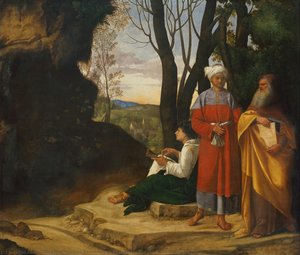 Three Philosophers - Giorgione
To stand before Giorgione’s Three Philosophers is to enter a silent, enigmatic dialogue that has captivated scholars for centuries. This masterpiece, a cornerstone of the Kunsthistorisches Museum’s collection, transcends mere portraiture; it is an atmospheric meditation on human knowledge and the mysteries of existence. Through his revolutionary use of sfumato , Giorgione dissolves sharp edges into a dreamlike haze, where the rich crimson robes of the figures emerge from a landscape of weathered ochre and deep umber. The painting’s inclusion in our top 25 is essential, as it represents the very moment Venetian art shifted from linear precision to an evocative, emotive mastery of light and mood.
The interplay of shadow and soft, glowing light invites a profound sense of introspection, making this work much more than a historical relic. At ArtsDot.com, we believe such profound energy should not be confined to museum walls. Imagine the quiet prestige of this Venetian enigma as a hand-painted oil reproduction in your own study or library—a soulful statement piece that transforms a modern room into a sanctuary of classical thought and timeless elegance.
Jane Seymour, Queen of England - Hans Holbein the Younger
 Jane Seymour, Queen of England - Hans Holbein the Younger
To encounter Jane Seymour, Queen of England by Hans Holbein the Younger is to stand before a silent witness to one of history's most turbulent eras. As one of the top 25 artworks in the Kunsthistorisches Museum, Vienna, this portrait transcends mere royal documentation; it is an intimate study of poise amidst political upheaval. Painted in 1536, following the tragic fall of Anne Boleyn, Holbein captures Jane not with flamboyant triumph, but with a restrained, photographic realism that commands the room.
The Northern Renaissance master utilizes a meticulous technique, rendering the heavy textures of her gown and the delicate precision of her features with an almost tactile clarity. The subtle interplay of light on the fabric and the somber, dignified atmosphere create a sense of timelessness that resonates deeply within modern, refined interiors. For the discerning collector, this piece offers more than historical insight; it provides a profound aesthetic anchor, embodying a legacy of quiet majesty and sophisticated grace that remains as captivating today as it was in the Tudor court.
Girl in a Fur - Titian Ramsay Peale II
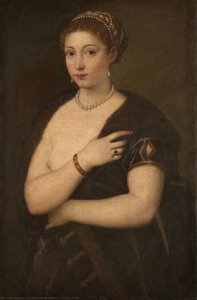 Girl in a Fur - Titian Ramsay Peale II
Acquiring a piece inspired by Girl in a Fur by Titian Ramsay Peale II is an investment in a profound legacy of taste and classical elegance. As one of the standout highlights within the top 25 artworks in Kunsthistorisches Museum, Vienna, this work serves as a bridge between the Venetian High Renaissance and 19th-century American naturalism. Peale II, born into an illustrious lineage of American portraitists, masterfully reimagines the sensuality of the original Titian, utilizing light to accentuate the tactile contrast between soft skin and opulent fur.
The painting’s presence in such a prestigious collection confirms its immense cultural value; it is a study in mystery, where pearls and gold adornments signal status while the subject's enigmatic gaze invites deep contemplation. For the discerning collector, bringing this level of historical depth into a contemporary setting is transformative. A high-quality, hand-painted oil reproduction of this masterpiece offers the same aesthetic authority and prestige, providing a focal point of timeless luxury that anchors modern, sophisticated interiors with unparalleled grace.
The Conquest of Jerusalem by Emperor Titus - Nicolas Poussin
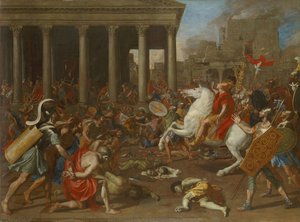 The Conquest of Jerusalem by Emperor Titus - Nicolas Poussin
To stand before The Conquest of Jerusalem by Emperor Titus is to feel the sudden, breathless heat of battle and the heavy dust of a collapsing era. In this 1638 masterpiece, Nicolas Poussin captures the precise moment where Roman imperial might meets the tragic upheaval of history. The canvas vibrates with the movement of cavalry, the glint of unsheathed swords, and the chaotic energy of soldiers and horses surging through the streets of Jerusalem.
Poussin, a titan of the French Baroque, utilizes his signature compositional clarity to organize this historical tumult into a profound meditation on power and destiny. This work earns its place among the top 25 artworks in Kunsthistorisches Museum, Vienna because it transcends mere chronicle; it invites us to contemplate the cyclical nature of human conflict and triumph. Just as Poussin distilled such grand drama into a balanced, intellectual vision, bringing a piece of this classical gravity into your own home can provide a sense of historical depth and enduring strength, transforming a modern space into a sanctuary of cultural reflection.
Diptych - Rogier van der Weyden
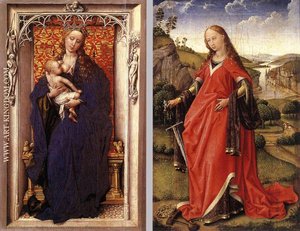 Diptych - Rogier van der Weyden
While many visitors to the Kunsthistorisches Museum, Vienna, are drawn to massive canvases, the true power of Rogier van der Weyden’s Diptych lies in its intimate, miniature scale. Created around 1440, this tiny masterpiece—measuring a mere 18 x 12 cm—demands a level of visual devotion usually reserved for much larger altarpieces. Van der Weyden, a titan of the Early Netherlandish movement, utilized the burgeoning medium of oil paint to achieve a luminosity that tempera simply could not permit. In this work, we witness a profound narrative of spiritual duality: on one side, a figure in celestial blue cradles an infant with serene grace; on the other, a figure in sacrificial scarlet holds a sword, symbolizing the strength of faith.
The technical precision required to render such delicate textures—the soft skin of a child, the sharp edge of a blade, and distant mountainous landscapes—is nothing short of miraculous. This meticulous focus on detail and the balance of light and shadow offer a profound sense of order and contemplation. Much like this Diptych, bringing a high-quality oil reproduction of such a masterpiece into a modern home office or study can foster an atmosphere of disciplined creativity and sophisticated intellectual depth.
The Procession to Calvary [detail] - Pieter Bruegel the Elder
![The Procession to Calvary [detail]](/media/artworks/images-thumb/32/c5/32c52a8c054c3755b769d95ed8a42796.jpg) The Procession to Calvary [detail] - Pieter Bruegel the Elder
The Procession to Calvary [detail] - Pieter Bruegel the ElderTo gaze upon the detail of The Procession to Calvary by Pieter Bruegel the Elder is to be swept into a swirling, cinematic tide of 16th-century humanity. Within this fragment of the Kunsthistorisches Museum’s incomparable collection, the air feels thick with the dust of the march and the palpable tension of the crowd. Bruegel masterfully orchestrates a landscape where earthy ochres and deep, bruised reds collide with the rhythmic movement of horses and the stoic faces of onlookers. The texture of the paint itself seems to mirror the rugged terrain, using heavy, deliberate strokes to capture the chaotic energy of the Northern Renaissance.
This work stands as a profound meditation on the intersection of the divine and the everyday, where religious solemnity meets the raw, unvarnished reality of peasant life. Bringing such a piece into a contemporary home offers more than mere decoration; it provides a window into a world of immense narrative depth. Whether through a large-scale oil reproduction or a focused study, Bruegel’s ability to weave complex symbolism into a vibrant, living atmosphere can serve as a powerful anchor for reflection and intellectual curiosity in any curated space.
Conclusion
To wander through the halls of the Kunsthistorisches Museum is to participate in a silent, eternal conversation with the masters. These twenty-five works are far more than mere relics of the Habsburg era; they are living presences that continue to pulse with the same vitality they possessed centuries ago. Whether it is the quiet, luminous intimacy of a Vermeer or the profound psychological depth found in a Rembrandt, these paintings possess an enduring ability to move the human heart and bridge the gap between the historical past and our contemporary reality. They remind us that beauty, when captured with such academic excellence, becomes a timeless anchor for the soul.
At ArtsDot.com , we believe this profound inspiration should not be confined to the grand galleries of Vienna, but should instead breathe life into the spaces where we live, work, and create. We serve as a dedicated creative partner for interior designers, architects, and collectors who seek to transform hotels, private villas, and refined residential interiors into curated artistic statements. Through our meticulous process of creating hand-painted oil reproductions, we allow you to bring the museum experience home. From providing professional digital mockups that visualize a masterpiece on your specific wall to crafting bespoke multi-panel installations for grand architectural spaces, our mission is to help you curate an environment of unparalleled culture.
As you reflect on these treasures, we invite you to explore the full collection and discover how the weight of art history can become the heartbeat of your next design project. Let us help you turn a mere room into a sanctuary of timeless elegance.