
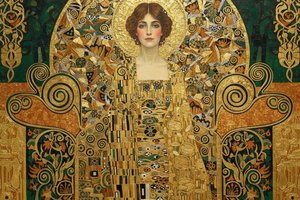


The Philosophy of Intentionality: Curating Narratives Beyond Decoration
 The Decorator's Eye: How to Integrate Masterpiece Art into Luxury Interiors
The Philosophy of Intentionality: Moving Beyond Decoration to Narrative Curating Elegance: The Connoisseur's Guide to Building a Bespoke Impressionist Collection for Luxury Interiors The Philosophy of Intentionality: Moving Beyond Decoration to Narra...
To step into a well-curated interior is to cross a threshold between the public persona and the private soul. In the rarefied atmosphere of high-end residential design, a profound shift is occurring—a movement away from the ostentately displayed wealth toward a more whispered elegance. True luxury no longer seeks to overwhelm with mere ornamentation; instead, it embraces a philosophy of intentionality. This approach moves beyond simple decoration to embrace narrative, where every piece serves as a chapter in a larger story of taste and heritage. When we select a reproduction of a canonical masterpiece, such as the luminous works of the Impressionists or the structured grandeur of the Renaissance, we are not merely hanging a picture; we are inviting a dialogue between our personal history and the collective memory of humanity.
A discerning collector understands that an interior should act as a psychological landscape. The walls do not merely enclose space; they hold memories, reflect light, and mirror the complexities of the minds that inhabit them. By choosing works that possess historical weight, one can transform a room from a transient living space into a sanctuary of permanence. This is the art of curation: selecting pieces that resonate with an individual's values, creating a sense of continuity that connects the modern dweller to the enduring traditions of beauty and order.
Harmonizing Eras: Integrating Classical Grandeur with Modern Minimalism
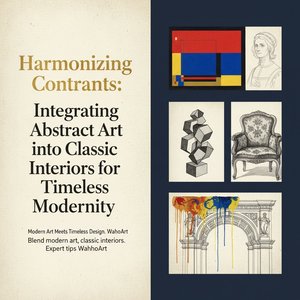 Harmonizing Contrasts: Integrating Abstract Art into Classic Interiors for Timeless Modernity
The Enduring Appeal of Classic Interiors: Why Abstract Art Complements Timeless Design Harmonizing Eras: Classical & Modern Art for Timeless Interiors Explore the art of blending classical & modern aesthetics for timeless interiors. Discover key arti...
One of the most captivating challenges in contemporary design is the art of harmonizing contrasts. There is an inherent tension, and subsequently a profound beauty, found in integrating abstract art or modern minimalism with classical aesthetics. The hallmarks of classic interior design—symmetry, refined materials, and a sense of historical continuity—provide a stable foundation of order. Yet, within this established elegance lies an opportunity for the unexpected. The dynamic energy of a modern piece can breathe life into a room characterized by traditional motifs, preventing it from feeling like a static museum period piece.
Consider the way a bold, geometric abstraction might interact with the ornate flourishes of an Empire-style furniture set. This conversation between eras is not a rebellion against tradition, but rather an expansion of its boundaries. Just as the 19th-century artists moved away from purely mimetic approaches to explore color and form, the modern decorator can use historical masterpieces to anchor a space while using contemporary elements to provide movement. This synthesis creates a timeless modernity, where the weight of the past supports the lightness of the present, resulting in an environment that feels both deeply rooted and refreshingly current.
The Architecture of Light: Using Masterpieces to Define Spatial Depth
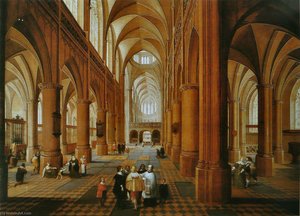 Pieter Neefs the Elder
Pieter Neefs the Elder: Architect of Sacred Light Pieter Neefs the Elder (c. 1578 – after 1656) stands as a pivotal figure in the history of Flemish art, renowned for his masterful depictions of ecclesiastical interiors. Born in Antwerp, he inherited...
Light is the silent architect of any interior, capable of altering the very perception of volume and atmosphere. Throughout art history, masters have utilized light not merely to illuminate subjects, but to sculpt space itself. In the architectural drawings of John Frederick Lewis, such as his breathtaking depiction of the Hagia Sophia, we see how light and shadow delineate soaring arches and intricate structural elements, evoking a sense of divine awe. Similarly, the Flemish master Pieter Neefs the Elder became renowned for his ability to capture the spiritual atmosphere of ecclesiastical interiors through a masterful use of chiarosciente, employing dual light sources to create depth and mystery.
In a modern home, one can replicate this architectural drama by strategically placing artworks that emphasize luminosity. The soft, diffused light found in the works of Vilhelm Hammershøi or Peter Ilsted—members of the Copenhagen Interior School—can introduce a sense of quietude and stillness to a room. These paintings do not illuminate so much as they reveal, gently modeling forms and creating an illusion of expanded space. By selecting reproductions that masterfully manipulate light, a decorator can guide the eye through layered depths, making even the most intimate corner feel parted by a window into another world.
Color and Texture: Bridging Historical Palettes with Contemporary Finishes
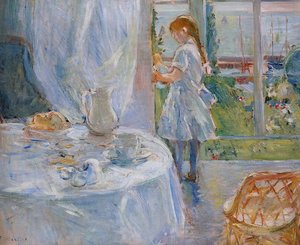 Cottage Interior (also known as Interior at Jersey)
Cottage Interior (also known as Interior at Jersey) by Berthe Morisot Berthe Morisot was a renowned French painter and a prominent figure in the Impressionist movement. Her painting, Cottage Interior (also known as Interior at Jersey) , is a beautifu...
The success of integrating historical art often rests upon the subtle interplay of color and texture. A common misconception is that a classical painting must strictly adhere to the color palette of the surrounding furniture. In reality, the most sophisticated interiors use art to bridge or even intentionally contrast these elements. The Impressionist technique, exemplified by Berthe Morisot, utilizes loose brushwork and a palette of soft pastels and cool blues to evoke serenity. Such works can soften the hard edges of modern industrial materials like concrete or steel, providing a tactile warmth that balances the room.
Texture plays an equally vital role. The physical presence of a hand-painted oil reproduction—with its visible brushstrokes and the rich, impasto depth of pigment on cotton canvas—offers a sensory experience that a flat print simply cannot replicate. This tactile reality provides a necessary counterpoint to the smooth, often sterile surfaces of modern minimalism. When we introduce works with an optional aged or craquelure finish, we add a layer of perceived history and "soul" to the room. This layering of textures—the smoothness of glass, the grain of wood, and the heavy weave of oil paint—creates a multidimensional environment that invites touch and prolonged contemplation.
Bespoke Integration: Custom Commissions as Architectural Elements
 The Inevitable Canvas: Bespoke Art Design as Architectural Integration for Harmonious Interiors
The Architectural Canvas: Integrating Art from Conception Transforming Spatial Visions: A Concierge Approach to Art Integration for Interior Design and Architectural Projects Elevate your design projects with our expert art concierge services. We sou...
For the truly discerning homeowner, the ultimate expression of design is the seamless integration of art from the very conception of a space. This goes beyond selecting a painting from a catalog; it involves treating art as an architectural element. Through bespoke services, such as our professional digital mockup service, art can be visually "placed" within a room before a single drop of paint touches the canvas. This allows for unparalleled customization, where colors can be matched to existing textiles, or even "period shifts" can be requested—transforming a contemporary photograph into a 17th-century masterpiece in the style of Rembrandt.
This level of integration extends to large-scale projects, including custom murals and ceiling frescoes that can recreate the grandeur of historical cathedrals. Whether it is splitting a wide landscape across a multi-panel arrangement to accentuate a grand staircase or commissioning a group portrait that weaves family history into the room's very fabric, bespoke art serves as the connective tissue of the home. It ensures that the artwork does not merely sit upon the wall but exists in a seamless dialogue with the architecture, maximizing both aesthetic and emotional value.
Preserving the Legacy: The Art of Long-Term Collection Management
Building an art collection is an act of stewardship. To preserve the vibrancy of these historical echoes for generations, one must understand the chemistry of art and the necessity of proper care. True museum-quality reproductions are crafted with longevity in mind, using flexible gesso to prevent cracking and specific oils, such as safflower, to ensure that whites do not yellow over time. A final coat of Damar varnish serves as a protective shield against the atmospheric pollutants and dust of modern life.
As you curate your space, remember that preservation is both physical and intellectual. Protecting your investment from direct sunlight and using acid-free matting are essential steps in maintaining the integrity of the pigments. However, the true preservation lies in the continued engagement with the art—the ongoing process of learning, appreciating, and sharing the stories behind each masterpiece. At ArtsDot.com, we provide not just the medium, but the expertise to help you build a legacy that transcends time, ensuring that your home remains a living gallery of human achievement.