The Eternal Resonance of the Canon: Why Masterpieces Endure
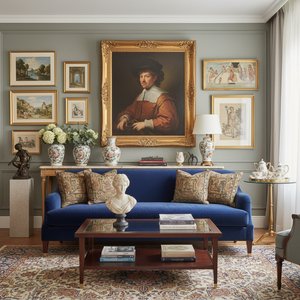 Hermitage Masterpieces: 25 Art Treasures to Inspire Your Home Decor
Introduction To stand before these twenty-five masterpieces within the walls of the State Hermitage Museum is to commune with the very soul of artistic expression. These are not merely paintings, sculptures, or artifacts; they are echoes of empires r...
To stand before a true masterpiece is to engage in a silent, profound dialogue with the soul of human history. Whether it is the haunting shadows of a Rembrandt or the luminous, atmospheric streets of Gustave Caillebotte’s
Paris Street; Rainy Day, certain works possess an inexplicable gravity that transcends the era of their creation. These are not merely objects of aesthetic pleasure; they are echoes of empires risen and fallen, testament to human ingenuity, and windows into the hearts of generations past. The endurance of the canon lies in its ability to speak to fundamental human truths—our longing for beauty, our fascination with the fleeting nature of time, and our search for meaning amidst the chaos of existence.
The greatness of these works often stems from their revolutionary impact on how we perceive reality. Consider the State Hermitage Museum, where the collection serves as a sanctuary for such profound expressions. When Catherine the Great founded this treasury, she embraced the radical idea that art should be accessible to all, fostering a legacy where the brilliance of the past could illuminate the present. This continuity of emotion is what allows a 19th-century Impressionist landscape or a Renaissance portrait to remain vital in a modern living space. We do not merely look at these paintings; we commune with them, finding in their pigments a reflection of our own enduring spirit.
The Art of Reinterpretation: Bridging Historical Context with Modern Aesthetics
Artistic licenseArtistic license (and more general or contextually-specific, derivative terms such as creative license, poetic license, historical license, dramatic license, and narrative license) refers to deviation from fact or form for artistic purposes. It can i...
The concept of artistic license allows us to revisit the masters not as static relics, but as living inspirations. To reimagine a classic is not to diminish its original intent, but to breathe new life into its heritage through a contemporary lens. This process of reinterpretation acts as a bridge, connecting the rigid structures of historical tradition with the fluid sensibilities of modern design. It is an act of cultural stewardship that ensures the stories told by the old masters are not lost to the dust of museums but are instead woven into the very fabric of our daily lives.
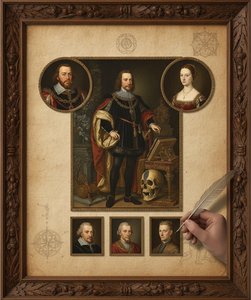
In the contemporary home, this bridge is built through thoughtful curation. We see a growing movement where the weight of history meets the lightness of modern minimalism. By bringing a reproduction of a classical work into a modern setting, we create a tension between the old and the modern—a dialogue that prevents history from becoming stagnant. This is particularly evident when we apply "Period Shifts," a technique where the essence of a modern moment is reimagined through the stylistic lens of a bygone era, such as transforming a personal portrait into a 17th-century masterpiece in the style of Rembrandt. Such transformations allow us to inhabit the grandeur of the past while remaining firmly rooted in our present identity.
Technique as Narrative: From Caillebotte’s Realism to Cézanne’s Geometric Vision
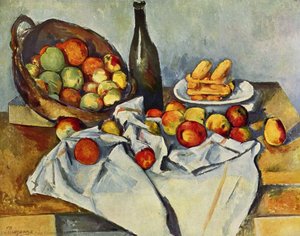 Basket of Apples
The Essence of Everyday Beauty Paul Cézanne's "Basket of Apples" (1895) is a masterful still life that captures the ordinary with extraordinary flair. This vibrant composition features a basket brimming with apples and pears, accompanied by bread rol...
Every brushstroke in a masterwork serves as a narrative device, guiding the viewer through the artist's psychological landscape. In Gustave Caillebotte’s
Paris Street; Rainy Day, we witness a masterful blend of realism and impressionism. His meticulous attention to linear perspective and precise lines provides a sense of structural depth, yet the atmosphere is softened by the interplay of light and weather. The umbrellas in his composition do more than shield figures from rain; they symbolize protection and companionship, creating an intimate human connection amidst the vast, transforming urban landscape of Haussmann’s Paris.
Conversely, we find a different kind of narrative in the works of Paul Cézanne. In his
Basket of Apples, the narrative is one of structure and essence rather than atmospheric fleetingness. As a bridge between Impressionism and Cubism, Cézanne utilized bold, expressive brushstrokes to emphasize geometric forms. His technique focuses on the weight and volume of everyday objects—the curve of a pear, the texture of bread—elevating the mundane to the level of the monumental. When we encounter these works through high-quality oil reproductions, the tactile nature of the paint—the visible impasto and the depth of the tonal range—allows us to feel the very pulse of the artist's hand, making the technical mastery of the past a tangible reality in the present.
Curating the Present: Integrating Classic Heritage into Contemporary Interiors
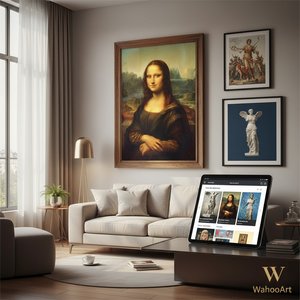 Louvre Masterpieces: Explore the Top 25 Artworks for Your Home | ArtsDot
Introduction To stand before these twenty-five masterpieces within the hallowed halls of the Louvre is to commune with centuries of human aspiration, ingenuity, and emotion. These are not merely paintings or sculptures; they are echoes of lives lived...
Integrating classical heritage into modern interiors requires more than mere decoration; it requires an architectural sensibility. The modern collector understands that a painting is a cornerstone of an interior’s soul. Whether utilizing the "Multi-Panel" trend to split a wide landscape across several canvases for a grand staircase, or selecting a single, commanding portrait to anchor a minimalist room, the goal is to create a cohesive visual narrative. This integration allows for a sophisticated layering of textures and eras, where the weathered elegance of a classical subject complements the clean lines of contemporary furniture.
For those seeking to create a truly bespoke environment, the possibilities are boundless. One might choose an "Aged & Cracked" finish to evoke the venerable character of an antique find, or perhaps opt for a custom color match to ensure a Renaissance masterpiece harmoniously aligns with a specific interior palette. The art of curation is about finding that perfect equilibrium where the grandeur of the past enhances, rather than overwhelms, the comfort of the present. Through expert consultation and digital mockups, this process becomes an exploration of how light, color, and history can converge to transform a house into a curated sanctuary of culture.
Beyond the Canvas: The Craftsmanship of Hand-Painted Oil Reproductions
 Netherlands Institute of Cultural Heritage
About the Netherlands Institute of Cultural Heritage The Netherlands Institute of Cultural Heritage (ICN) stands as a beacon of scholarly dedication to safeguarding Dutch artistic legacy and historical memory. Situated in Rijswijk, a charming municip...
The true essence of a masterpiece lies in its physicality—the way light catches the ridges of dried oil paint and the subtle variations in pigment density. This is why a hand-painted oil reproduction offers an experience that no digital print can replicate. At ArtsDot.com, our process is rooted in academic excellence. Each work is 100% hand-painted on cotton canvas by artists holding degrees from prestigious Fine Arts academies. These specialists—experts in maritime, portraiture, or landscape—apply layers of oil paint with a dedication to capturing the original's soul, from the luminous whites of safflower oils to the protective depth of a final Damar varnish.
This commitment to craftsmanship ensures that every reproduction possesses its own "soul." Unlike the flat appearance of a computer-printed poster, our hand-painted works feature visible brushstrokes and a deeper tonal range that mimics the original's texture. We offer a level of customization that allows for true artistic reimagination; an artist can be commissioned to paint a personal photograph in the light-drenched style of Monet or the heavy impasto of Van Gogh. This meticulous, multi-week process—involving everything from digital mockups for approval to the final hand-painted giclée finish—ensures that the resulting artwork is not just a copy, but a new, vibrant iteration of a timeless legend.
The Future of Legacy: Preserving Art History through Inspired Reimagination
 Historic preservation
Historic preservation (US), built heritage preservation or built heritage conservation (UK) is an endeavor that seeks to preserve, conserve and protect buildings, objects, landscapes or other artifacts of historical significance. It is a philosophica...
As we move further into a digital age, the importance of preserving and reinterpreting our artistic heritage becomes even more critical. The preservation of art is not merely about protecting physical objects in climate-controlled vaults; it is about maintaining the continuity of human expression. Through the medium of inspired reproductions and custom commissions, we ensure that the visual language of the masters remains a functional part of our cultural vocabulary. We are the custodians of these stories, ensuring that the brilliance of the Louvre, the drama of the Venetian Renaissance, and the precision of Dutch masters continue to inspire new generations.
Whether through the restoration of a cherished family photo into a classical portrait or the creation of large-scale architectural murals that recreate the splendor of a frescoed ceiling, the future of art lies in this intersection of tradition and innovation. By embracing the ability to "remix" history, we do not lose the past; rather, we grant it immortality. We invite you to explore this enduring legacy with us, finding your own connection to the masters and bringing the profound beauty of the world's greatest treasures into your own personal history.