The Sacred Space: Understanding the Role of the Atelier in Art History
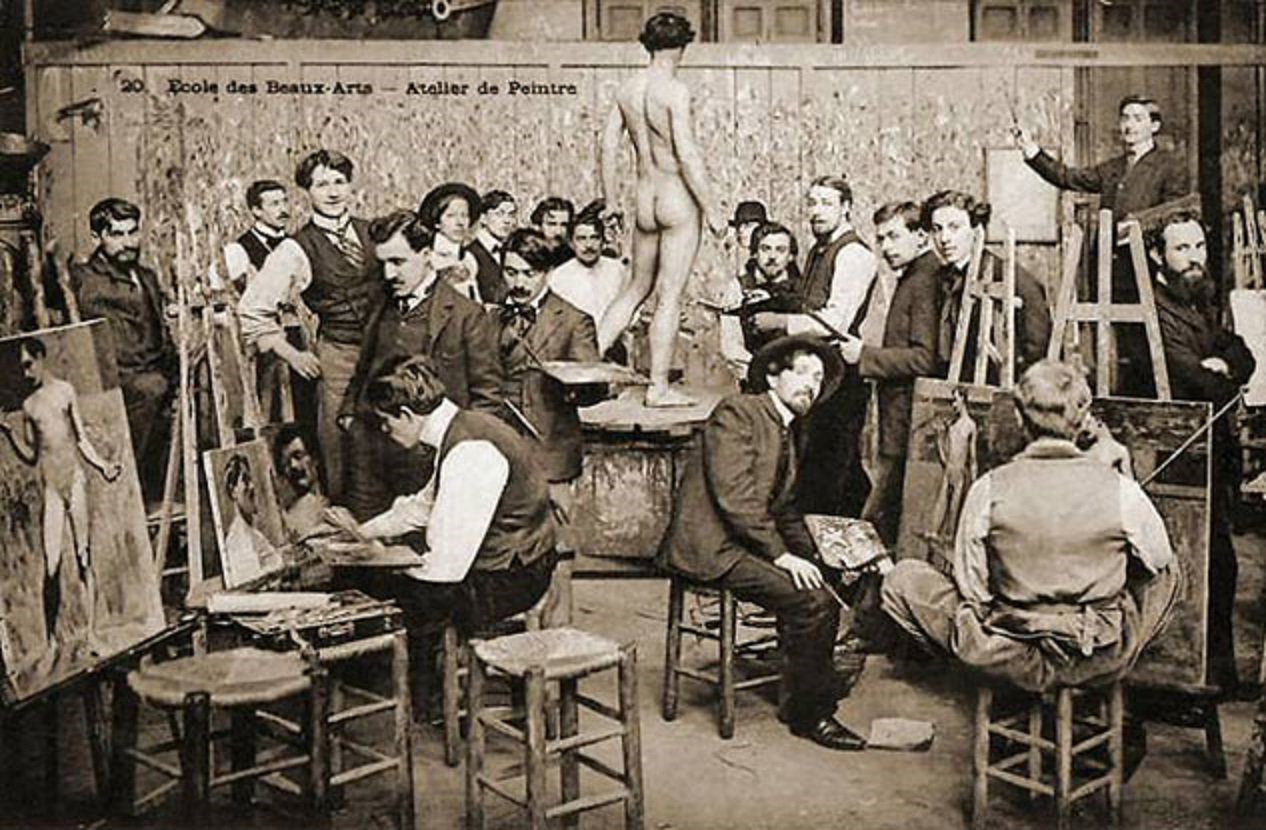 Atelier
An atelier (French: [atəlje]) is the private workshop or studio of a professional artist in the fine or decorative arts or an architect, where a principal master and a number of assistants, students, and apprentices can work together producing fine a...
To understand the genesis of a masterpiece, one must first understand the
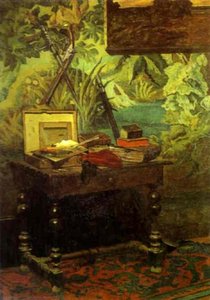
atelier. For centuries, from the medieval guilds to the height of the Renaissance, the studio was far more than a mere room filled with supplies; it was a sanctified workshop, a structured ecosystem where the master and apprentice breathed the same dust of pigments and linseed oil. This private sanctuary served as the foundation of European artistic tradition, a place where the rigorous discipline of anatomy, perspective, and color theory was passed down through generations. Within these walls, art was not merely an expression of individual whim but a disciplined craft, governed by the strictures of academic excellence and the watchful eye of the master.
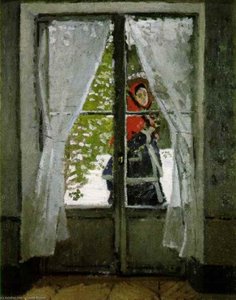
The atelier functioned as both a classroom and a factory of culture. Here, the heavy, somative shadows of tradition were meticulously maintained, providing a controlled environment where artists could labor over compositions born from sketches, memory, and idealized archetypes. It was a space of profound contemplation, yet it was also a place of intense physical labor, where the chemistry of pigments was mastered and the very architecture of visual reality was constructed. While these walls provided stability and prestige, they also created a boundary—a threshold between the controlled, intellectualized world of the studio and the raw, unmediated pulse of the living world outside.
Beyond the Canvas: The Studio as a Laboratory for Light and Experimentation
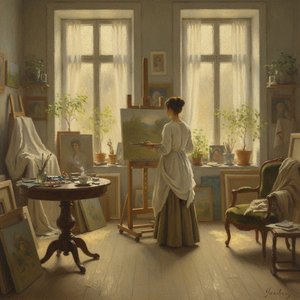 Beyond the Brushstroke: Unveiling the Intimate Charm of Impressionist Studio Scenes
The Threshold of Creation: An Introduction to the Impressionist Atelier To step into the world of the Impressionists is to leave behind the heavy, somber shadows of academic tradition and enter a realm bathed in dappled sunlight. In the mid-19th cent...
As the nineteenth century dawned, the rigid constraints of the official Paris Salon began to feel like a gilded cage to a new generation of rebels. The studio began to evolve from a site of static reproduction into a laboratory of light. No longer content with merely recreating historical grandeur or religious iconography, artists sought to dismantle the heavy, dark varnishes of the past. They turned their gaze toward the ephemeral, seeking to capture the very heartbeat of existence through the scientific observation of how light interacts with surfaces. This era marked a fundamental shift from the intellectualized, finished product toward a visceral, sensory experience where the true protagonist was no longer the subject, but the atmosphere itself.
This period of experimentation turned the studio into a space of profound discovery. Artists began to experiment with the way colors shift and blend, moving away from the predetermined looks dictated by academic rules. They embraced the beauty of the fleeting moment, recognizing that light is never static; it is a dance of shadows and brilliance that changes with every passing minute. This revolutionary approach allowed for a new kind of truth to emerge—one where the boundaries between the artist’s internal vision and the external world began to dissolve, creating a way of seeing that would forever alter the course of art history.
En Plein Air: When the Studio Walls Fall to the Open Sky
 Chasing Sunlight: The Enchanting World of Plein Air Impressionism
The Breath of Nature: Understanding the Essence of En Plein Air En plein air En plein air (pronounced [ɑ̃ plɛ.n‿ɛʁ]; French for 'outdoors'), or plein-air painting, is the act of painting outdoors. This method contrasts with studio painting or academi...
The most radical departure from tradition came with the advent of
en plein air painting. The term itself, meaning "in the open air," signifies more than just a change in location; it represents a profound philosophical commitment to direct observation. To paint outdoors is to embrace the ephemeral and to engage in an intimate dialogue with the living world. This method stands in stark contrast to the traditional studio practice of working from memory or prepared sketches. Instead, the artist becomes a hunter of sunlight, chasing the warmth of the morning mist or the golden glow of dusk before it vanishes forever.
The theoretical roots of this movement can be traced back to thinkers like Pierre-Henri de Valenciennes, who championed the concept of landscape portraiture. He urged artists to engage directly with nature, recording the subtle changes in weather and light
in situ. This pursuit of the transient gives plein air works their incomparable vitality; there is a palpable sense of breath and movement within the brushstrokes. When you observe a true Impressionist landscape, you are not merely looking at a depiction of a meadow or a river; you are witnessing a moment frozen in time, captured through the artist's struggle to translate the raw energy of nature onto a canvas.
Monet’s Floating Workshop: A Case Study in Immersive Creation
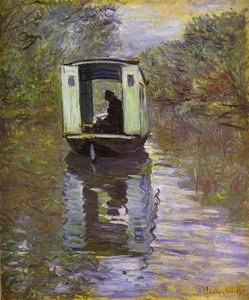 The Boat Studio (Le bateau-atelier)
A Moment Frozen in Light: Claude Monet’s *The Boat Studio* Claude Monet's *The Boat Studio*, painted in 1876, isn’t merely a depiction of a scene; it’s a profound meditation on the artist’s process, his relationship with nature, and the very essence ...
Perhaps no artist embodied this revolutionary spirit more profoundly than Claude Monet. His 1876 masterpiece,
The Boat Studio (Le Bateau-atelier), serves as a breathtaking window into his unique creative process. In this work, we see Monet not just painting a scene, but inhabiting it. He utilized a small, meticulously outfitted boat anchored along the Seine at Argenteuil as his mobile workshop. This floating studio was a deliberate rejection of the static, indoor environment; it allowed him to pursue his vision wherever light and inspiration led him, making him a true nomad of the landscape.
In
The Boat Studio, the essence of Impressionism is laid bare. The painting captures a moment of quiet reflection and solitude, yet it is brimming with technical innovation. Through loose, expressive brushstrokes, Monet depicts the dappified sunlight filtering through foliage and the shimmering dance of the water. He was not interested in photographic precision; rather, he sought to capture the
impression—the way colors interact and how the atmosphere envelops the subject. The boat itself becomes a symbol of this new artistic freedom, representing a sanctuary that is simultaneously part of the landscape it seeks to portray.
The Modern Legacy: Preserving the Spirit of the Master's Process
 Nicola D'ascenzo Studios
The Visionary Worlds of Nicola D'Ascenzo Studios Nicola D’Ascenzo Studios represents a compelling force in contemporary representational art, though its story is less about a single artist and more about the evolution of a dedicated atelier. Founded ...
Today, the legacy of the great masters lives on not just in museums, but in the continued reverence for craftsmanship and the tactile beauty of oil on canvas. While we live in an age of digital reproduction, there remains an enduring hunger for the soul of the original: the visible brushstroke, the depth of a hand-mixed pigment, and the textured
impasto that no printer can replicate. The spirit of the atelier survives in those who continue to honor the rigorous training of the past while embracing the creative freedom of the present.
At ArtsDot.com, we strive to keep this flame of classical excellence alive. Our artists, many of whom hold degrees from prestigious Fine Arts academies, specialize in recreating these historical moments with museum-grade precision. Whether it is a bespoke
Handmade Oil Reproduction that captures the light-drenched magic of Monet or a custom "period shift" that transforms a modern memory into a Rembrandt-style masterpiece, our mission is to bring the profound history of the studio into the contemporary home. We invite you to explore our collection and, perhaps, find a piece of that eternal, sun-drenched laboratory for your own walls.