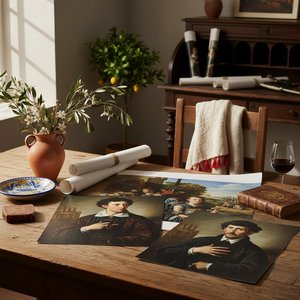
The Alchemy of Contrast: Defining Chiaroscuro and Tenebrism
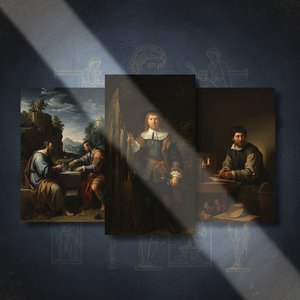 Chiaroscuro's Embrace: A Visual Journey Through Art History's Most Dramatic Masterpieces
The Alchemy of Light: Understanding Chiaroscuro and Tenebrism To gaze upon a true masterpiece is to witness a silent struggle between the visible and the unseen. In the annals of art history, few techniques possess the visceral power of chiaroscuro —...
To gaze upon a true masterpiece is to witness a silent, eternal struggle between the visible and the unseen. In the vast annals of art history, few technical innovations possess the visceral power of
chiaroscuro. Derived from the Italian words for light and dark, this technique is far more than a mere method of modeling three-dimensional forms; it is an emotional language. By orchestrating profound contrasts, artists are able to sculpt figures out of the void, granting them a sense of volume and weight that breathes life into the canvas. When light meets darkness, it creates a tension that pulls the viewer into the very consciousness of the subject.
Taking this technique to its most extreme, we encounter
tenebrism, a specialized application where the shadows become dominant, almost suffocating elements of the composition. In tenebristic works, figures are often plunged into deep, obsidian darkness, while key areas—a furrowed brow, a trembling hand, or a glinting blade—are struck by a piercing, singular light source. This creates a cinematic intensity that directs the eye with surgical precision. It is through this alchemy of contrast that the artist achieves a sense of drama that transcends simple representation, turning a flat surface into a stage for profound human and divine encounters.
The Baroque Theater: Emotional Depth through Light and Shadow
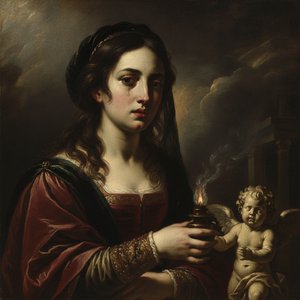 Chiaroscuro & Emotion: Capturing the Dramatic Soul of Baroque Art
The Historical Crucible: Counter-Reformation and the Birth of Baroque Emotion Decoding Baroque Grandeur: A Guide to the Drama and Emotion of 17th-Century Art The Historical Crucible: Counter-Reformation and the Rise of Absolutism Baroque Classicism: ...
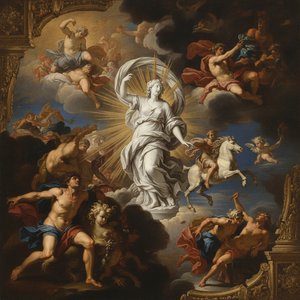
The transition from the rational clarity of the Renaissance to the turbulent energy of the Baroque era marked a fundamental shift in the purpose of art. While earlier masters sought balance and harmony, the Baroque painters embraced the theatrical. This period was characterized by an opulent use of color and a masterful manipulation of light designed to evoke spiritual fervor and psychological depth. In the works of masters like
Mattia Preti, we see how light and shadow dance across figures to create a chiaroscural tension that is characteristic of the era's grand tapestry.
In Preti’s
Apelle Painting Campaspe, for instance, the scene unfolds with a profound sense of movement. The interplay of light does not merely illuminate; it invites the viewer to participate in the act of looking, mirroring the gaze of the subjects within the frame. This era utilized shadow to create what can only be described as an atmosphere of palpable tension. Whether through the intense, dark shadows seen in the works of
Gérard de Lairesse or the expressive brushstrokes of
Václav Vavřinec Reiner, the Baroque masters used the absence of light to heighten the presence of emotion, ensuring that every canvas pulsated with the rawest edges of the human soul.
Spiritual Radiance: Divine Intervention in Renaissance and Baroque Works
 The Conversion of Saul
A Divine Encounter in Light and Shadow In the heart of the Venetian Renaissance, a moment of profound spiritual transformation was captured with unparalleled intensity by Jacopo Tintoretto. The Conversion of Saul is not merely a depiction of a biblic...
Beyond the realm of human drama, the use of light served a higher, more celestial purpose. In many canonical works, light acts as a symbol of divine intervention, a physical manifestation of grace descending upon the earthly plane. We see this beautifully executed in
Jacopo Tintoretto’s The Conversion of Saul. Within this Venetian masterpiece, Saul's world is suddenly fractured by a celestial light that demands total surrender. The use of chiaroscuro here directs our gaze toward the pivotal instant where the persecutor becomes the saint, using radiance to signify a spiritual transformation.
This theme of spiritual crisis and subsequent redemption is equally profound in the works of
Jusepe de Ribera. In his
The Tears of Saint Peter, a single, piercing light source strikes the Apostle from above, illuminating the rugged textures of his weathered skin and the damp glint of sorrow in his eyes. This dramatic lighting isolates the figure against an abyss of dark, undefined space, forcing an intimate confrontation between the viewer and the subject's remorse. In these moments, light is not merely a tool for visibility; it is a sacred messenger, illuminating the path from betrayal to repentance and from darkness to grace.
The Architecture of Emotion: How Dramatic Lighting Shapes Modern Interiors
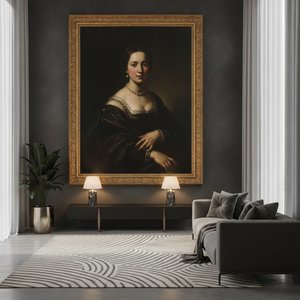 Baroque Portraits: Mastering Chiaroscuro and Dramatic Lighting for High-Impact Modern Interiors
The Power of Chiaroscuro: Why Dramatic Lighting Defines Modern Luxury In the realm of high-end interior design, true luxury is rarely found in the predictable or the muted; it resides in the tension between what is revealed and what remains hidden. T...
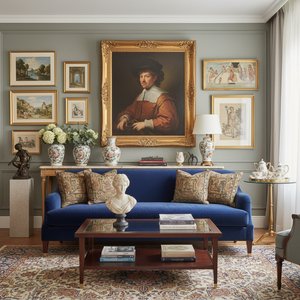
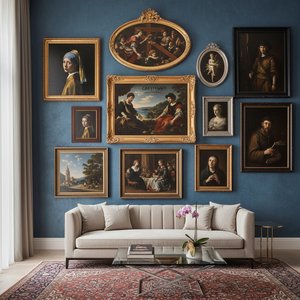
The legacy of the Baroque masters continues to resonate within the realm of contemporary high-end interior design. In modern luxury, true sophistication is rarely found in the predictable or the muted; rather, it resides in the tension between what is revealed and what remains hidden. A room filled with flat, even lighting can often feel sterile or uninspired. However, a space anchored by a portrait that breathes with
tenebrism—that intense, atmospheric shadow—can instantly transform a contemporary penthouse into a theater of emotion.
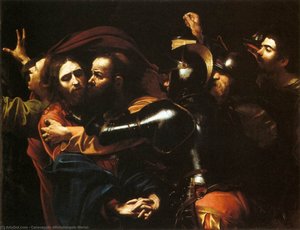
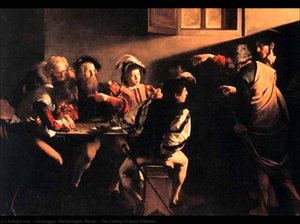
By introducing a focal point where light pierces through deep, velvety blacks, a collector creates a visual anchor that feels both grounded and transcendent. This is the architectural use of light within a canvas to manipulate the perception of space. For the discerning decorator, integrating pieces defined by such dramatic lighting provides a necessary counterpoint to the clean lines and neutral palettes of minimalist architecture. The deep, obsidian tones found in a masterpiece like
The Taking of Christ provide a sense of gravity and prestige, ensuring that every glance toward the artwork feels like a profound discovery within a curated atmosphere of depth and intention.
Mastering the Void: The Technical Brilliance of the Old Masters
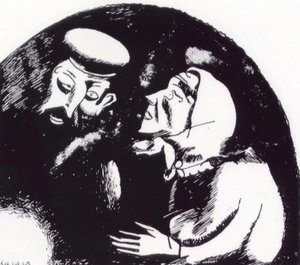 Old Man and Old Woman
Marc Chagall’s "Old Man and Old Woman" (1915) – a stark black & white Expressionist print depicting intense emotion. Explore this iconic work's symbolism & unique style.
To truly appreciate these masterpieces, one must recognize the immense technical virtuosity required to master the void. The artists of the 17th century, such as
Guercino or
Lorentz Pasch the Younger, did not simply paint figures; they sculpted them using light. This required an advanced understanding of how light interacts with different textures—the silvered strands of a beard, the heavy folds of drapery, or the subtle sheen of silk. Their ability to use light to create volume and three-dimensional presence is what allows these works to command the space they inhabit.
This technical brilliance is achieved through meticulous layering and a sophisticated understanding of color temperature. The masters used specific oils and pigments to ensure that their highlights remained radiant while their shadows retained a deep, translucent quality. It is this commitment to realism, blended seamlessly with symbolic representation, that allows these paintings to endure. When we look at the works preserved in institutions like the
Staatsgalerie Schleissheim, we are not just looking at relics of the past; we are witnessing the pinnacle of human craftsmanship—a legacy of light and shadow that continues to inspire awe and provide a window into the eternal complexity of our shared human experience.
At ArtsDot.com, we are dedicated to preserving this incredible heritage. We specialize in creating museum-quality, hand-painted oil reproductions that capture the very soul of these masterpieces. Our artists, holding degrees from prestigious academies, use the same techniques of texture and light to ensure every brushstroke reflects the brilliance of the Old Masters. Whether you seek a large-scale centerpiece for a modern hall or a custom "remix" of a historical icon, our 100% hand-painted cotton canvas reproductions bring the drama of art history into your home with unparalleled authenticity.