The Genesis of the Unconscious: Defining the Surrealist Movement
 Beyond Reality: A Sophisticated Exploration of Symbolism and the Dreamlike Subconscious in Art History
The Veil of Perception: Defining the Symbolist Movement To gaze upon a Symbolist masterpiece is to step through a threshold, leaving the tangible certainties of the material world for a realm where shadows possess weight and silence speaks in metapho...
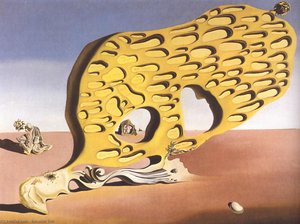
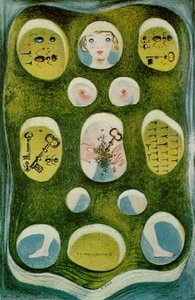
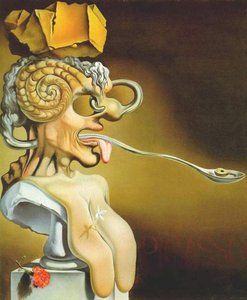
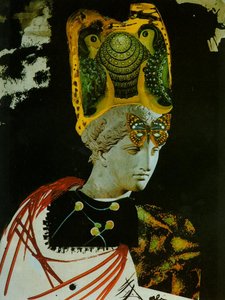
To gaze upon a Surrealist masterpiece is to step through a threshold, leaving the tangible certainties of the material world for a realm where shadows possess weight and silence speaks in metaphors. Emerging as a profound reaction against the literalism of Naturalism and the fleeting impressions of Impressionism, Surrealism sought something far more enduring: the expression of ideas, emotions, and the unseen currents of the human psyche. While the Symbolist movement of the late 19th century had already begun to bridge the visible and the invisible—capturing the internal resonance of sights within the soul—Surrealism pushed this boundary into a radical new dimension. It was not merely an attempt to replicate light or motion, but a deliberate endeavor to liberate the imagination from the rational constraints of logic.
This movement functioned as a psychological gateway, prioritizing dream imagery and irrational associations as pathways to accessing deeper truths. By embracing the absurd and the unexpected, Surrealist artists invited viewers to engage in a private dialogue with their own subconscious. In an era marked by profound global shifts, these artists sought to uncover the hidden realities lurking beneath the surface of conscious existence. They transformed the canvas into a laboratory of the mind, where the boundaries between reality and hallucination dissolve, leaving us to navigate a landscape shaped by desire, anxiety, and the beautiful chaos of the human spirit.
Architects of the Dream: The Life and Paranoiac-Critical Method of Salvador Dalí
 Salvador Dalí
A Life Submerged in Dreams: The World of Salvador Dalí Salvador Domingo Felipe Jacinto Dalí i Domènech, a name synonymous with surrealism, was born on May 11, 1904, in the sun-drenched town of Figueres, Spain. His existence was destined to be anythin...
No figure looms larger over the Surrealist landscape than Salvador Dalí, a name synonymous with the movement's most startling imagery. Born in 1904 in Figueres, Spain, Dalí’s very existence was meticulously crafted as a performance, an exploration of duality and loss that would permeate his entire oeuvre. The shadow of tragedy followed him from infancy; the death of his older brother, also named Salvador, created a profound sense of replacement and identity that haunted his creative process. His journey through the avant-garde circles of Paris in 1926 brought him into contact with titans such as André Breton and Pablo Picasso, but it was his development of a unique psychological tool—the
paranoiac-critical method—that truly revolutionized the movement.
This technique was far from mere madness; it was a self-induced state of controlled paranoia designed to unlock the hidden imagery of the subconscious. Through this method, Dalí could translate the fluid, often unsettling logic of dreams into a visual language characterized by meticulous realism juxtaposed with dreamlike distortions. His technical brilliance allowed him to render the impossible with such precision that the viewer is forced to confront the hallucination as if it were tangible. This mastery of form and content turned his life into a living dreamscape, where every brushstroke served to make the intangible visible, forever altering our perception of what art can achieve when it dares to look inward.
Symbolism and Subversion: Decoding the Metames of Surrealist Masterpieces
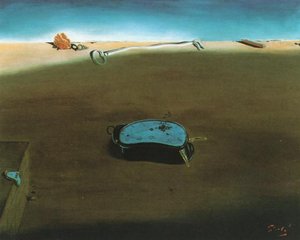 Soft Watches, 1933
Soft Watches, 1933 – A Surreal Echo of Time and Loss Salvador Dalí’s “Soft Watches,” painted in 1933, is more than just a depiction of an inanimate object; it's a profound meditation on mortality, memory, and the elusive nature of time itself. Execut...
The power of Surrealism lies in its ability to use familiar objects as vessels for profound, often unsettling, meanings. Consider Dalí’s 1933 masterpiece,
Soft Watches. At first glance, it depicts a clock face resting horizontally, yet the timepiece appears pliable, almost yielding under pressure. This deliberate exaggeration of form is far more than a visual trick; it is a profound meditation on mortality and the elusive nature of time itself. The drooping clocks serve as a symbol for the inevitable erosion caused by the passage of years, reflecting Dalí’s fascination with metamorphosis and decay. When paired with other objects like bottles or spoons, the painting creates an unsettling tableau that amplifies a sense of disorientation and existential dread.
Beyond the temporal, Surrealist symbolism often wrestles with themes of memory and the enduring influence of tradition. In
Archaeological Reminence of Millet's Angelus, Dalí takes a pastoral scene from Jean-François Millet and reimagines it through a fractured, dreamlike lens. Instead of celebrating piety, he presents a desolate landscape dominated by colossal, weathered statues that embody a palpable stillness. This subversion of a classical subject demonstrates how Surrealism uses the "relics" of art history to explore contemporary anxieties. By recontextualizing known symbols, these artists force us to question the stability of our perceptions and the permanence of the world we think we know.
From Millet to Modernity: Reimagining Tradition through Surrealist Lenses
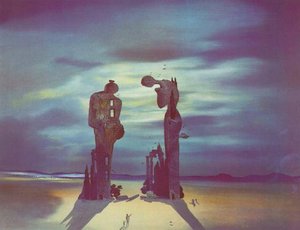 Archaeological Reminiscence of Millet's Angelus, 1935
A Fragment of Millet Revisited: Dali’s Surreal Echoes Salvador Dalí's “Archeological Reminiscence of Millet’s Angelus,” painted in 1935, isn’t merely a depiction of Jean-François Millet’s pastoral scene; it’s an audacious reimagining—a dreamscape bor...
Surrealism did not exist in a vacuum; rather, it was an audacious dialogue with the masters of the past. The movement frequently engaged in "period shifts," where historical motifs were stripped of their original context and reassembled into something entirely new. This process of reimagining tradition allowed artists to confront the weight of art history while simultaneously breaking free from its constraints. Dalí’s work, in particular, shows a deep reverence for the Renaissance masters and the technical precision of the Old Masters, yet he used that very precision to render the illogical.
This intersection of the classical and the avant-garde creates a tension that is central to the Surrealist experience. By utilizing the techniques of traditional oil painting—the meticulous layering of glazes and the careful manipulation of light—to depict impossible subjects, the artists achieved a "hyper-reality." This approach ensures that the dream feels grounded in truth, making the subversion all the more impactful. It is an invitation to see the familiar through a fractured mirror, where the echoes of Millet or Rembrandt are heard within the surrealist landscape, creating a continuous thread of human creativity that spans centuries.
The Physicality of Dreams: Preserving the Texture and Vision of Surrealist Art
To truly appreciate the depth of Surrealism, one must look beyond the subject matter to the physical execution of the work. The movement’s impact is felt most strongly in the tactile quality of its masterpieces—the way light catches a thick impasto stroke or how a smooth, polished surface reflects an unsettling void. For the true enthusiast, the allure lies in the
hand-painted texture that distinguishes a real masterpiece from a mere print. In a high-quality oil reproduction, one can observe the visible brushstrokes and the deeper tonal range that only natural pigments on cotton canvas can provide, capturing the very essence of the artist's hand.
Preserving this vision for future generations is a labor of passion and technical expertise. Just as the original Surrealists used specific oils and varnishes to protect their visions from the elements, modern custodians of art ensure that these works remain vibrant for decades. Whether through the use of
Damar varnish to protect against atmospheric pollutants or the careful engineering of heavy-duty stretchers to prevent warping, the goal remains the same: to maintain the integrity of the dream. For those looking to bring this extraordinary world into their own spaces, finding a reproduction that honors the original's physical depth—its shadows, its highlights, and its very soul—is the ultimate way to honor the legacy of the Surrealist masters.
For those seeking to possess a piece of this dreamlike history, ArtsDot.com offers museum-quality, hand-painted oil reproductions of the world's most iconic works. Our master artists specialize in capturing the precise textures and emotional resonance of the Surrealist era, ensuring that every brushstroke brings the subconscious to life in your home.