
Introduction
To step into the world of Ernst Ludwig Kirchner is to abandon the comfort of the familiar and embrace a landscape of raw, pulsating emotion. His work does not merely sit upon the canvas; it vibrates with the restless energy of a soul navigating the fractures of a modernizing Europe. As we prepare to journey through his top twenty-five masterpieces, we are not simply looking at paintings, but witnessing the birth of a visual language designed to scream, to weep, and to celebrate the profound psychological depths of the human condition.
Born in 1880 amidst the shifting landscapes of Germany, Kirchner emerged as a central figure of the Die Brücke (The Bridge) movement. This was an era of seismic cultural shifts—a time when the industrial revolution and the looming shadows of global conflict were tearing at the fabric of traditional society. Alongside his fellow rebels, Kirchner sought to build a bridge between the past and a visceral, unvarnently honest future. He drew inspiration from the primal strength of African and Oceanic art and the emotive intensity of Van Gogh, rejecting academic perfection in favor of jagged lines, jarring color palettes, and a sense of movement that feels almost breathless.
These twenty-five works remain profoundly meaningful today because they capture the universal experience of alienation and the search for identity within an increasingly chaotic world. Whether he is depicting the frenetic, neon-lit streets of Berlin or the serene, yet psychologically charged, figures in a sun-drenched landscape, Kirchner’s brushstrokes reveal the tension between our external reality and our internal truths. His ability to translate urban anxiety into vibrant, distorted beauty continues to resonate with anyone who has ever felt the weight of the modern age.
In the following pages, we will explore these seminal works in detail—from his iconic street scenes that pulse with the rhythm of city life to his intimate portraits that strip away social pretension. Each piece serves as a window into the mind of a master who dared to paint not what he saw, but what he felt.
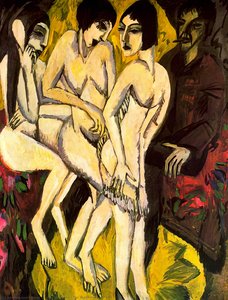
The Judgement of Paris - Ernst Ludwig Kirchner
To stand before a work of German Expressionism is to encounter the raw, unshielded pulse of human emotion. In The Judgement of Paris by Ernst Ludwig Kirchner, this pulse becomes a rhythmic, visual fever dream. As a cornerstone of the Die Brücke movement, this masterpiece captures the era's rejection of academic polish in favor of a visceral, psychological truth. The composition presents nude figures in an intimate, triangular embrace, their forms rendered with angular, expressive lines that vibrate against a backdrop of intense ochre and deep, dramatic reds.
Kirchner’s technique is profoundly tactile; thick, impasto brushstrokes create a physical landscape of paint, where light does not merely illuminate but seems to erupt from the canvas. The flattened perspective and jarring color contrasts evoke a sense of both profound connection and modern tension. This painting earns its place among the top 25 artworks of Ernst Ludwig Kirchner by transforming classical myth into a modern exploration of vulnerability and desire. Owning a handmade oil reproduction of this piece allows that same electric, transformative energy to anchor your space, bringing the heavy, soulful textures of art history into the contemporary home.
Self Portrait with Cat - Ernst Ludwig Kirchner
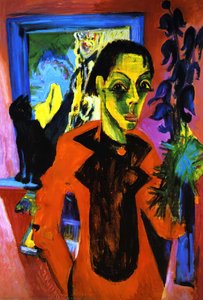 Self Portrait with Cat - Ernst Ludwig Kirchner
A profound stillness resides within the vibrant, fractured colors of Self Portrait with Cat by Ernst Ludwig Kirchner, a work that captures the delicate threshold between solitude and solace. As part of our curated selection of the top 25 artworks of Ernst Ludwig Kirchner, this 1919 masterpiece stands as an irreplaceable pillar of German Expressionism. It transcends mere portraiture, utilizing a thick impasto technique and a jarring, emotive palette—dominated by a striking red jacket and sun-drenched yellow curtains—to mirror the artist's psychological recovery following the trauma of World War I.
The painting’s inclusion in this definitive list is earned through its raw, unshielded vulnerability; the piercing gaze of the artist, anchored by the quiet, symbolic presence of a black cat, offers a window into the human soul. This tension between internal anxiety and external peace continues to resonate in the modern era. At ArtsDot.com, we believe such transformative beauty should not be confined to museum walls. Through our meticulous, hand-painted oil reproductions, you can bring this powerful expressionist energy and historical depth into your own home or private gallery, creating a space of profound reflection and cultural connection.
Portrat Gewecke - Ernst Ludwig Kirchner
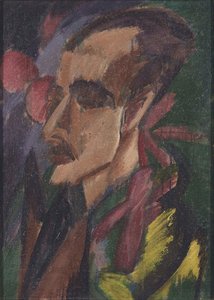 Portrat Gewecke - Ernst Ludwig Kirchner
To encounter Portrat Gewecke by Ernst Ludwig Kirchner is to stand before a raw, psychological threshold, an experience reserved for the most discerning collectors of German Expressionism. As one of the definitive works within the top 25 artworks of Ernst Ludwig Kirchner, this 1914 masterpiece transcends mere portraiture; it is a visceral window into the pre-war anxieties of a fracturing Europe. Through thick, energetic impasto and a jarring, emotive palette of earthy browns and somber greens, Kirchner captures an intensity that feels startlingly modern.
The painting’s power lies in its deliberate distortion—the widened eyes and heavy, gestural brushstrokes create a tactile depth that a mere print cannot replicate. For the sophisticated interior, such a piece offers more than decoration; it provides a profound intellectual anchor. Whether you are drawn to the way the crimson accents pierce the muted tones or the way the flattened perspective commands attention, this work embodies a timeless, avant-garde elegance. It is an essential acquisition for those seeking to surround themselves with the transformative legacy of the Die Brücke movement.
The Red Tower at Halle - Ernst Ludwig Kirchner
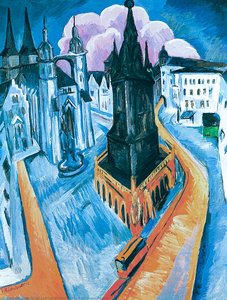 The Red Tower at Halle - Ernst Ludwig Kirchner
In The Red Tower at Halle , there is a rhythmic pulse that follows you—not with the chaos of a crowd, but with a profound understanding of urban vitality. This 1914 masterpiece does not merely depict a German landmark; it acts as a mirror to the restless energy of the modern soul. As you stand before this work, the diagonal perspective pulls you into a world of skewed architecture and vibrant, clashing hues where deep blues meet warm, glowing oranges.
Kirchner employs a thick, impasto technique that gives the street scene a tactile, breathing quality, making the historical tower feel both permanent and strikingly alive. The jagged, expressive brushstrokes capture the tension of the Die Brücke movement, turning a cityscape into an emotional landscape of light and shadow. Now, imagine this electric atmosphere in your own space. Not just as decor, but as a constant reminder : that even amidst the complexity of modern life, there is a magnificent, colorful strength to be found. Owning a hand-painted reproduction of this Kirchner classic allows you to bring that very pulse into your home.
Die tanzende Mary Wigman - Ernst Ludwig Kirchner
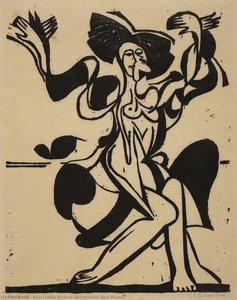 Die tanzende Mary Wigman - Ernst Ludwig Kirchner
In Die tanzende Mary Wigman , there is a kinetic energy that follows you—not with the grace of a traditional ballet, but with the raw, rhythmic pulse of an era in upheaval. This woodcut is not merely a depiction of movement; it is a mirror reflecting the psychological intensity of German Expressionism. Through bold, decisive black lines and a stark monochrome palette, Kirchner captures the revolutionary dancer Mary Wigman in a moment of profound emotional release.
The composition utilizes elongated, distorted forms to translate Wigman’s physical performance into a visual language of tension and ecstasy. As you observe the sharp contrasts against the creamy paper, you feel the weight of the 1920s—a period of deep social anxiety and searching. This work stands as one of the top 25 artworks of Ernst Ludwig Kirchner because it makes the invisible visible: the internal struggle of the modern soul. To possess a reproduction of this piece is to invite that same transformative energy into your home, reminding you that even in distortion, there is a breathtaking, sculptural truth.
The Drinker (self-portrait) - Ernst Ludwig Kirchner
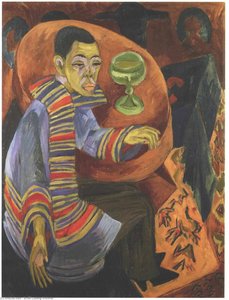 The Drinker (self-portrait) - Ernst Ludwig Kirchner
In The Drinker (self-portrait) , Ernst Ludwig Kirchner offers a hauntingly intimate window into the fractured psyche of an era on the precipice of collapse. As one of the most profound entries in our collection of the top 25 artworks of Ernst Ludwig Kirchner , this 1914 masterpiece transcends mere portraiture to become a visceral symbol of modern alienation. The composition, characterized by sharp, angular lines and a Cubist-influenced fragmentation, captures the artist lost in a moment of solitary contemplation, his gaze piercing yet distant.
The visual language is strikingly bold; jarring contrasts between cool, somber blues and aggressive, warm oranges create an atmosphere of restless tension. This use of color and distorted perspective mirrors the psychological instability felt across Europe on the eve of World War I. Today, the painting’s raw emotionality resonates deeply within contemporary interior design, where its expressive brushwork and dramatic shadows serve as a powerful focal point for those seeking to bring historical depth and intellectual gravity to their curated spaces. It remains an enduring testament to the power of German Expressionism.
Toilette, Frau vor Spiegel - Ernst Ludwig Kirchner
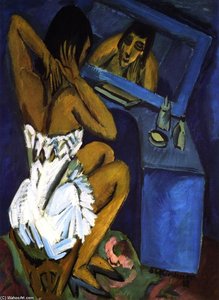 Toilette, Frau vor Spiegel - Ernst Ludwig Kirchner
In Toilette, Frau vor Spiegel , the lines of Ernst Ludwig Kirchner are not merely drawn; they are choreographed . This 1913 masterpiece is not a simple composition of a woman at her vanity; it is a dance frozen in time , capturing the psychological fragmentation of the early 20th century. As a cornerstone of German Expressionism, the work utilizes jagged, angular forms and a palette of muted yellows and deep blues to evoke a sense of profound introspection and urban anxiety.
The subject, captured in a moment of private ritual, gazes into a mirror that serves as a portal to the subconscious. Through thick, energetic impasto brushstrokes, Kirchner transforms a domestic scene into a visceral exploration of identity. This painting’s place among the top 25 artworks of Ernst Ludwig Kirchner is a tribute to its ability to make chaos feel like harmony. What if your living room could hold that same balance? What if your walls could breathe rhythm ? You can bring this emotive energy into your own space with a museum-quality, hand-painted oil reproduction, meticulously crafted to preserve every expressive stroke of the original.
Bridge in Wiesen - Ernst Ludwig Kirchner
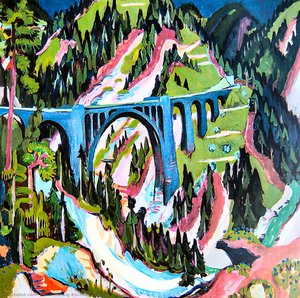 Bridge in Wiesen - Ernst Ludwig Kirchner
A profound sense of structural tension meets the quietude of the Alps in Bridge in Wiesen by Ernst Ludwig Kirchner. This 1926 masterpiece captures the Landwasser Viaduct not as a mere feat of engineering, but as a psychological landscape where human intervention and nature collide. As part of our curated selection of the top 25 artworks of Ernst Ludwig Kirchner, this piece stands out for its ability to translate the post-war anxieties of the Weimar Republic into a vibrant, tactile language of color and form.
Kirchner utilizes the bold, thick impasto strokes characteristic of the Die Brücke movement, creating a surface that vibrates with emotional energy. The stark contrast between the muted valley tones and the striking red signals creates a visual rhythm that is both unsettling and captivating. This work is essential to his legacy, representing a pivotal moment where Expressionism moved from urban chaos to a more contemplative, yet still restless, alpine setting. Today, the raw power of this composition offers a transformative presence for any modern collection; through our high-fidelity oil reproductions, you can bring this profound historical depth and textured beauty into your own home or private gallery.
Varieté, Englisches Tanzpaar - Ernst Ludwig Kirchner
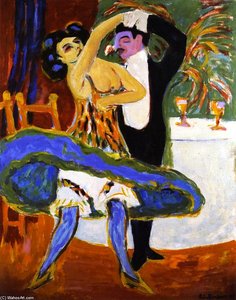 Varieté, Englisches Tanzpaar - Ernst Ludwig Kirchner
A rhythmic pulse of color and shadow, Varieté, Englisches Tanzpaar by Ernst Ludwig Kirchner captures the electric, dizzying heartbeat of a world in motion. As part of our curated selection of the top 25 artworks of Ernst Ludwig Kirchner, this 1910 masterpiece stands as a definitive pillar of German Expressionism. It is included in this collection for its profound ability to translate the sensory overload of urban nightlife into a visceral visual language, utilizing jagged brushstrokes and clashing, emotive hues that bypass the intellect to strike the soul.
The painting transcends mere depiction; it embodies the tension and exhilaration of the Die Brücke movement, where the boundaries between individual emotion and collective celebration blur. The swirling figures and vibrant, distorted forms offer a window into the psychological landscape of early twentieth-century modernity. Today, this masterpiece continues to inspire, offering a bold aesthetic that can transform a contemporary space. Through our high-fidelity, hand-painted oil reproductions, you can bring the transformative presence and raw, kinetic energy of Kirchner’s vision into your own home, office, or personal gallery.
The Three Old Women - Ernst Ludwig Kirchner
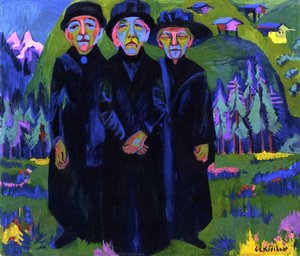 The Three Old Women - Ernst Ludwig Kirchner
In The Three Old Women , the lines of Ernst Ludwig Kirchner’s brush aren’t merely drawn; they are choreographed . This 1925 masterpiece does not simply present a portrait; it is a dance frozen in time , where the heavy, rhythmic presence of the elderly figures moves in concert with the jagged peaks of the background mountains. As one of the most profound entries in our collection of the top 25 artworks of Ernst Ludwig Kirchner, this piece captures the very soul of German Expressionism through a striking juxtaposition of dark, somber attire and a vibrant, almost electric landscape.
Kirchner utilizes a visceral impasto technique, layering thick, emotive strokes that allow the canvas to breathe rhythm . The tension between the weathered faces of the women and the luminous greens and blues of the scenery creates a profound psychological depth. What if your living room could hold that same balance? By bringing a hand-painted oil reproduction of this work into your home, you invite that same sense of structured chaos and historical resilience to your walls, transforming a modern space into a sanctuary of cultural significance.
Straße - Ernst Ludwig Kirchner
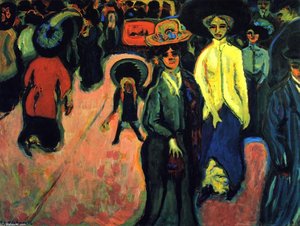 Straße - Ernst Ludwig Kirchner
In Straße , the viewer is immediately struck by the raw, energetic materiality of Kirchner’s brushwork. The oil paint is applied with a restless, jagged intensity, where thick, visible strokes create a sense of vibrating movement across the canvas. This technique is central to why this piece remains one of the top 25 artworks of Ernst Ludwig Kirchner ; it does not merely depict a street, but captures the psychological friction of urban life through textured, non-naturalistic color and fragmented forms. The way the light catches the impasto ridges evokes the frantic pulse of early 20th-century Berlin.
At ArtsDot.com , our mission is to preserve this exact tactile, three-dimensional quality for your private collection. Unlike flat prints, our Handmade Oil Reproductions are meticulously layered on cotton canvas by skilled artists, ensuring the physical depth of Kirchner’s Expressionist strokes is felt in every shadow and highlight. We bring the visceral energy of the Die Brücke movement into your home, offering a window into history that remains as emotionally charged as the day it was painted.
Hoffmann and Wife - Ernst Ludwig Kirchner
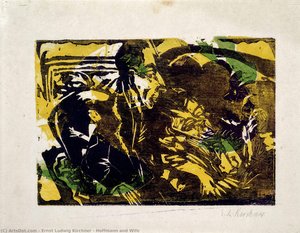 Hoffmann and Wife - Ernst Ludwig Kirchner
In the pantheon of the top 25 artworks of Ernst Ludwig Kirchner , Hoffmann and Wife (1913) stands as a profound psychological study that transcends mere portraiture. This piece captures the legendary German Romantic author E.T.A. Hoffmann and his wife within a space that feels both intimate and hauntingly isolated. Kirchner utilizes a signature Expressionist palette—heavy with ochres, murky greens, and amber light—to create a tableau of shared melancholy. The way the figures almost merge into the background reflects the era's growing preoccupation with the fragmentation of the self.
The painting’s placement in this collection is earned through its masterful use of distortion and thick, urgent brushstrokes that reject academic perfection in favor of raw, human vulnerability. It invites us to contemplate the quiet tensions that exist even within the closest bonds. For the modern collector, bringing a hand-painted oil reproduction of this masterpiece into a home offers more than decor; it introduces a timeless conversation about introspection and the beauty found in life's shadows, making it a sophisticated anchor for any curated interior.
Sitzende Frau mit Holzplastik - Ernst Ludwig Kirchner
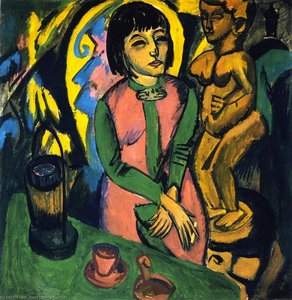 Sitzende Frau mit Holzplastik - Ernst Ludwig Kirchner
In Sitzende Frau mit Holzplastik , Ernst Ludwig Kirchner masterfully manipulates light not to illuminate a room, but to expose the psychological shadows of the human condition. Rather than traditional chiaroscuro, Kirchner employs a fractured, emotive light that dances across flattened planes of muted reds and somber blues. This interplay of light and shadow creates a rhythmic tension, where the glow on the table's vessels contrasts sharply with the heavy, angular contours of the seated figure. It is this command over atmospheric weight that secures its place among the top 25 artworks of Ernst Ludwig Kirchner ; he uses light to strip away the superficial, revealing an era gripped by existential uncertainty.
For the discerning collector, owning a hand-painted reproduction of this masterpiece offers more than mere decoration. The visible brushstrokes and deep tonal range of our oil paintings capture the very essence of Kirchner's Expressionist soul. When placed on a contemporary wall, the sophisticated interplay of light within this work adds an unparalleled layer of intellectual depth and museum-grade luxury to your interior space.
The Visit - Couple and Newcomer - Ernst Ludwig Kirchner
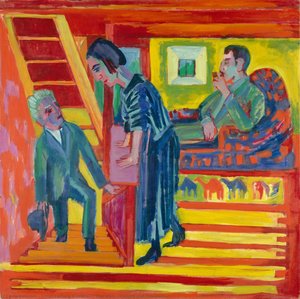 The Visit - Couple and Newcomer - Ernst Ludwig Kirchner
In "The Visit - Couple and Newcomer" (1922), Ernst Ludwig Kirchner invites us into a domestic space that feels both intimate and profoundly unsettled. As one of the most striking entries in our collection of the top 25 artworks of Ernst Ludwig Kirchner, this piece captures the psychological friction of the Weimar era. The composition centers on a woman, yet the presence of the "newcomer"" introduces a palpable tension, a disruption of the private sphere. Kirchner utilizes his signature Expressionist vocabulary—angular, distorted figures and a jarring, vibrant palette of reds and blues—to transform a simple gathering into a study of social alienation.
The room is filled with symbolic fragments: a solitary book, scattered vases, and heavy furniture that ground the scene in reality while the clashing colors suggest an underlying emotional storm. Owning a reproduction of this masterpiece is more than a decorative choice; it is an inheritance of the German Expressionist spirit. At ArtsDot.com, we bring this lineage of taste to your home through meticulous, hand-painted oil recreations that preserve every emotive brushstroke and textured impasto layer of Kirchner's original vision.
Winter lunar landscape - Ernst Ludwig Kirchner
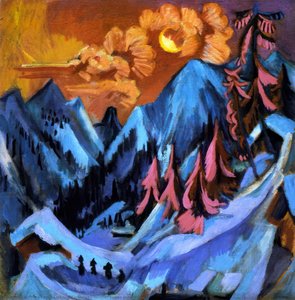 Winter lunar landscape - Ernst Ludwig Kirchner
In Winter lunar landscape , Ernst Ludwig Kirchner invites us into a world where the boundaries between reality and emotion dissolve. Painted in 1919, this work is far more than a nocturnal winter scene; it is a visceral manifestation of the Expressionist spirit. There is a gaze within this landscape that follows you—not with judgment, but with understanding . It does not merely depict a moonlit mountain range; it acts as a mirror to our own internal landscapes, reflecting the vibrant magentas, deep blues, and startling oranges that define Kirchner's post-war psyche.
As you observe the silhouetted figures traversing the snow alongside a solitary dog, you feel the tension between the tranquil lunar glow and the jagged, energetic brushstrokes. This piece stands as one of the top 25 artworks of Ernst Ludwig Kirchner because it makes the invisible visible—capturing the profound solitude and cosmic energy of the era. Imagine this masterpiece in your own collection; not merely watching you, but reminding you that even in the coldest winters, there is a luminous, transformative beauty to be found.
Kitchen in an Alpine Hut - Ernst Ludwig Kirchner
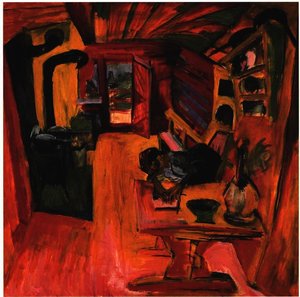 Kitchen in an Alpine Hut - Ernst Ludwig Kirchner
In Kitchen in an Alpine Hut , Ernst Ludwig Kirchner offers a profound window into the soul of German Expressionism, capturing a moment where domesticity meets deep psychological resonance. As one of the most significant works among the top 25 artworks of Ernst Ludwig Kirchner, this 1918 masterpiece transcends a simple interior scene; it is a visceral meditation on resilience painted during his convalescence after the trauma of World War I. The painting vibrates with a jarring yet captivating palette of yellows and deep shadows, utilizing thick, textured impasto to convey an atmosphere that oscillates between cozy intimacy and existential unease.
For the modern collector, this piece brings a bold, avant-garde energy to any space. Its rhythmic brushstrokes and striking color contrasts find a natural home in contemporary interiors that embrace eclectic or maximalist aesthetics, providing a sophisticated focal point that sparks conversation. Whether you are drawn to its historical gravity or its vibrant visual language, owning a hand-painted oil reproduction of this Kirchner classic allows you to invite the raw, transformative power of the Die Brücke movement into your own home.
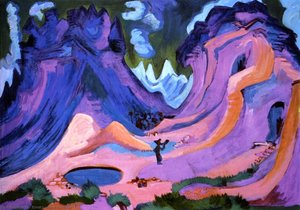
Landscape with blue rocks - Ernst Ludwig Kirchner
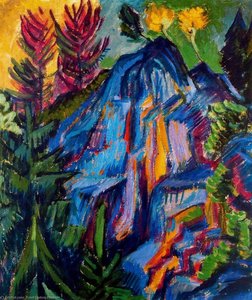 Landscape with blue rocks - Ernst Ludwig Kirchner
In Landscape with Blue Rocks , Ernst Ludwig Kirchner does not merely depict nature; he orchestrates a psychological storm. To gaze upon this 1919 masterpiece is to witness the very language of German Expressionism, where light and color are composed like a dissonant, haunting sonata. The painting’s soul resides in its striking, unnatural palette—a heavy, monumental mass of indigo and cerulean rocks that anchor the composition with an almost oppressive weight.
As you move your eyes across the canvas, you encounter a rhythmic explosion of fiery reds, acid yellows, and deep purples within the stylized foliage. These colors do not reflect sunlight; they invent it, pulsing with the raw, jagged energy of the Die Brücke movement. The thick, impasto brushstrokes create a tactile landscape where every ridge of paint vibrates with tension and urban anxiety. This work stands among the top 25 artworks of Kirchner because it transforms a simple vista into a portal of emotional depth. Bringing a hand-painted oil reproduction of this piece into your space allows that same restless, vibrant energy to spill onto your walls, turning a quiet room into a profound encounter with art history.
Bathers on the Lawn - Ernst Ludwig Kirchner
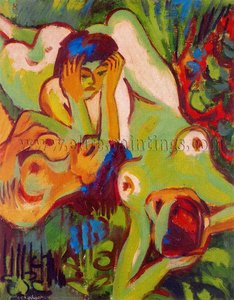 Bathers on the Lawn - Ernst Ludwig Kirchner
In the pantheon of German Expressionism, Bathers on the Lawn stands as a profound testament to the psychological intensity that defines Ernst Ludwig Kirchner’s legacy. This masterpiece captures the raw, pulsating energy of the human psyche, transcending a mere pastoral scene to explore themes of vulnerability and modern alienation. As one of the top 25 artworks of Ernst Ludwig Kirchner, it earns its place through a revolutionary use of color and form that disrupted the academic traditions of the early 20th century.
The canvas vibrates with an unsettling beauty; jagged, expressive lines and a flattened perspective create a sense of claustrophobic intimacy. Kirchner’s mastery of the impasto technique allows thick, agitated brushstrokes to lend a sculptural weight to the figures, making the very landscape feel alive and restless. The jarring juxtaposition of emerald greens against aggressive scarlet accents mirrors the internal tensions of a world in flux. For the modern collector, bringing this work into a curated space offers more than mere decoration; it introduces a timeless conversation about perception and the unshielded expression of the human soul, making it an evocative centerpiece for any sophisticated interior.
Rhätische Bahn, Davos - Ernst Ludwig Kirchner
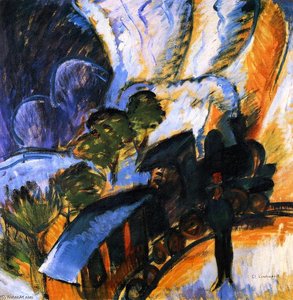 Rhätische Bahn, Davos - Ernst Ludwig Kirchner
In Rhätische Bahn, Davos , Ernst Ludwig Kirchner captures a profound moment of transition, where the mechanical pulse of modernity meets the serene isolation of the Swiss landscape. Painted in 1917, this work serves as a psychological window into the artist's retreat to Davos, reflecting a period of intense personal and creative reconfiguration. The composition is anchored by the rhythmic movement of the train, its presence cutting through the canvas with the bold, jagged energy characteristic of the German Expressionist movement.
The visual language—defined by vibrant, often jarring colors and thick, emotive brushstrokes—creates a tension between the man standing in the foreground and the vast, soaring sky where a solitary bird drifts. This interplay of human presence and industrial motion resonates deeply with contemporary audiences, mirroring our own modern anxieties regarding technology and nature. As one of the top 25 artworks of Ernst Ludwig Kirchner , this piece remains a vital study in movement and solitude. For those seeking to bring this era of raw emotion into their own collection, our hand-painted oil reproductions offer the tactile depth and impasto texture required to honor Kirchner's masterful legacy.
Fehmarn Coast - Ernst Ludwig Kirchner
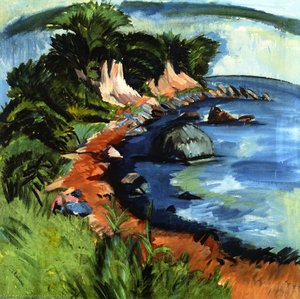 Fehmarn Coast - Ernst Ludwig Kirchner
What if I told you that Fehmarn Coast by Ernst Ludwig Kirchner was born from a moment of rebellion—a stroke of defiance against the ordinary? In this 1913 masterpiece, the tranquil Baltic shoreline is transformed into a visceral landscape of the soul. As one of the most significant works in our collection of the top 25 artworks of Ernst Ludwig Kirchner, it captures the very essence of German Expressionism through jagged rocks, sparse trees, and a restless sea rendered in jarring, emotive hues of blue and ochre.
Kirchner rejects academic realism, using thick impasto and distorted perspectives to convey the psychological tensions of a modernizing world. This painting does not merely depict a coast; it vibrates with an inner unease and profound contemplation. At ArtsDot.com, we believe such powerful history should not be confined to museums like the Hessisches Landesmuseum. Imagine this textured, emotive landscape as a centerpiece in your own sanctuary—a handmade oil reproduction that brings the raw energy of Die Brücke into your home, turning your walls into a profound artistic statement.
Doris with high neck - Ernst Ludwig Kirchner
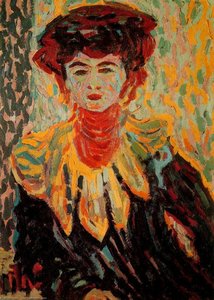 Doris with high neck - Ernst Ludwig Kirchner
What if I told you that “Doris with High Neck” by Ernst Ludwig Kirchner was born from a moment of rebellion—a stroke of defiance against the ordinary? This is not merely a portrait; it is a psychological manifesto. As one of the most profound entries in our collection of the top 25 artworks of Ernst Ludwig Kirchner, this piece captures the very heartbeat of German Expressionism through its jarring, angular lines and a palette that pulses with visceral energy.
In this work, Kirchner abandons the comfort of realism, using thick, impasto strokes of fiery oranges and deep, nocturnal blues to mirror the societal anxieties of the early 20th century. The subject’s direct, confronting gaze creates an intimate yet unsettling connection with the viewer. At ArtsDot.com, we believe such raw emotion deserves a place in the modern sanctuary. Imagine this masterpiece reimagined as a hand-painted oil reproduction hanging in your study—the visible brushstrokes and textured canvas transforming a simple wall into a profound statement of historical depth and artistic courage.
Variety Dancer - Ernst Ludwig Kirchner
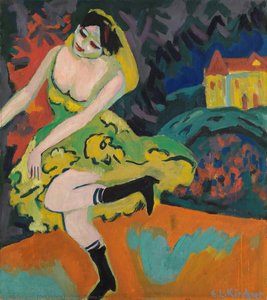 Variety Dancer - Ernst Ludwig Kirchner
In Variety Dancer , painted in 1910, Ernst Ludwig Kirchner captures the electric, fleeting pulse of the vaudeville era through a lens of raw German Expressionism. The canvas vibrates with the presence of a performer in a luminous yellow dress, her hands poised on her hips in a gesture of theatrical confidence. This work is far more than a nostalgic nod to stagecraft; it is a masterful study of movement and light, where the dancer becomes a focal point of energy against a backdrop that suggests a wider, perhaps more melancholic, world.
The painting’s brilliance lies in its tactile vitality—the way the bold colors and spirited pose evoke the sensory rush of a live performance. Owning Variety Dancer by Ernst Ludwig Kirchner isn’t merely a purchase; it is an inheritance of the avant-garde spirit. As part of our curated collection of the top 25 artworks of Ernst Ludwig Kirchner, this piece allows you to bring a lineage of taste into your own home. Through our meticulous hand-painted oil reproductions, the agitated brushstrokes and vibrant pigments are preserved, ensuring that this fragment of art history remains a living, breathing presence on your walls.
Sertigweg - Ernst Ludwig Kirchner
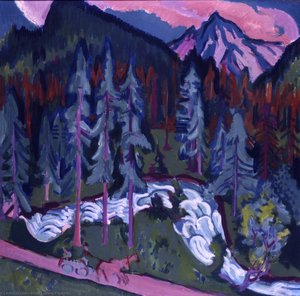 Sertigweg - Ernst Ludwig Kirchner
In Sertigweg , painted in 1926, Ernst Ludwig Kirchner offers a profound window into the psychological landscape of the Weimar Republic. This work secures its place among the top 25 artworks of Ernst Ludwig Kirchner by transcending mere landscape painting; it is a crystallized moment of Expressionist introspection. As the artist navigated his own turbulent emotional state, the Bavarian mountains became a stage for a much deeper drama of isolation and resilience.
The composition breathes with a heavy, wintry atmosphere, where muted blues and browns are punctuated by the raw energy of thick impasto brushstrokes. The presence of scattered bicycles and a solitary, sentinel-like horse introduces a haunting sense of movement interrupted—a metaphor for the aimlessness and existential uncertainty of a post-war era. To behold Sertigweg is to confront the tension between the permanence of nature and the fragility of human journeying. For the discerning collector, bringing such a powerful piece into a modern space offers more than decor; it invites a timeless conversation about strength amidst adversity, making it an evocative cornerstone for any curated collection of German Expressionism.
Street Scene - Ernst Ludwig Kirchner
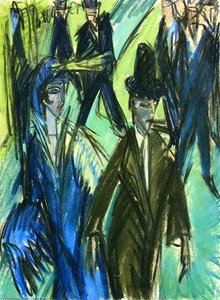 Street Scene - Ernst Ludwig Kirchner
To encounter Street Scene by Ernst Ludwig Kirchner is to step directly into the electric, often jarring pulse of a modernizing Berlin. As one of the most profound entries in our collection of the top 25 artworks of Ernst Ludwig Kirchner , this 1913 masterpiece captures the psychological turbulence of an era on the precipice of monumental change. Kirchner eschews traditional perspective, instead utilizing a compressed, claustrophobic space that mirrors the frantic energy and alienation of urban life.
The visual language is visceral; jagged, bold lines and a palette of brooding blues and greens are punctuated by sudden, luminous splashes of orange and yellow. These colors do not merely decorate the canvas but vibrate with an agitated, rhythmic tension. The figures—stylized and often hauntingly vacant—serve as symbols of the fragmentation of identity in an industrial world. Today, this work remains a vital cultural talking point, its themes of urban anxiety and social upheaval resonating deeply within contemporary metropolitan life. For those seeking to bring this raw, expressive energy into their own collection, our Handmade Oil Reproductions capture every textured brushstroke and emotional depth of Kirchner’s original vision.
Chicken near Mountain Village - Ernst Ludwig Kirchner
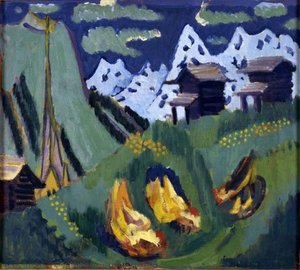 Chicken near Mountain Village - Ernst Ludwig Kirchner
A profound sense of restless energy vibrates through the canvas of Chicken near Mountain Village , a work that captures the very heartbeat of post-war German anxiety. As part of our curated selection of the top 25 artworks of Ernst Ludwig Kirchner, this piece stands as an irreplaceable pillar of Expressionism, marking the moment where landscape transcends mere scenery to become a psychological mirror. Through a radical, flattened perspective and a visceral use of impasto , Kirchner rejects traditional realism to present a world that feels both breathtakingly beautiful and claustrophobically intense.
The painting’s power lies in its jarring palette; fiery reds and deep, dramatic blues collide with the rolling greens of the alpine village, creating a visual tension that mirrors the social instability of the era. This masterpiece does more than document a mountain retreat; it invites us into the artist's fractured psyche. Today, this transformative energy can be brought into your own home or private gallery through our high-fidelity, hand-painted oil reproductions, allowing you to possess the raw, emotional depth of Kirchner’s most haunting vision.
Conclusion
To walk through the visual landscape of Ernst Ludwig Kirchner is to witness the pulse of a modern soul, caught between the frantic energy of the city and the raw, unyielding truths of human emotion. These twenty-five masterpieces do not merely exist as relics of the German Expressionist movement; they breathe within our contemporary consciousness, reminding us that even in moments of profound alienation or urban chaos, there is a vibrant, jagged beauty to be found. As the light fades on our exploration of his work, we see that Kirchner’s legacy is not found solely in museum archives, but in the way his bold, distorted forms and electric palettes continue to challenge our perceptions and stir our deepest sensibilities.
When we bring these works into our own living spaces, they cease to be mere historical documents and become living presences. A hand-painted reproduction of a Kirchner street scene or a vibrant figure study does more than decorate a wall; it introduces a dialogue between the past and the present, inviting a sense of movement and psychological depth into the sanctuary of the home. His ability to translate the anxieties and ecstasies of the human condition onto canvas offers us a mirror through which we can reflect on our own journeys through an ever-changing world. We invite you to continue this journey of discovery and find a piece of this expressive spirit for your own collection by exploring our full collection .
Ultimately, the enduring power of these paintings lies in their refusal to be silent. They remain as echoes of a revolution that sought to bridge the gap between the seen and the felt, ensuring that the raw, visceral energy of Die Brücke continues to inspire creativity, provoke thought, and enrich the aesthetic fabric of our daily lives for generations to come.