



The Enlightenment Catalyst: Moving from Rococo Excess to Rational Restraint
 Neoclassicism Unveiled: The Timeless Elegance of Order, Reason, and Classical Antiquity
The Enlightenment Catalyst: From Rococo Excess to Rational Restraint The Revival of Antiquity: Exploring Neoclassical Art's Ideals & Enduring Legacy The Seeds of Revival: Enlightenment Ideals & Rediscovering Classical Antiquity The latter half of the...
To truly appreciate the profound shift that Neoclassicism brought to the European soul, one must first envision the sensory landscape of the mid-18th century. Before the arrival of reason and restraint, the art world was enthralled by the Rococo—a style defined by its whimsical frivolity, asymmetrical flourishes, and an almost breathless preoccupation with the ornamental. It was an era of the salon, characterized by intimate, decorative works that often leaned into the lighthearted eroticism of the aristocracy. This period offered a sensory overload of pastel hues and swirling, unscripted energy, yet beneath its gilded surface, a deeper intellectual hunger was beginning to stir.
As the currents of the Enlightenment began to surge across the continent, thinkers such as Voltaire and Rousseau championed a new era of human agency. They advocated for a return to natural law and the cultivation of civic virtue, casting a critical eye upon the perceived decadence of the Rococo. This intellectual revolution demanded a visual language capable of mirroring its core values: reason, order, and clarity. The frantic energy of the previous age was increasingly viewed as a symptom of moral decay, prompting a deliberate, disciplined turning away from the ornate toward something far more permanent and grounded in truth.
This transition was not merely a change in aesthetic preference but a profound philosophical realignment. Artists began to seek a sanctuary of logic, where the chaotic emotions of a moment were replaced by universal truths. The movement sought to anchor the human spirit in enduring principles, establishing an aesthetic attitude that prioritized restraint over excess and universality over the ephemeral. It was the birth of a visual era that valued the intellect as much as the eye.
The Revival of Antiquity: Pompeii, Herculaneum, and the Archaeological Spark
 Neoclassicism Defined: The Timeless Elegance of Order, Grandeur, and the Classical Ideal
The Renaissance of Antiquity: Defining the Neoclassical Aesthetic Neoclassical art | History, Characteristics & Artists - Britannica Neoclassicism in the arts is an aesthetic attitude based on the art of Greece and Rome in antiquity, which invokes ha...
The heartbeat of Neoclassicism found its rhythm in the dust of rediscovered ruins. The mid-18th century witnessed a monumental archaeological awakening with the excavations of Pompeii and Herculaneum, which acted as a powerful catalyst for the artistic revival. These discoveries did more than just uncover lost cities; they provided a tangible, breathtaking connection to the grandeur of the Greco-Roman world. For the first time in centuries, the silent majesty of antiquity was no longer a matter of myth but a visible, tactile reality that could be studied, documented, and emulated.
This archaeological spark ignited a passion for classical antiquity among scholars and artists alike. The discovery of intricate frescoes, delicate jewelry, and weathered sculptures offered a new blueprint for beauty. It inspired an era of intense study, where the works of ancient masters became the ultimate standard for excellence. This fascination was not limited to the ground beneath our feet; it extended into the very way light and form were perceived on canvas. The newfound access to authentic Roman and Greek motifs allowed artists to move beyond mere imitation, seeking instead to capture the idealized essence of a lost golden age.
This era of rediscovery fostered a deep reverence for the past, creating a bridge between the ancient and the modern. It was a period where the weight of history felt lightened by the brilliance of new vision, allowing the aesthetic standards of antiquity to reshape the cultural identity of Europe. The echoes of these excavations can still be felt today in any space that seeks to honor the enduring power of classical form.
Principles of Order: The Intellectual Framework of Neoclassical Composition
 The Timeless Elegance of Academic Classicism: A Journey Through Order, Precision, and the Pursuit of Perfection
The Foundations of Order: Defining the Principles of Academic Classicism Mastering Perfection: A Definitive Guide to the Elegance and Precision of Academic Classicism The Foundations of Order: Defining the Principles of Academic Classicism To underst...
To step into the world of Neoclassicism is to enter a sanctuary of profound logic and historical reverence. Unlike the spontaneous energy found in later movements, Neoclassical art was governed by a rigorous intellectual framework. It was an art form rooted in the conviction that true beauty is not found in the accidental or the raw, but in the careful structure and mathematical harmony of the composition. This movement emerged as a disciplined pursuit of truth through the lens of clarity and precision.
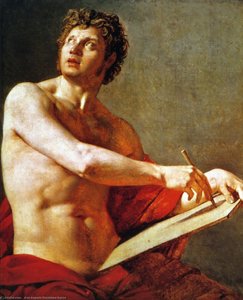
At its core, this style emphasizes a hierarchy where history painting stands at the pinnacle of achievement. The artist’s task was to master the complex language of line and form to communicate universal truths. There is a profound sense of stability in these works; every brushstroke and element within the frame serves a greater narrative or moral purpose. By adhering to established canons of proportion, the Neoclassical artist sought to capture the eternal essence of human experience, using anatomical precision and balanced composition to evoke a sense of permanence.
This pursuit of perfection required more than mere talent; it demanded an almost scientific approach to the canvas. The use of clear contours, subtle shading, and a controlled color palette ensured that the viewer’s eye was led through a logical progression of form. In this way, Neoclassicism offered a quiet power that transcended the ephemeral nature of daily life, providing a visual anchor for an age defined by the search for order in an ever-changing world.
Masters of Form: Exploring the Sculptural and Painterly Legacies of the Era
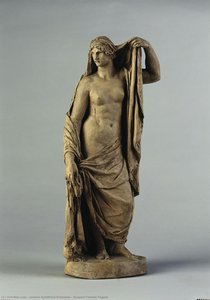 Draped Female Figure
A Study in Classical Grace: Johann Gottfried Schadow's Draped Female Figure This exquisite hand-painted reproduction captures the essence of a pivotal moment in Neoclassical sculpture – Johann Gottfried Schadow’s “Draped Female Figure,” created in 18...
The legacy of Neoclassicism is etched into the very textures of its most celebrated works. In sculpture, we see a remarkable sensitivity to form and texture, as seen in the works of Johann Gottfried Schadow. His ability to render drapery with such meticulous grace evokes the spirit of ancient Greece, where the soft, diffused lighting highlights the marble's contours and creates an illusion of movement and volume. Similarly, the pencil sketches of Vincenzo Camuccini serve as windows into this era, capturing expressions of serene dignity through precise hatching and cross-hatching techniques that prioritize anatomical accuracy.
In the realm of painting, figures like Gavin Hamilton and Anton Raphael Mengs played pivotal roles in shaping the aesthetic standards of the age. Hamilton, an antiquarian painter, used his deep knowledge of Roman ruins to depict monumental scenes from Greek and Roman mythology, imbuing his work with a sense of historical authenticity. Meanwhile, painters like Paolo Borroni brought a notable sense of realism to religious themes, blending classical motifs with a profound emotional depth. These artists did not merely paint; they interpreted the ancient world for a modern audience.
Even in the more decorative traditions, such as the works inspired by antique reliefs like those of Francis Hayman, we see the subtle dance between gods and mortals captured through a lens of classical legend. Whether through the smooth surfaces of marble or the deliberate, controlled brushstrokes on canvas, these masters achieved a level of craftsmanship that remains a testament to the enduring fascination with idealized beauty and the pursuit of perfection.
Timeless Aesthetics: How Neoclassical Values Endure in Modern Interior Design
 Mougins Museum of Classic Art
A Timeless Dialogue: The Soul of Mougins Nestled within the sun-drenched, medieval heart of Provence, the Mougins Museum of Classic Art serves as a profound sanctuary where the echoes of antiquity meet the vibrant pulse of modernity. To step into thi...
Though centuries have passed since the height of the Neoclassical movement, its principles continue to breathe life into contemporary aesthetics. The values of order, grandeur, and clarity remain incredibly relevant for those seeking to create spaces of sophistication and calm. In modern interior design, we see the echoes of this era in the use of symmetrical layouts, clean architectural lines, and a preference for a balanced color palette that avoids visual clutter.
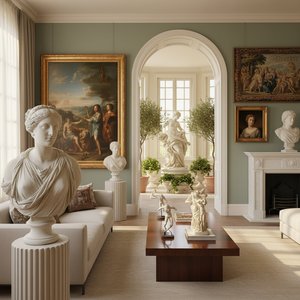
The Neoclassical influence is particularly potent when integrating historical motifs into a modern setting. Much like the Mougins Museum of Classic Art, which orchestrates an encounter between ancient antiquities and contemporary vision, a well-designed home can serve as a curated conversation between eras. Incorporating elements such as classical busts, framed architectural prints, or even large-format murals that evoke historical ceilings allows a space to feel anchored in history while remaining vibrantly modern.
Ultimately, the elegance of Neoclassicism lies in its ability to transcend time. By embracing the principles of harmony and restraint, we can create environments that offer a sanctuary from the frantic energy of the modern age. Whether through a single carefully chosen reproduction or a grand multi-panel installation, the enduring beauty of the classical ideal continues to inspire a sense of timelessness and grace in our most personal spaces.