
Introduction
There is a profound, quiet intimacy found in the soft scratch of graphite against paper—a sensory prelude to the grander symphonies of oil and canvas. Before the vibrant light of Monet’s gardens or the swirling, emotional depths of Van Gogh’s skies, there was the humble pencil. It is an instrument of pure intention, capable of capturing the most delicate whisper of a shadow or the sharp, sudden clarity of a gaze. To step into the world of graphite mastery is to enter a sanctuary of light and silver, where the artist’s hand moves with a vulnerability that only monochrome can permit.
Throughout history, the evolution of graphite has mirrored our own cultural journey toward precision and psychological depth. From the meticulous anatomical studies that defined the Renaissance to the expressive, atmospheric sketches that paved the way for the Impressionist movement, these works served as the very blueprints of human creativity. Graphite allowed masters to experiment with chiaroscuro , testing the boundaries between presence and absence, life and memory. It was never merely a preparatory tool; it was a medium of profound truth, stripped of the distraction of color, leaving only the raw essence of form.
Today, these legendary works remain deeply meaningful because they touch upon something universal. In an era of digital perfection and fleeting images, the tactile weight of a pencil stroke offers a connection to the human struggle for permanence. We see in these masterpieces not just lines on paper, but the heartbeat of the artist—the hesitation, the pressure, and the ultimate triumph of vision. They remind us that even with the simplest of tools, one can capture the infinite.
As we wander through this curated selection, prepare to encounter ten extraordinary works that redefined the limits of the medium. We will journey from the hauntingly detailed portraits that breathe life into stillness to the sweeping, atmospheric landscapes that command the very air around them. Each piece on this list represents a moment in time when graphite ceased to be a mere sketch and became a legend.
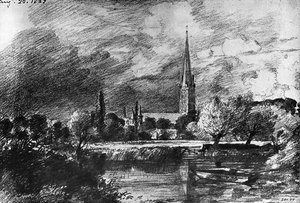
Salisbury cathedral - John Constable
 Salisbury cathedral - John Constable
In the delicate, silvered whispers of graphite, John Constable captures more than mere architecture; he invites us into a moment of profound spiritual stillness. His Salisbury Cathedral is a masterclass in the emotive power of monochrome, where every precise line and soft shadow breathes life into the soaring Gothic spires. As you gaze upon this sketch, you aren't just observing a landscape; you are witnessing the Romantic era’s sublime dialogue between human devotion and the tranquil English countryside.
Constable utilizes masterful hatching and varied line weights to create a tactile sense of depth, leading the eye from the textured riverbanks toward the cathedral’s majestic silhouette. The interplay of light and atmospheric haze evokes a sense of reverence, turning a simple pencil drawing into a window to the soul. To possess such a work is to transform your home into a sanctuary of historical elegance. It is not merely an addition to a wall; it is an invitation to inhabit a space defined by timeless beauty and the quiet, enduring strength of nature and faith.
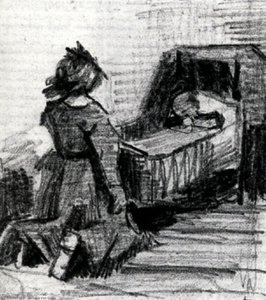
Girl Kneeling in Front of a Cradle - vincent willem van gogh
 Girl Kneeling in Front of a Cradle - vincent willem van gogh
In the quiet, monochromatic depths of "Girl Kneeling in Front of a Cradle," we are invited into a private sanctuary of domestic devotion. Created in 1883, this exquisite graphite drawing by Vincent van Gogh captures a fleeting moment of profound tenderness that transcends the simple boundaries of a sketch. Unlike the explosive, sun-drenched canvases for which he is globally renowned, this early work offers a window into his more somber, introspective period, finding extraordinary beauty in the humble rituals of care.
The mastery lies in Van Gogh's expressive linework ; rather than smooth transitions, he utilizes short, rhythmic strokes and meticulous cross-hatching to breathe life into the scene. One can almost feel the rough grain of the wooden cradle and the soft weight of the fabric through his energetic, visible lines. This piece is not merely a drawing but a transformation of paper into emotion. For the true connoisseur, bringing such a soulful, grounded work into one's home turns a simple room into a gallery of the soul , where the quiet dignity of life is eternally preserved.
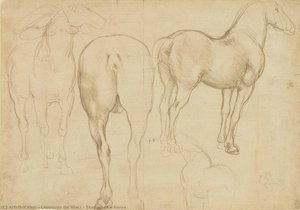
Studies of a horse - Leonardo da Vinci
 Studies of a horse - Leonardo da Vinci
To gaze upon Leonardo da Vinci’s Studies of a Horse is to step directly into the restless, searching mind of the Renaissance master. This exquisite collection of graphite and metalpoint studies, dating from approximately 1490, is far more than a mere sketch; it is an intimate window into a scientific odyssey. Its inclusion in our selection of legendary graphite masterpieces is essential, as it redefined the very essence of drawing—transforming it from simple representation into a profound biological inquiry. Leonardo captures the tension of muscle and the fluid grace of movement with a precision that blurs the line between fine art and anatomical truth.
Each delicate stroke and subtle gradation of tone offers a tactile sense of life, making this work a cornerstone of artistic evolution. At ArtsDot.com, we believe such profound moments of human curiosity deserve to be felt daily. Imagine the quiet strength of these anatomical explorations hanging in your personal sanctuary, turning a simple wall into a space of intellectual wonder and timeless elegance. It is an invitation to surround yourself with the raw, beautiful pulse of creation.
Houses by the Sea - Claude Monet
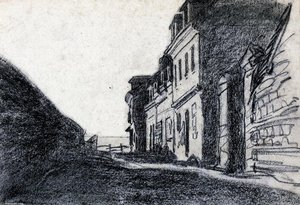 Houses by the Sea - Claude Monet
In Houses by the Sea , Claude Monet invites us into a world where light is not merely seen, but felt through the delicate medium of graphite. Long before his famous sun-drenched canvases, this 1864 masterpiece demonstrates his early mastery of chiaroscuro , using intricate hatching and cross-hatching to sculpt atmosphere from mere pencil strokes. The way the diffused coastal light dances across the architectural forms, creating soft shadows and luminous highlights, captures that quintessential Impressionist obsession with the ephemeral.
Monet’s command of tonal gradation—moving from deep, velvety blacks to the brightest paper whites—transforms a simple seaside sketch into a profound study of depth and movement. This sophisticated interplay of light and shadow is precisely what secures its place among the greatest graphite works in history. For the modern collector, bringing such a piece into a home offers more than decoration; it introduces a layer of quiet luxury and intellectual depth. When reproduced with our meticulous hand-painted techniques, the visible texture and tonal range of this work can breathe a sense of timeless, atmospheric elegance into any contemporary space.
Standing pair of Lovers, Seen from the Side - Gustav Klimt
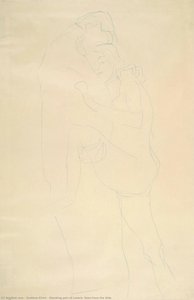 Standing pair of Lovers, Seen from the Side - Gustav Klimt
In the quiet, evocative lines of Gustav Klimt’s Standing Pair of Lovers, Seen from the Side , we find a private sanctuary of affection frozen in time. This masterpiece earns its place among the top legendary graphite pencil works through its profound ability to strip away the distractions of color, leaving only the tender geometry of two souls in embrace. The monochrome palette creates a stark, emotive power, where every delicate stroke of the pencil breathes life into the tactile reality of skin and drapery.
Klimt’s technical brilliance shines through sophisticated hatching, creating a palpable sense of weight and texture that feels almost sculptural. While the graphite provides a soulful depth, subtle whispers of gold and red hint at his signature opulence, bridging the gap between raw sketching and decorative splendor. For the modern collector, this piece brings a sense of timeless sophistication to a contemporary interior; its harmonious balance of light and shadow offers a meditative calm, inviting a moment of deep, symbolic connection into the heart of the home.
Woman with Hat, Coat and Pleated Dress - vincent willem van gogh
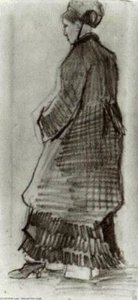 Woman with Hat, Coat and Pleated Dress - vincent willem van gogh
Before the world knew him through the sun-drenched yellows of Arles, Vincent van Gogh found a profound, quiet intensity within the silver shadows of graphite. In 1882, as he wandered the streets of Paris, he captured more than just a figure; he captured a heartbeat. "Woman with Hat, Coat and Pleated Dress" invites us to walk alongside a solitary soul, feeling the cool, rhythmic rustle of fabric and the soft, muted atmosphere of an urban afternoon.
This masterpiece earns its place among the greatest graphite pencil works because of its raw, tactile honesty. Through masterful hatching and cross-hatching , Van Gogh breathes life into the heavy drape of a coat and the delicate pleats of a dress, using nothing but light and shadow to create volume. There is a beautiful, melancholic grace in this monochromatic study—a reminder that even in the simplest lines, there is infinite depth. Bringing such a piece into your home does more than decorate a wall; it introduces a moment of contemplative serenity, anchoring a modern space with the timeless, soulful energy of a master at work.
El Vagabundo - Pablo Picasso
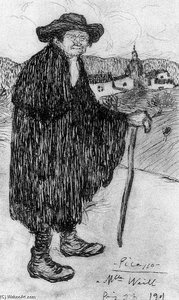 El Vagabundo - Pablo Picasso
In the charcoal-hued depths of El Vagabundo by Pablo Picasso , we find a profound meditation on solitude. The dominant, somber shades of graphite create a mood of quiet introspection, pulling the viewer into a world defined by shadow and silvered light. This monochrome mastery is why it stands among the Top 10 Legendary 'Graphite Pencil' Masterpieces That Changed Art Forever ; Picasso eschews color to focus entirely on the raw, expressive power of line and texture. Through meticulous hatching, he renders the weathered skin of a wanderer and the distant silhouette of a church steeple with an architectural strength that feels both ancient and immediate.
For the discerning collector, integrating such a piece into a modern interior offers a way to anchor a room with emotional gravity. The work’s monochromatic palette serves as a sophisticated foundation for a minimalist living space or a moody, dimly lit study, providing a focal point that evokes a sense of timelessness and dignity. It is not merely a drawing, but an invitation to find beauty in the transient and the overlooked.
Untitled (95) - Pablo Picasso
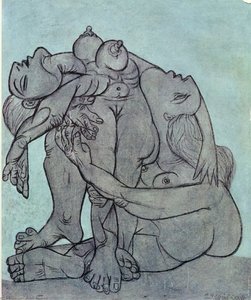 Untitled (95) - Pablo Picasso
To possess a study of Untitled (95) by Pablo Picasso is to hold a fragment of history’s most profound psychological tension; it is an investment in a legacy of raw, transformative genius. Created in 1936 amidst the shadows of the Spanish Civil War, this graphite masterpiece transcends mere sketching to become a visceral echo of human vulnerability. Through a muted palette of ghostly grays and ethereal blue-grays, Picasso utilizes meticulous hatching to weave three intertwined figures into a claustrophobic, hauntingly beautiful tableau.
The work’s position among the greatest graphite masterpieces is cemented by its ability to translate political upheaval into universal symbols of connection and fragmentation. The sharp, angular distortions and the heavy, textured use of charcoal-like strokes create an emotional intensity that remains unparalleled in modern art history. For the discerning collector, bringing a high-quality oil reproduction of this work into a modern luxury interior offers more than decoration; it provides an unmistakable aesthetic authority. Much like the original's commanding presence, a masterful hand-painted tribute serves as a sophisticated focal point, imbuing contemporary spaces with the timeless, somber elegance of Picasso’s most emotive era.
Fisherman with Sou'wester, head - vincent willem van gogh
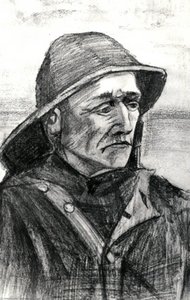 Fisherman with Sou'wester, head - vincent willem van gogh
In the quiet, monochromatic world of 1883, Vincent van Gogh invites us into a moment of profound, weathered intimacy. In Fisherman with Sou'wester, head , the artist does not merely use graphite; he breathes life into the very grain of the paper. There is no vibrant color to distract us, only the rhythmic language of hatching and cross-hatching that builds a tactile reality you can almost feel beneath your fingertips.
The light in this masterpiece isn't something reflected—it is something composed . It emerges from the deep, velvety shadows of the fisherman’s heavy coat, catching the rugged textures of his salt-sprayed skin and the sturdy brim of his sou'wester hat. As you gaze into the subject's downward look, you feel the weight of a life shaped by the sea—a sense of weary resilience and quiet contemplation. This graphite work is a masterclass in emotional depth, where every deliberate pencil stroke serves to capture the dignity of the working class. It is a hauntingly beautiful portal into the soul of a man, waiting to bring a sense of storied prestige and soulful stillness to your own collection.
Portrait of Fanny Cornforth - Dante Gabriel Rossetti
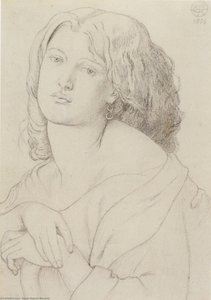 Portrait of Fanny Cornforth - Dante Gabriel Rossetti
In the Portrait of Fanny Cornforth by Dante Gabriel Rossetti , the dominant shade is a soft, silvery charcoal, a monochromatic whisper that sets a mood of profound, quiet intimacy. This graphite masterpiece transcends simple sketching through its masterful use of tonal gradations; Rossetti employs delicate hatching to breathe life into the velvet shadows of Fanny’s hair and the luminous, porcelain smoothness of her skin. It earns its place among the top 10 legendary graphite pencil masterpieces because it captures a soul through the mere interplay of light and shadow, proving that color is not required to convey deep emotion.
For the discerning collector, integrating such a work into a modern living space offers an opportunity to curate an atmosphere of serene prestige. The drawing’s subtle, neutral palette acts as a soulful anchor, perfect for creating a contemplative corner or a sophisticated dining room where soft, diffused lighting can highlight the intricate textures of the pencil strokes. It brings a sense of historical grace and academic excellence, inviting a moment of quiet reflection into the heart of a contemporary home.
Conclusion
As the light fades on our journey through these graphite wonders, we are left with more than just the memory of fine lines and delicate shadows. These masterpieces, born from the humble intimacy of pencil and paper, do not belong solely to the silent halls of museums; they live within us. They are the quiet whispers in a sunlit morning, the profound stillness of a thoughtful afternoon, and the enduring pulse of human emotion captured in silver and grey. Each stroke we have explored serves as a bridge between the past and our present, reminding us that even the simplest medium can hold the weight of the world's beauty.
To bring these works into your own sanctuary is to invite an eternal dialogue into your home—a way to anchor your personal spaces with the grace of history and the soft, evocative textures of a bygone era. Whether it is the tender realism of a portrait or the sweeping drama of a landscape, these drawings continue to shape our interiors, turning mere walls into windows of reflection and inspiration. They remind us that art is not a static relic, but a living presence that breathes alongside our daily lives, offering solace, wonder, and a timeless connection to the human spirit.
We invite you to continue this exploration and find the piece that speaks to your soul within our full collection . May you always find beauty in the subtle gradients of life and the enduring strength of a well-placed line.