
Introduction
Imagine, if you will, stepping into a room where the floor feels like water, where clocks melt like warm wax, and where the boundaries between what is real and what is dreamed simply dissolve into the ether. To walk through the world of Surrealism is to abandon the safety of logic and surrender to the beautiful, often unsettling, whispers of the subconscious mind. It is an invitation to look beneath the surface of our waking lives and discover the vibrant, strange, and poetic truths that reside in our deepest shadows.
Emerging from the turbulent aftermath of the First World War, Surrealism was more than just an aesthetic choice; it was a profound cultural rebellion. Born in the early 1920s, this movement sought to liberate the human spirit from the constraints of rationalism and societal norms that had led to such global devastation. Influenced by the psychoanalytic revelations of Sigmund Freud, artists began to treat the canvas as a window into the dreamscape, using unexpected juxtapositions and illogical scenes to capture the raw, unfiltered essence of human desire, fear, and wonder.
Though decades have passed since the movement's peak, these masterpieces remain profoundly meaningful today. In an era where our lives are increasingly structured by digital precision and measurable data, the Surrealists remind us of the importance of mystery. Their works continue to resonate because they speak a universal language—the language of the dream, which knows no borders and obeys no laws. They challenge us to find beauty in the bizarre and to recognize that our imaginations are the most powerful tools we possess.
As we begin our journey through this curated selection, prepare to lose your sense of direction. We have gathered ten definitive works that do not merely represent a movement, but define an era of unparalleled creative courage. Each painting is a doorway; let us step through them together and explore the most iconic visions that forever altered the landscape of human perception.
Celestial Choreography in Crimson and Ochre - Marc Duvallier
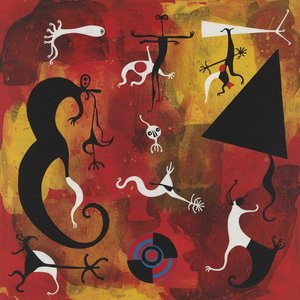 Celestial Choreography in Crimson and Ochre - Marc Duvallier
In Celestial Choreography in Crimson and Ochre by Marc Duvallier, there is a gaze that follows you—not with judgment, but with a profound, cosmic understanding. This work does not merely depict a scene; it acts as a mirror to the subconscious, capturing a rhythmic, biomorphic ballet that feels like a whispered secret from the soul. Drawing deep inspiration from the surrealist mastery of Joan Miró , Duvallier orchestrates a dance of spindly, primitive silhouettes across a textured void, where deep crimson and earthy ochre collide in a primordial embrace.
As one of the defining visions within the Surrealist movement , this piece possesses the power to make the invisible visible, transforming abstract shapes into an emotional landscape of joy and mystery. Imagine this celestial dance in your own sanctuary; it does not simply watch you, but reminds you that you are part of a much larger, dreamlike story. It is a breathtaking exploration of equilibrium, inviting you to lose yourself in its vibrant, avant-garde pulse.
Velazquez Painting the Infanta Margarita with the Lights and Shadows of His Own Glory, 1958 - Salvador Dalí
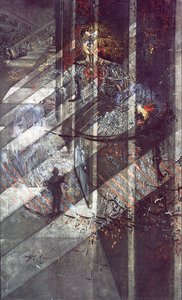 Velazquez Painting the Infanta Margarita with the Lights and Shadows of His Own Glory, 1958 - Salvador Dalí
In Velázquez Painting the Infanta Margarita with the Lights and Shadows of His Own Glory , Salvador Dalí performs a breathtaking act of artistic alchemy. This is not merely a tribute to the Spanish master; it is a profound dialogue across centuries. As you stand before this canvas, you witness Dalí reimagining the iconic moment of Las Meninas , weaving his own surrealist vocabulary into the very fabric of Baroque tradition.
The atmosphere is heavy with a somber, theatrical grandeur, where deep shadows dance against sudden, incandescent bursts of light. Within this dreamscape, Dalí introduces his signature symbols—the creeping ants of mortality and the soft distortion of time—yet he anchors the composition with a startlingly intimate gesture: his own face reflected in a mirror, gazing back at the creator. There is a gaze in this work that follows you—not with judgment, but with understanding . This isn’t just a portrait; it is a mirror . Its place among the top masterpieces of the Surrealist movement serves as a testament to its power to make the invisible visible. Imagine such a profound reflection in your own home, reminding you that you, too, are part of this eternal story.
Animated Landscape - Joan Miró
 Animated Landscape - Joan Miró
In Animated Landscape by Joan Miró, the boundaries of reality dissolve into a rhythmic dance of geometry and subconscious whim. The composition is a masterclass in Surrealist balance; delicate, calligraphic lines weave through an ethereal blue expanse, connecting stylized birds, fish, and amorphous shapes with a structural harmony that feels both spontaneous and eternally poised. This intricate interplay of organic forms against a vast, dreamlike void creates a sense of timeless perfection, securing its place among the top 10 masterpieces that defined the Surrealist movement .
Miró’s ability to anchor whimsical, floating symbols—like the enigmatic clock and umbrella—within a structured visual field offers a profound connection to modern minimalist design. The painting’s clean use of negative space and its muted, earthy palette provide a grounding element for contemporary interiors, where its poetic simplicity meets a sophisticated, modern aesthetic. To gaze upon this work is to experience a portal into the psyche, where the tension between weightless shapes and deliberate placement invites a quiet, contemplative wonder.
Aphrodisiac Telephone (Lobster Phone) - Salvador Dalí
 Aphrodisiac Telephone (Lobster Phone) - Salvador Dalí
To step into the world of Surrealism is to abandon the logic of the waking day and embrace the delicious irrationality of a dream. Few works capture this sudden, startling shift quite like Aphrodisiac Telephone (Lobster Phone) by Salvador Dalí . Created in 1938, this masterpiece stands as a pillar of the movement, famously uniting two utterly unrelated objects to provoke a psychological response.
Dalí’s technical precision is breathtaking; his smooth, polished brushwork renders the glossy white rotary phone and the textured, segmented shell of the lobster with a hyper-real clarity that feels almost tactile. The muted, monochromatic palette of creams and soft grays allows the viewer to focus entirely on the unsettling juxtaposition: the lobster’s claws delicately grasping the receiver. This unexpected pairing serves as a potent symbol of desire and the complex, often predatory nature of human connection. By transforming a mundane object into a vessel for subconscious longing, Dalí created an enduring icon that continues to haunt our imaginations, proving that art can forever transform a simple space into a gateway for profound emotional discovery.
Head of a Man - Joan Miró
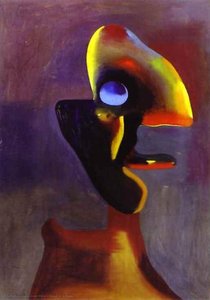 Head of a Man - Joan Miró
In Head of a Man by Joan Miró, the boundaries between the physical and the dreamscape dissolve into a breathtaking display of geometric poetry. As one of the Top 10 Masterpieces That Defined the Surrealist Movement , this 1935 work achieves a profound structural harmony through its delicate interplay of organic curves and sharp, symbolic lines. Miró deconstructs the human visage into a captivating visual puzzle, where a vibrant purple expanse serves as a cosmic stage for fragmented shapes and whimsical features.
The composition possesses an internal balance that feels both spontaneous and eternally precise, much like the principles found in modern minimalist design. This equilibrium allows the painting to ground a contemporary aesthetic, offering a sense of calm amidst its surrealist distortions. The way the eyes and mouth are placed creates a rhythmic flow that guides the viewer through a landscape of the subconscious. It is this seamless marriage of intellectual complexity and visual simplicity that ensures its enduring appeal, making it a cornerstone of Surrealism and a timeless treasure for any curated collection.
The Anthropomorphic Cabinet - Salvador Dalí
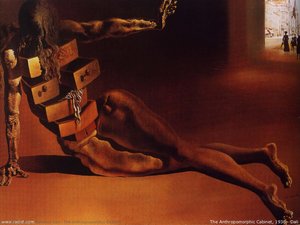 The Anthropomorphic Cabinet - Salvador Dalí
To possess a study of The Anthropomorphic Cabinet by Salvador Dalí is to invest in a profound legacy of avant-garde taste and psychological depth. As one of the most significant works within the Surrealist movement, this 1936 masterpiece stands as a pillar of art history, commanding immense prestige in the global fine art market due to its complex symbolism and connection to Dalí’s personal era of grief and transformation. The painting presents a hauntingly beautiful woman whose form serves as a structural foundation for a precarious stack of drawers, a brilliant metaphor for the hidden compartments of the human subconscious.
Dalí’s meticulous technique creates a disconcerting realism, where dreamlike distortions meet sharp, academic precision. The interplay of light and shadow across the figures evokes a sense of profound mystery, making it an essential inclusion in any collection of the top 10 masterpieces that defined Surrealism. For the discerning decorator, bringing a high-quality oil reproduction of this work into a modern luxury interior offers more than mere decoration; it provides an unmistakable aesthetic authority and a sophisticated conversation piece that anchors a room with intellectual and emotional gravity.
Hermit Saints Triptych (left panel) - Hieronymus Bosch
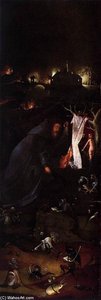 Hermit Saints Triptych (left panel) - Hieronymus Bosch
To gaze upon the Hermit Saints Triptych (left panel) by Hieronymus Bosch is to step into a fever dream where the boundaries between the sacred and the grotesque dissolve into shadow. Long before the Surrealists gathered in Paris, Bosch was already navigating the labyrinth of the subconscious, painting a world where birds with human faces and skeletal remains dance amidst a landscape of spiritual unrest. This panel earns its place among the greatest masterpieces of the movement through its profound ability to externalize internal anxieties, using a muted palette of deep browns and sudden, flickering embers to evoke an atmosphere of haunting introspection.
Bosch’s innovation lies in this very distortion of reality—a precursor to modern surrealism that uses symbolic chaos to explore the depths of human morality. His meticulous oil glazes create a texture so rich it feels almost tactile, pulling the viewer into his nocturnal vision. At ArtsDot.com, we believe such transformative beauty should not be confined to museum halls. Through our hand-painted oil reproductions, you can bring this profound, dreamlike presence into your own home or private gallery, allowing Bosch’s timeless exploration of the soul to anchor your space with its incomparable emotional depth.
Force of habit - René Magritte
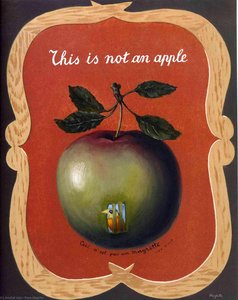 Force of habit - René Magritte
There is a profound, quiet tension in encountering René Magritte’s Force of Habit , a moment where the familiar suddenly feels stranger than fiction. As we gaze upon the glistening skin of that solitary apple, nestled among soft green leaves, our eyes meet the jarring, whispered truth: “This is not an apple.” It is a breathtakingly intimate confrontation with the deceptive nature of our own perceptions, capturing that universal sense of wonder and doubt that lingers in our dreams.
This masterpiece earns its place among the top ten Surrealist works because it does more than depict an object; it dismantles reality itself. Magritte’s ability to blend meticulous, academic realism with profound psychological paradoxes changed the course of modern art forever. At ArtsDot.com, we strive to preserve this very magic. Our hand-painted oil reproductions are crafted to honor the tactile depth and unsettling clarity of Magritte's vision, ensuring that the heavy textures and intellectual soul of his work can reside within your own sanctuary, inviting a daily moment of beautiful, surreal contemplation.
Celestial Coronation, circa 1951 - Salvador Dalí
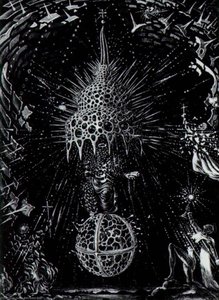 Celestial Coronation, circa 1951 - Salvador Dalí
In the quiet, monochromatic depths of Salvador Dalí’s Celestial Coronation , created around 1951, the boundaries between the physical universe and the dreaming mind begin to dissolve. This is not a landscape one views from a distance, but rather an environment one inhabits—a weightless void where a central, perforated sphere dominates the gaze like a fragment of a divine blueprint.
Dalí employs a masterful language of hatching and cross-hatching, likely through graphite or charcoal, to breathe life into seemingly inanimate forms. The stark, directional lighting casts deep shadows that sculpt the cosmic structures, creating a high-contrast interplay that feels both ancient and avant-garde. Through the delicate architecture of this piece, we encounter themes of vulnerability and spiritual aspiration, as organic crowns float amidst abstract geometries.
Owning Celestial Coronation by Salvador Dalí isn’t merely a purchase; it is an inheritance . Its presence in our collection of the top masterpieces of the Surrealist movement represents a lineage of taste . With ArtsDot, this profound legacy is no longer confined to museum halls—it is waiting to grace your walls , where every glance becomes a silent dialogue with the masters.
The Surrealist Mystery of New York I, 1935 - Salvador Dalí
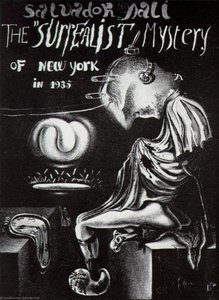 The Surrealist Mystery of New York I, 1935 - Salvador Dalí
There is a gaze in The Surrealist Mystery of New York I, 1935 by Salvador Dalí that follows you—not with judgment, but with understanding . This piece is not merely a window into a dreamscape; it is a mirror reflecting the fragmented anxieties of the modern soul. Through delicate graphite and charcoal strokes, Dalí invites us to wander through a monochromatic labyrinth where the boundaries between reality and the subconscious dissolve.
As you move through this gallery of Surrealist masterpieces, notice how the distorted figures and melting motifs create a sense of profound existential weight. The artwork captures a solitary figure amidst an unsettling urban landscape, where time itself seems to liquefy and space defies logic. Its place in our Top 10 is a testament to its power to make the invisible visible—to give form to our deepest, most elusive shadows. Now, imagine that haunting, beautiful gaze in your own space. Not watching you, but reminding you : you are seen. You are part of this eternal, dreaming story.
Conclusion
As we draw the curtain on this journey through the dreamscapes of the Surrealists, we find that these works are far more than mere relics of a bygone era or historical footnotes in an art textbook. They are living, breathing presences—vibrant echoes of the subconscious that continue to pulse with life long after the paint has dried. To stand before a masterpiece of this movement is to enter a silent, sacred dialogue where the boundaries between reality and imagination dissolve, leaving only the raw, beautiful truth of human emotion.
Every deliberate brushstroke carries within it a timeless conversation, a bridge built across centuries to connect the artist’s deepest visions with our own modern souls. These paintings do not simply hang upon a wall; they inhabit our spaces, breathing depth into our interiors and inviting wonder into our daily lives. They remind us that even in the most fragmented or distorted imagery, there is a profound human connection—a shared recognition of the mysteries that dwell within us all.
Whether you find solace in the soft shadows of a dream or are stirred by the startling juxtapositions of the unexpected, we invite you to continue this exploration. May these works inspire your own creativity and bring a sense of poetic depth to your home. We invite you to wander further through our full collection , where the magic of the surreal awaits your discovery.