

The Frame as Argument: Elevating Visual Narratives through Architectural Integration
 Frames of Elegance: The Connoisseur's Guide to Selecting Perfect Frames for Luxury Interiors
The Silent Partner: Understanding the Frame's Role in Visual Narrative The Frame as Argument: An Expert Guide to Selecting the Perfect Frame for Your Masterpiece The Silent Partner: Understanding the Frame's Role in Visual Narrative The Frame as Argu...
In the rarefied atmosphere of luxury hospitality, excellence has undergone a profound metamorphosis. For generations, the hallmark of a premier establishment was found in predictable perfection; today, it resides in the ability to curate an emotional landscape. To the discerning hotel designer, a painting is never merely a decorative object hung upon a wall. Rather, when approached with true connoisseurship, the frame acts as a silent partner in a profound dialogue between the artwork and the observer. It serves as a curated gateway, a threshold that prepares the mind for the emotional journey contained within the pigment. Much like the architectural bones of a grand estate, the frame provides the necessary punctuation to the artist's visual sentence, defining where the world of the painting ends and the reality of the guest begins.
Consider the historical precedent set by masters such as William Charles Lebrocq, an American craftsman who operated not through the stroke of a brush, but through the meticulous curation of the viewer's gaze. Lebrocq understood that the boundary between an artwork and its environment is where true magic resides. His collaboration with legendary architects like Stanford White allowed for frames that were an extension of grand architectural visions, ensuring that art did not merely sit within a space but breathed alongside it. When we select a heavy, gilded border, we command a sense of reverence and historical weight; conversely, a minimalist edge invites a contemporary, unmediated connection. In the hands of a skilled designer, the frame becomes an argument—a structural introduction that directs the gaze inward and prevents the eye from wandering into the periphery of the room.
Beyond the Border: The Psychological Impact of Bespoke Presentation on Guest Experience
 Framed for Success: Transforming Hotel Interiors with Museum-Level Art Presentation
The Neuroaesthetics of Hospitality: Art as an Emotional Anchor Beyond Decor: Creating a Bespoke Impressionist Art Identity for Luxury Hotels & Galleries The Neuroaesthetics of Hospitality: Art as an Emotional Anchor for the Modern Traveler Elevate Ho...
The neuroaesthetics of hospitality suggest that art serves as an essential emotional anchor for the modern traveler. In a world of transient movement, a well-presented masterpiece offers a sense of permanence and sanctuary. When a guest enters a suite or a grand lobby, their perception is immediately shaped by the structural introduction of the art they encounter. A bespoke presentation does more than protect a canvas; it creates a cognitive structure for visual information, helping to organize and interpret the surrounding luxury. This psychological anchoring is vital in creating what we call "the soul of place," transforming a mere room into a memorable destination.
The impact of this presentation extends to the very way light and texture interact within a space. Imagine the interplay of light upon an intricate, gilded stucco or the subtle shadows cast by a deep-set, museum-grade frame. Such details evoke a sense of awe and reverence, much like the spiritual ambiance found in the soaring arches of the Hagia Sophia. By thoughtfully selecting how art is presented, designers can manipulate the perceived depth and dimension of a room, using the physical boundaries of the frame to create illusions of infinite space or intimate seclusion. This level of detail is what separates a standard hotel from a landmark institution.
Curating Continuity: Aligning Frame Styles with Period Aesthetics and Interior Motifs
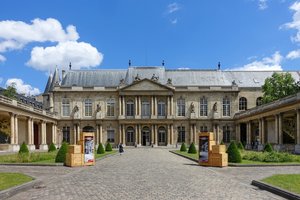 Hôtel de Soubise
A Symphony of Gilded Splendor: The Soul of the Hôtel de Soubise To step across the threshold of the Hôtel de Soubise is to surrender oneself to the intoxicating embrace of the French Rococo. Located in the historic heart of the Marais, this architect...
True luxury lies in the seamlessness of design, where every element whispers tales of a unified aesthetic narrative. For the designer working within historic contexts—such as the French Rococo splendor of the Hôtel de Soubise or the Italian Liberty style of the Grand Hotel Campo dei Fiori—the challenge is to achieve architectural harmony. The frame must not clash with the existing boiserie or gilded moldings; it must emerge from them. This requires a deep understanding of period-specific craftsmanship, where the use of pastel hues, expansive mirrors, and organic curves can be echoed in the choice of ornamentation.
Achieving this continuity involves a sophisticated approach to materiality. One might look to the legacy of Robert Moore Kulicke, who bridged the gap between ancient goldsmithing traditions and modern minimalism. In a contemporary setting, a polished aluminum frame might provide a sleek sanctuary for an Abstract Expressionist piece, while in a more classical environment, a hand-carved wooden frame with gold leaf can anchor a room's historical weight. The goal is to ensure that the art feels as though it has always belonged to the architecture, creating a sense of timelessness that is the hallmark of the world’s most prestigious hotels.
Mastering Scale and Depth: Utilizing Multi-Panel Compositions for Grand Hotel Atriums
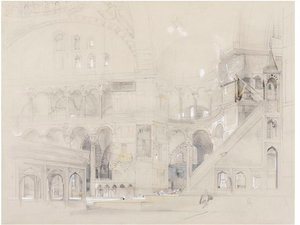 Interior of Hagia Sophia, Constantinople
Subject and Composition This captivating architectural drawing offers a detailed glimpse into the majestic interior of the Hagia Sophia, one of the most iconic symbols of Byzantine architecture and religious history. The sketch captures the grandeur ...
In the vast, soaring expanses of hotel atriums and grand staircases, single-canvas works often struggle to command the necessary presence. To overcome this architectural challenge, the "multi-panel" trend offers a sophisticated solution. By splitting a singular, breathtaking image across three, four, or even five panels, a designer can create a rhythmic, modern architectural look that spans wide walls and guides the eye through layered depths. This technique allows for a monumental scale that respects the verticality and openness of large-scale structures.
The artistry in multi-panel installation lies in the seamless flow of color and brushstroke across every panel. It is an exercise in precision, ensuring that the composition remains cohesive despite the physical breaks in the canvas. When executed correctly, these expansive works function as modern frescoes, transforming a static wall into a dynamic, cinematic experience. This approach allows for the recreation of historical grandeur—such as the sweeping vistas of a ceiling fresco—within a contemporary framework, providing a sense of epic scale that is essential for high-impact public spaces.
The Connoisseur’s Choice: Materiality, Craftsmanship, and the Preservation of Artistry
 robert kulicke
The Architect of the Frame and the Soul of Still Life Robert Moore Kulicke was far more than a mere craftsman; he was a visionary who understood that the boundary between an artwork and its environment is where true magic resides. Born in Philadelphi...
For the professional buyer, the integrity of the artwork is paramount. The distinction between a mere print and a handmade oil reproduction lies in the tactile depth of the medium. A true masterpiece features visible brushstrokes, an impasto texture that catches the light, and a deeper tonal range than any digital reproduction can achieve. This physical presence is achieved through meticulous layering on 100% cotton canvas, using specific oils like safflower to ensure that whites remain pure and do not yellow over time. Every painting is a labor of passion, finished with a protective coat of Damar varnish to shield the surface from the atmospheric pollutants of a high-traffic hotel environment.
Furthermore, the longevity of the investment depends on the engineering of the support. Stretcher bars must be robustly braced to prevent warping, and the use of flexible gesso is essential to prevent cracking in varying climates. Whether it is the choice of solid wood for a frame—ranging from gold leaf to deep espresso—or the decision to use an "Aged & Cracked" finish to evoke antiquity, every material choice must be made with an eye toward both aesthetic impact and archival permanence. In luxury hospitality, art is not just decor; it is a legacy that must endure for generations.
From Selection to Installation: A Professional Guide to Bespoke Art Procurement
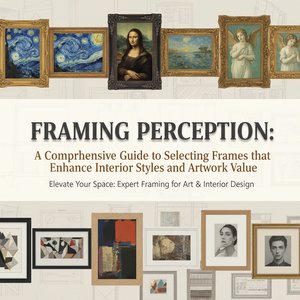 Framing Perception: A Comprehensive Guide to Selecting Frames that Enhance Interior Styles and Artwork Value
The Art of Framing: Beyond Protection – Elevating Interiors & Artwork Value Wikipedia: Interior design Interior design is the art and science of enhancing the interior of a building to achieve a healthier and more aesthetically pleasing environment f...
Navigating the complexities of large-scale art procurement requires more than just an eye for beauty; it requires a structured, professional process. For the hotel designer, the journey begins with vision and ends with seamless integration. This process is best managed through a dedicated Project Coordinator who serves as a single point of contact, bridging the gap between the designer's requirements and the artist's execution. From the initial digital mockup—which allows for unlimited revisions to color and composition before a single drop of paint touches the canvas—to the final delivery via secure, global logistics, every step must be transparent and controlled.
The modern procurement workflow utilizes advanced tools to remove uncertainty. Digital placement services allow designers to see exactly how a custom commission will look on a specific wall before production begins, ensuring that scale and color palette are perfectly aligned with the interior design. Once the artwork is approved, the transition from studio to site is handled with industrial-grade care, using reinforced packaging and trusted global carriers like DHL Express. This level of service ensures that when the art finally arrives, it is not merely a delivery, but the arrival of a masterpiece, ready to transform a space into an unforgettable experience.
ArtsDot.com stands as the global flagship for this level of excellence. As a premium full-service marketplace, we specialize in providing hotels, restaurants, and interior designers with hand-painted oil reproductions, custom commissions, and bespoke art solutions. From transforming personal memories into historical masterpieces to managing large-scale B2B projects with volume discounts and white-label shipping, our mission is to bring the museum experience to the world's most exquisite interiors. Discover our full range of services and expert consultations at ArtsDot.com.