

The Celestial Herald: Understanding the Iconography of Gabriel
In the vast, silent corridors of art history, few figures command as much reverence and ethereal grace as the Archangel Gabriel. As the divine messenger tasked with bridging the gap between the celestial and the terrestrial, Gabriel serves as the pivotal protagonist in some of the most profound narratives ever committed to canvas. To the discerning enthusiast, recognizing Gabriel is not merely about identifying a winged figure; it is about deciphering a complex language of sacred symbols designed to evoke awe and spiritual contemplation.
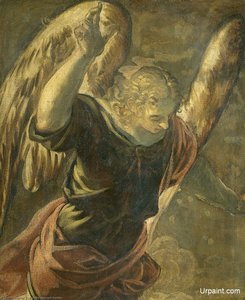
The iconography of Gabriel is deeply rooted in his role as the herald of the Incarnation. He is often depicted with an air of profound solemnity, yet imbued with a lightness that suggests his ability to traverse realms. Artists throughout the centuries have utilized specific attributes to signal his identity: the lily, representing purity; the scepter, denoting his royal authority from the heavens; and often, a gentle, downward motion of his hands or wings, signifying the delivery of a momentous decree. Through these subtle visual cues, the artist transforms a mere figure into a vessel of divine will, inviting the viewer into a moment of cosmic significance.
Understanding this heraldry allows us to look beyond the paint and pigment, seeing instead the theological weight carried by each brushstroke. When we encounter Gabriel in a masterpiece, we are witnessing more than a scene; we are participating in a timeless dialogue between the human soul and the infinite.
The Annunciation: A Masterclass in Renaissance Composition
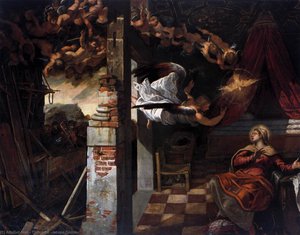
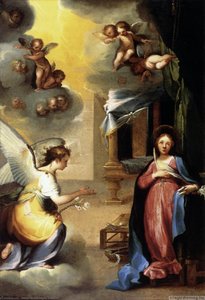
Nowhere is the presence of Gabriel more impactful than within the composition of the Annunciation. This specific narrative moment—the instant the angel delivers his message to the Virgin Mary—became a cornerstone of Renaissance artistic exploration. During this era, masters sought to harmonize the spiritual with the mathematical, using perspective and light to create a sense of tangible reality within a divine event.
Consider the sublime work of Le Perugino, whose 1489 masterpiece, The Annunciation of Mary, stands as a testament to Early Renaissance precision. In such works, the composition is often structured around a profound sense of balance and spatial depth. The angel does not simply appear; he enters a carefully constructed architectural or garden setting that feels both real and sanctified. The use of sfumato and delicate transitions in light allows the figure of Gabriel to emerge from the ether, his presence felt through the soft interplay of shadow and glow.
The brilliance of these Renaissance compositions lies in their ability to direct the viewer's eye. Through the strategic placement of figures and the use of vanishing points, artists guide us from the movement of the approaching angel to the receptive, often contemplative, posture of Mary. It is a choreographed dance of light and geometry, where every element of the landscape and every fold of drapery serves to heighten the tension and sanctity of the encounter.
From Early Renaissance to Baroque: The Evolution of Divine Light
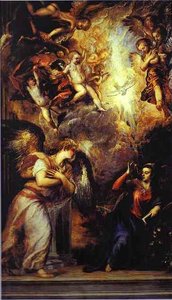
As art transitioned from the structured clarity of the Renaissance into the dramatic intensity of the Baroque period, the depiction of Gabriel underwent a breathtaking metamorphosis. While the Early Renaissance focused on balance, order, and a serene, almost static divinity, the Baroque era embraced movement, emotion, and the theatrical power of chiarosc::scuro.
In the works influenced by masters like Titian or Palma Vecchio, such as those seen in the compositions of Girolamo da Santacroce, we begin to see a more visceral approach to the divine. The light is no longer merely a tool for clarity; it becomes a character in itself. In the Baroque tradition, Gabriel might burst into the frame amidst swirling clouds and turbulent skies, his wings catching dramatic highlights that contrast sharply with deep, impenetrable shadows. This era sought to overwhelm the senses, using the interplay of extreme light and dark to evoke a sense of religious ecstasy and the overwhelming power of the divine presence.
This evolution reflects a broader shift in the human experience—a move from the intellectualized devotion of the 15th century toward the emotive, sensory-driven spirituality of the 17th. The angel remains the messenger, but his arrival becomes an event of cosmic drama, pulling the viewer into a whirlwind of motion and light that defies the stillness of the canvas.
Symbolism and Splendor: Floral Motifs and Sacred Attributes
Beyond the central figures, the true depth of Gabriel’s presence is often found in the exquisite details surrounding him. The use of botanical symbolism serves as a silent, beautiful commentary on the themes of fertility, purity, and the renewal of life. In many religious paintings, the space inhabited by the angel is adorned with intricate floral arrangements that are far more than mere decoration.
The meticulous rendering of these textures—the velvety petal of a rose, the dew on a leaf, the heavy weight of a blooming peony—adds a sense of "living" quality to the artwork. When an artist masters this level of detail, the painting ceases to be a flat image and becomes a window into a sacred garden, where every blossom is a syllable in a divine poem.
Preserving the Divine: Collecting and Curating Sacred Artworks
For the true art enthusiast, acquiring a piece that captures such profound themes is an act of stewardship. Whether it is a meticulously rendered Renaissance reproduction or a dramatic Baroque oil painting, collecting sacred art requires an appreciation for both historical context and technical mastery. The challenge lies in finding works that retain the "soul" of the original—the visible, tactile brushstrokes and the depth of color that define the Old Masters.
When curating a collection of religious iconography, one must consider the interplay of light and space within their own environment. A large-scale, multi-panel composition can transform a grand hallway into a cathedral-like corridor, while a smaller, intimate portrait may serve as a focal point for quiet meditation in a study. The longevity of such pieces is paramount; true collectors look for the integrity of materials, from the heavy-duty cotton canvas to the use of premium, lightfast pigments that ensure the divine light captured centuries ago remains vibrant for generations to come.
In an age of digital reproduction, the value of a hand-painted work lies in its ability to bridge the gap between history and the modern home. By bringing these iconic depictions of Gabriel into contemporary spaces, we do more than decorate; we preserve the continuity of human creativity and ensure that the whispers of the divine messengers continue to resonate through the ages.
At ArtsDot.com, we are dedicated to this legacy of preservation. Our studio specializes in creating museum-quality, hand-painted reproductions that honor the techniques of the masters. From the delicate precision of the Renaissance to the dramatic textures of the Baroque, our artists use traditional methods and premium oils to ensure every brushstroke breathes life into history, making the sublime accessible to collectors worldwide.