The Sacred Sanctuary: Defining the Atelier as a Laboratory of Light
 Beyond the Brushstroke: Unveiling the Intimate Charm of Impressionist Studio Scenes
The Threshold of Creation: An Introduction to the Impressionist Atelier To step into the world of the Impressionists is to leave behind the heavy, somber shadows of academic tradition and enter a realm bathed in dappled sunlight. In the mid-19th cent...
To step across the threshold of a true atelier is to leave the clamor of the external world behind and enter a realm where time is measured not by the ticking of a clock, but by the slow movement of shadows across a floor. Historically, the studio has never been merely a room; it is a sanctuary, a private laboratory where the artist’s internal vision meets the tangible elements of the physical world. In the tradition of the great European academies, this space—often referred to as an atelier—was a structured environment of discipline and devotion. It was here that the scent of damp clay, the sharp tang of turpentine, and the heavy presence of linseed oil created an atmosphere of intense focus. For the discerning collector, understanding this sanctity is essential, for it is within these walls that the very soul of a masterpiece is forged, long before the brush ever touches the final canvas.
The studio serves as the vital bridge between thought and form. It is a place of profound meditation, where the boundaries between the creator’s mind and their medium begin to dissolve. Whether it be the light-drenched workshops designed to capture the subtle nuances of musculature or the dim, controlled environments used to master the chiaroscuro of the Old Masters, the studio is the crucible of innovation. It is a space that fosters both the rigorous application of classical technique and the spontaneous bursts of inspiration that define greatness. When we admire a work of art, we are, in essence, witnessing the preserved energy of that sacred, creative struggle.
Mastery in Motion: From Rembrandt’s Shadows to Monet’s Floating Studio
 The Artist in his Studio
The Artist in his Studio is the title of an oil painting on panel created by Rembrandt in 1629. The Museum of Fine Arts in Boston, Massachusetts currently holds the painting. The painting depicts an artist standing on the left side of his studio, gaz...
The history of art is written in the varying ways masters have utilized their workspaces to capture the ephemeral. Consider the profound depth found in the works of Rembrandt, where the studio becomes a stage for dramatic tension. In his 1629 masterpiece,
The Artist in his Studio, we see the artist positioned within a space defined by its sparse, purposeful objects—a grinding stone, palettes, and bottles of oil. The composition invites us to observe the quiet intensity of the creative gaze, where the artist stands at a distance from the easel, lost in the profound act of observation. Here, the studio is a place of intellectual rigor, where light is used to sculpt form out of the darkness, creating a sense of permanence and weight.
In stark contrast, the Impressionist revolution sought to dismantle the heavy, somber shadows of the academic tradition, moving the laboratory of art into the unpredictable brilliance of the outdoors. Claude Monet’s
The Boat Studio offers a breathtaking glimpse into this shift. By utilizing a floating studio—a small, meticulously outfitted boat anchored along the Seine—Monet transformed his workspace into a mobile vessel for capturing fleeting moments of light and color. This was no longer a static room, but a dynamic engagement with nature itself. The water shimmers, the air feels heavy with moisture, and the artist becomes a participant in the landscape’s rhythm. This movement from the controlled interior to the
en plein air experience represents one of the most significant evolutions in art history, shifting our focus from the documentation of reality to the capture of an impression—the very heartbeat of existence.
The Alchemy of Creation: Exploring the Tactile Soul of Sculptural and Painterly Spaces
 The Memorial Museum-Studio of Z. Azgur
A Sanctuary of Bronze and Soul: The Living Legacy of Zair Azgur In the heart of Minsk, where the pulse of Belarusian history beats most vibrantly, lies a space that transcends the traditional boundaries of a museum. The Memorial Museum-Studio of Z. A...
Beyond the mere depiction of scenes, the studio embodies a physical alchemy where raw materials are transmuted into eternal beauty. In the realm of sculpture, as seen in the Memorial Museum-Studio of Z. Azgur, the workspace is an intimate, breathing encounter with the creative spirit. To enter such a space is to move through a landscape where the cold permanence of bronze converges with the soft, malleable nature of damp clay. The architecture itself often serves as an extension of the artist’s philosophy; large, light-drenched windows are not mere aesthetic choices but functional necessities, allowing the sculptor to observe the subtle nuances of expression and anatomy.
This tactile experience extends deeply into the painterly tradition, where the texture of the medium becomes a language of its own. The works of Sir Alfred James Munnings, for instance, evoke an atmospheric warmth through the use of thick impasto—bold, visible brushstrokes that convey volume and presence. In these spaces, the artist does not merely apply color; they build layers of history upon the canvas. This physical layering, much like the process we uphold at ArtsDot.com, ensures that a reproduction possesses the same depth and tonal range as an original. The soul of the artwork lies in this palpable texture, where the ridges of dried paint catch the light, inviting the viewer to touch the very moment of creation with their eyes.
Beyond the Canvas: The Modern Evolution of the Artist's Workshop
 Studio Marion
The Enigmatic World of Studio Marion Studio Marion represents a fascinating, and deliberately obscured, presence in the contemporary art landscape. Unlike many artists whose biographies are readily available, Studio Marion operates under a veil of an...
In our contemporary era, the concept of the studio has expanded far beyond the physical walls of a single building. It has evolved into a global dialogue, where tradition meets modern technology and personal narrative. We see this in the enigmatic presence of entities like Studio Marion, which choose to operate under a veil of anonymity, allowing the pure aesthetic experience to supersede the celebrity of the artist. This rejection of the traditional persona places the emphasis squarely on the work itself—on the sophisticated interplay of color, form, and texture that exists independently of biographical detail.
Furthermore, the modern studio has embraced the dynamic energy of life outside the gallery. From the vibrant chronicles of Eb Studios in Sydney, which captures the kinetic power and raw emotion of sporting moments, to the large-scale architectural triumphs of custom murals and frescoes, the workshop is now a place of limitless scale. The contemporary atelier can be a digital space for reimagining history or a massive production site for canvas rolls destined to transform the ceilings of luxury hotels. This evolution ensures that the spirit of the master remains relevant, capable of being translated into new formats—such as multi-panel group sets or bespoke photo-to-oil transformations—without losing the academic excellence that defines true craftsmanship.
Curating the Creative Spirit: Bringing the Essence of the Studio into the Private Collection
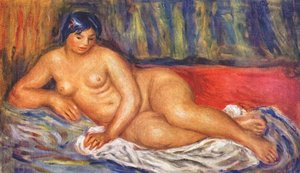
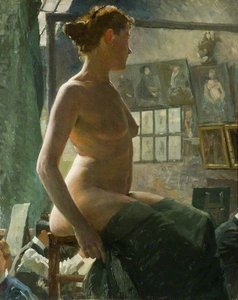 A Female Nude Seated at Julian's Atelier, Rue du Dragon
A Female Nude Seated at Julian's Atelier, Rue du Dragon – A Portrait of Artistic Reverie Sir Alfred James Munnings’ ‘A Female Nude’ (1902) stands as a testament to Impressionistic brilliance and a poignant glimpse into the artistic spirit of Edwardia...
For the sophisticated collector, the ultimate goal is to bring this sense of creative mastery into one's own environment. To curate a collection is to invite the energy of the atelier into the home or professional space, creating an atmosphere of profound cultural depth. Whether it is through a meticulously crafted oil reproduction that echoes the light-drenched style of Monet, or a custom portrait that utilizes the dramatic chiaroscuro of Rembrandt, the art serves as a window into the creative process itself.
At ArtsDot.com, we specialize in preserving this legacy for the global connoisseur. Our artists, holders of degrees from prestigious Fine Arts academies, utilize a rigorous six-step process to ensure every commission meets museum-grade standards. From the initial digital mockup that allows for personalized color matching to the final application of protective Damar varnish, our commitment is to authenticity and longevity. We offer more than mere decoration; we provide the means to "remix" art history, allowing you to transform personal milestones into timeless masterpieces. Through our professional services—ranging from expert art consultations to large-scale architectural murals—we ensure that the soul of the studio becomes a permanent, vibrant part of your private world.