


Introduction
To step into the presence of a true masterpiece is to witness a conversation between the artist’s soul and the physical world. While we often envision the heavy, textured grandeur of oil on canvas, there exists a more intimate, luminous dimension of art history found within the delicate marriage of acrylic on paper . It is a medium of immediacy and breath—where the rapid drying of pigment allows for a spontaneous, rhythmic dance of color that captures the fleeting pulse of a moment before it vanishes into memory.
The emergence of acrylics revolutionized the twentieth-century landscape, offering artists a newfound versatility to layer, glaze, and sculpt light with unprecedented speed. When applied to the receptive, absorbent surface of paper, these pigments achieve a unique translucency and a vibrant, saturated intensity that defies the traditional boundaries of the medium. This era marked a cultural shift toward experimentation, where the rigid hierarchies of the Old Masters gave way to the bold, gestural freedom of Modernism and beyond.
<_P>These ten legendary works are more than mere historical artifacts; they are living legacies. They remain profoundly meaningful today because they embody the very essence of human innovation—the courage to embrace new materials to express timeless emotions. As we journey through this curated selection, you will encounter works that redefined color theory, challenged the perception of space, and pushed the limits of what a simple sheet of paper can endure.Prepare to wander through a gallery of brilliance, where each stroke tells a story of revolution, and each piece stands as a testament to the enduring power of artistic evolution. We invite you to explore these ten definitive masterpieces that forever altered the trajectory of art history.
Map of Tuscany and the Chiana Valley - Leonardo da Vinci
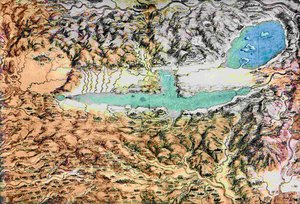 Map of Tuscany and the Chiana Valley - Leonardo da Vinci
What story does the terrain of the Italian Renaissance tell through the eyes of its greatest visionary? In Leonardo da Vinci’s Map of Tuscany and the Chiana Valley , we find more than mere cartography; we encounter a profound intersection of science, engineering, and fine art. Created in 1502, this work emerged from a period where the boundaries between observation and creation were dissolving, allowing Leonardo to use chalk and paper to translate topographical data into a breathtaking visual narrative.
The map’s mastery lies in its ability to evoke a sense of immense scale and tactile reality. The subtle shading of mountains and the meandering veins of rivers create a rhythmic, organic flow that transcends its historical utility. For the modern collector seeking a curated escape, this piece offers a window into a lost world of discovery. Integrating such a legendary masterpiece into a contemporary interior provides an intellectual anchor, evoking the timeless elegance of the Renaissance and inviting a sense of historical depth and quiet contemplation into the home.
Near the Hearth - vincent willem van gogh
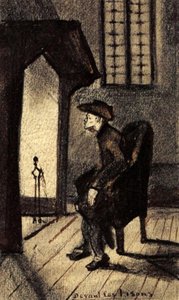 Near the Hearth - vincent willem van gogh
In Near the Hearth , Vincent van Gogh captures a profound moment of domestic stillness that transcends its humble subject matter. Painted in 1881, this work serves as a poignant precursor to his later, more vibrant masterpieces, showcasing an early mastery of light and shadow through meticulous pencil and ink work on paper. While often celebrated for his later use of color, this piece stands within our collection of legendary works for its raw, emotional intensity and its ability to find the monumental within the mundane.
The composition—featuring an elderly figure seated by a fireplace—utilizes light not merely as illumination, but as a symbol of enduring hope amidst solitude. For the modern collector or interior designer, the monochromatic depth of this piece offers a sophisticated anchor for contemporary spaces, providing a sense of historical weight and quiet contemplation. Its stark, tonal range complements minimalist aesthetics, bringing an atmosphere of refined, soulful tranquility to any curated gallery wall or private study.
Head of a Man - vincent willem van gogh
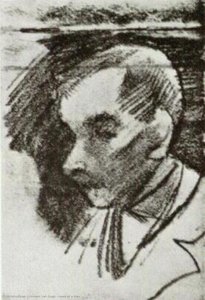 Head of a Man - vincent willem van gogh
In Head of a Man , Vincent van Gogh masterfully employs the stark interplay of light and shadow to sculpt a soul from the void. Though part of our exploration into legendary works on paper, this 1886 study transcends its medium through a profound use of chiaroscuro. The way the light catches the prominent brow and descends into the deep, velvety shadows of the beard creates a dramatic tension that captures the subject's quiet introspection. This command of illumination does more than define form; it breathes life into the man’s closed eyes, inviting us into a moment of profound psychological depth.
As one of the top 10 legendary masterpieces, this work stands as a testament to how light can dictate emotion. When brought into a modern interior through a high-end oil reproduction, the dramatic tonal range and textured shadows add an incomparable layer of luxury and intellectual weight to a room. The piece serves as a sophisticated focal point, offering a window into the artist's raw, unshielded brilliance that continues to captivate collectors worldwide.
The Magic Flute Opera by Wolfgang Amadeus Mozart. Set design for second scene, the Queen of the Night’s Hall of Stars - Karl Friedrich Schinkel
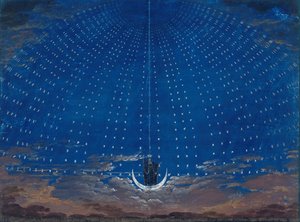 The Magic Flute Opera by Wolfgang Amadeus Mozart. Set design for second scene, the Queen of the Night’s Hall of Stars - Karl Friedrich Schinkel
In the celestial stage design for The Magic Flute , Karl Friedrich Schinkel captures a moment where the heavens descend to meet the earth, freezing a sense of cosmic wonder in time. This masterpiece stands among the top legendary works because it transcends mere theatrical backdrop; it is a profound architectural hallucination that bridges Neoclassical precision with the raw, emotional pulse of Romanticism. Schinkel’s use of deep indigo and cerulean blues creates an infinite void, punctuated by a granular texture of starlight that seems to pulse against the paper.
The composition breathes through its dramatic tension, where the warmth of swirling, amber-toned clouds at the base provides a grounded contrast to the ethereal, ribbed vaults above. This interplay of light and shadow evokes a sense of the sublime, inviting the viewer into a realm of Masonic mystery and spiritual awe. In a contemporary setting, such a work brings an unparalleled sense of depth and sophisticated drama, offering a window into a boundless, starlit sanctuary that inspires both quiet contemplation and architectural grandeur.
Satan Exulting over Eve - William Blake
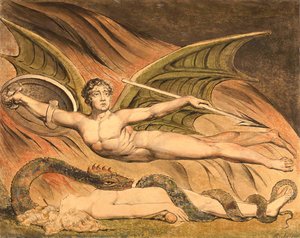 Satan Exulting over Eve - William Blake
In the hauntingly beautiful Satan Exulting over Eve , William Blake invites us into a realm where the boundaries between the divine and the fallen dissolve. This 1795 masterpiece serves as a profound exploration of the soul’s inherent duality, capturing a moment of visceral triumph and tragic vulnerability. Through his revolutionary technique—layering thick watercolors on stiff board before transferring them to paper—Blake achieved an unparalleled textural depth that breathes life into the shadows.
The composition is a masterclass in dramatic tension; the triumphant, winged figure of Satan looms over the unconscious Eve, creating a palpable sense of cosmic conflict. As one of the most significant works among the top 10 legendary acrylic on paper masterpieces , its use of earthy tones and intricate pen-and-ink detailing resonates deeply with modern aesthetics that prize dark romanticism and symbolic storytelling. In today’s curated interiors, Blake’s ability to weave mythological lore with raw, human emotion makes this piece a timeless cultural talking point, reminding us that the struggle between desire and innocence is eternally relevant.
Natural disaster - Leonardo da Vinci
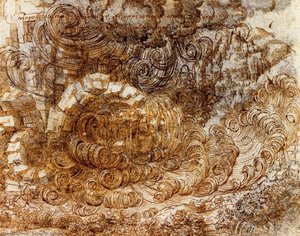 Natural disaster - Leonardo da Vinci
In the swirling shadows of Natural Disaster by Leonardo da Vinci, we witness a moment where the raw, unbridled fury of the elements is frozen in a hauntingly beautiful dance of ink and breath. This masterpiece earns its place among the top legendary works for its profound ability to capture the sublime—that delicate, terrifying intersection of beauty and chaos. Through his masterful use of chalk and ink, Da Vinci breathes life into a tempestuous landscape where muscular horses struggle against crashing waves and turbulent clouds, creating a sensory experience of movement and tension.
The monochromatic depth of this work offers a sophisticated study in contrast, where light pierces through darkness to reveal the anatomical precision that defined the Renaissance. For the modern collector or interior designer, such a piece serves as a powerful focal point; its dramatic energy provides a striking counterpoint to the minimalist calm of contemporary architecture. It is more than a depiction of weather; it is an eternal meditation on resilience, inviting us to find grace within the storm and bringing a sense of historical gravity to any curated space.
The sculptor - Pablo Picasso
 The sculptor - Pablo Picasso
In the quiet, shadowed intimacy of a studio, The Sculptor by Pablo Picasso captures a profound moment of creative tension. This masterful work, executed with the raw, rhythmic energy of ink and charcoal on paper, transcends mere sketching to become a cinematic study of form and psyche. As your eyes trace the bold, angular contours and the dramatic interplay of light and shadow, you are pulled into a Cubist world where the boundaries between the creator and the subject begin to dissolve.
Picasso utilizes dynamic hatching and fragmented geometric shapes to evoke a sense of movement and psychological depth. The heavy, expressive lines do not just define bodies; they pulse with the intensity of artistic obsession. For the discerning collector, integrating such a powerful piece into a modern interior offers more than decoration—it introduces a focal point of intellectual prestige and contemplative energy. Whether displayed in a minimalist study or a grand salon, this masterpiece serves as a timeless window into the very soul of modern abstraction, inspiring a sense of profound creativity and historical connection.
Cut Outs - Henri Matisse
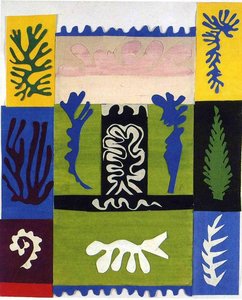 Cut Outs - Henri Matisse
In the Cut Outs by Henri Matisse, we witness a breathtaking liberation of form where geometry meets pure emotion. The composition is a masterclass in structural harmony, utilizing a rhythmic arrangement of organic ovals, sharp rectangles, and stylized botanical silhouettes that dance across the surface. Matisse achieves a sense of timeless perfection through the meticulous balance of weight and space; the way vibrant, warm yellows intersect with tranquil, deep blues creates a visual equilibrium that feels both spontaneous and profoundly calculated.
This mastery of acrylic on paper techniques transcends mere decoration, offering a blueprint for the modern era. The flattened perspective and bold, graphic lines find a striking parallel in contemporary minimalist design, where the removal of excess allows the essence of the subject to breathe. As one of the most legendary masterpieces in our collection, these cut-outs do more than occupy space—they ground a clean, sophisticated aesthetic, proving that the simplest interplay of shape and hue can evoke an infinite depth of tranquility and movement.
El Toro 7 - Pablo Picasso
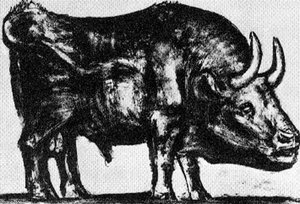 El Toro 7 - Pablo Picasso
To encounter El Toro 7 by Pablo Picasso is to stand before a raw, pulsating heartbeat of modernism. This masterpiece does not merely depict a bull; it captures the very essence of primal force through a masterful command of line and negative space. As one of our featured selections in this exploration of legendary works, it commands the room with its stark, monochromatic intensity, utilizing bold black ink to carve geometric planes out of the white paper.
Picasso’s Cubist brilliance is on full display here, where the bull’s musculature is fragmented into a dynamic dance of angles and shadows. The scratchy, visceral texture of the ink evokes a sense of movement that feels both ancient and avant-garde. For the discerning collector or interior designer, such a piece offers more than decoration; it provides a profound focal point of strength and cultural heritage. Its minimalist palette and architectural weight make it an unparalleled addition to a refined, contemporary space, embodying a timeless aesthetic that continues to redefine the boundaries of expressive power.
Constellation: Toward the Rainbow - Joan Miró
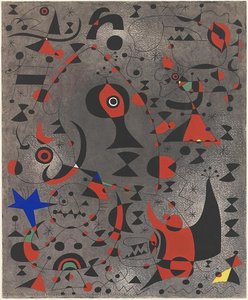 Constellation: Toward the Rainbow - Joan Miró
To gaze upon Joan Miró’s Constellation: Toward the Rainbow is to step directly into a dreamscape where the boundaries between the cosmos and the human psyche dissolve. Painted in 1941 amidst the profound shadows of World War II, this masterpiece serves as a vibrant act of psychological survival. It does not merely depict stars; it captures the rhythmic pulse of a soul seeking sanctuary within a celestial dance of primary colors and intuitive symbols.
This work earns its place among the top 10 legendary acrylic and gouache masterpieces through its unparalleled ability to translate Surrealist subconsciousness into a universal visual language. Miró’s delicate interplay of deep blues, fiery ochres, and whimsical, floating forms creates an emotional resonance that has captivated collectors for decades. At ArtsDot.com, we honor this profound legacy by offering hand-painted oil reproductions that meticulously preserve the artist's signature energy. Our master artists recreate every spontaneous line and symbolic shape on premium canvas, allowing you to invite Miró’s transcendent, star-drenched universe into your own private gallery.
Conclusion
As the light fades on our journey through these ten extraordinary works, we are reminded that a masterpiece is never truly finished; it lives and breathes through every gaze that meets its surface. These acrylics on paper, though delicate in their medium, possess a profound weight, anchoring us to the moments of human brilliance that redefined the boundaries of expression. They are not merely relics of a bygone era or static treasures locked behind museum glass, but living presences that continue to pulse with energy, shaping the very atmosphere of our homes and inspiring the creative spirit of new generations.
To stand before such works is to participate in a timeless conversation—a silent, soulful dialogue between the artist’s initial, daring stroke and the admirer’s enduring wonder. Whether it is the vibrant immediacy of a modern texture or the soft, layered depth of a classic composition, each piece carries a fragment of the human experience that transcends centuries. We invite you to continue this exploration and find your own connection to these legacies by wandering through our full collection . In every pigment and every line, may you discover not just art, but a reflection of the beauty that connects us all.