




Introduction
To step into the era of Romanticism is to surrender the safety of reason and embrace the beautiful turbulence of the human spirit. It was a period when the canvas ceased to be merely a window onto a structured, orderly world and became instead a vessel for the sublime —that profound, heart-stopping moment where breathtaking beauty meets an underlying sense of terror. As the rigid logic of the Enlightenment gave way to the encroaching shadows of the Industrial Revolution, a new generation of visionaries turned their gaze inward toward the depths of emotion, and outward toward the untamed, unpredictable majesty of the natural world.
These masterpieces do not merely depict historical scenes or landscapes; they evoke visceral atmospheres. They capture the salt spray of a shipwrecked vessel, the haunting stillness of a moonlit ruin, and the raw, unscripted ache of human longing that transcends the centuries. In an age increasingly defined by mechanical precision and societal structure, these artists championed the individual, the dream, and the irrational. Today, their works remain as vital as ever, serving as a powerful mirror to our own enduring struggle to find meaning amidst the vast, often overwhelming forces of nature and time.
In the following curation, we invite you to wander through ten definitive masterpieces that defined this movement—works of profound artistry that continue to breathe, pulse, and command the soul long after the final brushstroke has dried upon the canvas.
Liberty Leading the People - Eugène Delacroix
 Liberty Leading the People - Eugène Delacroix
In Delacroix’s Liberty Leading the People , history breathes through layers of oil and raw emotion. This is not merely a depiction of the July Revolution; it is a visceral surge of movement, where the French tricolor pierces through a haze of smoke and shadow. At its heart stands Liberty, an allegorical force leading a diverse tide of revolutionaries over a barricade of fallen heroes. The composition is a masterful pyramid of energy, anchored by the stark, patriotic reds and blues set against somber, earthy tones. You can almost feel the grit of the cobblestones and the heat of the struggle in every expressive brushstroke.
Owning this masterpiece is not simply a purchase; it is an inheritance . It represents a lineage of taste that connects your personal space to the very soul of Romanticism. With ArtsDot, this profound legacy moves from the museum to your walls , where every glance serves as a nod to the masters.
The Third of May, 1808 The Execution of the Defenders of Madrid - Francisco José de Goya y Lucientes
 The Third of May, 1808 The Execution of the Defenders of Madrid - Francisco José de Goya y Lucientes
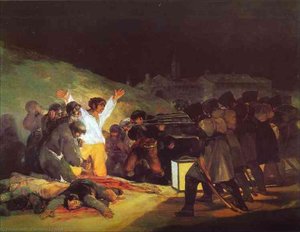
Francisco Goya’s The Third of May, 1808 stands as a harrowing pillar within the Top 10 Masterpieces That Defined the 'Romanticism' Art Movement . It is far more than a historical record; it is a visceral scream against tyranny that continues to resonate in our modern consciousness. Goya secures its place among the era's greatest through his revolutionary departure from Neoclassical order, prioritizing raw emotion over rigid reason. Through dramatic chiaroscuro and thick, expressive brushwork, he captures the unvarnished terror of the Peninsular War, where the lantern’s stark light illuminates a central figure of defiant martyrdom against an encroaching, blood-stained darkness.
This masterpiece invites us to reflect on the enduring resilience of the human spirit amidst systemic brutality. For the discerning collector or interior designer, such a profound work serves as more than mere decor; it is a commanding focal point that initiates a timeless conversation between historical tragedy and the sophisticated curation of a modern, soulful space.
The Hay Wain - John Constable
 The Hay Wain - John Constable
To acquire a tribute to The Hay Wain by John Constable is to invest in a profound legacy of British taste and the very essence of the Romantic movement. This 1821 masterpiece transcends mere landscape; it is an emotive chronicle of the River Stour, where Constable’s mastery of light and atmospheric tension—captured through expressive, textured brushwork—redefined the English landscape tradition. Its position in the pantheon of all-time greats is secured by its revolutionary authenticity, moving away from idealized vistas toward a deeply felt, visceral connection to nature that later inspired the Barbizon school. The dramatic interplay of billowing, storm-touched clouds against the tranquil pastoral scene creates a sublime tension that continues to captivate the global art market. For the discerning collector, integrating such a masterpiece into a modern luxury interior provides unparalleled aesthetic authority. A meticulously crafted oil reproduction carries this same historical prestige, serving as a sophisticated cornerstone for any curated home or professional space.
The Raft of the Medusa - Théodore Géricault
 The Raft of the Medusa - Théodore Géricault
At ArtsDot, our mission is to democratize beauty, bringing the profound emotional weight of history’s most significant canvases into the reach of every discerning collector. The Raft of the Medusa by Théodore Géricault stands as a definitive pillar in this journey. As a cornerstone of the Romanticism movement, this masterpiece transcends mere maritime tragedy; it is a visceral, cinematic exploration of human resilience against the sublime terror of nature. Géricault’s use of dramatic chiaroscuro , turbulent brushwork, and a haunting palette of ochre and deep shadow captures a moment of agonizing hope and political scandal that forever altered the course of art history. Its raw, sculptural intensity offers more than just visual drama—it provides a soul-stirring focal point for any sophisticated space. By commissioning a high-fidelity, hand-painted oil reproduction, you can invite this transformative, monumental presence into your home, office, or private gallery, allowing the enduring power of Romanticism to breathe life into your personal aesthetic.
Saturn Devouring His Son - Francisco José de Goya y Lucientes
 Saturn Devouring His Son - Francisco José de Goya y Lucientes
To encounter Francisco Goya’s Saturn Devouring His Son is to confront the very shadows of the human psyche. As a cornerstone of the Romanticism movement, this work transcends mere mythological illustration; it is a visceral, bone-chilling descent into madness and the relentless hunger of time. Part of his private Black Paintings series, Goya abandoned the polished grace of Neoclassicism for a raw, expressive language of thick impasto and haunting chiaroscuro. The stark contrast between the abyssal blacks and the frantic, bloodied ochres creates an atmosphere of profound existential dread.
In today’s curated interiors, where discerning collectors seek pieces that provoke deep conversation and emotional resonance, Goya’s masterpiece remains an unparalleled icon. It serves as a powerful reminder that true art does not merely decorate a space—it haunts it, reflecting our enduring struggle with the darker, more turbulent aspects of our shared history and nature.
The Fighting Temeraire Tugged to Her Last Berth to Be Broken up - Joseph Mallord William Turner
 The Fighting Temeraire Tugged to Her Last Berth to Be Broken up - Joseph Mallord William Turner
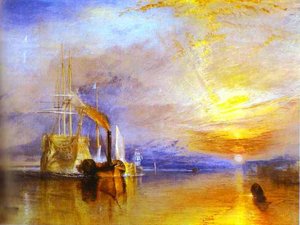
To gaze upon J.M.W. Turner’s The Fighting Temeraire is to witness light not merely as illumination, but as a profound, emotive language. Turner did not simply paint the sunset; he composed it like a haunting musical sonata. In this quintessential Romantic masterpiece, the fiery oranges and bruised purples of the sky do more than reflect a dying day—they mourn a dying era. As the ghostly, majestic silhouette of the HMS Temeraire is towed toward its final berth by a small, utilitarian steam tug, we feel the poignant friction between heroic tradition and the relentless march of progress. The shimmering Thames, rendered with expressive, impasto brushstrokes, captures the very essence of the sublime. This is why it remains a cornerstone of the movement: it does not just reflect light; it invents it. Now, imagine that celestial glow spilling into your own sanctuary, turning a simple wall into a portal of historical wonder and eternal inspiration.
La maja desnuda. . Madrid, Museo del Prado. - Francisco José de Goya y Lucientes
 La maja desnuda. . Madrid, Museo del Prado. - Francisco José de Goya y Lucientes
Francisco Goya’s La maja desnuda is more than a painting; it is a daring encounter with the soul of Spanish Romanticism. In this masterpiece, Goya utilizes dramatic chiaroscuro to sculpt the reclining figure from a deep, velvety void, creating an atmosphere that is simultaneously intimate and profoundly unsettling. The soft, directional light dances across the organic contours of her body, highlighting the delicate textures of skin and fabric against a somber, earthy palette.
Her unashamed gaze pierces through time, challenging the viewer to confront both beauty and vulnerability. To surround yourself with such genius is not merely to decorate a wall; it is an act of transformation . This piece does not just occupy space; it redefines it, turning a private residence into a curated gallery of human emotion and historical rebellion.
Man and Woman Contemplating the Moon - Caspar David Friedrich
 Man and Woman Contemplating the Moon - Caspar David Friedrich
Imagine standing in the hushed stillness of a moonlit forest, where the only sound is the weight of your own breath. Caspar David Friedrich’s Man and Woman Contemplating the Moon (1824) invites us into this exact moment of profound solitude. As the two figures gaze upward toward the ethereal crescent moon, we are transported to the heart of the Romantic movement—an era defined by the pursuit of the sublime. Through a palette of deep indigos, somber purples, and the textured shadows of an ancient, gnarled tree, Friedrich captures the spiritual dialogue between humanity and the infinite. This masterpiece earns its place among the greatest of all time because it transcends mere landscape; it is a window into the human soul. For the discerning collector or designer, placing such a work in a contemporary space does more than decorate a wall—it creates a sanctuary of contemplation, offering a quiet, powerful anchor of serenity amidst the chaos of modern life.
Chalk Cliffs on Rügen - Caspar David Friedrich
 Chalk Cliffs on Rügen - Caspar David Friedrich
Close your eyes. Can you feel the ethereal glow in Chalk Cliffs on Rügen ? For Caspar David Friedrich, light was never merely illumination; it was a language . He did not simply paint the dawn over the German coast; he composed it, like a musician crafting a sonata.
As you gaze upon these towering white cliffs, you are drawn into the very soul of the Romanticism movement. The composition, framed by ancient, arching trees, invites a profound, spiritual introspection. Notice the figures—small, humble witnesses to the vastness of the sea. Their attire, woven with symbolic threads of blue for faith and red for love, speaks to a silent dialogue between humanity and the divine. The sky, a breathtaking tapestry of gold, violet, and soft rose, captures the essence of the sublime—that delicate tension between awe and overwhelming power. This masterpiece does more than decorate; it is a portal, waiting to transform your walls into windows of infinite inspiration.
Rain Steam and Speed, The Great Western Railway - Joseph Mallord William Turner
 Rain Steam and Speed, The Great Western Railway - Joseph Mallord William Turner
To behold J.M.W. Turner’s Rain Steam and Speed, The Great Western Railway is to witness a moment where history and atmosphere collide with breathtaking intensity. It is not merely a painting; it is an elemental experience reserved for the most discerning eyes.
As one of the Top 10 Masterpieces That Defined the Romanticism Art Movement , this work stands as a testament to Turner’s unparalleled ability to capture the 'sublime.' Through masterful, textured impasto and a luminous palette of fiery oranges and deep violets, he dissolves the boundary between the industrial locomotive and the swirling English mist. The composition vibrates with the energy of the Industrial Revolution, using diagonal lines to evoke a sense of relentless, modern motion.
For the sophisticated collector, this piece offers more than historical significance; it brings a dynamic, atmospheric soul to any refined interior. Its ability to command attention through light and movement makes it an enduring icon of Romanticism , perfect for spaces that celebrate both heritage and avant-garde spirit.
Conclusion
As we conclude our passage through these evocative landscapes and stirring portraits, it becomes clear that the essence of Romanticism does not reside solely within the archives of art history. These masterpieces—with their turbulent skies, profound shadows, and unbridled passion—remain living presences, breathing vitality into the spaces we inhabit today. They are far more than mere historical milestones; they are emotional anchors that invite us to pause, to reflect, and to reconnect with the sublime beauty of both the natural world and the human spirit. When a hand-painted reproduction of such a work finds its place within a contemporary home or a sophisticated interior, it does much more than decorate a wall; it initiates an eternal dialogue between the grandeur of the past and the intimacy of our modern lives. To bring these echoes of greatness into your sanctuary is to invite the very soul of the masters to reside with you, ensuring that the profound wonder of this era continues to shape our emotions, our culture, and our collective imagination. We invite you to discover more within our full collection .