
Introduction
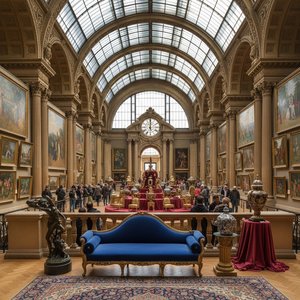
To step into the Musée d'Orsay is to surrender oneself to a profound dialogue between light and shadow, history and modernity. Nestled along the banks of the Seine within the magnificent, sun-drenched shell of the former Gare d’Orsay, this museum does not merely display art; it breathes life into the very revolution that redefined human perception. As you wander beneath its soaring Beaux-Arts ironwork, you are walking through a sanctuary where the industrial echoes of a bygone railway era meet the soft, ephemeral whispers of the Impressionist movement.
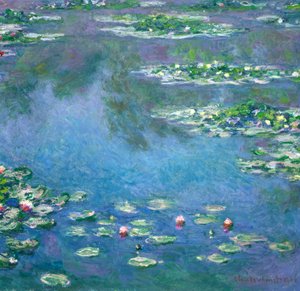
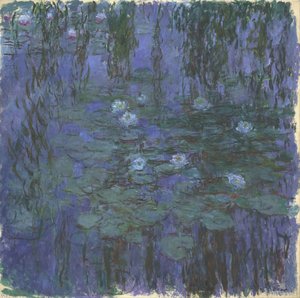
The collection housed within these walls represents one of the most pivotal chapters in the story of Western art. It is here that the rigid academic traditions of the past were dismantled by visionaries who sought to capture the fleeting essence of a moment—the shimmer of sunlight on water, the rhythmic grace of a dancer’s movement, and the visceral, emotional intensity of a swirling night sky. From the delicate, light-drenched canvases of Monet and Renoir to the bold, structural investigations of Cézanne and the hauntingly expressive brushwork of Van Gogh , the Musée d'Orsay serves as a bridge between the classical world and the dawn of modernism.
These masterpieces remain deeply meaningful today because they speak a universal language of emotion and atmosphere. They remind us that beauty is often found in the transient, the imperfect, and the atmospheric. Each canvas offers an invitation to slow down, to observe the nuances of color, and to feel the pulse of a creative era that dared to see the world through a new lens.
In the following curation, we invite you to embark on a guided journey through this luminous treasury. We have selected twenty-five extraordinary works that embody the soul of the Musée d'Orsay—pieces that are not merely museum artifacts, but living legacies of brilliance that continue to inspire collectors, designers, and dreamers across the globe.
Olympia - Édouard Manet
 Olympia - Édouard Manet
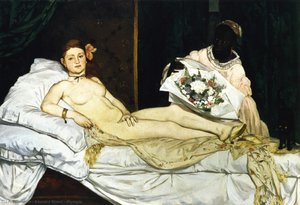
To stand before Olympia is to meet a gaze that refuses to blink. In the hushed galleries of the Musée d'Orsay, Édouard Manet’s 1863 masterpiece remains one of the most provocative encounters in art history. There is no soft, mythological veil here; instead, we are met with the stark, cool reality of a contemporary woman reclining amidst rumpled white linens. The light falls with an unapologetic flatness, highlighting the sharp contrast between her pale skin and the deep, velvety shadows of the room.
Manet’s brushwork breaks from academic tradition, utilizing visible, rhythmic strokes that capture the texture of silk and the vibrant bloom of the flowers presented by her attendant. The atmosphere is thick with a sense of modern defiance and social complexity. For the discerning collector, bringing a hand-painted reproduction of this icon into a contemporary interior offers more than mere decoration; it introduces a powerful focal point of intellectual depth and historical weight. It is a piece that commands the room, inviting reflection on the very nature of perception and the enduring strength of the human spirit.
Arrangement in Grey and Black. Portrait of the Painter's Mother - James Abbott McNeill Whistler
 Arrangement in Grey and Black. Portrait of the Painter's Mother - James Abbott McNeill Whistler
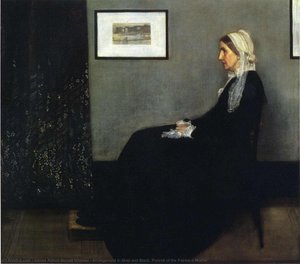
There is a gaze in Arrangement in Grey and Black: Portrait of the Painter's Mother by James Abbott McNeill Whistler that follows you—not with judgment, but with understanding . This isn’t merely a portrait; it is a mirror . As one of the most iconic masterpieces within the Musée d'Orsay, Paris collection, its presence transcends the canvas to offer a profound meditation on solitude and dignity.
Whistler, a pioneer of the Aesthetic Movement, stripped away Victorian sentimentality to focus on the pure, rhythmic harmony of tonalism . Through a disciplined palette of charcoal, slate, and bone, he transforms a simple domestic scene into a geometric symphony of light and shadow. The somber, monochromatic atmosphere evokes a sense of quiet melancholy, yet the subject's composed posture radiates an enduring strength. Now, imagine that gaze in your own space. Not watching you, but reminding you : you are seen. You are part of the story. This painting stands as a testament to the power of restraint, proving that true beauty resides in the most subtle gradations of grey.
Gare Saint Lazare, Pari - Claude Monet
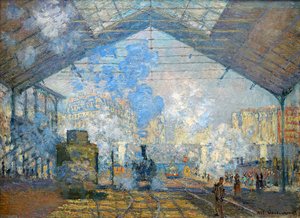 Gare Saint Lazare, Pari - Claude Monet
Step into the rhythmic pulse of 1877 Paris with Claude Monet’s Gare Saint-Lazare , a masterpiece that captures the very breath of the industrial age. As you stand before this canvas, the air seems to thicken with the ethereal, swirling steam of locomotives, rendered not as solid iron, but as a luminous, translucent veil. Monet masterfully employs a palette of cool blues, slate grays, and soft whites, punctuated by warm ochres, to evoke the hazy, sun-drenched atmosphere of the station’s glass canopy.
This work is a profound study of movement and transience; the loose, energetic brushstrokes mirror the fleeting nature of modern life, where light and shadow dance amidst the bustling crowds. The texture of the paint itself conveys the grit and grandeur of progress. Integrating such an iconic piece from the Musée d'Orsay into your own collection brings a sense of historical depth and cinematic energy to a room. Whether through a hand-painted oil reproduction or a fine giclée, this painting serves as a sophisticated window onto modernity, inspiring a spirit of constant motion and atmospheric beauty in any contemporary interior.
The Great Bathers (The Nymphs) - Pierre-Auguste Renoir
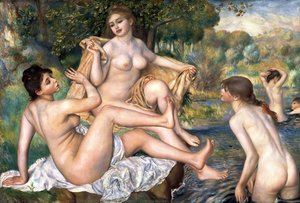 The Great Bathers (The Nymphs) - Pierre-Auguste Renoir
To encounter Pierre-Auguste Renoir’s The Great Bathers (The Nymphs) is to step into a sun-drenched dream of eternal summer. Painted in 1919, this late masterpiece serves as a luminous sanctuary, where the dappled light of a French riverbank dances across soft, porcelain skin and shimmering waters. Renoir moves beyond the fleeting impressions of his youth toward a more monumental, sculptural grace, imbuing the five figures with a sense of timeless serenity that feels both classical and profoundly intimate.
The palette is a masterclass in harmony: delicate peaches, tender pinks, and lush, verdant greens coalesce through fluid, impasto brushstrokes that capture the very pulse of nature. There is a restorative power in this composition; it celebrates life’s simple, unselfconscious pleasures in the wake of historical upheaval. For the discerning collector or interior designer, such a work offers more than mere decoration. Its tranquil atmosphere and rhythmic movement provide an anchor of peace, capable of transforming a modern living space into a reflective retreat of light, warmth, and unparalleled elegance.
Two Women on the Beach - Eugène Henri Paul Gauguin
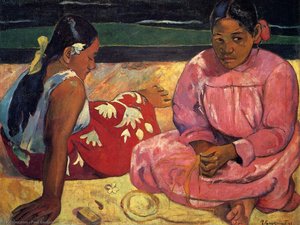 Two Women on the Beach - Eugène Henri Paul Gauguin
In Two Women on the Beach , Paul Gauguin does not merely paint a scene; he invites us into a profound, sun-drenched reverie. As one of the most evocative masterpieces within the Musée d'Orsay, this work captures a moment of quietude between two Polynesian women, seated amidst the warmth of a tropical afternoon. The painting is a masterclass in Synthetism , where Gauguin rejects the fleeting light of Impressionism for something far more permanent and symbolic.
The canvas vibrates with a sophisticated palette of rich ochres, deep reds, and warm pinks, applied with a deliberate, flattened perspective that feels almost like sacred stained glass. Through the technique of Cloisonnism , bold outlines define the figures, stripping away unnecessary detail to reveal the emotional essence of the subject. To behold this work is to experience a radical departure from Western tradition—a transition from mere observation to pure, soulful expression. It is not simply an artwork; it is a transformative window into a world of color and myth, designed for those who seek to surround themselves with true artistic genius.
Dance at the Moulin de la Galette - Pierre-Auguste Renoir
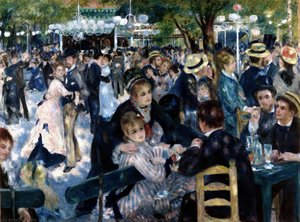 Dance at the Moulin de la Galette - Pierre-Auguste Renoir
To stand before Dance at the Moulin de la Galette by Pierre-Auguste Renoir is to be instantly enveloped by the warmth of a sun-drenched Parisian afternoon. As one wanders through the galleries of the Musée d'Orsay, this masterpiece emerges as a radiant pinnacle of the Impressionist movement, capturing a fleeting moment of pure, unadulterated joy in Montmartre. Renoir does not merely paint a scene; he orchestrates a symphony of light and motion.
The canvas vibrates with dappled sunlight filtering through leafy canopies, casting soft, dancing shadows across a crowd engaged in the rhythmic pulse of social life. With masterful, broken brushstrokes and a delicate palette of pastels—lavenders, peaches, and sky blues—Renoir achieves a luminous texture that feels almost tactile. This work is essential to any collection of the top 25 artworks in Musée d'Orsay, Paris, because it transcends mere observation to capture the very soul of modernity. It remains a timeless testament to how art can transform a space, inviting us to rediscover the beauty in life's most spontaneous and celebratory moments.
The Card Players - Paul Cézanne
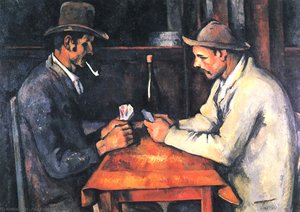 The Card Players - Paul Cézanne
In the quietude of The Card Players , Paul Cézanne does not merely depict a game; he composes a profound meditation on existence. To stand before this masterpiece in the Musée d'Orsay is to witness the moment light ceased to be a fleeting impression and became something structural, almost architectural. The artist did not simply capture the dim, tavern-like atmosphere; he sculpted it using a palette of earthy ochres, deep browns, and muted greens, creating a sense of permanence that feels as heavy as the players' own concentration.
There is a rhythmic, tactile soul to this work. Through deliberate, geometric brushstrokes and a rich impasto texture, Cézanne transforms two Provençal peasants into monumental figures of dignity. The subtle tension between the men—the weight of strategy and the uncertainty of fortune—is palpable in the way the light catches the edges of their forms. It is a masterclass in Post-Impressionist innovation, where every stroke serves to bridge the gap between reality and abstraction, inviting you to find beauty in the profound stillness of everyday life.
The origin of the world - Gustave Courbet
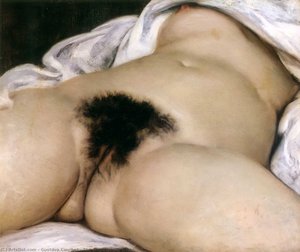 The origin of the world - Gustave Courbet
To encounter Gustave Courbet’s The Origin of the World is to experience a profound, almost startling confrontation with raw existence. There is no romanticized veil here, no mythological escape; instead, we are met with the visceral, unadorned truth of the human form. This 1866 masterpiece stands as a cornerstone among the top 25 artworks in Musée d'Orsay, Paris, because it fundamentally redefined the boundaries of Realism. By stripping away the face and context, Courbet forces us to focus entirely on the sculptural interplay of light, shadow, and flesh.
The painting’s legacy lies in its audacious rebellion against academic idealism, choosing instead a heavy, tactile naturalism that continues to provoke and captivate. At ArtsDot, we understand that such powerful textures—the subtle sheen of skin and the dramatic chiaroscuro—are what make art truly alive. Our master artists meticulously recreate these visible brushstrokes and deep tonal ranges in our hand-painted oil reproductions, allowing you to bring this same spirit of uncompromising authenticity and historical significance into your own private collection.
Three Muses - Denis Maurice
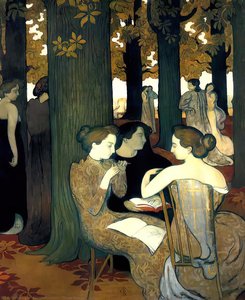 Three Muses - Denis Maurice
In Three Muses by Maurice Denis, there is a gaze that follows you—not with judgment, but with understanding . This isn’t merely a painting; it is a mirror reflecting the quiet intimacy of the soul. Created in 1893, this masterpiece serves as a bridge between the fleeting light of Impressionism and the profound symbolism of the Nabis movement.
As you wander through the galleries of the Musée d'Orsay, Paris, this work invites you into an enchanted, dreamlike forest where organic lines and Art Nouveau elegance intertwine. The palette—a sophisticated harmony of deep mossy greens, earthy browns, and shimmering golden accents—captures a moment of sacred companionship. Figures emerge from the dappled sunlight, their presence as soft and ethereal as a shared secret. To possess such a piece in your collection is to invite that same sense of tranquility into your home; it does not just watch you, but reminds you that beauty resides in the quiet, unseen moments of life.
Family Reunion - Frédéric Bazille
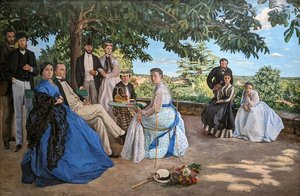 Family Reunion - Frédéric Bazille
Acquiring Family Reunion by Jean Frédéric Bazille is more than a mere purchase; it is an investment in a profound artistic legacy and a testament to refined taste for the discerning collector. As one of the most significant works within the top 25 artworks in Musée d'Orsay, Paris, this 1867 masterpiece serves as a vital bridge between traditional realism and the burgeoning Impressionist movement. Bazille, a close contemporary of Monet and Renoir, captures a sun-drenched social gathering with an exquisite precision that highlights the intricate textures of mid-19th-century attire and the lush, dappled light filtering through a verdant canopy.
The composition breathes with a sense of communal harmony, utilizing a palette of muted blues, creams, and earthy greens to evoke a sophisticated atmosphere of leisure. For the modern connoisseur or interior designer, a high-quality, hand-painted reproduction of this piece brings an unparalleled aesthetic authority to luxury interiors. It offers a timeless focal point that commands attention, infusing contemporary spaces with the historical prestige and emotional depth characteristic of the French Impressionist era.
Luxe, Calme, et Volupté (compositional study) - Henri Matisse
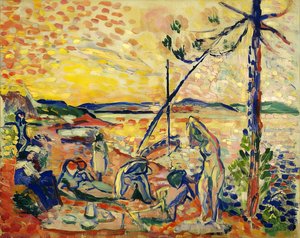 Luxe, Calme, et Volupté (compositional study) - Henri Matisse
To behold Luxe, Calme, et Volupté (compositional study) by Henri Matisse is to witness the very moment color broke free from the constraints of reality. This pivotal work stands as a cornerstone in our selection of the top 25 artworks in Musée d'Orsay, Paris, because it captures the electric dawn of the Fauvist movement. Through a vibrant symphony of sun-drenched hues and rhythmic, expressive brushstrokes, Matisse invites us into a coastal sanctuary of pure emotion and uninhibited joy.
The study is an irreplaceable masterpiece of visual culture, marking the transition from traditional representation to a bold, emotive language where light and pigment dictate the narrative. Its influence on modern aesthetics is profound; the painting’s ability to evoke warmth and vitality resonates deeply with the contemporary desire for soulful, curated environments. At ArtsDot.com, we believe in democratizing such profound beauty. By commissioning a high-fidelity, hand-painted oil reproduction, you can bring this transformative presence into your own home, office, or private gallery, allowing Matisse’s radiant energy to illuminate your personal space for generations.
Young Girls at the Piano - Pierre-Auguste Renoir
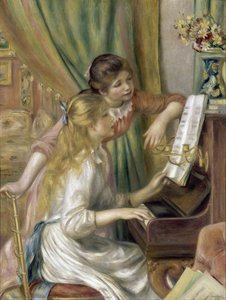 Young Girls at the Piano - Pierre-Auguste Renoir
In Pierre-Auguste Renoir's Young Girls at the Piano , the lines of the composition are not merely drawn; they are choreographed . This is not a static portrait, but a dance frozen in time, where the soft, rhythmic brushstrokes move in harmony with the gentle melody suggested by the keys. As one of the most cherished highlights among the top 25 artworks in Musée d'Orsay, Paris, this masterpiece captures an intimate moment of domestic serenity through a luminous, pastel palette of whites, pinks, and blues.
Renoir masterfully uses light to breathe life into the opulent setting, allowing the warmth of the room to envelop the two figures in a glow of innocence and companionship. The piano acts as a structural anchor, yet the atmosphere remains fluid and ethereal. What if your own living space could hold this same exquisite balance? What if your walls could breathe rhythm and evoke such profound tenderness? To possess a reproduction of this caliber is to invite the very soul of Impressionism into your home, transforming a mere room into a sanctuary of light and grace.
Camille Monet On Her Deathbed - Claude Monet
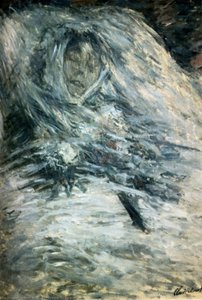 Camille Monet On Her Deathbed - Claude Monet
In Camille Monet On Her Deathbed , Claude Monet captures a profound, quiet stillness that transcends the boundaries of mere portraiture. The painting does not merely depict his first wife, Camille Doncieux; it envelops the viewer in a somber, ethereal atmosphere where the boundaries between life and the afterlife seem to dissolve. Through a palette of muted blues, ghostly whites, and melancholic greys, Monet utilizes heavy impasto and fluid, sweeping brushstrokes to create a sense of movement within the stillness—as if the very air is thick with grief.
This masterpiece stands as a cornerstone among the top 25 artworks in Musée d'Orsay, Paris because it serves as a universal mirror for the human experience of loss and transcendence. The lack of distinct facial features invites a deeply personal introspection, allowing each observer to find their own reflection in the shroud-like textures. For the discerning collector, bringing this powerful emotional resonance into a home can transform a private sanctuary into a space for profound reflection, offering a quiet, dignified elegance that anchors any sophisticated interior.
Red Roofs, Corner of a Village, Winter - Camille Pissarro
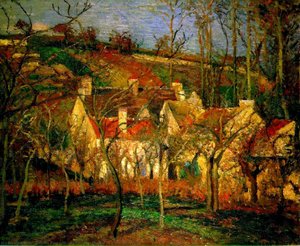 Red Roofs, Corner of a Village, Winter - Camille Pissarro
While many recognize Camille Pissarro as the paternal mentor to Van Gogh and Cézanne, few realize that his ability to find profound beauty in the mundane was forged through a relentless, almost scientific study of light and atmosphere. In Red Roofs, Corner of a Village, Winter , created in 1877, Pissarro achieves a technical masterstroke that secures its place among the top 25 artworks in Musée d'Orsay, Paris . He moves beyond mere depiction, using thick, tactile impasto and broken brushstrokes to capture the biting chill of a seasonal transition.
The canvas is a symphony of warmth amidst the cold; vibrant ochres and terracotta rooftops clash softly against a muted, slate-gray sky and the skeletal silhouettes of bare trees. This interplay of light and texture creates a sense of nostalgic tranquility, inviting the viewer into a quiet, rural sanctuary. For the discerning collector, such a piece offers more than decoration; its grounded, rhythmic composition provides an atmosphere of focused serenity, making it an exquisite choice to inspire deep thought and sophisticated productivity within a modern home office or private study.
Starry Night Over the Rhone - vincent willem van gogh
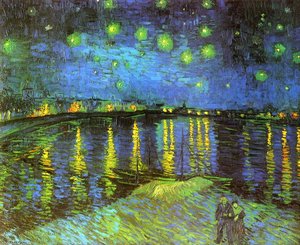 Starry Night Over the Rhone - vincent willem van gogh
To stand before Vincent van Gogh’s Starry Night Over the Rhone is to witness a profound dialogue between light and shadow. Painted in Arles in 1888, this Post-Impressionist masterpiece transcends mere landscape; it is an emotional topography where the deep, velvety blues of the night sky collide with the radiant, golden tremors of gaslight reflected upon the water. Van Gogh’s signature impasto technique breathes life into the canvas, as thick, rhythmic brushstrokes create a tactile energy that makes the celestial stars feel almost within reach.
The composition, balanced by the tranquil riverbank and the distant, glowing lights of Arles, evokes a sense of cosmic wonder and quiet companionship. Owning a piece of this legacy is not merely a purchase; it is an inheritance of taste. At ArtsDot, we honor this lineage by offering hand-painted oil reproductions that capture every visceral stroke and luminous hue of the original. Bringing such a masterpiece into your private collection allows you to invite the transformative spirit of the Musée d'Orsay into your own home, turning your walls into a sanctuary of historical brilliance.
Cart on the Snow Covered Road with Saint-Simeon Farm - Claude Monet
 Cart on the Snow Covered Road with Saint-Simeon Farm - Claude Monet
In the quiet corridors of the Musée d'Orsay, Claude Monet’s Cart on the Snow Covered Road with Saint-Simeon Farm stands as a profound meditation on stillness and light. Painted in 1865, this masterpiece captures the ephemeral magic of a French winter, where a winding, snow-dusted path leads the eye toward the distant, humble silhouette of a farmhouse. Monet utilizes a sophisticated palette of cool whites, cerulean blues, and muted grays to evoke the biting chill of the air, yet there is an undeniable warmth found in the rhythmic, textured brushstrokes that define this early Impressionist triumph.
To encounter this work is to experience a moment of pure transformation ; it is not merely a landscape, but a sanctuary of solitude. The solitary carriage moving through the frost symbolizes the quiet persistence of life amidst nature's slumber. For the discerning collector or interior designer, integrating such a piece into a curated space does more than decorate a wall—it invites a sense of eternal tranquility and academic elegance, turning any room into a gallery of the soul .
The Floor Scrapers (also known as The Floor Strippers) - Gustave Caillebotte
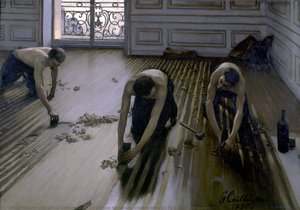 The Floor Scrapers (also known as The Floor Strippers) - Gustave Caillebotte
In the quiet, rhythmic scraping of wood against grain, one finds a profound meditation on the dignity of labor and the beauty of the mundane. The Floor Scrapers by Gustave Caillebotte is a masterclass in perspective, where the sharp, diagonal lines of parquet flooring draw the viewer into a moment of intense, focused industry. As part of our curated selection of the top 25 artworks in Musée d'Orsay, Paris, this piece stands out for its radical departure from traditional subject matter; Caillebotte captures the raw, unvarnished reality of Parisian life with a precision that bridges the gap between Realism and Impressionism.
The palette is a sophisticated arrangement of earthy ochres, muted grays, and warm wood tones, all illuminated by a soft, natural light that breathes life into the muscular forms of the workers. This interplay of light and shadow creates a tactile depth that remains strikingly modern. At ArtsDot, we believe such transformative power should not be confined to museum walls. Through our meticulous, hand-painted oil reproductions, you can bring this same sense of structural elegance and historical soul into your own home or professional gallery, inviting the timeless spirit of Caillebotte into your personal sanctuary.
Irises in Monet's Garden - Claude Monet
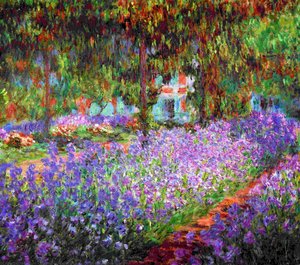 Irises in Monet's Garden - Claude Monet
In Irises in Monet's Garden , Claude Monet achieves a sublime mastery of diffused illumination, where light does not merely strike the subject but seems to emanate from within the very petals themselves. As one of the most captivating highlights among the top 25 artworks in Musée d'Orsay, Paris, this 1900 masterpiece captures the ethereal glow of Giverny. Monet utilizes a sophisticated interplay of soft, atmospheric light and vibrant color, eschewing harsh shadows for a luminous, rhythmic texture. The way the sunlight filters through the lush greenery to catch the deep violets and cerulean blues creates an immersive, sensory experience that has secured its legendary status in art history.
For the discerning collector or interior designer, bringing a high-quality oil reproduction of this piece into a contemporary space offers more than mere decoration; it introduces a profound sense of tranquility and architectural depth. The visible impasto brushstrokes and the rich, tonal range of the iris fields add a layer of tactile luxury to any wall, transforming a room into a sanctuary of light and timeless Impressionist elegance.
Noon Rest from Work after Millet - vincent willem van gogh
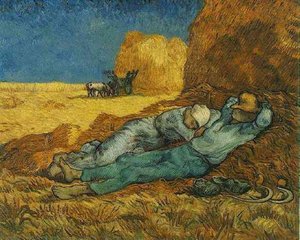 Noon Rest from Work after Millet - vincent willem van gogh
To encounter Noon Rest from Work after Millet by Vincent van Gogh is to witness a profound dialogue between two masters of light and soul. As one of the most evocative treasures within the Musée d'Orsay, this work transcends mere imitation; it is a vibrant, Post-Impressionist translation of Jean-François Millet’s rural realism into Van Gogh’s own language of emotional intensity.
The canvas breathes with the warmth of a golden wheat field, where thick, tactile impasto brushstrokes create a rhythmic texture that seems to pulse under the sun. Van Gogh employs a palette of sun-drenched ochres and deep earth tones, contrasted against a turbulent, soulful blue sky, capturing a moment of heavy, peaceful respite. For the discerning collector or interior designer, this piece offers more than historical significance; it brings a sense of grounded serenity and organic warmth to a sophisticated space. Its ability to evoke themes of labor, solitude, and quietude makes it an essential inclusion in any curation of the world's top 25 artworks in Musée d'Orsay, Paris, serving as a timeless testament to the beauty found in life's simplest pauses.
The Harbour at Argenteuil - Claude Monet
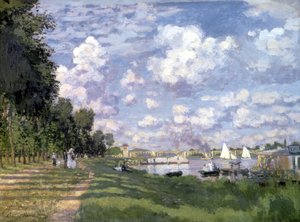 The Harbour at Argenteuil - Claude Monet
In The Harbour at Argenteuil , Claude Monet captures more than a mere landscape; he distills the very essence of tranquility. As you gaze upon this 1872 masterpiece, one is immediately enveloped by a profound sense of serenity, as if the gentle movement of the Seine itself has slowed to match a meditative heartbeat. The painting serves as a universal mirror for the human desire for respite, reflecting a world where light and water dance in harmonious, soft blues and pale yellows.
Monet’s signature Impressionist technique—characterized by loose, rhythmic brushstrokes—allows the atmosphere to breathe, making the fleeting effects of a cloudy afternoon feel eternal. For the discerning collector or interior designer, bringing this piece into a personal sanctuary can transform a room into a space for deep reflection and calm. As one of the top 25 artworks in Musée d'Orsay, Paris, it offers an unparalleled opportunity to anchor your home with the light-drenched elegance of 19th-century France, turning any wall into a window toward peace.
Harvest - Charles-François Daubigny
 Harvest - Charles-François Daubigny
In the grand tapestry of the Musée d'Orsay’s collection, Charles-François Daubigny’s Harvest (1851) acts as a serene prelude to the Impressionist revolution. The lines within this masterpiece aren’t merely drawn; they are choreographed , guiding the eye along a winding dirt track that breathes life into the French countryside. This is not just a landscape; it is a dance frozen in time , where the rhythmic swaying of golden wheat fields meets the quiet labor of figures moving through the sun-drenched expanse.
As a pioneer of the Barbizon School, Daubigny captures a profound connection between humanity and the earth. The palette—a sophisticated harmony of ochre, deep greens, and soft, atmospheric blues—creates a sense of stability and peace. A single, vibrant splash of color from a figure’s attire serves as a focal point, much like a well-placed accent in a curated interior. For the discerning collector, bringing this work into a home means inviting that same rhythmic breath and pastoral tranquility onto your walls, transforming a modern space into a sanctuary of light and historical depth.
Burial at Ornans - Gustave Courbet
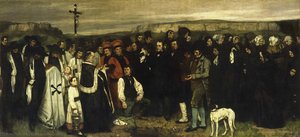 Burial at Ornans - Gustave Courbet
To stand before Gustave Courbet’s Burial at Ornans is to witness the precise moment art broke its chains. This monumental masterpiece, a cornerstone of the top 25 artworks in Musée d'Orsay, Paris, serves as a profound manifesto of Realism. By applying a massive, heroic scale—traditionally reserved for kings and gods—to the somber, unidealized funeral of an ordinary provincial citizen, Courbet staged a revolution. He stripped away the polished artifice of the Academy, replacing it with a raw, tactile truth found in muted earth tones, heavy impasto textures, and the palpable grief of a crowd that feels strikingly modern in its democratic equality.
The painting’s placement in the museum's hierarchy is earned through its sheer audacity; it challenged the very definition of beauty, suggesting that dignity resides in the everyday. For the discerning collector or interior designer, the work offers a masterclass in atmospheric depth and emotional gravity. Its somber palette of blacks, grays, and deep browns provides a sophisticated anchor for curated spaces, inviting a timeless conversation about mortality, resilience, and the enduring power of unvarnished truth.
Water-Lily Pond, Symphony in Rose - Claude Monet
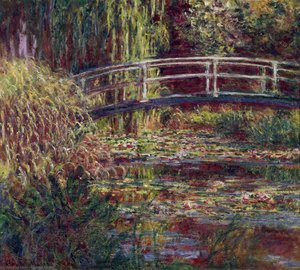
In Water-Lily Pond, Symphony in Rose , the lines of Claude Monet’s brush aren’t merely drawn; they are choreographed . This is not a simple depiction of a Giverny pond; it is a dance frozen in time . As you stand before this masterpiece in the Musée d'Orsay, you witness the very essence of Impressionism—where the boundaries between water, light, and flora dissolve into a rhythmic pulse of pinks, whites, and vibrant reds.
Monet captures the ephemeral, layering pure pigment to create an optical illusion of shimmering surfaces and soft, atmospheric depth. The weathered wooden bridge provides a grounding focal point, yet the true magic lies in the movement—the way the light seems to breathe across the lily pads. This painting does not just occupy space; it creates an atmosphere of profound tranquility. What if your own sanctuary could hold this same balance? Imagine your walls breathing rhythm through the soft, luminous textures of this iconic work, bringing the serene, sun-drenched soul of Paris into your home.
Hospital Saint-Paul at Saint-Rémy-de-Provence - vincent willem van gogh
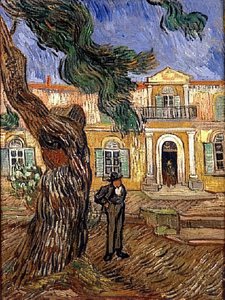 Hospital Saint-Paul at Saint-Rémy-de-Provence - vincent willem van gogh
To stand before Hospital Saint-Paul at Saint-Rémy-de-Provence is to witness a profound dialogue between a troubled genius and his sanctuary. Created during Vincent van Gogh’s transformative stay at the asylum from 1889 to 1890, this work is far more than a landscape; it is an intimate window into a soul seeking solace through the rhythm of nature. The canvas vibrates with the artist's signature Post-Impressionist energy, where sun-drenched yellow walls and verdant green shutters meet the heavy, emotive texture of his brushstrokes.
As you trace the architectural details—the delicate balcony and the watchful clock—you feel the tension between the structured asylum life and the wild, expressive spirit of the man. This masterpiece belongs to a lineage of taste that connects the halls of the Musée d'Orsay directly to your own collection. At ArtsDot, we believe such legacies should not be confined to museums. Through our meticulous hand-painted oil reproductions, you can invite this same emotional depth and historical grandeur into your home, turning a mere wall into a curated gallery of human resilience.
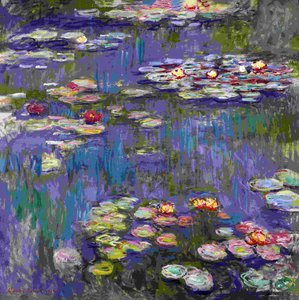
Water-Lilies (12) - Claude Monet
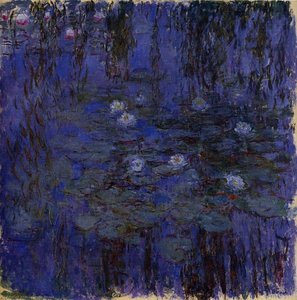
To encounter Water-Lilies (12) by Claude Monet is to step into a private sanctuary of light, where the boundaries between water, sky, and soul dissolve. As one of the most profound masterpieces within the Musée d'Orsay’s collection, this 1916 work transcends mere landscape painting; it is an immersive atmospheric experience. Monet utilizes a masterful technique of broken color—applying rhythmic, fluid brushstrokes that blend optically to capture the ephemeral shimmer of a Giverny dusk.
The palette, dominated by deep, melancholic blues and ethereal purples, evokes a sense of profound tranquility and timelessness. For the discerning collector or interior designer, this piece represents the pinnacle of Impressionist innovation, offering a serene focal point that brings a sophisticated, dreamlike depth to any refined space. Beyond its historical significance, the painting resonates with modern luxury through its ability to evoke emotion through texture and light. It remains an enduring symbol of beauty’s fleeting nature, standing as a cornerstone among the top 25 artworks in Paris.
Conclusion
As the golden hour descends upon the Seine and the shadows of the Gare d’Orsay lengthen across the riverbanks, one realizes that leaving these galleries is not an end, but a transformation. The masterpieces we have wandered through—the sun-drenched haystacks, the rhythmic dancers, and the swirling, emotive skies—do not remain trapped behind velvet ropes or within the gilded frames of the nineteenth century. Instead, they depart with us, carrying a certain light that lingers in our minds long after the museum doors have closed.
These works are far more than historical milestones; they are living, breathing presences that continue to pulse with the same raw emotion and revolutionary spirit that once scandalized the salons of Paris. They exist today as whispers of beauty in our quietest moments and as profound anchors of culture in our most vibrant spaces. To bring the essence of these works into one's own home is to invite a dialogue between history and the present, allowing the textures of Impressionism and the depth of Post-Impressionism to shape the very atmosphere of modern life.
Whether through the tactile soul of a hand-painted oil reproduction that captures every deliberate brushstroke or the delicate grace of a fine print, the legacy of the Musée d'Orsay remains an inexhaustible source of inspiration. We invite you to continue this journey and find your own connection to these eternal treasures within our full collection . May the light of these masters forever illuminate your world.