A Painter of Romance and Chivalry
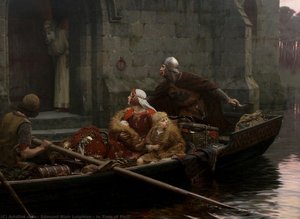
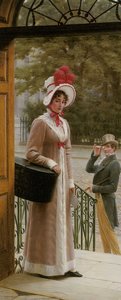
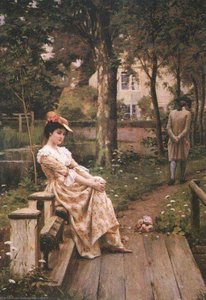
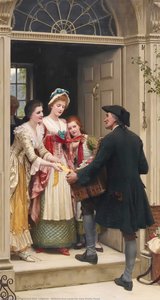
Edmund Blair Leighton, born in London on September 21st, 1852, was a master storyteller through paint, an artist who breathed life into the romanticized visions of medieval and Regency-era England. Though often associated with the Pre-Raphaelite movement due to his meticulous detail and narrative focus, Leighton carved out a unique space for himself, specializing in scenes that evoked chivalry, courtly love, and moments of poignant drama. His paintings weren’t simply historical recreations; they were carefully constructed emotional landscapes designed to stir the imagination and transport viewers to worlds of bygone elegance and heroic deeds. The son of artist Charles Blair Leighton and Caroline Boosey, Edmund experienced early hardship with his father's untimely death in 1855, leaving his mother to raise their family. This experience perhaps instilled a sensitivity that would later permeate his work, imbuing it with a sense of longing and nostalgia. After an initial foray into the world of commerce – a practical necessity following his father’s passing – Leighton pursued formal artistic training at the Royal Academy Schools, dedicating himself to honing his skills in draftsmanship and composition. He initially supplemented his income through illustrations for publications like Cassell's Magazine, further refining his skills in composition and storytelling before fully committing to oil painting.Developing a Distinctive Style
Leighton’s artistic development was shaped by a confluence of influences. The Pre-Raphaelites, with their unwavering commitment to accuracy of detail, vibrant color palettes inspired by medieval manuscripts, and literary subject matter drawn from Arthurian legends and Shakespearean dramas, undeniably served as foundational inspiration. However, Leighton distinguished himself from the more overtly symbolic and socially conscious members of that brotherhood through his singular preoccupation with narrative clarity and emotional resonance. He eschewed grand pronouncements about moral philosophy or political ideology; rather, he sought to capture fleeting instants of human experience—a knight’s solemn vow before embarking on a perilous quest, a princess accepting a heartfelt declaration of love—transforming them into visually arresting compositions that captivated audiences across social strata. His early canvases – pieces like A Flaw in the Title (1874) and Witness My Act and Seal – immediately garnered acclaim for their technical virtuosity and palpable romanticism, establishing him as a rising star within London’s burgeoning artistic community. These successes propelled him toward sustained engagement with the Royal Academy Schools, where he diligently cultivated his mastery of draughtsmanship and compositional technique—skills that would prove indispensable to his subsequent oeuvre.The Height of Popularity: Themes and Masterpieces
By the late 19th and early 20th centuries, Leighton had ascended to the pinnacle of artistic achievement. His paintings became synonymous with romantic historical genre, resonating deeply within the sensibilities of collectors and art enthusiasts alike. Recurring motifs in his artwork included scenes of courtly romance—a nobleman serenading his beloved beneath a moonlit sky—chivalrous knights upholding noble ideals—a warrior accepting a royal accolade—and dramatic confrontations imbued with psychological depth—a princess bravely defying societal constraints. Works such as Godspeed (1900), depicting a knight receiving blessings before embarking on a perilous journey, and The Accolade (1901)—arguably his most celebrated masterpiece—became iconic representations of the era’s fascination with medieval chivalry and heroic virtue. Leighton's unparalleled ability to imbue his figures with life and emotion—captured through subtle gestures and expressive facial expressions—transported viewers into the very heart of each narrative, fostering a profound connection between artist and audience. Beyond these monumental achievements, other notable canvases include Tristan and Isolde (1907)—a hauntingly beautiful portrayal of the tragic love story—and The Dedication (1908)—a solemn depiction of religious ceremony reflecting Leighton’s deep spiritual convictions.A Lasting Legacy
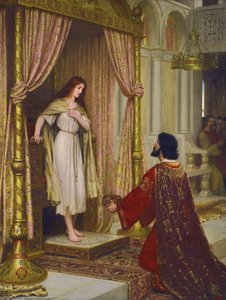
Despite his consistent participation in exhibitions at the Royal Academy for over forty years, Leighton never achieved formal recognition commensurate with his artistic stature—remaining neither an Academician nor an Associate. This perhaps stemmed from a deliberate rejection of institutional pressures and a steadfast devotion to pursuing artistic excellence independently. Nevertheless, Leighton’s reputation endured throughout his lifetime, securing him a prominent position within the British art world and cementing his legacy as one of the foremost practitioners of romantic historical painting. He was elected to the Royal Institute of Oil Painters in 1887—a testament to his exceptional skill and unwavering dedication to mastering the medium—acknowledging the widespread admiration for his artistic vision. Leighton’s influence extended beyond the confines of fine art, permeating popular culture through countless reproductions and adaptations of his iconic images—inspiring generations of artists and captivating audiences worldwide. He passed away peacefully on September 1st, 1922, leaving behind a remarkably prolific body of work that continues to inspire awe and wonder today. His son, Eric James Blair Leighton, followed in his footsteps, perpetuating the family tradition of artistic brilliance and upholding Leighton’s enduring contribution to British art history. Major works include:- A King and a Beggar Maid (1878): A poignant depiction of social contrast and unexpected affection.
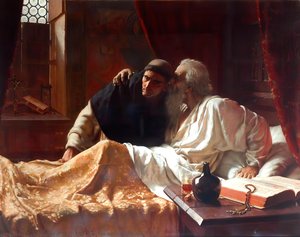
- The Dying Copernicus (1880): A dramatic portrayal of the astronomer's final moments, filled with intellectual intensity.
- To Arms! (1888): An energetic scene of a medieval call to battle, brimming with patriotic fervor.
- Lady Godiva (1892): A classic depiction of the legendary tale, emphasizing both vulnerability and defiance.
- The Accolade (1901): Perhaps his most famous work, embodying the ideals of chivalry and honor.