

 Pregledaj u prostoru
 Pošalji
 Podeli
 Detalji o delu

 Преузми
 Slični predmeti
 Rendgenski snimak
 Slajdovi
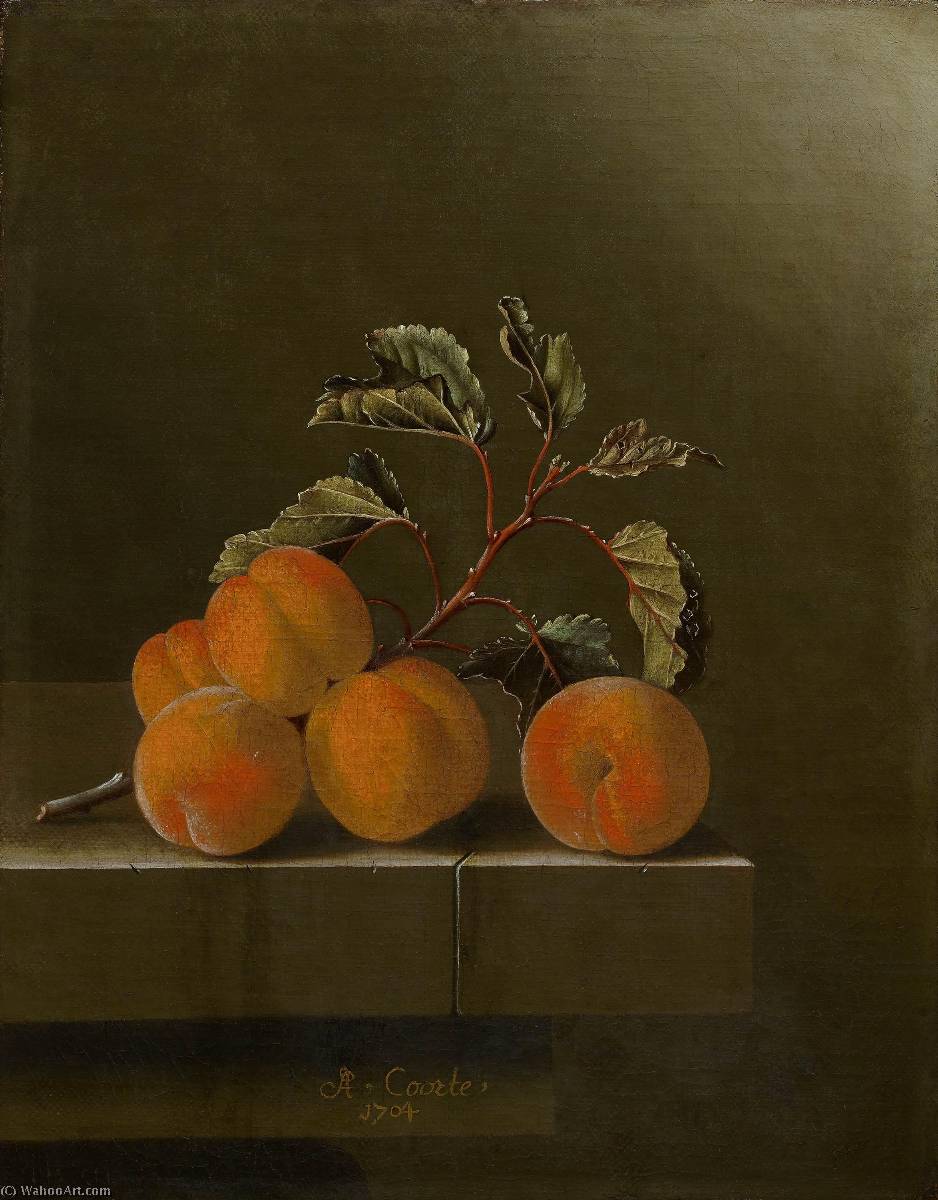
English Still life with five apricots
 1704
1704 30.0 x 24.0 cm
 Royal Picture Gallery Mauritshuis
 Pročitaj više
Kupite digitalnu sliku visoke rezolucije i poboljšanog kvaliteta, koja je znatno superiornija od onoga što vidite u online prikazu.
Svaka datoteka je pedantno pripremljena od strane naših stručnjaka koristeći napredne alate i profesionalnu ručnu retušu. Osiguravamo da svaka slika ima izuzetnu oštrinu, preciznu reprodukciju boja i fine detalje.
Konačna datoteka se dostavlja putem e-pošte u roku od 72 sata, optimizovana za neposrednu upotrebu u profesionalnim, izdavačkim i štamparskim okruženjima. To je isti kvalitet kojem veruju vrhunski studiji dizajna, izdavači i galerije.
Digitalna slika
Preuzmite datoteku visoke rezolucije za ličnu upotrebu, štampanje i kreativne projekte. ( Kupi print Kupi ručno naslikanu sliku)
Uključeno uz svaku porudžbinu digitalne slike
Profesionalna digitalna isporuka, zagarantovana
Kada odaberete ArtsDot.com, ne dobijate samo sliku – vi primate profesionalno unapređeno digitalno umetničko delo, izrađeno sa najvećom preciznošću i uz garanciju zadovoljstva. Evo svega što automatski dolazi uz vašu porudžbinu:

Brza dostava putem e-pošte
Vaša digitalna slika visoke rezolucije biće vam poslata putem e-pošte u roku od 72 sata od poručivanja – spremna za trenutnu upotrebu.

Digitalna datoteka unapređena veštačkom inteligencijom
Vaše umetničko delo je profesionalno optimizovano korišćenjem naprednih AI alata i ručne obrade, čime se osiguravaju maksimalni detalji, oštrina i preciznost boja.

Besplatna ponovna isporuka doživotno
Slučajno ste obrisali ili izgubili svoju datoteku? Ne brinite – poslaćemo vam je ponovo u bilo kom trenutku, potpuno besplatno.

Bez troškova uvoza – zauvek
Uživajte u svojim umetničkim delima trenutno, bez carine, dažbina ili troškova dostave – digitalni download je uvek bez poreza.

Garancija vernosti boja
Uz pomoć profesionalnih alata i upravljanja bojama, osiguravamo da vaša digitalna slika što vernije odražava originalne boje.

Garancija zadovoljstva u roku od 60 dana
Ako niste zadovoljni svojom digitalnom slikom, revidirat ćemo je ili vratiti 100% novca u roku od 60 dana – bez ikakvih pitanja.

100% garancija povrata novca
Niste zadovoljni? Obezbedite pun povrat novca u roku od 60 dana od trenutka kada ste primili svoju digitalnu datoteku – bez suvišnih pitanja.

Popusti na velike porudžbine
Kupite 3 slike, uštedite 10% - Kupite 5 slika, uštedite 15% - Kupite 10+ slika, uštedite 20%. Odlično za kreativne projekte, galerije i agencije.
Srodna umetnička dela







Biografija umetnika
A Rediscovered Intimacy: The Life and Art of Adriaen Coorte
Adriaen Coorte, a name that remained largely obscured for centuries, now resonates as one of the most captivating figures of the Dutch Golden Age. Born around 1665 in Middelburg, Netherlands, his life was shrouded in mystery until relatively recently. Unlike many of his contemporaries who enjoyed widespread recognition during their lifetimes, Coorte’s existence faded into near oblivion after his death sometime after 1707. It wasn't until the mid-20th century that Dutch art historian Laurens J. Bol meticulously pieced together fragments of information, resurrecting Coorte from historical obscurity and revealing a painter of remarkable sensitivity and unique vision. What emerged was not the story of an artist celebrated in grand courts or commissioned for elaborate displays, but rather one of quiet dedication to a profoundly intimate form of still life painting.Early Influences and Artistic Development
Coorte’s artistic journey began around 1680 with an apprenticeship under Melchior d'Hondecoeter in Amsterdam. D'Hondecoeter was renowned for his depictions of birds, often repeating specific poses and compositions—a practice that would subtly shape Coorte’s early style. It appears the master tasked pupils with copying these established motifs, creating a recognizable signature within their work. Indeed, echoes of d'Hondecoeter’s avian subjects can be detected in some of Coorte’s earlier paintings, though he quickly diverged from his teacher’s flamboyant approach. He returned to Middelburg around 1683 and established a modest workshop. This return marked a pivotal shift towards the minimalist aesthetic that would define his oeuvre. He eschewed the elaborate arrangements favored by contemporaries like Jan Davidsz de Heem, instead focusing on small-scale compositions of fruits, vegetables, or shells—subjects rendered with an almost monastic simplicity. His choice of materials was equally unconventional; he frequently painted on paper glued to wooden panels, a practice indicative of his unpretentious approach and perhaps limited resources.A Singular Style: Minimalism and the Study of Light
Coorte’s paintings are characterized by their extraordinary restraint. He typically presented arrangements of just a few objects—a bowl of strawberries, a scattering of shells, or a single peach—against dark backgrounds. These were not lavish displays intended to showcase wealth or status; rather, they were intensely focused studies of form, texture, and light. His compositions are remarkably balanced, almost geometric in their precision, yet imbued with a sense of naturalism that transcends mere technical skill. The lighting is particularly noteworthy, often emanating from an unseen source above, casting subtle shadows and highlighting the delicate surfaces of his subjects. He possessed a remarkable ability to capture the transient beauty of perishable objects—the velvety skin of a peach, the glistening dew on a strawberry, the pearlescent sheen of a shell. This focus on ephemerality lends his work a poignant quality, reminding viewers of the fleeting nature of existence. Unlike many still lifes of the period that incorporated opulent silver or Chinese porcelain, Coorte favored simple pottery—a deliberate rejection of ostentation in favor of humble authenticity.Rediscovery and Lasting Significance
For centuries, Adriaen Coorte remained largely unknown outside his native Middelburg. His work appeared sporadically in local tax inventories, but he was not celebrated or widely collected during his lifetime. It wasn’t until the 1950s that art historian Laurens J. Bol embarked on a painstaking investigation into his life and paintings. Bol's monograph and catalogue raisonné, published in 1977, brought Coorte to the attention of a wider audience, sparking a renewed appreciation for his unique style. An exhibition at the Dordrechts Museum in 1958 proved particularly influential, captivating Dutch audiences and inspiring poets like Hans Faverey and Ed Leeflang. Subsequent exhibitions at institutions such as the National Gallery of Art in Washington D.C. (2003) and the Mauritshuis in The Hague (2008) further cemented his reputation as a master of Dutch Baroque painting. Today, Coorte’s paintings are highly sought after by collectors and museums alike. His work stands as a testament to the power of simplicity—a quiet rebellion against the excesses of his time and a profound meditation on the beauty of the everyday. He is now recognized not merely as an anomaly within the Dutch Golden Age but as a singular voice, offering a unique perspective on light, form, and the ephemeral nature of life itself.Themes and Symbolism
While Coorte’s paintings lack the overt moralizing often found in other still lifes of the period, they are not devoid of symbolic meaning. The fruits he depicted—peaches, strawberries, grapes—were frequently associated with themes of temptation, abundance, and the pleasures of earthly life. However, his minimalist approach tempers these traditional interpretations. The single butterfly that appears in many of his compositions is often seen as a symbol of transformation and resurrection, while the dark backgrounds evoke a sense of mystery and contemplation. His paintings are not didactic pronouncements but rather invitations to quiet reflection. The very act of focusing on such humble subjects—a few pieces of fruit or a handful of shells—can be interpreted as a celebration of simplicity and a rejection of materialism. Coorte’s work resonates with a sense of spiritual stillness, inviting viewers to appreciate the beauty of the present moment. The intense study of light itself can also be seen as symbolic, representing divine illumination or the fleeting nature of time. Ultimately, Coorte's paintings are open to multiple interpretations, allowing each viewer to find their own meaning within these exquisitely rendered scenes.
after adriaen coorte
1665 - 1707
Kratke činjenice
- Artistic Movement Or Style: Dutch Golden Age Still Life
- Artists Or Movements Influenced By This Artist: Rediscovered Dutch Baroque painters
- Artists Who Influenced This Artist: ["Melchior d'Hondecoeter"]
- Date Of Birth: ca. 1665
- Date Of Death: after 1707
- Full Name: Adriaen Coorte
- Nationality: Dutch
- Notable Artworks:
- A Bowl of Strawberries
- Still Life with Shells
- Five Shells on a Slab
- Place Of Birth: Middelburg, Netherlands

