

 Pošalji
 Podeli
 Detalji o delu

 Преузми
 Slični predmeti
 Slajdovi
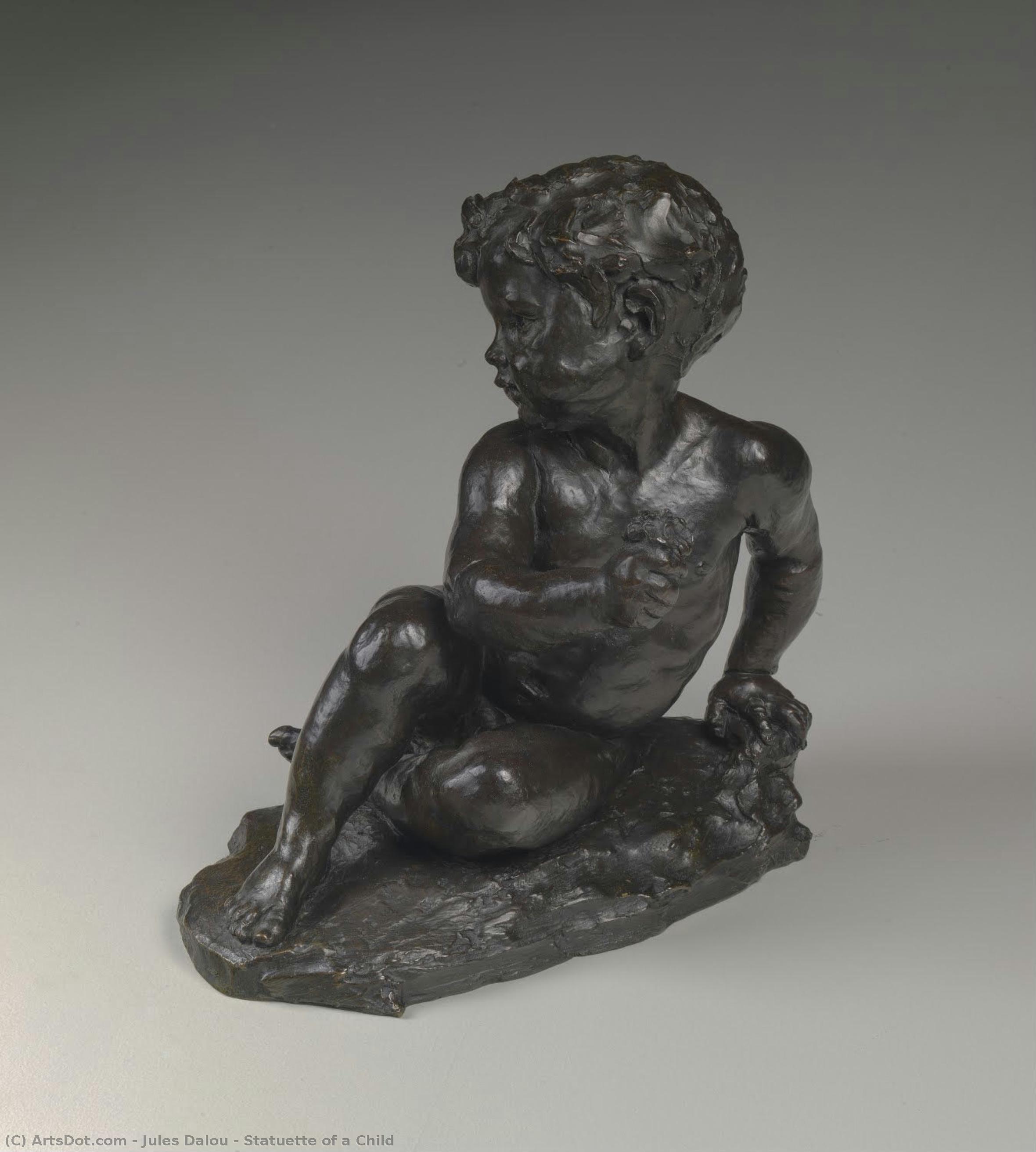
Statuette of a Child


 Pročitaj više
Kupite digitalnu sliku visoke rezolucije i poboljšanog kvaliteta, koja je znatno superiornija od onoga što vidite u online prikazu.
Svaka datoteka je pedantno pripremljena od strane naših stručnjaka koristeći napredne alate i profesionalnu ručnu retušu. Osiguravamo da svaka slika ima izuzetnu oštrinu, preciznu reprodukciju boja i fine detalje.
Konačna datoteka se dostavlja putem e-pošte u roku od 72 sata, optimizovana za neposrednu upotrebu u profesionalnim, izdavačkim i štamparskim okruženjima. To je isti kvalitet kojem veruju vrhunski studiji dizajna, izdavači i galerije.
Digitalna slika
Preuzmite datoteku visoke rezolucije za ličnu upotrebu, štampanje i kreativne projekte. ( Kupi print Kupi ručno naslikanu sliku)
Uključeno uz svaku porudžbinu digitalne slike
Profesionalna digitalna isporuka, zagarantovana
Kada odaberete ArtsDot.com, ne dobijate samo sliku – vi primate profesionalno unapređeno digitalno umetničko delo, izrađeno sa najvećom preciznošću i uz garanciju zadovoljstva. Evo svega što automatski dolazi uz vašu porudžbinu:

Brza dostava putem e-pošte
Vaša digitalna slika visoke rezolucije biće vam poslata putem e-pošte u roku od 72 sata od poručivanja – spremna za trenutnu upotrebu.

Digitalna datoteka unapređena veštačkom inteligencijom
Vaše umetničko delo je profesionalno optimizovano korišćenjem naprednih AI alata i ručne obrade, čime se osiguravaju maksimalni detalji, oštrina i preciznost boja.

Besplatna ponovna isporuka doživotno
Slučajno ste obrisali ili izgubili svoju datoteku? Ne brinite – poslaćemo vam je ponovo u bilo kom trenutku, potpuno besplatno.

Bez troškova uvoza – zauvek
Uživajte u svojim umetničkim delima trenutno, bez carine, dažbina ili troškova dostave – digitalni download je uvek bez poreza.

Garancija vernosti boja
Uz pomoć profesionalnih alata i upravljanja bojama, osiguravamo da vaša digitalna slika što vernije odražava originalne boje.

Garancija zadovoljstva u roku od 60 dana
Ako niste zadovoljni svojom digitalnom slikom, revidirat ćemo je ili vratiti 100% novca u roku od 60 dana – bez ikakvih pitanja.

100% garancija povrata novca
Niste zadovoljni? Obezbedite pun povrat novca u roku od 60 dana od trenutka kada ste primili svoju digitalnu datoteku – bez suvišnih pitanja.

Popusti na velike porudžbine
Kupite 3 slike, uštedite 10% - Kupite 5 slika, uštedite 15% - Kupite 10+ slika, uštedite 20%. Odlično za kreativne projekte, galerije i agencije.
Opis kolekcionarskog dela
A Moment Frozen in Time: The Essence of Dalou's 'Statuette of a Child'
Aimé-Jules Dalou’s 1902 bronze sculpture, ‘Statuette of a Child,’ isn’t merely a depiction of youth; it’s a profound meditation on vulnerability, quiet contemplation, and the poignant beauty of fleeting innocence. Born amidst the tumultuous social landscape of late 19th-century France – a period marked by republican ideals and artistic rebellion – Dalou sought to capture the essence of human experience with an unprecedented level of realism and emotional depth. This small yet powerfully resonant work stands as a testament to his ability to distill complex feelings into a remarkably simple, almost heartbreakingly direct image.
(Image courtesy of Museu Calouste Gulbenkian)
The Naturalist Vision and Rodin’s Legacy
Dalou's artistic journey was deeply intertwined with the legacy of Auguste Rodin, a sculptor he greatly admired. Like Rodin, Dalou rejected the idealized forms prevalent in academic sculpture, opting instead for a brutally honest portrayal of human anatomy and emotion. However, unlike Rodin’s often dramatic and overtly expressive figures, Dalou favored a more restrained approach, focusing on capturing subtle nuances of expression and gesture. ‘Statuette of a Child’ exemplifies this naturalist style – the child's slightly downturned mouth, the furrowed brow, and the delicate curve of his hand holding an unseen object all speak to a quiet sadness or perhaps simply a moment of deep thought. The work is considered a direct reflection of Dalou’s time spent in London, where he was exposed to new artistic ideas and techniques.
Craftsmanship and Material: Bronze as a Vessel for Emotion
The sculpture itself is cast in bronze, a material that lends itself beautifully to capturing texture and detail. Dalou's meticulous attention to the surface of the bronze – the subtle variations in tone, the delicate modeling of the folds in the clothing, and the almost palpable sense of weight and solidity – speaks volumes about his technical skill. The patina developed over time—a rich, dark brown hue—adds another layer of depth and character to the piece, suggesting a history and an enduring presence. The casting process itself, utilizing the *cire perdue* (lost-wax) method, ensured exceptional detail and precision, allowing Dalou to translate his vision with remarkable fidelity.
Symbolism and Context: A Reflection of Victorian Mourning
‘Statuette of a Child’ was originally conceived as part of a larger monument commissioned by Queen Victoria in 1878 – ‘The Kingdom of Heaven,’ a complex terracotta group depicting an angel cradling five infant children who had died in infancy. This sculpture is a replica of the child leaning against the angel's right knee, for which Dalou made numerous preparatory sketches. The work reflects the Victorian preoccupation with mortality and mourning, particularly the profound grief experienced by families who lost young children. The quiet dignity of the child’s pose suggests an acceptance of fate, while also hinting at a lingering sadness—a poignant reminder of the fragility of life.
A Timeless Masterpiece: Reproduction and Beyond
Today, ‘Statuette of a Child’ continues to resonate with viewers across generations. Its quiet beauty and emotional depth make it an ideal subject for high-quality reproductions, allowing its message of innocence and melancholy to be shared widely. Whether displayed in a private collection or adorning a public space, this sculpture serves as a powerful reminder of the enduring value of human connection and the poignant beauty of fleeting moments.
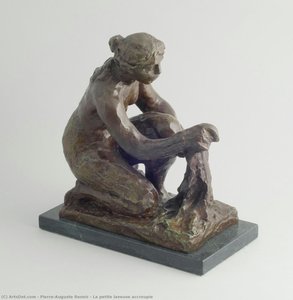
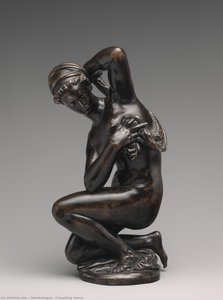
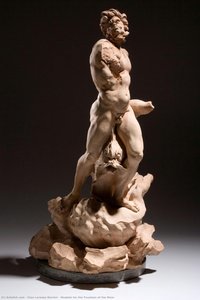
Srodna umetnička dela
Biografija umetnika
A Life Forged in Republican Ideals: The Sculptural Vision of Aimé-Jules Dalou
Aimé-Jules Dalou, a name resonant with the spirit of 19th-century French sculpture, was more than just an artist; he was a chronicler of his time, a sensitive observer of humanity, and a passionate advocate for republican ideals. Born in Paris in 1838 to a working-class Huguenot family, Dalou’s upbringing instilled within him a deep sense of social justice and secularity – values that would profoundly shape both his life and artistic output. This foundation fostered an empathy for the common person, a theme consistently woven throughout his oeuvre. His early training at the Petite École, followed by studies at the prestigious École des Beaux-Arts under Abel de Pujol and François-Joseph Duret, provided him with a solid academic grounding. However, it was the mentorship of Jean-Baptiste Carpeaux that truly ignited his artistic spark, imbuing his work with vitality and technical brilliance. Dalou absorbed Carpeaux’s dynamism while simultaneously cultivating a scholarly approach to sculpture, demonstrating an impressive command of form and composition.From Parisian Salons to English Exile: A Period of Growth and Resilience
Dalou's early career unfolded against the backdrop of a politically turbulent France. His work began attracting attention at the Paris Salon in 1861, establishing his reputation as a rising talent. Yet, his outspoken republican sympathies would soon lead to hardship. The tumultuous events of the Paris Commune in 1871 forced Dalou into exile in England, a consequence of his perceived involvement with the revolutionary government. This period, though born of adversity, proved remarkably fruitful for the artist. He found employment teaching at the South London Technical Art School and the South Kensington School of Art, contributing significantly to the development of British sculpture by introducing a more humanist and naturalist approach. In England, Dalou’s style evolved, manifesting in a series of exquisite terracotta statuettes and intimate portrait busts. Works like A French Peasant Woman and Child and Woman of Boulogne Telling Her Beads reveal his growing mastery of capturing the nuances of everyday life with poignant realism. He also received important commissions, including the fountain called Charity for the Royal Exchange in London (1878) and monuments for Queen Victoria’s granddaughters at Windsor Castle, demonstrating his versatility and skill on a grand scale.Triumph and Recognition: A Return to France and Monumental Achievements
The declaration of an amnesty in 1879 allowed Dalou to return to France, where he was greeted with renewed enthusiasm. This marked the beginning of his most prolific and celebrated period. He quickly secured major commissions, creating works that would solidify his place as one of France’s leading sculptors. The relief of Mirabeau replying to Dreux-Brezé (1883) showcased his ability to capture dramatic historical moments with compelling energy, while the decorative panel Fraternity (1885) embodied his commitment to republican ideals. However, it was the monumental “Triumph of the Republic” at Place de la Nation in Paris – erected in 1899 after years of dedicated work – that stands as Dalou’s most ambitious and enduring achievement. This sprawling allegorical composition, a vibrant celebration of French republican values, became an iconic symbol of national identity. Other significant monuments followed, including the Alphand Monument (1899) and the Hoche Monument in Quiberon (1902), further cementing his legacy as a master of public sculpture.A Lasting Legacy: Bridging Tradition and Modernity
Aimé-Jules Dalou’s impact on 19th-century French art is undeniable. He was lauded for his exceptional technical skill, perceptive realism, and ability to seamlessly blend grand allegorical themes with intimate portrayals of ordinary life. His work resonated with a growing desire for social commentary and artistic innovation, bridging the gap between academic traditions and emerging realist tendencies. The accolades he received – including the Grand Prix at the Exposition Universelle (1889) and his appointment as a Commander of the Legion of Honor – were testaments to his artistic prowess and national recognition. As one of the founding members of the Société Nationale des Beaux-Arts, and its first president of the sculpture section, Dalou played a pivotal role in shaping the direction of French art at the turn of the century. His influence extended beyond his immediate circle, inspiring generations of sculptors to embrace both technical mastery and social consciousness in their work. Today, Dalou’s sculptures continue to captivate audiences with their emotional depth, artistic brilliance, and enduring relevance, ensuring his place as a pivotal figure in the history of French sculpture.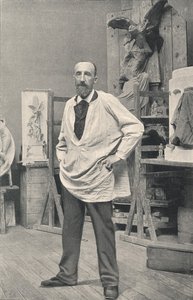
Aimé-Jules Dalou
1838 - 1902 , France
Kratke činjenice
- Artistic Movement Or Style: Realism, New Sculpture
- Artists Or Movements Influenced By This Artist: ['Later sculptors']
- Artists Who Influenced This Artist:
- Carpeaux
- Giambologna
- Puget
- Rubens
- Date Of Birth: 1838
- Date Of Death: 1902
- Full Name: Aimé-Jules Dalou
- Nationality: French
- Notable Artworks:
- Le Laboureur
- Triumph of the Republic
- Statuette of a Child
- Mirabeau replying to Dreux-Brezé
- Fraternity
- Place Of Birth: Paris, France

