

 Pregledaj u prostoru
 Pošalji
 Podeli
 Detalji o delu

 Преузми
 Slični predmeti
 Rendgenski snimak
 Slajdovi
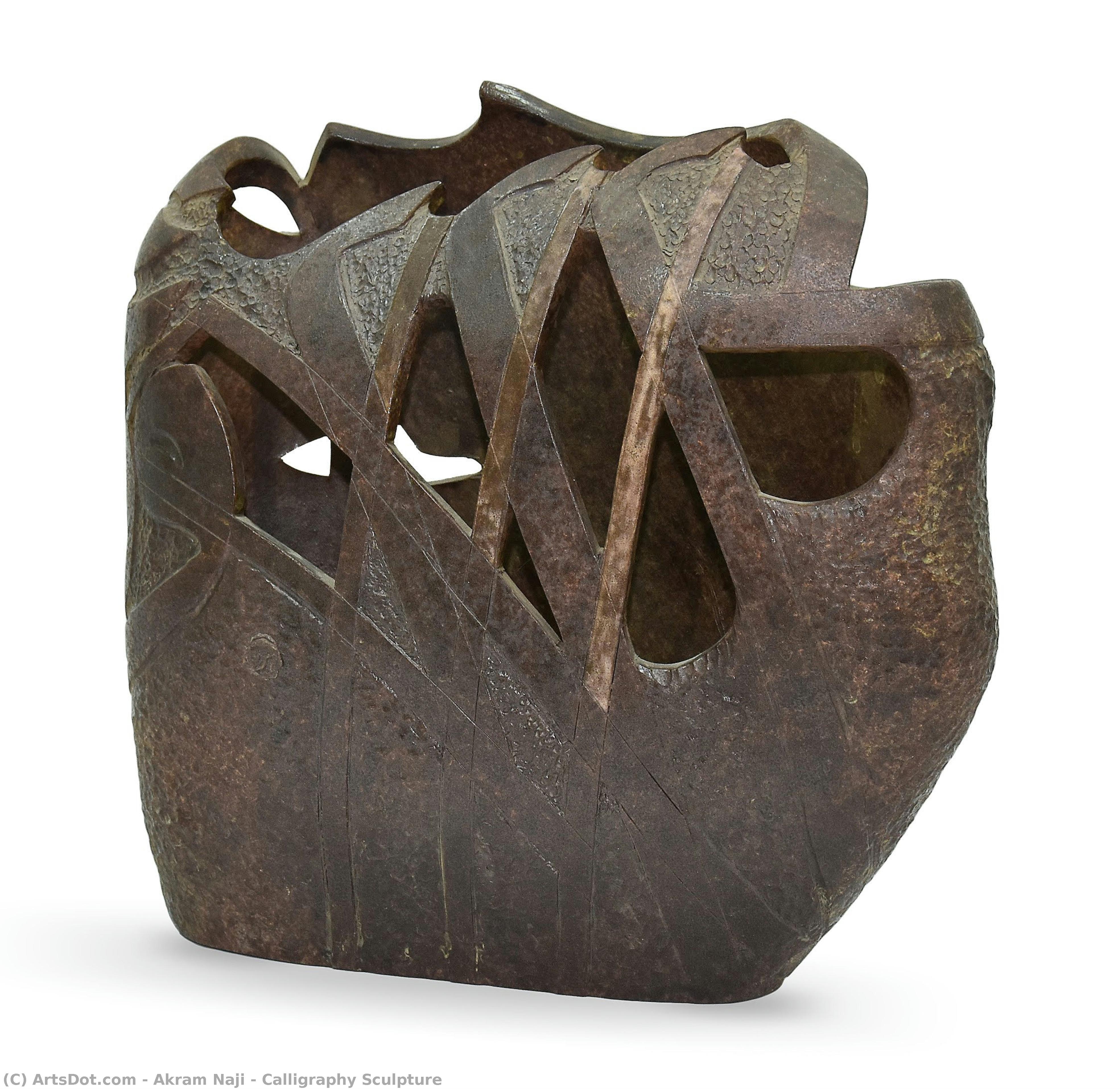
Calligraphy Sculpture
 1994
1994 32.0 x 11.0 cm
 Ibrahimi Collection
 Pročitaj više
Ručno rađena uljana reprodukcija
Ručno oslikano uljanim bojama na platnu u dimenzijama i okviru po vašem izboru, izrađeno po porudžbini od strane naših umetnika. ( Kupi print Kupi digitalnu sliku)




































Izaberite jednu od naših unapred definisanih veličina koje odgovaraju originalnim proporcijama umetničkog dela.

Можете унети сопствене димензије како бисте прилагодили дело одређеном оквиру или простору. Ако одабрана величина не одговара пропорцијама оригинала, слика ће бити исечена или проширена додатним елементима који се ручно насликавају. Дигитални prikaz ће вам бити послат на одобрење пре почетка производње.
Имајте на уму да преглед на екрану не одражава стварно исецање или проширење. Само приказ (mockup) ће тачно приказати коначну композицију.
Иако су доступне прилагођене величине, препоручујемо да одаберете димензију из дефинисане листе како бисте сачували оригиналне пропорције.
Nakon narudžbine, tim ArtsDot.com će klijentu putem e-pošte poslati uputstva i dostaviti prikaz predloženog rešenja
Isporuka širom sveta () za 3/4 nedelje umesto uobičajenih 5 nedelja. (7 септембар). Bez kompromisa po pitanju kvaliteta.

Besplatna ekspresna dostava širom sveta

Visokokvalitetno laneno platno

Kompletno osiguranje transporta

Garancija povraćaja carine i uvoznih dažbina

Garancija vernosti boja

Politika povraćaja u roku od 100 dana (isključivo u slučaju nedostataka)

Garancija povrata novca od 100%

Popust pri grupnoj kupovini
 Opcija sa staklom dostupna je samo za dimenzije manje od 110 cm

Calligraphy Sculpture
Tehnika reprodukcije
Dimenzije reprodukcije
-


Konačna cena
$ 263
Srodna umetnička dela




Biografija umetnika
Wassily Kandinsky: Pioneer of Abstraction
Wassily Wassilyevich Kandinsky (16 December 1866 – 13 December 1944) stands as a monumental figure in the history of art, widely recognized as one of the very first to truly break free from representational painting and pioneer abstraction. Born in Moscow, Russia, his artistic journey was marked by a profound intellectual and spiritual quest, culminating in a revolutionary approach to color, form, and composition that continues to resonate with artists and viewers today. Initially trained in traditional academic art – studying law and economics alongside drawing and anatomy – Kandinsky’s path shifted dramatically after encountering the vibrant world of Impressionism and Post-Impressionism in Munich at the turn of the 20th century. This exposure ignited a lifelong fascination with color, its psychological impact, and its potential to evoke emotion beyond mere depiction.Early Influences and Artistic Development
Kandinsky’s early artistic output reflected a blend of influences. He began his career as a landscape painter, diligently studying the works of artists like Jean-François Millet and depicting scenes of rural life with meticulous detail. However, he soon felt constrained by the limitations of portraying the external world through realistic representation. His travels to Paris in 1896 proved pivotal, exposing him to the radical ideas of Vincent van Gogh, Paul Gauguin, and particularly, the burgeoning Symbolist movement. This period marked a crucial transition as Kandinsky began experimenting with color and form, seeking ways to express inner feelings and spiritual experiences rather than simply mirroring external reality. His work during this time, often characterized by muted tones and evocative landscapes, foreshadowed his later abstract explorations. A significant turning point occurred in 1901 when he visited Saint Petersburg and was deeply moved by the Russian icon paintings, which profoundly influenced his understanding of color and symbolism.The Birth of Abstract Expression
Kandinsky’s formal declaration as a pioneer of abstraction arrived with his seminal 1911 publication, *Concerning the Spiritual in Art*. In this groundbreaking treatise, he argued that art should transcend mere imitation of nature and instead serve as a vehicle for expressing inner emotions and spiritual truths. He described his artistic process as a journey from “temptation” – representing objects realistically – to “necessity” – employing purely abstract forms and colors. His paintings from 1910-1914, such as *Composition VII* (1913) and *Improvisation 28* (1912), exemplify this shift, utilizing dynamic compositions of geometric shapes, vibrant hues, and bold lines to convey a sense of movement, energy, and spiritual intensity. These works are considered foundational in the development of abstract art, demonstrating Kandinsky’s belief that color and form could communicate directly with the viewer's soul.Key Movements and Collaborations
Kandinsky was deeply involved in several influential artistic movements of his time. He played a key role in the Blue Rider group (Die Brücke), alongside artists like Ernst Ludwig Kirchner and Emil Nolde, known for their expressive use of color and rejection of academic conventions. He later became associated with Der Blaue Reiter ("The Blue Rider"), a more spiritually oriented collective that explored themes of mysticism and symbolism. His collaboration with Gabriele Münter, a fellow artist and close friend, was particularly significant, providing him with both artistic inspiration and emotional support throughout his career. His time at the Bauhaus school in Germany further broadened his artistic horizons, exposing him to new ideas about design and functionality.Later Years and Legacy
Following the rise of Nazism, Kandinsky fled to France in 1933, continuing to paint until his death in Neuilly-sur-Seine in 1944. During this period, he developed a more restrained style, utilizing simpler forms and colors while retaining his commitment to expressing spiritual ideas through abstraction. Despite the tumultuous events of the 20th century, Kandinsky’s work remained remarkably consistent in its pursuit of inner truth and emotional expression. He is now recognized as one of the most important figures in modern art, profoundly influencing generations of artists with his innovative approach to color, form, and composition. His legacy extends far beyond painting, impacting fields such as architecture, design, and music, demonstrating the universal potential of abstract art to communicate directly with the human spirit. His work continues to inspire contemplation and evoke powerful emotional responses in viewers around the world.
akram naji
1944 - , Syrian Arab Republic
Osnovne informacije
- Artistic Movement Or Style:
- Abstraction
- Expressionism
- Artists Or Movements Influenced By This Artist:
- Mondrian
- Bauhaus
- Artists Who Influenced This Artist:
- Monet
- Van Gogh
- Date Of Birth: 16 December 1866
- Date Of Death: 13 December 1944
- Full Name: Wassily Wassilyevich Kandinsky
- Nationality: Russian, French
- Notable Artworks:
- On White II
- Blue Rider
- Place Of Birth: Moscow, Russia