

 Pregledaj u prostoru
 Pošalji
 Podeli
 Detalji o delu

 Преузми
 Slični predmeti
 Rendgenski snimak
 Slajdovi
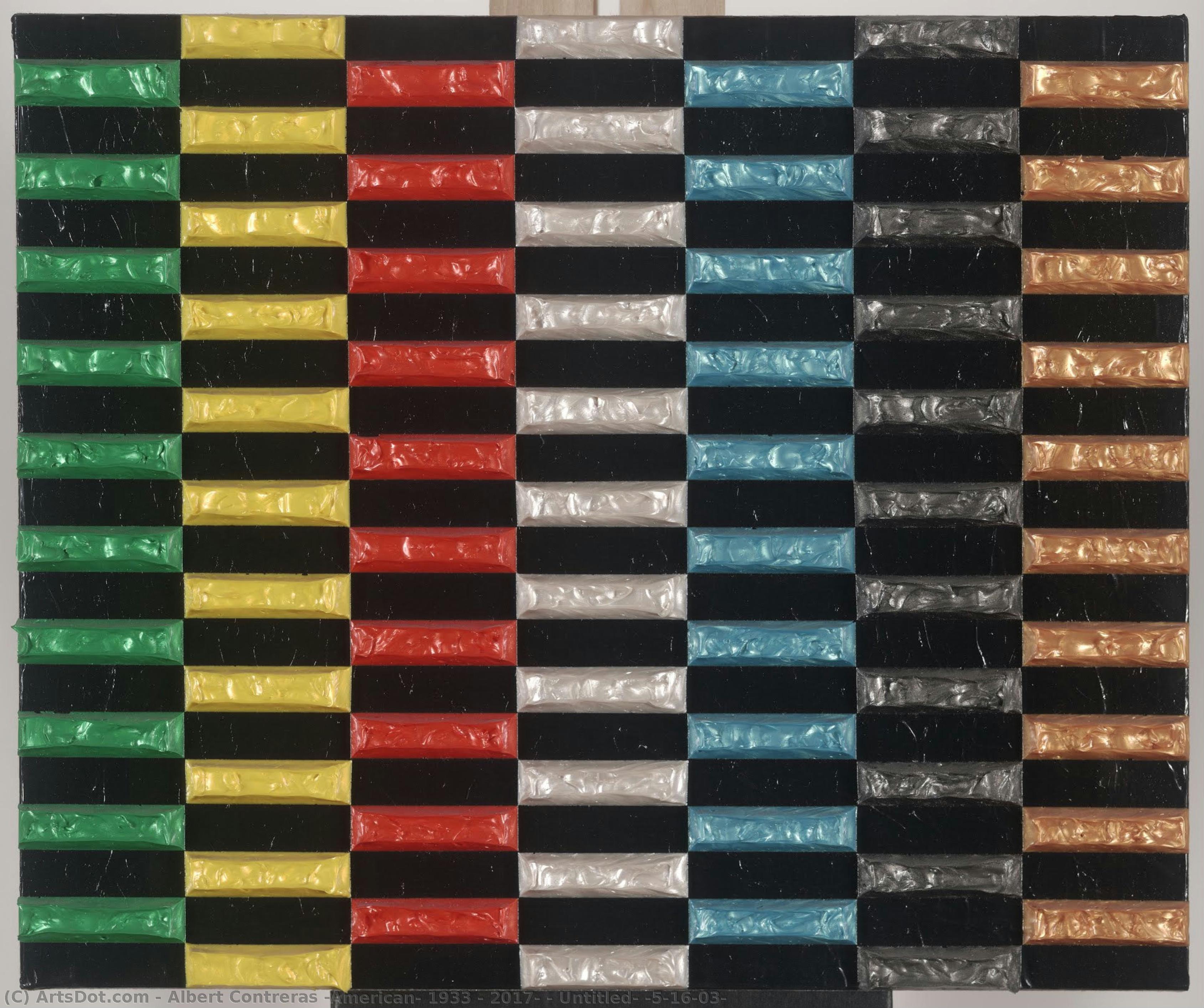
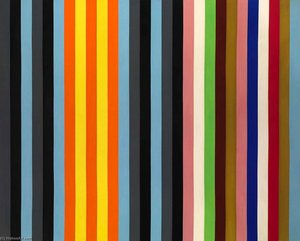
Untitled, (5-16-03)
 Acrylic On Canvas
- WallArt
- Minimalism
 2003
2003- Contemporary
 50.0 x 61.0 cm
 USC Fisher Museum of Art
 Pročitaj više
Giclee štampa / Umetnički otisak
Giclée štampa ili print na platnu muzejskog kvaliteta uz brzu proizvodnju i fleksibilne opcije završne obrade. ( Kupi ručno naslikanu sliku Kupi digitalnu sliku)




































Izaberite jednu od naših unapred definisanih veličina koje odgovaraju originalnim proporcijama umetničkog dela.

Možete uneti sopstvene dimenzije kako biste umetničko delo prilagodili specifičnom okviru ili prostoru. Ako odabrani format ne odgovara proporcijama originalne slike, mi ćemo ili iscrtati deo dela ili proširiti sliku pomoću ogledane ivice ili jednobojnog popunjavanja. Digitalni prikaz će vam biti poslat na odobrenje pre početka proizvodnje.
Imajte na umu da pregled na ekranu ne odražava stvarno iscrtavanje ili proširivanje. Samo će prikaz (mockup) precizno pokazati finalnu kompoziciju.
Iako su prilagođene dimenzije dostupne, preporučujemo da odaberete dimenziju sa unapred definisane liste kako biste očuvali originalne proporcije.
Dostava širom sveta () za 2 nedelje umesto uobičajenih 4/5 nedelja. (7 септембар)

Besplatna ekspresna dostava širom sveta

Visokokvalitetno laneno platno

Kompletno osiguranje transporta

Garancija povraćaja carine i uvoznih dažbina

Garancija vernosti boja

Politika povraćaja u roku od 100 dana (isključivo u slučaju nedostataka)

Garancija povrata novca od 100%

Popust pri grupnoj kupovini
 Opcija sa staklom dostupna je samo za dimenzije manje od 110 cm

Untitled, (5-16-03)
Giclee štampa / Umetnički otisak
Dimenzije reprodukcije
-


Konačna cena
$ 62
A Symphony of Mundane Objects: The Vibrant World of Albert Contreras
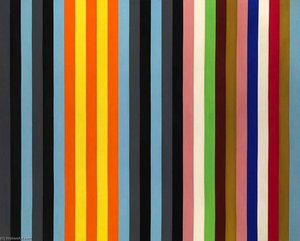
In the quiet intersection where everyday utility meets profound abstraction, we find Untitled, (5-16-03), a mesmerizing work by the American master Albert Contreras. At first glance, the viewer is greeted by a rhythmic, organized parade of colorful forms that mimic the appearance of plastic bags arranged in meticulous rows. Yet, to look closer is to enter a meditative space where the boundaries between the disposable and the eternal begin to blur. Created in 2003, this acrylic on canvas piece serves as a vibrant testament to Contreras’s ability to find extraordinary beauty within the most overlooked fragments of modern life. The painting captures a spectrum of light through shades of yellow, red, blue, black, green, orange, white, gray, and brown, transforming a simple concept into a complex tapestry of color and form.
The technique employed by Contreras in this work showcases a sophisticated command over the medium of acrylic. Each row of "bags" is rendered with a precision that suggests both the lightness of the subject matter and the weight of the artist's intention. There is a tactile quality to the paint, where the layering of pigments creates a sense of depth and dimension, making the flat canvas pulse with life. The composition is structured through nine distinct rows, creating a visual cadence that guides the eye across the 50 x 61 cm surface in a way that feels both orderly and spontaneous. This balance between rigid structure and fluid color is a hallmark of his style, bridging the gap between the disciplined logic of minimalism and the emotive energy of abstract expressionism.
Historically, this piece emerges from the later period of an artist whose life was defined by a remarkable creative resurgence. Having lived through the transformative eras of mid-20th century American art, Contreras brought a unique perspective to his work—one informed by his time as a sanitation engineer, a role that undoubtedly deepened his intimacy with the discarded objects of society. In Untitled, (5-16-03), we see the elevation of the mundane; the plastic bag, often viewed as a symbol of waste, is reimagined as a vessel for pure color and geometric interest. This transformation invites collectors and enthusiasts to reconsider their own relationship with the material world, finding a sense of wonder in the repetitive patterns of daily existence.
For the discerning collector or interior designer, this artwork offers a versatile yet commanding presence. Its structured composition makes it an ideal focal point for modern, minimalist, or contemporary spaces, where its bold palette can breathe life into neutral environments. The emotional impact of the piece is one of unexpected joy and rhythmic calm; it provides a visual anchor that is stimulating without being overwhelming. Owning a high-quality reproduction of this work allows one to bring a piece of American art history into the home—a piece that celebrates the resilience of creativity and the enduring power of color to transform the ordinary into the sublime.
Srodna umetnička dela





Biografija umetnika
Albert Contreras: A Second Act of Color and Form
Born in Santa Monica, California, in 1933, Albert Contreras’s artistic journey was a testament to the enduring power of delayed expression and a profound connection to the tactile nature of paint. His life, marked by periods of intense creative output followed by decades of quiet contemplation, offers a compelling narrative within the broader context of mid-20th century American art – particularly the evolving landscape of abstract expressionism and minimalism. Contreras’s work isn't easily categorized; it exists in a space between these movements, imbued with a unique sensibility shaped by his experiences as a sanitation engineer, a period of deliberate detachment from the artistic world that ultimately fueled an extraordinary resurgence of creativity.
Contreras initially began painting in the early 1960s, deeply influenced by the burgeoning currents of abstract expressionism and the nascent explorations of minimalism. His early canvases, exhibited at Peter Mendenhall Gallery during this pivotal decade, demonstrated a bold engagement with color and form – vibrant hues layered over stark geometric shapes, reflecting the dynamism and experimentation characteristic of the era. These works, often characterized by their energetic brushwork and a sense of raw emotion, established him as a promising voice within the American art scene. However, around 1972, at the height of his early success, Contreras abruptly ceased painting, a decision he attributed to having achieved everything he’d set out to do. This wasn't a simple retirement; it was a conscious severing of ties with an artistic identity that had become, in his view, fully realized.
For the next 25 years, Contreras led a remarkably ordinary life, working as a sanitation engineer for the City of Santa Monica – a job he described as profoundly grounding and deeply satisfying. He found fulfillment in the physicality of his work, the tangible results of his labor, and the camaraderie of his colleagues. This period of deliberate inactivity was not one of artistic stagnation but rather a crucial period of personal reflection and re-evaluation. As Peter Mendenhall, his long-time gallerist and friend, noted, Contreras’s psychotherapy sessions provided him with the mental space to reconnect with his creative core. It was during this time that he began to quietly contemplate the nature of art itself, questioning its purpose and seeking a new direction.
The Resurgence: 1997 and Beyond
In 1997, after years of introspection, Contreras returned to painting with an intensity and urgency that belied his decades-long absence. This wasn’t simply a resumption of a previous career; it was the birth of a new artistic voice, informed by both his past experiences and his subsequent period of detachment. His later works represent a significant departure from his earlier geometric abstractions, embracing a more gestural and layered approach. Contreras began to experiment with unconventional materials – acrylic lacquer paint, glitter, sand, and pebbles – creating surfaces that were richly tactile and visually complex.
A defining characteristic of this second phase of his career was the use of black wood panels as a backdrop for his vibrant compositions. This stark contrast heightened the impact of the colors, emphasizing their luminosity and depth. Contreras’s palette became increasingly bold and expressive, moving beyond subtle gradations to encompass saturated hues and unexpected combinations. He frequently employed techniques that blurred the boundaries between painting and sculpture, building up thick impasto layers that created a sense of three-dimensionality. The incorporation of glitter, often applied in delicate, shimmering patterns, added an ethereal quality to his work, transforming them into mesmerizing kaleidoscopes of color and light.
A Unique Style: Abstract Expressionism Meets Minimalism
Contreras’s artistic style is remarkably difficult to pin down, existing as a compelling synthesis of abstract expressionism and minimalism. While he shared with the abstract expressionists a commitment to emotional intensity and spontaneous gesture, his later work moved away from the sprawling, gestural brushstrokes of artists like Jackson Pollock towards the more controlled and reductive forms of minimalist painters such as Donald Judd or Sol LeWitt. His canvases are often characterized by bold colors, distorted forms, and exaggerated expressions – yet these elements are deployed with a deliberate precision that reflects his minimalist sensibilities.
His work frequently features large-scale compositions, often employing circular motifs—sometimes simple circles, sometimes complex arrangements of concentric shapes—that evoke both spiritual and geometric associations. The use of unconventional materials, such as acrylic lacquer paint and glitter, further distinguishes his style, adding a tactile dimension to his paintings and creating surfaces that are richly textured and visually stimulating. The influence of Jay DeFeo’s monumental “Rose” is often noted in discussions of Contreras' work, particularly in the layering of paint and the creation of relief-like textures.
Legacy and Recognition
Albert Contreras left an indelible mark on the American art world, not only through his distinctive artistic style but also through his unwavering commitment to his craft. His works have been exhibited at numerous museums and galleries across the United States and Sweden, including the Museum of Modern Art in Stockholm and the Gothenburg Art Museum, ensuring that his art is accessible to a wide audience. He generously donated many of his paintings to university galleries and private collections, contributing significantly to the preservation and appreciation of his work for future generations.
Contreras’s story—a career punctuated by periods of intense creative activity followed by deliberate withdrawal—offers a poignant reflection on the nature of artistic identity and the importance of self-reflection. His legacy extends beyond his individual works, serving as an inspiration to artists who seek to challenge conventional notions of creativity and embrace the unexpected turns of life’s journey. He died in 2017 at the age of 84, leaving behind a body of work that continues to captivate and inspire viewers with its bold colors, dynamic forms, and profound sense of emotional depth.

albert contreras (american, 1933 - 2017)
1933 - 2017 , United States of America
Osnovne informacije
- Artistic Movement Or Style: Abstract expressionism, Minimalism
- Artists Or Movements Influenced By This Artist: ['Peter Mendenhall Gallery']
- Artists Who Influenced This Artist:
- Abstract Expressionism
- Minimalism
- Date Of Birth: 1933
- Date Of Death: 2017
- Full Name: Albert Contreras
- Nationality: American
- Notable Artworks: ['Untitled, (5-16-03)']
- Place Of Birth: United States
Povezani članci
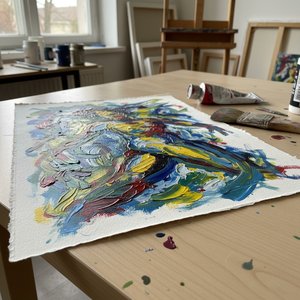
Acrylic on Paper: A Modern Canvas for Contemporary Expression
Explore the versatility of acrylic painting on paper! Discover expert techniques, artist insights & archival practices for creating stunning contemporary art. Learn more at ArtsDot.

Top 10 dela geometrijske apstrakcije koje morate videti | ArtsDot.com
Istražite 10 remek-dela geometrijske apstrakcije – Mondrian, Malevič i Kandinski. Otkrijte priče iza ovih ikoničnih slika i pronađite inspiraciju za dekoraciju enterijera sa ArtsDot.com! Reprodukcije vrhunskog kvaliteta.

Abstraktni Ekspresionizam: 10 Remek Dela Koja Su Definisala Pokret
Otkrijte 10 remek dela koja su definisala apstraktni ekspresionizam! Istražite dela Pola Krausa, Džejson Poloka i drugih. Saznajte priče iza umetnosti i inspirisanje za dekoraciju doma. Eksplorirajte kolekciju na ArtsDot.com!
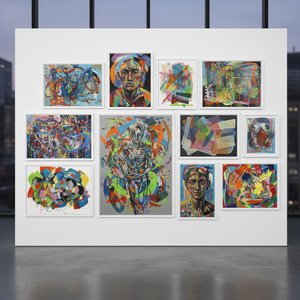
Acrylic Revolution: 10 Masterpieces That Redefined Modern Art | ArtsDot
Explore 10 legendary acrylic paintings that revolutionized modern art! From Helen Frankenthaler's color fields to Richter’s abstract power, discover the stories behind these iconic masterpieces. Find museum-quality reproductions & elevate your home decor on ArtsDot.com.
Kandinsky's Masterpieces: 25 Paintings That Define Abstract Art | ArtsDot
Journey through Wassily Kandinsky's 25 most iconic abstract paintings. Explore his revolutionary use of color, form & spiritual expressionism. Find museum-quality Kandinsky reproductions and elevate your home decor with ArtsDot.com. Discover all masterpieces on ArtsDot.com!