

 Pregledaj u prostoru
 Pošalji
 Podeli
 Detalji o delu

 Преузми
 Slični predmeti
 Rendgenski snimak
 Slajdovi
 Stats
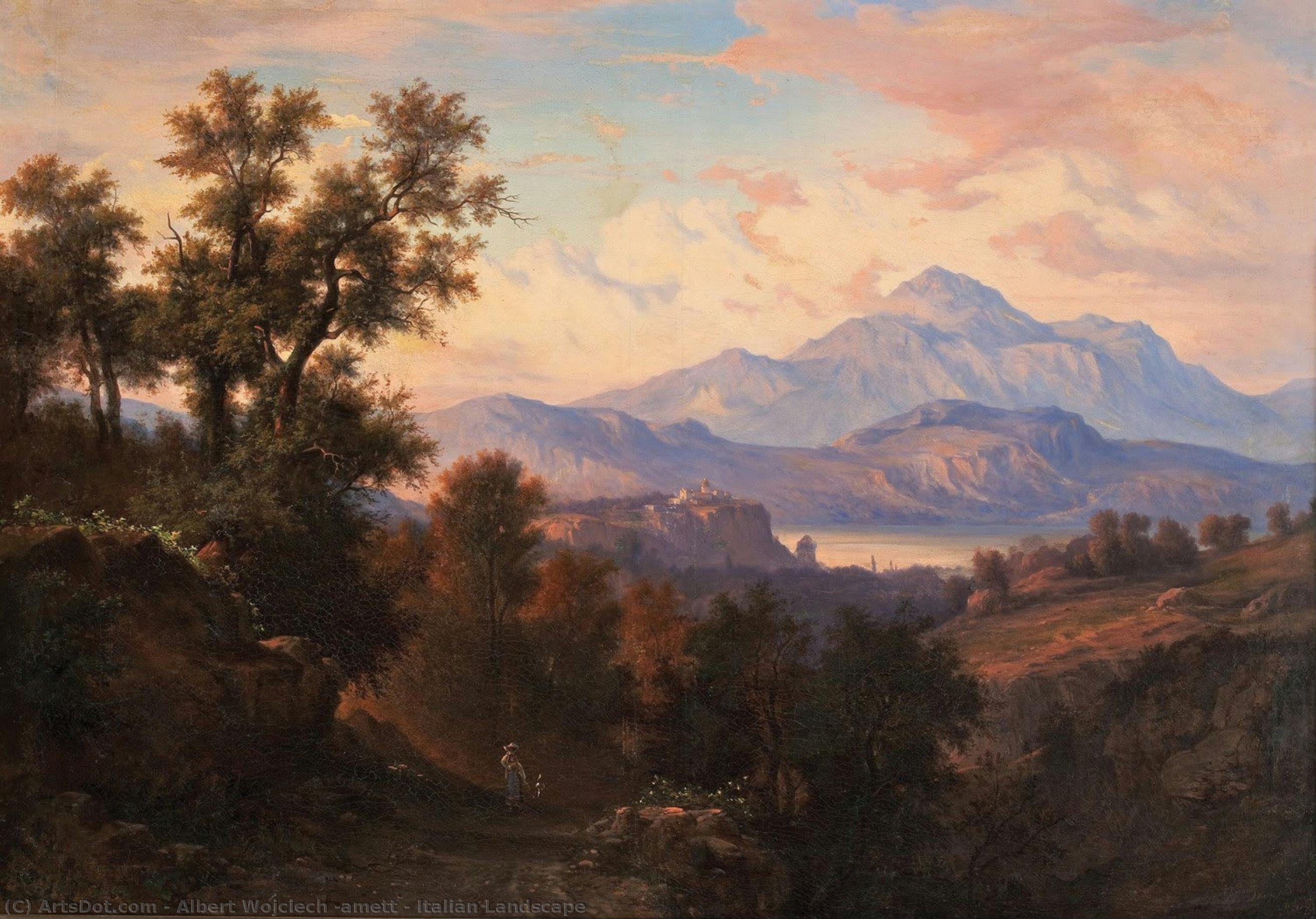
StatsItalian Landscape
 1861
1861 77.0 x 105.0 cm
 Lithuanian Art Centre TARTLE
 Pročitaj više
Ručno rađena uljana reprodukcija
Ručno oslikano uljanim bojama na platnu u dimenzijama i okviru po vašem izboru, izrađeno po porudžbini od strane naših umetnika. ( Switch to Print Switch to Digital Image)




































Izaberite jednu od naših unapred definisanih veličina koje odgovaraju originalnim proporcijama umetničkog dela.

Можете унети сопствене димензије како бисте прилагодили дело одређеном оквиру или простору. Ако одабрана величина не одговара пропорцијама оригинала, слика ће бити исечена или проширена додатним елементима који се ручно насликавају. Дигитални prikaz ће вам бити послат на одобрење пре почетка производње.
Имајте на уму да преглед на екрану не одражава стварно исецање или проширење. Само приказ (mockup) ће тачно приказати коначну композицију.
Иако су доступне прилагођене величине, препоручујемо да одаберете димензију из дефинисане листе како бисте сачували оригиналне пропорције.
Nakon narudžbine, tim ArtsDot.com će klijentu putem e-pošte poslati uputstva i dostaviti prikaz predloženog rešenja
Isporuka širom sveta () za 3/4 nedelje umesto uobičajenih 5 nedelja. (7 септембар). Bez kompromisa po pitanju kvaliteta.

Besplatna ekspresna dostava širom sveta

Visokokvalitetno laneno platno

Kompletno osiguranje transporta

Garancija povraćaja carine i uvoznih dažbina

Garancija vernosti boja

Politika povraćaja u roku od 100 dana (isključivo u slučaju nedostataka)

Garancija povrata novca od 100%

Popust pri grupnoj kupovini
 Opcija sa staklom dostupna je samo za dimenzije manje od 110 cm

Italian Landscape
Tehnika reprodukcije
Dimenzije reprodukcije
-


Konačna cena
$ 263
Srodna umetnička dela









Biografija umetnika
A Life Painted in Light: The Evocative Landscapes of Albert Żamett
Albert Wojciech Żamett (1821–1876) was a painter whose life and work beautifully bridged the worlds of Polish Romanticism and Russian academic tradition. Born on November 25th, 1821, in Vilnius, Lithuania, his story is one of artistic pursuit fueled by patronage and shaped by extensive travel across Europe’s cultural heartlands. Żamett was not merely documenting landscapes; he was capturing fleeting moments of serenity and light, imbuing his scenes with a quiet emotional resonance that continues to captivate viewers today. His upbringing was steeped in both Polish heritage and the broader Imperial context, as his father, Daniel Schamett, an emigrant from East Prussia, had established himself as a Russian citizen in Vilnius. The foundations of Żamett’s technical mastery were laid during his formative years in Vilnius, where he attended gymnasium education before seeking more rigorous training. His journey led him to the Imperial Academy of Arts in St. Petersburg, where he studied under the guidance of Maxim Vorobiev. Under Vorobiev’s mentorship, Żamett absorbed the essential stylistic precepts of the era, specifically focusing on tonal harmony and atmospheric perspective. Though he attended the academy as a free listener—a testament to his independent spirit—the training he received there provided him with the structural precision necessary to later master the more fluid, emotive qualities of Romantic landscape art.The Italian Transformation and Artistic Refinement
A pivotal moment in Żamett’s development arrived in 1847, facilitated by the generous support of the Kaunas Marshal, Benedict Tyszkiewicz. This patronage enabled a transformative decade-long immersion in Italy, where he lived from 1847 to 1857. During this period, Żamett moved beyond the academic rigors of St. Petersburg to study at the St. Luke Academy in Rome, perfecting his ability to capture the sublime beauty of the Mediterranean landscape. He became profoundly captivated by the Italian light, the grandeur of classical ruins, and the picturesque countryside—themes that would dominate his oeuvre for decades to come. His time in Italy was not merely a period of study but an emotional awakening. He drew inspiration from the vibrant hues of Tuscan hillsides and the dramatic vistas of the Apennines. One of his most notable achievements includes works depicting the Gran Sasso in the Abruzzo region, where he utilized a masterly composition to showcase mountain peaks looming over tranquil waters. Even after leaving Italy, Żamett continued to recreate these landscapes from memory and sketches, ensuring that the warm, shimmering evening light and the romantic mood of the Italian peninsula remained central to his artistic identity.Legacy and the Romantic Vision
Beyond his Italian sojourns, Żamett’s travels extended through France, England, and Germany, allowing him to absorb the diverse artistic currents of 19th-century Europe. His years in France, specifically between 1859 and 1863, further refined his ability to capture atmospheric effects, a skill that allowed him to create "ideal landscapes" that were highly sought after by collectors of the era. His work often featured:- Atmospheric Perspective: The use of light and haze to create a sense of depth and distance.
- Emotional Resonance: The inclusion of small, human elements—such as a lone figure walking a path—to emphasize the vastness and grandeur of nature.
- Tonal Harmony: A sophisticated palette that transitioned from the lush greens of foreground foliage to the soft pinks and blues of distant, sun-drenched hills.
albert wojciech żamett
1821 - 1876 , Lithuania
Osnovne informacije
- Artistic Movement Or Style: Romantic Painting
- Artists Or Movements Influenced By This Artist: ['Imperial Academy of Arts']
- Artists Who Influenced This Artist: ['Maxim Vorobiev']
- Date Of Birth: November 25, 1821
- Date Of Death: 1876
- Full Name: Albert Wojciech Żamett
- Nationality: Lithuanian
- Notable Artworks:
- Italian Landscapes
- Serene Scenes
- Place Of Birth: Vilnius, Lithuania