

 Pregledaj u prostoru
 Pošalji
 Podeli
 Detalji o delu

 Преузми
 Slični predmeti
 Rendgenski snimak
 Slajdovi
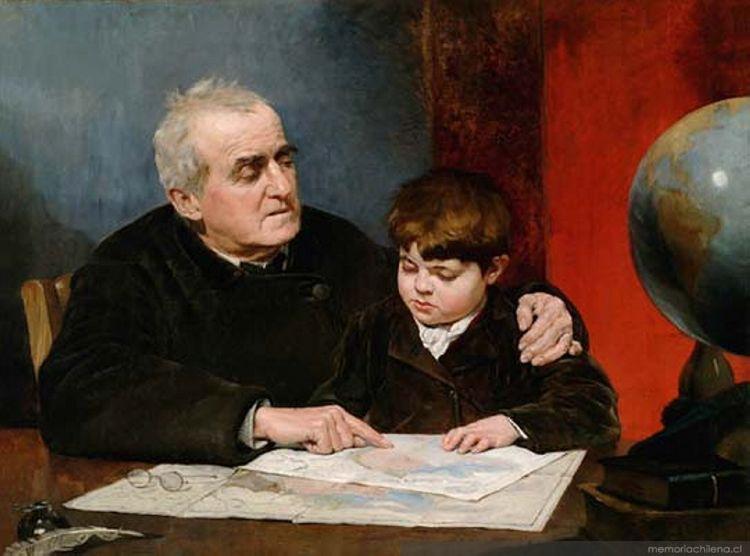
Lección de geografía
 Acrylic On Canvas
- WallArt
- Contemporary Realism
 82.0 x 111.0 cm
 Museo Nacional de Bellas Artes
 Pročitaj više
Ručno rađena uljana reprodukcija
Ručno oslikano uljanim bojama na platnu u dimenzijama i okviru po vašem izboru, izrađeno po porudžbini od strane naših umetnika. ( Kupi print Kupi digitalnu sliku)




P118B $10

P118H $10

P118W $10

P438Z $10

P508JH $12

P508YH $12

P805H $10

P805Z $10

P919BZ $10

P919G $10

P919XJ $10

P959ZH $10

P968JZ $12

W106C $8

W218G $10

W218JH $8

W218Y $10

W307PJ $10

W316G $10

W316PJ $8

W316Y $10

W398PJ $8

W4111J $10

W500HY $15

W500JH $15

W692G $12

W849H $8

W940BG $15

W953PJ $8




Izaberite jednu od naših unapred definisanih veličina koje odgovaraju originalnim proporcijama umetničkog dela.

Можете унети сопствене димензије како бисте прилагодили дело одређеном оквиру или простору. Ако одабрана величина не одговара пропорцијама оригинала, слика ће бити исечена или проширена додатним елементима који се ручно насликавају. Дигитални prikaz ће вам бити послат на одобрење пре почетка производње.
Имајте на уму да преглед на екрану не одражава стварно исецање или проширење. Само приказ (mockup) ће тачно приказати коначну композицију.
Иако су доступне прилагођене величине, препоручујемо да одаберете димензију из дефинисане листе како бисте сачували оригиналне пропорције.
Nakon narudžbine, tim ArtsDot.com će klijentu putem e-pošte poslati uputstva i dostaviti prikaz predloženog rešenja
Isporuka širom sveta () za 3/4 nedelje umesto uobičajenih 5 nedelja. (7 септембар). Bez kompromisa po pitanju kvaliteta.

Besplatna ekspresna dostava širom sveta

Visokokvalitetno laneno platno

Kompletno osiguranje transporta

Garancija povraćaja carine i uvoznih dažbina

Garancija vernosti boja

Politika povraćaja u roku od 100 dana (isključivo u slučaju nedostataka)

Garancija povrata novca od 100%

Popust pri grupnoj kupovini
 Opcija sa staklom dostupna je samo za dimenzije manje od 110 cm

Lección de geografía
Tehnika reprodukcije
Dimenzije reprodukcije
-


Konačna cena
$ 263
Alfredo Valenzuela Puelma: A Pioneer of Chilean Realism
Chile’s artistic landscape owes an immense debt to Alfredo Valenzuela Puelma (1856-1909), a painter whose unwavering commitment to realism established him as one of the nation's foremost masters. Born in Valparaiso, a city renowned for its bohemian spirit and cosmopolitan atmosphere—a crucible of artistic experimentation—Valenzuela Puelma’s formative years were marked by exposure to both intellectual stimulation and profound personal hardship. Despite facing significant challenges throughout his life, including debilitating tuberculosis that ultimately claimed his vitality, he persevered in pursuing his artistic ambitions with unwavering determination.The Parisian Influence: Shaping a Distinctive Vision
Valenzuela Puelma’s artistic trajectory took its decisive turn when he embarked on a transformative journey to Paris in 1882. This immersion within the epicenter of European art offered him unparalleled opportunities for observation and emulation, fostering connections with luminaries such as Gustave Moreau and Alexandre Cabanel—artists whose stylistic sensibilities profoundly impacted his own evolving aesthetic. The École Supérieure des Beaux-Arts instilled in him a meticulous approach to anatomical study and compositional planning, skills that would become hallmarks of his oeuvre. More importantly, Paris exposed him to the burgeoning Impressionist movement, sparking an internal debate about the role of light and color in conveying emotion—a consideration that subtly infused his paintings with a nuanced sensitivity rarely encountered elsewhere.A Portrait of Learning: Analyzing “Lección de geografía”
“Lección de geografía,” or “Lesson of Geography,” exemplifies Valenzuela Puelma’s signature style – a masterful blend of meticulous realism and humanist compassion. Painted circa 1890, this captivating portrait depicts a father instructing his son about the intricacies of geography using a map as their guide. The scene unfolds with quiet dignity within a warmly lit interior—a deliberate choice that underscores the importance of familial connection and intellectual curiosity. Valenzuela Puelma’s technique is characterized by painstaking detail: Every wrinkle on the father's face, every gesture of instruction, every subtle expression on the son’s countenance is rendered with breathtaking accuracy. The muted palette—dominated by earthy tones—creates a sense of tranquility and reinforces the painting’s contemplative mood.Symbolism Embedded in Detail
Beyond its technical brilliance, “Lección de geografía” resonates with symbolic significance. The map itself serves as a metaphor for knowledge acquisition and the transmission of cultural heritage—values deeply cherished within Chilean society at the time. Furthermore, the father's posture conveys unwavering support and guidance, symbolizing the role of parental influence in shaping one’s intellectual development. Even the clock hanging on the wall subtly reinforces the passage of time—a reminder that learning is a lifelong endeavor.Emotional Resonance: Capturing Human Experience
Ultimately, Valenzuela Puelma succeeds in capturing the essence of human experience – the quiet intimacy of familial bonds and the profound satisfaction derived from pursuing intellectual pursuits. “Lección de geografía” transcends mere representation; it evokes empathy and invites contemplation about the values that underpin a fulfilling life. It stands as an enduring testament to Valenzuela Puelma’s artistic genius—a masterpiece that continues to inspire admiration and provoke discussion among art historians and collectors alike.Srodna umetnička dela

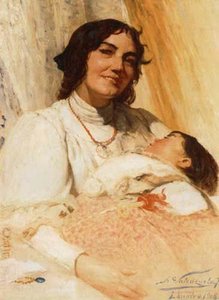
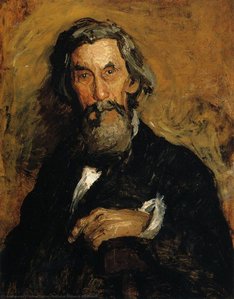
Biografija umetnika
A Chilean Master of Realism: The Life and Art of Alfredo Valenzuela Puelma
Alfredo Valenzuela Puelma, born in the vibrant port city of Valparaiso, Chile, in 1856, stands as a pivotal figure in the nation’s artistic heritage. His life was a compelling narrative woven with threads of academic rigor, Parisian influence, and a deeply personal struggle that ultimately shaped his distinctive artistic vision. From an early age, Valenzuela Puelma demonstrated a remarkable aptitude for drawing, prompting his enrollment at the Academy of Fine Arts in Santiago at just twelve years old, where he studied under the tutelage of Ernesto Kirchbach and Juan Mochi. This formal training was uniquely balanced with studies in medicine—a testament to his intellectual curiosity and breadth of interests that would subtly inform his artistic perspective. He wasn’t merely a painter; he was an observer of life, anatomy, and the human condition, all elements that found their way onto his canvases.Parisian Refinement and Artistic Development
A turning point in Valenzuela Puelma's career arrived in 1881 with a Chilean government scholarship that propelled him to Paris—the epicenter of the art world at the time. He entered the workshop of Benjamin Constant, immersing himself in the artistic currents of the era. Simultaneously, he pursued anatomical studies at the Sorbonne, exposing himself to emerging movements like those championed by the Manet School. While acknowledging these modern trends, Valenzuela Puelma found a deeper resonance in the Old Masters, spending countless hours copying Spanish masters at the Louvre. This deliberate engagement with the past profoundly shaped his stylistic development, instilling within him a reverence for technique and composition that would become hallmarks of his work. A second scholarship in 1887 allowed further refinement under Jean Paul Laurens, solidifying his academic foundation and honing his skills. It was during these formative years in Paris that Valenzuela Puelma began to forge the distinctive path that would set him apart as a leading Chilean Realist painter.A Diverse Oeuvre: Themes and Techniques
Upon returning to Chile, Valenzuela Puelma actively engaged with the burgeoning art scene, consistently submitting works to exhibitions and competitions in Santiago where he garnered consistent recognition. He also took on administrative roles at the Theater La Victoria and managed various art exhibitions in Valparaíso during the 1890s, demonstrating a commitment to fostering cultural life beyond his own artistic practice. His oeuvre is remarkably diverse, encompassing landscapes imbued with atmospheric light, intimate interiors revealing glimpses of domestic life, compelling portraits that capture the essence of his subjects, delicate still lifes, and notably, sensuous nudes that challenged conventional norms. A recurring motif in his work—a testament to Constant’s influence—is the incorporation of Arabic elements, adding an exotic allure to compositions like La Perla del Mercader (The Merchant's Pearl) and El Niño del Fez (Fez Boy). Valenzuela Puelma’s technique is characterized by a meticulous realism rooted in academic principles. He possessed a masterful command of light, shadow, and color, creating paintings that are both technically brilliant and emotionally resonant. Works such as La Sevillana, Saliendo de Caza (Going Hunting), and Niña con Vestido Amarillo (Girl in a Yellow Dress) exemplify his ability to capture fleeting moments with remarkable precision and grace.Legacy and Historical Significance
In 1907, Valenzuela Puelma embarked on a final journey to France, but tragically never returned to Chile. He battled persistent depression and mental illness, conditions that ultimately led to his untimely death in Villejuif in 1909 at the age of fifty-three. His remains were later repatriated to Chile with great ceremony and interred at the National Museum of Fine Arts—a fitting tribute to a master artist. Though he did not formally dedicate himself to teaching, Valenzuela Puelma mentored several promising painters, including Alfredo Helsby and Eucarpio Espinosa, passing on his knowledge and inspiring a new generation of Chilean artists. Art critic and historian Antonio Romera rightfully recognized his significant contribution by including him among the “Great Masters of Chilean Painting.” Valenzuela Puelma’s legacy rests upon his successful synthesis of academic training with a uniquely personal vision. He left behind a body of work that continues to be admired for its technical skill, diverse subject matter, and enduring beauty—a testament to the power of realism to capture the complexities and nuances of the human experience. His paintings remain vital windows into 19th-century Chile, offering glimpses into its society, culture, and artistic aspirations.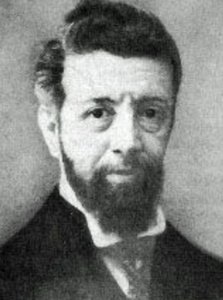
Alfredo Valenzuela Puelma
1856 - 1909 , Chile
Osnovne informacije
- Artistic Movement Or Style: Realism
- Artists Or Movements Influenced By This Artist:
- Alfredo Helsby
- Eucarpio Espinosa
- Artists Who Influenced This Artist:
- Benjamin Constant
- Jean Paul Laurens
- Date Of Birth: Feb 8, 1856
- Date Of Death: Oct 27, 1909
- Full Name: Alfredo Valenzuela Puelma
- Nationality: Chilean
- Notable Artworks:
- La Perla del Mercader
- El Niño del Fez
- Paisaje
- La Sevillana
- Saliendo de Caza
- Place Of Birth: Valparaiso, Chile
Povezani članci

Romantic Realism's Finest: 10 Masterpieces for Your Home | ArtsDot
Explore 10 defining masterpieces of Romantic Realism! Discover Courbet, Millet & Daumier's powerful paintings—capturing emotion and social realities. Find museum-quality reproductions for your home at ArtsDot.com.

Echoes of Society: Exploring Social Realism's Enduring Legacy in Art
Explore the powerful world of Social Realism art! Discover key artists, masterpieces & its profound social commentary. Expert insights into this influential movement's history and enduring legacy.
The Evocative Embrace of Reality: Exploring Romantic Realism in 19th-Century Painting
Explore the captivating world of Romantic Realism! Discover key artists like Courbet & Millet, masterpieces, and the social context behind this influential art movement. Expert insights for collectors at ArtsDot.
The Poetic Truth of Observation: Exploring 19th-Century Realism in Painting
Explore the captivating world of 19th-century Realism! Discover key artists like Courbet & Millet, masterpieces, and the powerful social commentary behind this influential art movement. Expert insights at ArtsDot.
Academic Realism's Finest: 10 Masterpieces for Art Lovers & Home Decor
Explore 10 defining Academic Realism masterpieces by Bouguereau, Gérôme & Cabanel. Discover the stories behind these iconic paintings and bring timeless art into your home with museum-quality reproductions from ArtsDot.com. Explore the full collection online!