 Pregledaj u prostoru
 Pošalji
 Podeli
 Detalji o delu

 Преузми
 Slični predmeti
 Rendgenski snimak
 Slajdovi
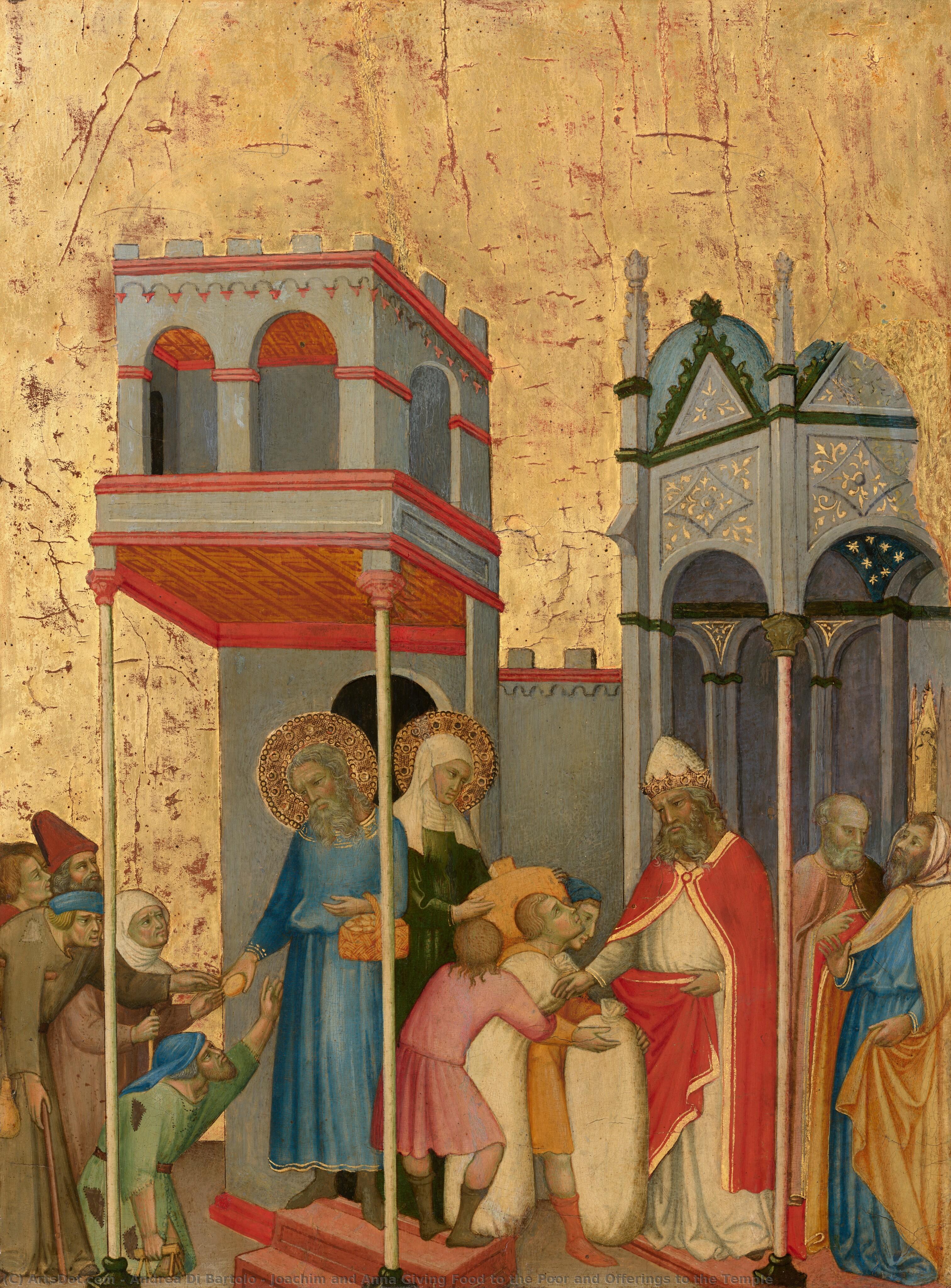
Joachim and Anna Giving Food to the Poor and Offerings to the Temple
 Tempera On Panel
- International Gothic
 1405
1405- Late Medieval
 46.0 x 34.0 cm
 Pročitaj više
Ručno rađena uljana reprodukcija
Ručno oslikano uljanim bojama na platnu u dimenzijama i okviru po vašem izboru, izrađeno po porudžbini od strane naših umetnika. ( Kupi print Kupi digitalnu sliku)




P118B $10

P118H $10

P118W $10

P438Z $10

P508JH $12

P508YH $12

P805H $10

P805Z $10

P919BZ $10

P919G $10

P919XJ $10

P959ZH $10

P968JZ $12

W106C $8

W218G $10

W218JH $8

W218Y $10

W307PJ $10

W316G $10

W316PJ $8

W316Y $10

W398PJ $8

W4111J $10

W500HY $15

W500JH $15

W692G $12

W849H $8

W940BG $15

W953PJ $8




Izaberite jednu od naših unapred definisanih veličina koje odgovaraju originalnim proporcijama umetničkog dela.

Можете унети сопствене димензије како бисте прилагодили дело одређеном оквиру или простору. Ако одабрана величина не одговара пропорцијама оригинала, слика ће бити исечена или проширена додатним елементима који се ручно насликавају. Дигитални prikaz ће вам бити послат на одобрење пре почетка производње.
Имајте на уму да преглед на екрану не одражава стварно исецање или проширење. Само приказ (mockup) ће тачно приказати коначну композицију.
Иако су доступне прилагођене величине, препоручујемо да одаберете димензију из дефинисане листе како бисте сачували оригиналне пропорције.
Nakon narudžbine, tim ArtsDot.com će klijentu putem e-pošte poslati uputstva i dostaviti prikaz predloženog rešenja
Isporuka širom sveta () za 3/4 nedelje umesto uobičajenih 5 nedelja. (1 септембар). Bez kompromisa po pitanju kvaliteta.

Besplatna ekspresna dostava širom sveta

Visokokvalitetno laneno platno

Kompletno osiguranje transporta

Garancija povraćaja carine i uvoznih dažbina

Garancija vernosti boja

Politika povrata u roku od 60 dana (samo u slučaju nedostataka)

Garancija povrata novca od 100%

Popust pri grupnoj kupovini
 Opcija sa staklom dostupna je samo za dimenzije manje od 110 cm

Joachim and Anna Giving Food to the Poor and Offerings to the Temple
Tehnika reprodukcije
Dimenzije reprodukcije
-


Konačna cena
$ 263
A Golden Vision of Devotion and Charity
In the luminous glow of a shimmering gold background, a profound moment of human connection and spiritual duty unfolds within this exquisite 1405 masterpiece by Andrea di Bartolo. The painting, titled Joachim and Anna Giving Food to the Poor and Offerings to the Temple, serves as a breathtaking window into the late Gothic period, where the divine and the earthly intersect through acts of profound generosity. As viewers are drawn into this vertical composition, they encounter a scene teeming with life, set beneath two imposing, tower-like structures that frame a gathering of thirteen souls. The atmosphere is one of quiet sanctity, captured through a palette of rich jewel tones—royal blues, emerald greens, and deep crusted reds—that dance against the celestial radiance of the gilded backdrop.
The narrative heart of the work lies in the tender interactions between the holy figures and the vulnerable. To the left, the patriarch Joachim, distinguished by his flowing gray beard and a halo etched with delicate rings of light, embodies the virtue of charity. His focused gaze and the gentle gesture of offering bread from a woven basket resonate with an eternal message of compassion. Beside him, Anna, draped in an ivory head covering and an emerald-green gown, moves with a quiet grace, her presence anchoring the scene in maternal devotion. The artist masterfully depicts the physical reality of poverty through the tattered, patched robes of the figures gathered at their feet, creating a poignant contrast between the regal splendor of the holy couple and the humble, weathered existence of those receiving their bounty.
Technically, the work showcases the Sienese mastery of detail and symbolic color. Andrea di Bartolo employs a delicate touch to render the textures of heavy fabrics, the weathered skin of the elderly, and the soft features of the children. The use of light is not merely physical but spiritual; the gold leaf does not simply sit upon the surface but seems to emanate from within the figures themselves, elevating a scene of social welfare into a divine liturgy. For the discerning collector or interior designer, this piece offers more than mere decoration; it provides a focal point of profound emotional depth. A high-quality reproduction of this work brings a sense of historical weight and timeless elegance to any space, inviting contemplation on the enduring importance of kindness, community, and the beauty found in selfless service.
Srodna umetnička dela
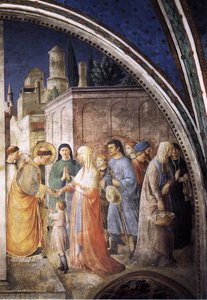
![Legend Of St Francis - [21] - Apparition To Fra Agostino And To Bishop Guido Of Arezzo — Đijoto Di Bondone, Proto-renaissance](/media/artworks/images-thumb/8a/06/8a0632ef03ba49f12919faa78718a88b.jpg)
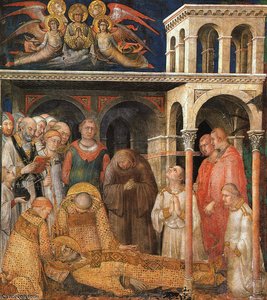
![Legend Of St Francis - [11] - St Francis Before The Sultan (trial By Fire) — Đijoto Di Bondone, Proto-renaissance](/media/artworks/images-thumb/0d/32/0d328acfb6c90f7ef32707586e86044b.jpg)
Biografija umetnika
Nardo di Cione: A Florentine Lyricist of the Late Quattrocento
Born around 1320 in Florence, Nardo di Cione – often referred to as “Nardo” – stands as a pivotal figure bridging the Gothic and nascent Renaissance artistic landscapes of Italy. While his life was tragically cut short around 1365, his brief but intensely productive career left an indelible mark on Florentine painting, characterized by a lyrical sensibility, profound humanism, and a masterful command of color that foreshadowed the developments of the High Renaissance. His legacy is primarily defined by a small yet remarkably significant body of work, meticulously reconstructed through careful analysis of signed pieces and stylistic comparisons.
Nardo’s origins are deeply intertwined with the prominent Cione family, a dynasty of artists who had long held a respected position within Florentine art circles. He was one of three brothers – Orcagna, Andrea, and Jacopo – all contributing to the artistic output of their household. Orcagna, arguably the most renowned of the siblings, established a powerful workshop that exerted considerable influence over the city’s artistic scene during the latter half of the 14th century. Nardo's work, while distinct from his brother’s more monumental and often narrative-driven compositions, shares a similar commitment to emotional depth and a refined aesthetic sensibility.
Early Influences and Artistic Development
Tracing the precise trajectory of Nardo’s artistic development remains a challenging endeavor due to the scarcity of documented information about his early training. However, stylistic analysis strongly suggests that he was profoundly influenced by the traditions of Byzantine art, particularly as practiced in Florence during the preceding decades. The influence of Paolo Veneziano, a Venetian painter who spent considerable time in Florence around 1320-1365, is readily apparent in Nardo’s early works – notably the “Standing Madonna” (Institute of Arts, Minneapolis) and the frescoes in the Chapel of San Silvestro at Santa Croce. These pieces exhibit a characteristic Byzantine formality, with their hierarchical composition, flattened perspective, and emphasis on luminous color. The use of gold leaf and rich pigments—a hallmark of Byzantine painting—is also evident.
Crucially, Nardo’s work began to evolve beyond this purely Byzantine model as he matured. He gradually incorporated elements of the Florentine Gothic style, characterized by a greater naturalism in figure representation, more dynamic compositions, and a heightened sense of spatial depth. This transition is particularly noticeable in his frescoes for the chapel of Sant'Anna in Santa Maria Novella, where he skillfully blended Byzantine techniques with emerging Renaissance principles.
The Frescoes of Sant’Anna: A Masterpiece of Florentine Art
The frescoes within the chapel of Sant’Anna represent Nardo’s most significant and enduring contribution to the artistic heritage of Florence. These monumental panels, dating from approximately 1345-1350, depict scenes from the life of St. Anne – her birth, miraculous conception, and death – alongside four figures of saints. The frescoes are remarkable for their emotional intensity, delicate modeling, and harmonious color scheme. Nardo’s depiction of St. Anne, in particular, is profoundly moving, conveying a sense of vulnerability and maternal devotion that resonated deeply with viewers.
The “Last Judgment” fresco within the same chapel further demonstrates Nardo's artistic prowess. It’s a dramatic composition filled with dynamic movement and expressive figures, reflecting the influence of Giotto – another Florentine master who was actively working at the time. The panel showcases Nardo’s ability to capture both the grandeur and the terror of divine judgment.
Later Works and Legacy
Following the completion of the Sant'Anna frescoes, Nardo produced a series of smaller-scale works that further refined his artistic style. The “St. John the Baptist with Saints” (National Gallery, London), often interpreted as a triptych, exemplifies his lyrical sensibility and masterful use of color. The “Crucifixion Panel” (Galleria degli Uffizi, Florence) is another notable example of his mature style, characterized by its emotional intensity and subtle modeling.
Nardo’s life was tragically cut short in 1365, likely due to illness. Despite the brevity of his career, he left behind a remarkably coherent body of work that reveals a unique artistic voice—one marked by lyricism, humanism, and a profound sensitivity to color. His influence on subsequent generations of Florentine painters is undeniable, and his frescoes in Santa Maria Novella remain among the most celebrated masterpieces of the late Quattrocento.
Nardo di Cione’s work serves as a crucial link between the Gothic and Renaissance periods, demonstrating the complex interplay of influences that shaped the artistic landscape of Florence during this transformative era. His legacy endures not only through his surviving paintings but also through the inspiration he provided to those who followed in his footsteps.
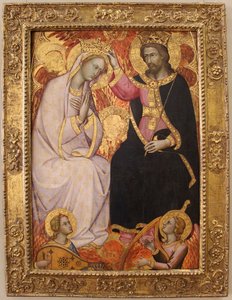
andrea di bartolo
1365 - 1428 , Italy
Osnovne informacije
- Artistic Movement Or Style: Late Gothic/Early Renaissance
- Artists Or Movements Influenced By This Artist: ["Nardo's style"]
- Artists Who Influenced This Artist:
- Orcagna
- Paolo Veneziano
- Giottino
- Date Of Birth: ca. 1320
- Date Of Death: ca. 1365
- Full Name: Nardo di Cione
- Nationality: Italian
- Notable Artworks:
- Strozzi Chapel frescoes
- Standing Madonna
- St John the Baptist
- Place Of Birth: Firenze, Italy
Povezani članci

Golden Masterpieces: 10 Paintings That Define Art History | ArtsDot
Explore 10 breathtaking paintings where gold leaf shines! From Klimt to Byzantine icons, discover art history’s most gilded masterpieces. Find museum-quality reproductions & elevate your home decor with ArtsDot. Explore the full collection online.
The Allure of Gold in Art History: Symbolism, Technique & Cultural Significance
Explore the rich history of gold in art! Discover symbolism, techniques & cultural significance from ancient civilizations to Klimt's masterpieces. Expert insights for collectors at ArtsDot.
Golden Glow: How to Use Metallic Gold Artworks to Elevate Your Home Decor with Timeless Luxury
Discover how to elevate your home with the timeless elegance of metallic gold artworks. From sculptural metal pieces to gilded oil paintings, learn expert interior design tips for integrating luxurious gold accents into your space with sophistication and grace.
Beyond Borders: The Spiritual & Stylistic Innovations of International Gothic Art
Explore the exquisite beauty & spiritual depth of International Gothic art. Discover key artists like Simone Martini & Pol de Limbourg, its origins, symbolism, and lasting influence on European painting. Expert insights at ArtsDot.
Gustav Klimt: 25 Remek-Dela Koje Očaravaju Svet – Reprodukcije za Vaš Dom
Uronite u svet Gustava Klimta! Otkrijte 25 remek-dela bečkog secesiona, od 'Poljupca' do portreta Adele Bloch-Bauer. Reprodukcije slika vrhunskog kvaliteta za luksuzni enterijer – inspiracija i dekoracija na ArtsDot.com.