

 Pregledaj u prostoru
 Pošalji
 Podeli
 Detalji o delu

 Преузми
 Slični predmeti
 Rendgenski snimak
 Slajdovi
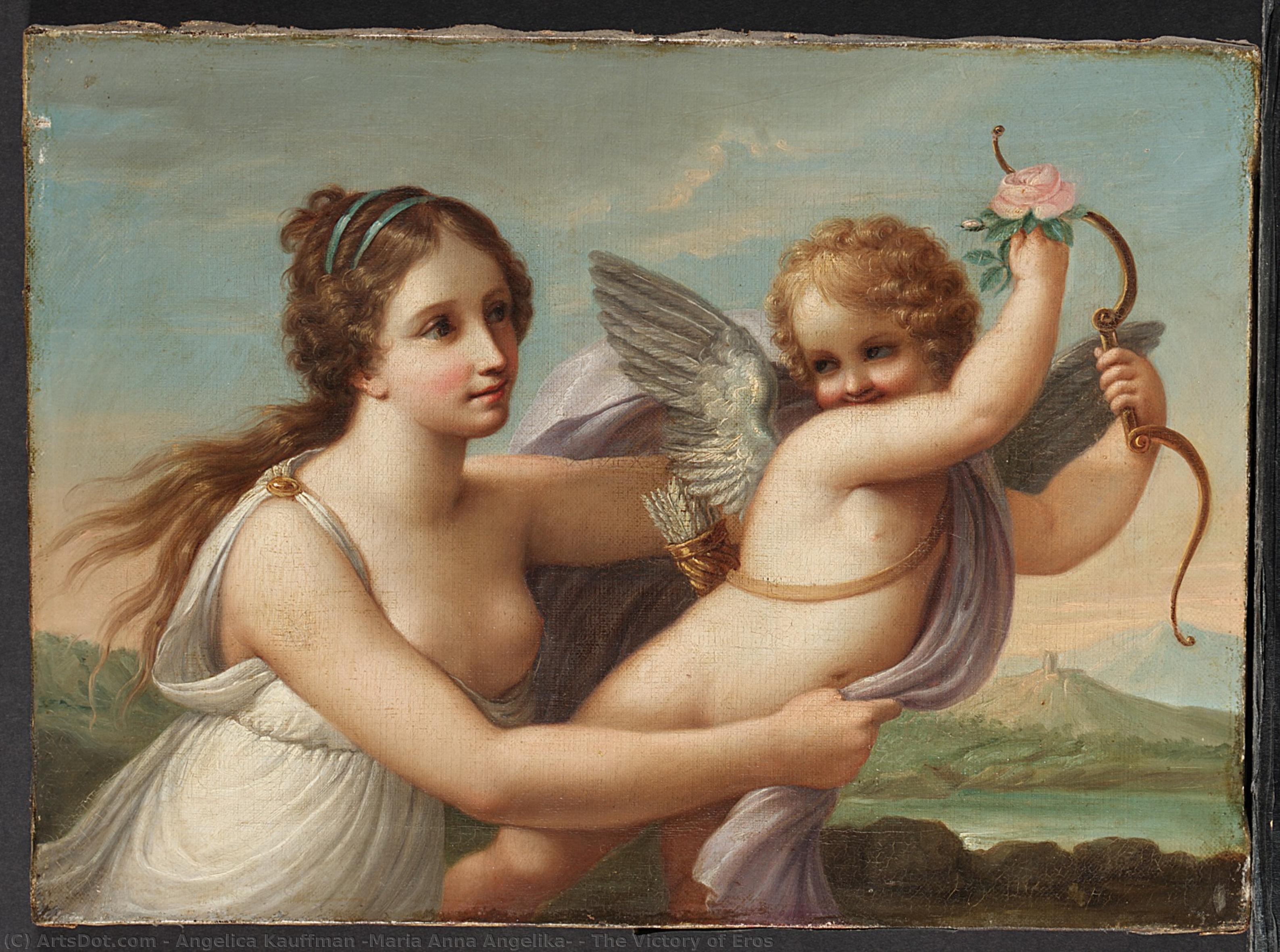
Победа Ероса
 Akril na platnu
- Umetnost za zidove
- Neoklasicizam
 1750
1750 48.0 x 60.0 cm
 Metropolitan Museum of Art
 Pročitaj više
Kupite digitalnu sliku visoke rezolucije i poboljšanog kvaliteta, koja je znatno superiornija od onoga što vidite u online prikazu.
Svaka datoteka je pedantno pripremljena od strane naših stručnjaka koristeći napredne alate i profesionalnu ručnu retušu. Osiguravamo da svaka slika ima izuzetnu oštrinu, preciznu reprodukciju boja i fine detalje.
Konačna datoteka se dostavlja putem e-pošte u roku od 72 sata, optimizovana za neposrednu upotrebu u profesionalnim, izdavačkim i štamparskim okruženjima. To je isti kvalitet kojem veruju vrhunski studiji dizajna, izdavači i galerije.
Digitalna slika
Preuzmite datoteku visoke rezolucije za ličnu upotrebu, štampanje i kreativne projekte. ( Kupi print Kupi ručno naslikanu sliku)
Uključeno uz svaku porudžbinu digitalne slike
Profesionalna digitalna isporuka, zagarantovana
Kada odaberete ArtsDot.com, ne dobijate samo sliku – vi primate profesionalno unapređeno digitalno umetničko delo, izrađeno sa najvećom preciznošću i uz garanciju zadovoljstva. Evo svega što automatski dolazi uz vašu porudžbinu:

Brza dostava putem e-pošte
Vaša digitalna slika visoke rezolucije biće vam poslata putem e-pošte u roku od 72 sata od poručivanja – spremna za trenutnu upotrebu.

Digitalna datoteka unapređena veštačkom inteligencijom
Vaše umetničko delo je profesionalno optimizovano korišćenjem naprednih AI alata i ručne obrade, čime se osiguravaju maksimalni detalji, oštrina i preciznost boja.

Besplatna ponovna isporuka doživotno
Slučajno ste obrisali ili izgubili svoju datoteku? Ne brinite – poslaćemo vam je ponovo u bilo kom trenutku, potpuno besplatno.

Bez troškova uvoza – zauvek
Uživajte u svojim umetničkim delima trenutno, bez carine, dažbina ili troškova dostave – digitalni download je uvek bez poreza.

Garancija vernosti boja
Uz pomoć profesionalnih alata i upravljanja bojama, osiguravamo da vaša digitalna slika što vernije odražava originalne boje.

Garancija zadovoljstva u roku od 60 dana
Ako niste zadovoljni svojom digitalnom slikom, revidirat ćemo je ili vratiti 100% novca u roku od 60 dana – bez ikakvih pitanja.

100% garancija povrata novca
Niste zadovoljni? Obezbedite pun povrat novca u roku od 60 dana od trenutka kada ste primili svoju digitalnu datoteku – bez suvišnih pitanja.

Popusti na velike porudžbine
Kupite 3 slike, uštedite 10% - Kupite 5 slika, uštedite 15% - Kupite 10+ slika, uštedite 20%. Odlično za kreativne projekte, galerije i agencije.
Angelika Kauffman i pobeda Erosa – Simbol ljubavi i čistine u zlatnim nijansama
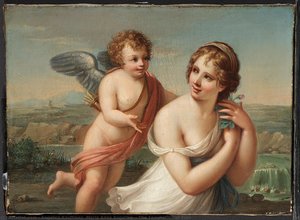
Angelika Kauffmann, austrijska umetnica rođena u Švajcarskoj 1741. godine i željela je svojim delima da oslikaju svet oko sebe, posebno umetnost klasike i njenu lepotu. Njeno umetničko nasleđe ostaje nezaboravno, a među njenim najpoznatijim radovima nalazi se „Pobeda Erosa“, slika koju je napravila između 1750. i 1775. godine. Ova fascinantna kompozicija predstavlja izuzetan primer evropskog umetničkog dela XVIII veka i danas je dostupna kao visokokvalitetna reprodukcija na ArtsDot.com.- Tema: Kompozicija prikazuje bogu Erosu koji drži luk i стрелу, dok ga podržava žena koja simbolizuje zaštitu i nežnost. Često se smatra da je ova žena predstavljena kao nimfa ili boginja, što dodatno pojačava simboličku vrednost slike.
- Stil: Kauffmanova umetnost pripadaju klasici neoklasicizma, koji je bio veoma popularan u Italiji i Engleskoj tokom XVIII veka. Ona je poznata po svojim istorijskim slikama koje su prikazivale događaje iz evropske istorije sa velikom pažnjom prema detaljima i estetici.
- Tehnika: „Pobeda Erosa“ je oslikana uljem na platnu, što je bila dominantna tehnika umetnosti tog vremena. Kauffmanova maestralnost u korišćenju svetlosti i boja omogućila joj je da postiže izuzetno lep izgled slike koji je danas veoma cenjen od strane kolekcionara i umetnika.
- Emocionalni utisak: Ova slika izaziva osećaj topline, sreće i spokojstva zbog svoje delikatne kolorističke palete i pažnjom prema detaljima. Ona predstavlja izuzetan primer umetnosti koja je sposobna da prenese emocije i vrednosti koje su važni za ljude svih vremena.
Srodna umetnička dela
Biografija umetnika
A Luminary of the Enlightenment: The Life and Art of Angelica Kauffman
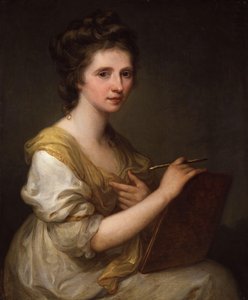
Angelica Kauffman, born Maria Anna Angelika in Chur, Switzerland on October 30, 1741, was a prodigious talent who rose to become one of the most celebrated artists of her time. Her journey defied societal expectations for women in the 18th century, establishing her as a respected figure within the male-dominated art world and a key player in the Neoclassical movement. Kauffman’s father, Johann Georg Kauffmann, was a modest but skilled itinerant painter who recognized his daughter's exceptional abilities early on. He provided her with initial training, fostering a passion that would quickly outstrip his own expertise. By the age of thirteen, Angelica was already receiving commissions for portraits and religious paintings, demonstrating an astonishing level of skill and maturity. Her early work reveals influences from Rococo painters like François Boucher, characterized by delicate brushwork, pastel palettes, and charming depictions of mythological scenes. However, her ambition extended beyond mere imitation; she sought a more rigorous academic foundation, traveling extensively throughout Italy to study the Old Masters – Raphael, Titian, and Correggio – absorbing their techniques and compositional principles. This period proved pivotal in shaping her distinctive style, moving away from the frivolousness of Rococo towards a greater emphasis on historical accuracy, classical form, and emotional depth.Rome, Royal Patronage, and the Birth of Neoclassicism
In 1754, Kauffman arrived in Rome, a city teeming with artistic energy and intellectual ferment. She quickly integrated into the vibrant community of artists, becoming acquainted with prominent figures like Johann Joachim Winckelmann, whose writings on classical art profoundly influenced her aesthetic sensibilities. Rome became her base for over fifteen years, during which she established an international reputation attracting commissions from nobility across Europe. Her talent caught the attention of Lady Wentworth, a wealthy English aristocrat who became her devoted patron and friend. Through Lady Wentworth’s connections, Kauffman gained access to influential circles in England, receiving prestigious commissions including portraits of prominent figures like Sir Joshua Reynolds and David Garrick. However, it was her historical paintings that truly distinguished her. Works such as *Hector Taking Leave of Andromache* (1758) showcased her mastery of dramatic composition, elegant figure painting, and a growing interest in classical themes – hallmarks of the emerging Neoclassical style. In 1763, she became one of only two female founding members of the Royal Academy of Arts in London, a testament to her exceptional skill and standing within the art world. This achievement was groundbreaking, challenging prevailing prejudices against women artists and paving the way for future generations. Her time in England, though successful, proved somewhat fraught with professional rivalry; some male artists resented her popularity and perceived her success as a threat.A Return to Italy and Continued Innovation
In 1766, Kauffman returned to Rome, where she continued to flourish as a sought-after artist. She married Antonio Zucchi, a Venetian painter who shared her passion for classical art and became a collaborative partner. This period saw a further refinement of her Neoclassical style, characterized by balanced compositions, clear narratives, and an emphasis on moral virtue. Her portraits from this era are particularly noteworthy, capturing not only the physical likenesses of her sitters but also their inner character and social standing. She skillfully blended portraiture with allegorical elements, imbuing her works with layers of meaning and symbolism. Kauffman’s studio became a hub for artists and intellectuals, attracting visitors from across Europe eager to witness her talent firsthand. She received commissions from prominent patrons including Pope Clement XIV and Catherine the Great, solidifying her reputation as one of the leading artists of the age. Her work for Catherine the Great included designing a series of paintings for the Hermitage Museum, showcasing scenes from classical literature and mythology. She also explored new mediums, creating designs for tapestries, furniture, and decorative arts, demonstrating her versatility and artistic range.Legacy and Historical Significance
Angelica Kauffman died in Rome on November 5, 1807, leaving behind a vast body of work that continues to captivate audiences today. Her influence extended beyond her own paintings; she played a crucial role in popularizing Neoclassical art and challenging conventional notions about the role of women in society. She proved that women could achieve artistic excellence on par with their male counterparts, inspiring generations of female artists to pursue their passions despite societal obstacles. Her success within the Royal Academy, though not without its challenges, opened doors for other women seeking recognition and professional opportunities. Kauffman’s paintings are characterized by a unique blend of elegance, intelligence, and emotional depth. She skillfully combined classical form with Rococo charm, creating works that were both visually appealing and intellectually stimulating. Her portraits offer valuable insights into the social and cultural life of 18th-century Europe, capturing the personalities and aspirations of her sitters. Her historical paintings are particularly significant for their emphasis on moral virtue and classical themes, reflecting the Enlightenment ideals of reason, order, and civic responsibility. Today, Kauffman is recognized as a pivotal figure in the history of art, a luminary whose talent and determination helped to shape the aesthetic landscape of the 18th century and beyond.Key Achievements & Artistic Style
- Founding Member of the Royal Academy of Arts (1763): A landmark achievement for women in art.
- International Reputation: Commissions from nobility across Europe, including England, Italy, and Russia.
- Mastery of Historical Painting: Dramatic compositions, elegant figure painting, and classical themes.
- Versatility as an Artist: Exploration of various mediums including portraiture, tapestry design, and decorative arts.
- Neoclassical Style: Balanced compositions, clear narratives, emphasis on moral virtue, and a refined aesthetic sensibility.
Kratke činjenice
- Artistic Movement Or Style: Neoclassicism
- Artists Or Movements Influenced By This Artist:
- Neoclassical portraiture
- Female artists
- Artists Who Influenced This Artist:
- Correggio
- Raphael
- Mengs
- Date Of Birth: 1741
- Date Of Death: 1807
- Full Name: Angelica Kauffman
- Nationality: Swiss
- Notable Artworks:
- Portrait of Lady Sarah Bunbury Sacconi
- Venus at the Toilet of Love
- The Departure of Telemachus for Pylos
- Place Of Birth: Chur, Switzerland

