

 Pregledaj u prostoru
 Pošalji
 Podeli
 Detalji o delu

 Преузми
 Slični predmeti
 Rendgenski snimak
 Slajdovi
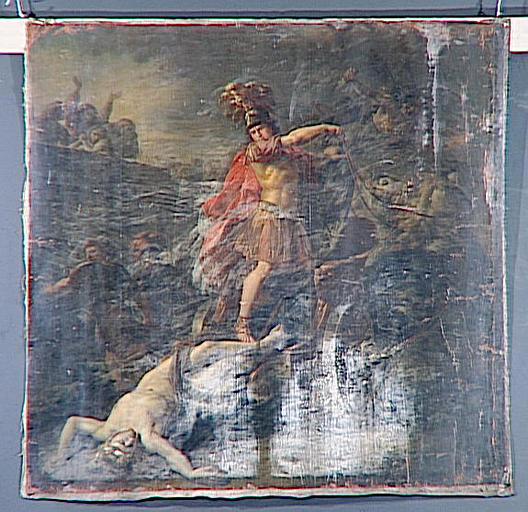
Achille trainant le corps d'Hector devant les murs de Troie et sous les yeux de Priam et d'Hécube, qui implorent le vainqueur


 Pročitaj više
Giclee štampa / Umetnički otisak
Giclée štampa ili print na platnu muzejskog kvaliteta uz brzu proizvodnju i fleksibilne opcije završne obrade. ( Kupi ručno naslikanu sliku Kupi digitalnu sliku)




P118B $10

P118H $10

P118W $10

P438Z $10

P508JH $12

P508YH $12

P805H $10

P805Z $10

P919BZ $10

P919G $10

P919XJ $10

P959ZH $10

P968JZ $12

W106C $8

W218G $10

W218JH $8

W218Y $10

W307PJ $10

W316G $10

W316PJ $8

W316Y $10

W398PJ $8

W4111J $10

W500HY $15

W500JH $15

W692G $12

W849H $8

W940BG $15

W953PJ $8




Izaberite jednu od naših unapred definisanih veličina koje odgovaraju originalnim proporcijama umetničkog dela.

Možete uneti sopstvene dimenzije kako biste umetničko delo prilagodili specifičnom okviru ili prostoru. Ako odabrani format ne odgovara proporcijama originalne slike, mi ćemo ili iscrtati deo dela ili proširiti sliku pomoću ogledane ivice ili jednobojnog popunjavanja. Digitalni prikaz će vam biti poslat na odobrenje pre početka proizvodnje.
Imajte na umu da pregled na ekranu ne odražava stvarno iscrtavanje ili proširivanje. Samo će prikaz (mockup) precizno pokazati finalnu kompoziciju.
Iako su prilagođene dimenzije dostupne, preporučujemo da odaberete dimenziju sa unapred definisane liste kako biste očuvali originalne proporcije.
Dostava širom sveta () za 2 nedelje umesto uobičajenih 4/5 nedelja. (24 август)

Besplatna ekspresna dostava širom sveta

Visokokvalitetno laneno platno

Kompletno osiguranje transporta

Garancija povraćaja carine i uvoznih dažbina

Garancija vernosti boja

Politika povrata u roku od 60 dana (samo u slučaju nedostataka)

Garancija povrata novca od 100%

Popust pri grupnoj kupovini
 Opcija sa staklom dostupna je samo za dimenzije manje od 110 cm

Achille trainant le corps d'Hector devant les murs de Troie et sous les yeux de Priam et d'Hécube, qui implorent le vainqueur
Giclee štampa / Umetnički otisak
Dimenzije reprodukcije
-


Konačna cena
$ 62
Opis predmeta
A Clash of Titans: Callet’s Dramatic Depiction of Achilles and Hector
Antoine François Callet's "Achille trainant le corps d'Hector devant les murs de Troie et sous les yeux de Priam et d'Hécube, qui implorent le vainqueur" is not merely a historical scene; it’s a visceral embodiment of the Trojan War’s tragic core. Painted in 1784-1785 during a period of immense political and social upheaval in France – a time mirroring the turmoil within the war itself – this monumental canvas captures a pivotal moment of brutal consequence, forever etching the defeat of Troy into the collective memory. Callet masterfully blends elements of Rococo elegance with the burgeoning Neoclassical emphasis on drama and narrative clarity, resulting in an artwork that is both visually arresting and profoundly moving.
The composition immediately commands attention. Achilles, rendered as a figure of immense strength and grim determination, dominates the center of the scene. He drags Hector’s lifeless body behind him, a testament to his victory but also a symbol of unbearable loss. The sheer scale of the dragging corpse underscores the enormity of the conflict and the devastating cost of war. Notice how Callet avoids glorifying violence; instead, he presents it with stark realism, emphasizing the vulnerability of both warriors. The positioning of Achilles – slightly off-center, his gaze fixed ahead – suggests a weary acceptance of his fate, a recognition that victory is often purchased at an exorbitant price.
The Stage of Tragedy: Setting and Figures
Behind Achilles, the walls of Troy rise imposingly, a formidable barrier against which the drama unfolds. The city itself is rendered with a subtle sense of decay, hinting at the impending doom that awaits it. Crucially, Callet doesn’t neglect the human element. Priam, the aged king of Troy, and Hecuba, his grief-stricken queen, are positioned prominently on the elevated platform, their faces etched with despair as they witness the desecration of their son's body. Their pleading gestures – hands raised in supplication – amplify the tragedy and underscore the profound sense of loss felt by the Trojan people. The inclusion of these figures transforms the scene from a simple depiction of military victory into a poignant meditation on mortality, family, and the futility of war.
Adding to the complexity is the presence of other figures scattered throughout the composition. A shadowy figure on the left, possibly representing Fate or Destiny, adds an element of inevitability to the scene. The two individuals in the middle, and the one on the right, likely represent the aftermath of battle and the suffering endured by both sides. Callet’s skillful use of light and shadow further enhances the dramatic effect, creating a sense of depth and atmosphere that draws the viewer into the heart of the tragedy.
Technique and Style: A Masterful Blend
Callet's technical skill is evident in every brushstroke. The artist employs a rich, layered technique characteristic of his era, utilizing impasto – thick application of paint – to create texture and volume, particularly in Achilles’ muscular form and the folds of Hector’s draped clothing. The color palette is predominantly somber, dominated by earthy tones—ochres, browns, and grays—reflecting the grim reality of war and death. However, flashes of red—the blood staining Hector's tunic—provide a stark visual contrast, emphasizing the violence of the scene. The artist’s attention to detail is remarkable, from the intricate folds of the fabric to the subtle expressions on the faces of Priam and Hecuba.
Furthermore, Callet demonstrates a sophisticated understanding of composition, employing diagonal lines—created by Achilles' dragging body—to draw the viewer's eye through the scene. The pyramidal structure of the composition – with Achilles at its apex – reinforces the sense of drama and stability amidst chaos. The overall effect is one of controlled dynamism, capturing both the raw power of the moment and the underlying tragedy.
Symbolism and Emotional Resonance
Beyond its immediate depiction of a historical event, "Achille trainant le corps d'Hector" resonates with profound symbolic meaning. The dragging of Hector’s body represents not only Achilles’ victory but also the irreversible loss of innocence and the destruction of a civilization. The pleas of Priam and Hecuba symbolize the enduring power of grief and the futile attempts to reclaim what has been lost. The entire scene serves as a cautionary tale about the devastating consequences of conflict, reminding us of the human cost of ambition and pride.
Ultimately, Callet’s masterpiece is more than just a painting; it's an enduring testament to the complexities of war, the weight of loss, and the timeless struggle between triumph and tragedy. Its dramatic intensity and emotional depth continue to captivate viewers centuries later, solidifying its place as a cornerstone of French Baroque art.
Srodna umetnička dela
Biografija umetnika
The Painter of Allegory and Imperial Splendor
Antoine François Callet, often known simply as Antoine Callet, remains a luminous figure in the grand tapestry of late 18th-century French art. His life and career unfolded against a backdrop of profound historical transformation, spanning the twilight of the Ancien Régime under Louis XVI and the rising sun of the Napoleonic era. Born in Paris in 1741, Callet emerged as a master of both the intimate portrait and the monumental allegory, a painter capable of capturing the delicate psychological nuances of a monarch while simultaneously orchestrating vast, celestial narratives across the ceilings of France's most prestigious palaces.
Callet’s journey toward artistic mastery was paved with the prestigious accolades of the French academic system. His talent was formally recognized when he won the grand prix de Rome in 1764 with his evocative work, Cléobis et Biton conduisent le char de leur mère au temple de Junon. This triumph granted him the invaluable opportunity to study in Italy, where the shadows of masters like Caravaggio and the dramatic architectural energy of Bernini left an indelible mark on his technique. It was during these formative years in Rome that Callet refined his use of chiaroscuro and learned to infuse classical themes with a sense of theatrical movement, a skill that would later define his most celebrated compositions.
A Master of Royal Portraiture and Grandeur
Upon his return to France, Callet ascended to the highest echelons of the art world, securing a position within the Académie Royale de peinture et de sculpture. His ability to blend the elegance of the Rococo style with the emerging discipline of Neoclassicism made him the preferred choice for the French nobility and royalty. Perhaps his most enduring legacy lies in his role as the official portraitist to Louis XVI. In works such as his 1779 portrait of the King, Callet did more than merely record a likeness; he constructed an icon of sovereignty. Through the meticulous rendering of ermine-lined robes and the strategic placement of the Fleur-de-lis, he utilized the language of symbolism to project stability and divine right during a period of mounting political tension.
Beyond the individual portrait, Callet’s genius flourished in the realm of large-scale decorative painting. He possessed a rare ability to transform architectural spaces into immersive, mythological realms. His contributions to the Galerie d'Apollon at the Louvre, specifically his breathtaking ceiling fresco Le Printemps ou Zéphire et Flore couronnant de fleurs Cybèle, demonstrate his command over color and illusionistic perspective. In these works, the boundaries between the physical room and the painted heavens dissolve, inviting the viewer into a symphony of gold, azure, and eternal spring.
Legacy of an Era in Transition
The significance of Callet’s oeuvre extends far beyond mere decoration; his work serves as a visual chronicle of a world in flux. As France moved from the decadent splendor of the monarchy through the upheaval of the Revolution and into the imperial ambitions of Napoleon, Callet’s brush captured the shifting aesthetic values of the age. His ability to navigate between the Rococo's ornamental grace and the Neoclassical's structured nobility allowed him to remain relevant across decades of intense social change.
To study the works of Antoine François Callet is to witness the heartbeat of French history through paint and pigment. His achievements include:
- Academic Excellence: Winning the prestigious Prix de Rome, which established his foundation in classical antiquity.
- Royal Patronage: Serving as a primary visual architect for the identity of Louis XVI.
- Architectural Transformation: Creating monumental ceiling paintings that redefined the interior grandeur of French palaces like the Palais du Luxembourg.
- Stylistic Synthesis: Successfully bridging the gap between the emotive, flowing lines of the Rococo and the disciplined, heroic themes of Neoclassicism.
Today, Callet’s paintings stand as windows into a lost epoch of elegance, reminding us of a time when art was used to weave together the threads of myth, power, and human emotion into a single, magnificent tapestry.
antoine françois callet
1741 - 1823 , France
Osnovne informacije
- Artistic Movement Or Style: Rococo Style
- Artists Or Movements Influenced By This Artist: ['Louis XVI']
- Artists Who Influenced This Artist: ['Jean-Baptiste Rousseau']
- Date Of Birth: Paris, France (1741)
- Date Of Death: 1823
- Full Name: Antoine François Callet
- Nationality: French
- Notable Artworks:
- L'aurore
- Allegorie du dix-huit brumaire
- Allegorie de la bataille d'Austerlitz
- Place Of Birth: Paris
Povezani članci
William Owen: A Poetic Vision of War & Landscape in British Modernism
Explore the poignant war poetry of Wilfred Owen, a key figure in British Modernism. Discover his innovative style, themes of loss & camaraderie, and lasting impact on 20th-century literature. Analysis & historical context included.
Echoes of Trauma & Hope: Representing Transformation in Artworks of 1918
Explore the profound artistic responses to World War I's trauma & hope. Discover Expressionist masterpieces by Bacon, de Kooning & more. Expert insights for collectors & art enthusiasts at ArtsDot.
C.R.W. Nevinson: A Vorticist Vision of War & Modernity
Explore the powerful art of C.R.W. Nevinson, a key British Vorticist painter. Discover his impactful depictions of WWI and evolution beyond Futurism. Expert analysis & high-quality reproductions at ArtsDot.
Vasily Vereshchagin: Realism, War & Subversion in 19th-Century Russian Painting
Explore the powerful realism of Vasily Vereshchagin's war paintings & Central Asian scenes. Discover how this Russian master challenged artistic conventions and offered a brutal, honest depiction of 19th-century conflict. Learn about his legacy for discerning collectors.

Echoes of a World on the Brink: Trauma & Transformation in 1914 Art
Explore how artists responded to the trauma of World War I in 1914. Discover modernism's emergence, symbolic representations of loss, and the enduring legacy of a world forever changed. Expert analysis & insights.

