

 Pregledaj u prostoru
 Pošalji
 Podeli
 Detalji o delu

 Преузми
 Slični predmeti
 Rendgenski snimak
 Slajdovi
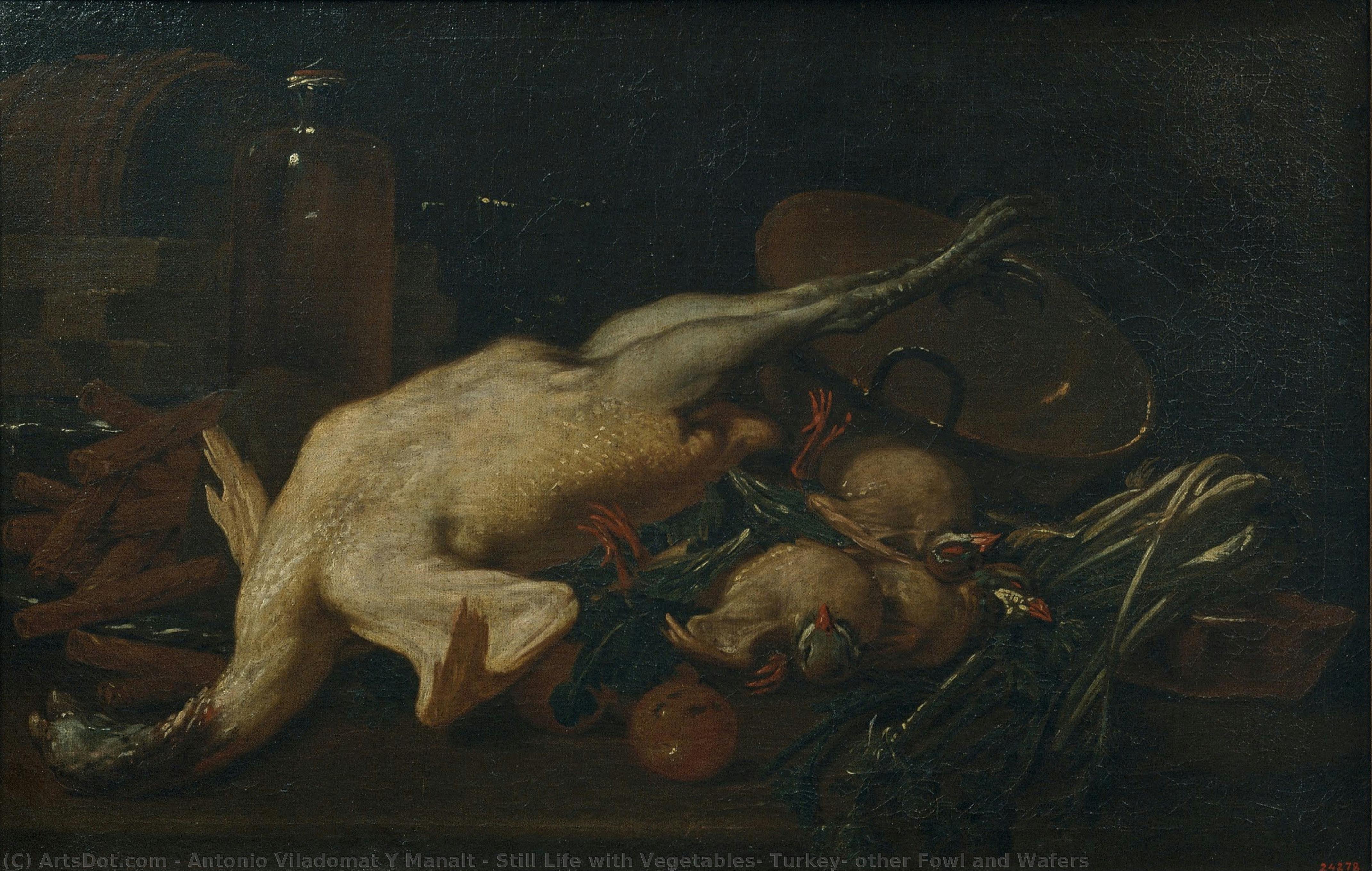
Still Life with Vegetables, Turkey, other Fowl and Wafers
 1700
1700 20.0 x 660.0 cm
 Museu Nacional d'Art de Catalunya
 Pročitaj više
Ručno rađena uljana reprodukcija
Ručno oslikano uljanim bojama na platnu u dimenzijama i okviru po vašem izboru, izrađeno po porudžbini od strane naših umetnika. ( Kupi print Kupi digitalnu sliku)




































Izaberite jednu od naših unapred definisanih veličina koje odgovaraju originalnim proporcijama umetničkog dela.

Можете унети сопствене димензије како бисте прилагодили дело одређеном оквиру или простору. Ако одабрана величина не одговара пропорцијама оригинала, слика ће бити исечена или проширена додатним елементима који се ручно насликавају. Дигитални prikaz ће вам бити послат на одобрење пре почетка производње.
Имајте на уму да преглед на екрану не одражава стварно исецање или проширење. Само приказ (mockup) ће тачно приказати коначну композицију.
Иако су доступне прилагођене величине, препоручујемо да одаберете димензију из дефинисане листе како бисте сачували оригиналне пропорције.
Nakon narudžbine, tim ArtsDot.com će klijentu putem e-pošte poslati uputstva i dostaviti prikaz predloženog rešenja
Isporuka širom sveta () za 3/4 nedelje umesto uobičajenih 5 nedelja. (2 септембар). Bez kompromisa po pitanju kvaliteta.

Besplatna ekspresna dostava širom sveta

Visokokvalitetno laneno platno

Kompletno osiguranje transporta

Garancija povraćaja carine i uvoznih dažbina

Garancija vernosti boja

Politika povrata u roku od 60 dana (samo u slučaju nedostataka)

Garancija povrata novca od 100%

Popust pri grupnoj kupovini
 Opcija sa staklom dostupna je samo za dimenzije manje od 110 cm

Still Life with Vegetables, Turkey, other Fowl and Wafers
Tehnika reprodukcije
Dimenzije reprodukcije
-


Konačna cena
$ 263
Srodna umetnička dela








Biografija umetnika
A Visionary of the Catalan Baroque
In the vibrant, sun-drenched streets of 17th-century Barcelona, a master was quietly preparing to redefine the spiritual landscape of Catalonia. Antonio Viladomat y Manalt, born in 1678, emerged not merely as a painter, but as a storyteller of the divine. The son of a skilled gilder, Viladomat’s earliest encounters with art were rooted in the tactile brilliance of gold leaf and craftsmanship. This foundational connection to the luster of precious metals would later manifest in his ability to manipulate light, creating canvases that seemed to glow from within. His journey began under the watchful eye of Pasqual Bailon Savall, a master whose workshop provided the essential seeds of technique, before he transitioned into a long and transformative apprenticeship with Joan Baptista Perramon. It was during these formative years that Viladomat began to weave together the technical rigor of his training with an burgeoning emotional depth.
The trajectory of Viladomat’s artistry took a profound turn when his path crossed with the architectural and painterly grandeur of Ferdinando Galli-Bibiena. Working on projects such as the Church of San Miguel, Viladomat was exposed to the sweeping scales and theatrical complexities of Italian art. This encounter acted as a catalyst, pulling his gaze toward the horizons of the Venetian Baroque. He became deeply enamoth with the concept of chiaroscuro—the dramatic, almost rhythmic interplay between profound shadows and piercing light. This influence breathed life into his compositions, allowing him to move beyond mere representation and into the realm of spiritual atmosphere, where every shadow held a secret and every highlight offered a glimpse of the celestial.
Mastery of Light and Sacred Narrative
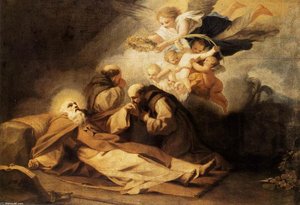
Viladomat’s oeuvre is a testament to the power of religious iconography to evoke profound human emotion. His works were rarely mere decorations; they were windows into the sacred. He possessed a singular ability to render the weight of holiness through the physical details of his subjects. In his celebrated depictions of saints, one can observe an exquisite attention to the texture of heavy fabrics, the delicate translucency of skin, and the symbolic presence of objects like lilies for purity or books for divine wisdom. His masterpiece, The Death of St Anthony the Hermit, serves as a breathtaking example of this mastery. In this work, the artist achieves a sense of profound serenity, using a soft, ethereal light to surround the dying saint with angels, creating a composition that feels both intimately human and cosmically significant.
Beyond individual portraits of sanctity, Viladomat undertook monumental tasks that shaped the very walls of Barcelona’s ecclesiastical institutions. His ambitious projects, including the Stations of the Cross and his sweeping cycles portraying Saint Francis of Assisi for the Franciscan monastery, demonstrate a capacity for large-scale narrative cohesion. These works were not just painted; they were orchestrated to guide the viewer through a spiritual pilgrimage. Through his use of color and composition, he could direct the eye across vast canvases, ensuring that the theological message remained as clear as it was captivating.
Legacy and Historical Significance
The historical importance of Antonio Viladomat y Manalt lies in his role as a bridge between the local traditions of Catalonia and the broader European Baroque movement. While he remained deeply rooted in the spiritual needs of his home city, his aesthetic language was international, shaped by the sophisticated currents of Italian influence. He navigated the complexities of his era—including the legal struggles with the Colegio de Pintores guild—with a determination to maintain the integrity of his craft and his professional standing.
Today, the legacy of this Baroque visionary lives on through the preserved treasures held in institutions such as the Museu Nacional d'Art de Catalunya and the Museo del Prado. His ability to capture the ephemeral nature of light and the eternal nature of faith ensures that his work continues to resonate with modern viewers. To look upon a Viladomat canvas is to experience the heartbeat of the 18th century—a time when art served as the ultimate medium for exploring the intersection of the earthly and the divine.
antonio viladomat y manalt
1678 - 1755 , Spain
Osnovne informacije
- Artistic Movement Or Style: Baroque
- Artists Or Movements Influenced By This Artist: ['Italian Art']
- Artists Who Influenced This Artist: ['Pasqual Bailon Savall']
- Date Of Birth: March 20, 1678
- Full Name: Antoni Viladomat i Manalt
- Nationality: Spanish
- Notable Artworks:
- Death of St Anthony the Hermit
- Saint Francis Receives the Order from the Crucifix
- Place Of Birth: Barcelona, Spain

