

 Pregledaj u prostoru
 Pošalji
 Podeli
 Detalji o delu

 Преузми
 Slični predmeti
 Rendgenski snimak
 Slajdovi
 Stats
StatsStory of the one winged-figures


 Pročitaj više
Ručno rađena uljana reprodukcija
Ručno oslikano uljanim bojama na platnu u dimenzijama i okviru po vašem izboru, izrađeno po porudžbini od strane naših umetnika. ( Switch to Print Switch to Digital Image)




































Izaberite jednu od naših unapred definisanih veličina koje odgovaraju originalnim proporcijama umetničkog dela.

Можете унети сопствене димензије како бисте прилагодили дело одређеном оквиру или простору. Ако одабрана величина не одговара пропорцијама оригинала, слика ће бити исечена или проширена додатним елементима који се ручно насликавају. Дигитални prikaz ће вам бити послат на одобрење пре почетка производње.
Имајте на уму да преглед на екрану не одражава стварно исецање или проширење. Само приказ (mockup) ће тачно приказати коначну композицију.
Иако су доступне прилагођене величине, препоручујемо да одаберете димензију из дефинисане листе како бисте сачували оригиналне пропорције.
Nakon narudžbine, tim ArtsDot.com će klijentu putem e-pošte poslati uputstva i dostaviti prikaz predloženog rešenja
Isporuka širom sveta () za 3/4 nedelje umesto uobičajenih 5 nedelja. (7 септембар). Bez kompromisa po pitanju kvaliteta.

Besplatna ekspresna dostava širom sveta

Visokokvalitetno laneno platno

Kompletno osiguranje transporta

Garancija povraćaja carine i uvoznih dažbina

Garancija vernosti boja

Politika povraćaja u roku od 100 dana (isključivo u slučaju nedostataka)

Garancija povrata novca od 100%

Popust pri grupnoj kupovini
 Opcija sa staklom dostupna je samo za dimenzije manje od 110 cm

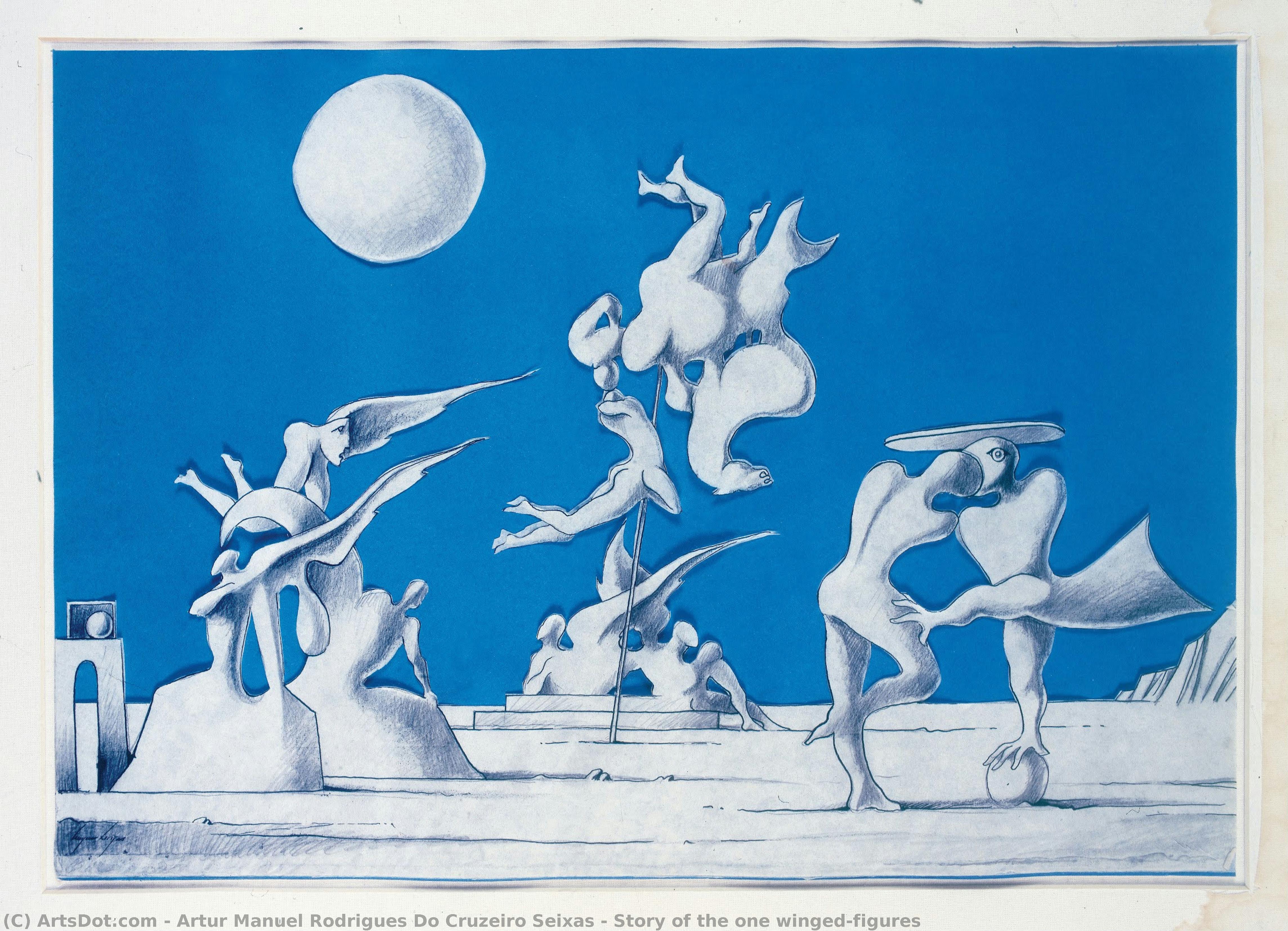
Story of the one winged-figures
Tehnika reprodukcije
Dimenzije reprodukcije
-


Konačna cena
$ 263
A Nocturnal Flight Through the Surrealist Dreamscape
In the evocative masterpiece Story of the one winged-figures, created in 1970 by the legendary Portuguese surrealist Artur Manuel Rodrigues do Cruzeiro Seixas, we are invited to step beyond the veil of reality and into a realm where gravity holds no dominion. The canvas unfolds as a breathtaking nocturnal odyssey, capturing a celestial procession of winged beings navigating a moonlit sky. These figures, draped in an ethereal dance of movement, appear caught in a moment of profound liberation. Some soar with solitary purpose, while others engage in silent, cosmic dialogues, their varied wings—ranging from delicate plumes to expansive, structural shapes—adding a rhythmic dynamism to the composition. The presence of the moon, casting a soft, silvered glow over the scene, anchors this dreamscape in a sense of quiet wonder, transforming the night sky into a stage for the infinite possibilities of the subconscious.
The technique employed by Seixas reflects his deep-seated connection to the surrealist movement, where the boundaries between the tangible and the imagined are intentionally blurred. Through a masterful use of light and shadow, the artist breathes life into the dark expanse, creating a sense of depth that pulls the viewer into the heart of the flight. The brushwork, while contributing to the fluid motion of the winged figures, also serves to create a texture of mystery; the atmosphere feels thick with the magic of a dream just before waking. For the discerning collector or interior designer, this piece offers more than mere decoration; it provides a window into a meticulously crafted universe where every stroke is an exploration of the psyche.
Symbolism and the Spirit of Liberation
Beyond its visual splendor, Story of the one winged-figures serves as a profound meditation on freedom and the human condition. The central motif of the winged figures acts as a powerful symbol of transcendence—the ability of the spirit to rise above the mundane constraints of earthly existence. In the context of Seixas’s life and his role in the Portuguese Surrealist group, these figures can be viewed as manifestations of pure thought and uninhibited emotion, breaking free from the social and political conventions of their time. The interplay between the solitary flyers and the interacting groups suggests a complex tapestry of human connection: the beauty of individual autonomy balanced against the shared experience of a collective journey through the unknown.
For those seeking to integrate art into a sophisticated living space, this reproduction offers an unparalleled emotional impact. It possesses a rare ability to command attention while simultaneously fostering a sense of contemplative peace. Whether placed in a grand gallery setting or as a focal point in a contemporary study, the painting’s dark, luminous palette and its themes of cosmic exploration evoke a sense of intellectual curiosity and spiritual uplift. It is an investment in a piece that does not merely occupy space but enriches it with the enduring legacy of one of Portugal's most significant twentieth-century visionaries.
Srodna umetnička dela
Biografija umetnika
A Life Immersed in Surrealism: The World of Cruzeiro Seixas
Artur Manuel Rodrigues do Cruzeiro Seixas, known simply as Cruzeiro Seixas, was a figure who resisted easy categorization—a “man who paints,” as he preferred to be called rather than a painter, and a profoundly influential Portuguese poet. Born in Amadora, Portugal, in 1920, and passing away in Lisbon in 2020 at the remarkable age of 99, Seixas’s long life was deeply interwoven with the evolution of surrealism, not merely as an artistic style but as a philosophical stance against convention and a passionate exploration of the subconscious. His work is characterized by dreamlike imagery, literary allusions, and a unique visual language that often evokes both unsettling mystery and playful delight.Early Influences and the Lisbon Surrealist Group
Seixas’s artistic journey began in the fertile intellectual environment of António Arroio School, where he forged lasting friendships with key figures who would shape Portugal's cultural landscape: Mário Cesariny, Marcelino Vespeira, Júlio Pomar, and Fernando Azevedo. This circle became the nucleus of what would emerge as the Surrealist Group of Lisbon in the mid-1940s, born from a schism within the broader Portuguese surrealist movement. Initially drawn to neorealism, Seixas quickly gravitated towards the liberating principles of surrealism—a rejection of rational thought and an embrace of the irrational, the fantastical, and the power of free association. The 1949 exhibition of the group marked a pivotal moment, establishing their presence and challenging the prevailing artistic norms. This period was crucial in defining Seixas’s aesthetic trajectory, fostering his commitment to exploring the depths of human consciousness through visual expression.A Journey Beyond Borders: Africa, Asia, and Poetic Beginnings
The 1950s saw Seixas embark on a transformative journey that would profoundly impact both his artistic vision and his poetic voice. Enlisting in the Merchant Navy, he traveled extensively throughout Africa, India, and Asia—experiences that broadened his horizons and infused his work with new perspectives and symbolic resonances. His time in Angola, beginning in 1951, proved particularly significant; he worked at the Luanda Museum while simultaneously developing his poetic production. This period marked the genesis of a powerful literary voice alongside his increasingly distinctive visual style. Early exhibitions during this time sparked considerable debate, demonstrating Seixas’s willingness to challenge expectations and provoke thought through unconventional imagery and object-based works.Collaboration, Recognition, and a Unique Artistic Vision
Upon returning to Portugal in 1964, Seixas continued to push the boundaries of artistic expression. His collaboration with Natália Correia on the renowned “Anthology of Erotic and Satirical Portuguese Poetry” in 1966 showcased his ability to seamlessly blend visual art with literary themes. The late 1960s brought further recognition, including a scholarship from the Calouste Gulbenkian Foundation, which allowed him to dedicate himself fully to his artistic pursuits. Retrospective exhibitions and solo shows at galleries like Buchholz and Divulgação solidified his position within the Portuguese art world. Throughout his career, Seixas maintained a steadfast commitment to surrealism, engaging with international colleagues and contributing to magazines dedicated to the movement. His work is characterized by a “broken world” where dreamlike elements coexist with unsettling violence and a playful exploration of artistic history—a unique synthesis that defies easy categorization.Legacy and Historical Significance
Cruzeiro Seixas’s enduring legacy lies in his unwavering dedication to surrealism as a means of exploring the complexities of human experience. He wasn't simply replicating a style; he was using it as a vehicle for profound introspection, literary engagement, and social commentary. His paintings, often imbued with symbolic figures and haunting imagery, invite viewers into a realm where logic is suspended and the subconscious takes center stage. The recognition bestowed upon him—including the rank of Grand Officer of the Ancient, Nobilíssimo and Enlightened Military Order of Santiago da Espada—underscores his significant contribution to Portuguese culture. He remained a vital force in the art world until his death, continuing to challenge conventions and inspire generations of artists with his unique vision and unwavering commitment to the power of imagination. His work stands as a testament to the enduring relevance of surrealism and its capacity to illuminate the hidden depths of the human psyche.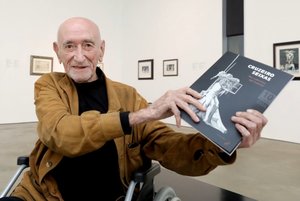
artur manuel rodrigues do cruzeiro seixas
1920 - 2020 , Portugal
Osnovne informacije
- Artistic Movement Or Style: 1920s Art Deco
- Artists Or Movements Influenced By This Artist:
- Dada
- Surrealism
- Expressionism
- Artists Who Influenced This Artist: ['Marcel Duchamp']
- Date Of Death: 2020
- Place Of Birth: WahooArt
Povezani članci
Surrealist Painting Masterpieces: 10 Artworks That Redefined Reality | ArtsDot
Journey into the dreamlike world of Surrealism! Explore 10 masterpieces by Dali, Magritte & Miró that redefined art. Discover their stories & find museum-quality reproductions to elevate your home decor on ArtsDot.com.
Salvador Dalí: 25 Remek-dela Genijalnog Surrealiste | ArtsDot
Uronite u svet Salvador Dalíja sa 25 remek-dela koje definišu surrealizam. Otkrijte priče iza ikoničnih slika, tehnike i inspiraciju za dizajn enterijera. Reprodukcije vrhunskog kvaliteta dostupne na ArtsDot.com.
Decoding Dalí: The Secrets of the Paranoiac-Critical Method and Surrealist Symbols
Unlock the mysteries of Salvador Dalí. Explore the profound secrets behind his Paranoiac-Critical Method and decode the surrealist symbols that define his legendary dreamscapes in this expert art history guide.
Oscar Domínguez: Surrealist Visions & the Poetics of Decay
Explore the haunting surrealist world of Oscar Domínguez. Discover his innovative decalcomania technique, recurring themes & lasting influence on 20th-century art. High-quality reproductions available.
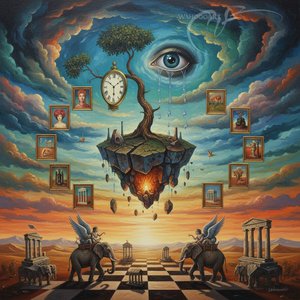
Surrealistički Majstori: 10 dela koja su definisala pokret i inspiracija za vaš dom
Otkrijte 10 remek dela koja su definisala surrealizam! Dalí, Magritte i drugi majstori kroz snoviće i simbolizam. Inspiracija za vaš dom uz ArtsDot – reprodukcije vrhunskog kvaliteta i kuratorske ideje. Istražite kolekciju online!