

 Pregledaj u prostoru
 Pošalji
 Podeli
 Detalji o delu

 Преузми
 Slični predmeti
 Rendgenski snimak
 Slajdovi
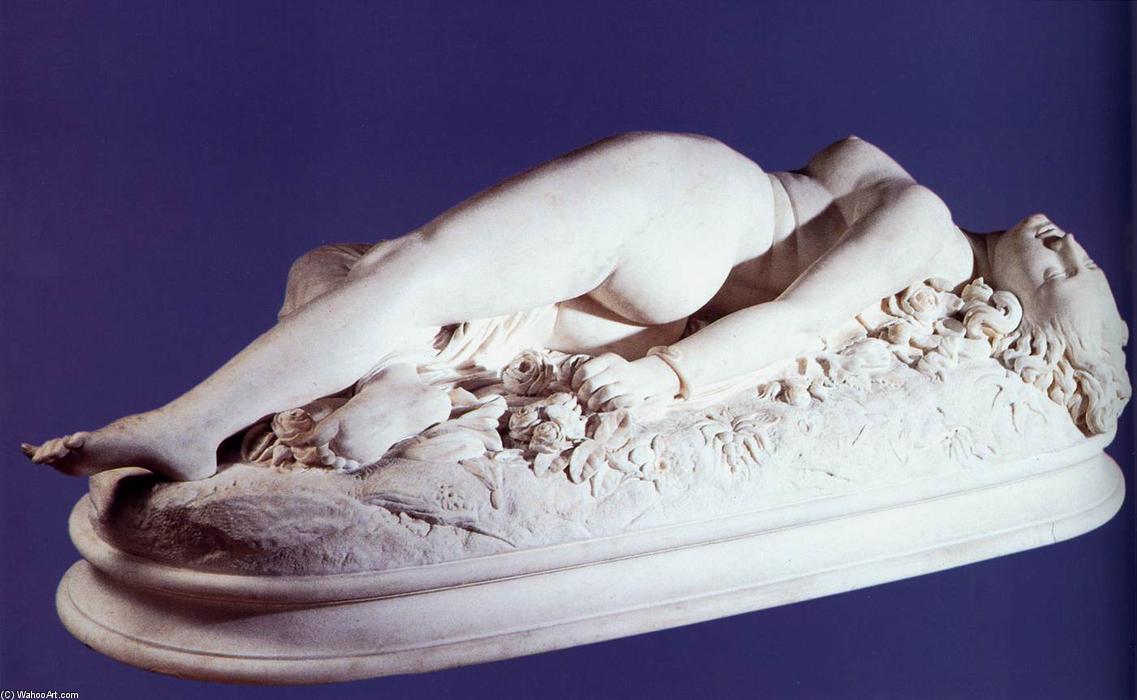
Woman Bitten by a Snake
 Neoclassicism
 1847
1847 56.0 x 180.0 cm
 Muzej d'Orsej
 Pročitaj više
Ručno rađena uljana reprodukcija
Ručno oslikano uljanim bojama na platnu u dimenzijama i okviru po vašem izboru, izrađeno po porudžbini od strane naših umetnika. ( Kupi print Kupi digitalnu sliku)




P118B $10

P118H $10

P118W $10

P438Z $10

P508JH $12

P508YH $12

P805H $10

P805Z $10

P919BZ $10

P919G $10

P919XJ $10

P959ZH $10

P968JZ $12

W106C $8

W218G $10

W218JH $8

W218Y $10

W307PJ $10

W316G $10

W316PJ $8

W316Y $10

W398PJ $8

W4111J $10

W500HY $15

W500JH $15

W692G $12

W849H $8

W940BG $15

W953PJ $8




Izaberite jednu od naših unapred definisanih veličina koje odgovaraju originalnim proporcijama umetničkog dela.

Можете унети сопствене димензије како бисте прилагодили дело одређеном оквиру или простору. Ако одабрана величина не одговара пропорцијама оригинала, слика ће бити исечена или проширена додатним елементима који се ручно насликавају. Дигитални prikaz ће вам бити послат на одобрење пре почетка производње.
Имајте на уму да преглед на екрану не одражава стварно исецање или проширење. Само приказ (mockup) ће тачно приказати коначну композицију.
Иако су доступне прилагођене величине, препоручујемо да одаберете димензију из дефинисане листе како бисте сачували оригиналне пропорције.
Nakon narudžbine, tim ArtsDot.com će klijentu putem e-pošte poslati uputstva i dostaviti prikaz predloženog rešenja
Isporuka širom sveta () za 3/4 nedelje umesto uobičajenih 5 nedelja. (20 август). Bez kompromisa po pitanju kvaliteta.

Besplatna ekspresna dostava širom sveta

Visokokvalitetno laneno platno

Kompletno osiguranje transporta

Garancija povraćaja carine i uvoznih dažbina

Garancija vernosti boja

Politika povrata u roku od 60 dana (samo u slučaju nedostataka)

Garancija povrata novca od 100%

Popust pri grupnoj kupovini
 Opcija sa staklom dostupna je samo za dimenzije manje od 110 cm

Woman Bitten by a Snake
Tehnika reprodukcije
Dimenzije reprodukcije
-


Konačna cena
$ 263
Opis umetničkog dela
A Serpent’s Embrace: Auguste Clésinger's *Woman Bitten by a Snake*
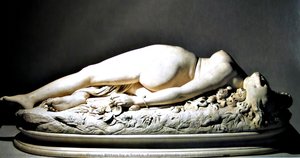
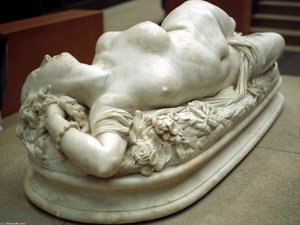
Auguste Clésinger’s 1847 marble sculpture, *Woman Bitten by a Snake*, is far more than a depiction of a dramatic, even unsettling, scene. It’s a potent distillation of Neoclassical ideals colliding with the burgeoning currents of Realism and Romanticism, a work that ignited controversy upon its debut at the Paris Salon and continues to hold an undeniable allure. The sculpture captures a moment of exquisite torment – a reclining nude female figure, her left arm entwined around a small serpent poised to deliver its venomous bite. The pose itself is crucial; it’s not one of passive suffering but of intense, almost ecstatic, vulnerability. Her body curves with a languid grace, yet every muscle seems taut with the sudden shock and pain of the attack. The drapery, meticulously carved to mimic the folds of luxurious fabric, cascades around her like a storm cloud, intensifying the drama and obscuring details while simultaneously emphasizing the contours of her form.
Neoclassical Roots, Romantic Intensity
Clésinger’s style firmly anchors *Woman Bitten by a Snake* within the Neoclassical tradition. The idealized beauty of the figure—a deliberate echo of classical sculpture—is evident in her balanced proportions and serene expression (despite the obvious distress). However, beneath this surface lies a distinctly Romantic sensibility. The heightened emotion, the dramatic lighting that casts deep shadows across her face and body, and the unsettling subject matter – a venomous bite – all point to an exploration of intense feeling and psychological depth, qualities often associated with the Romantic movement. The sculpture wasn’t simply about depicting a beautiful woman; it was about conveying a powerful emotional experience.
The Scandal and the Secret: A Life-Cast Revelation
The initial reception of *Woman Bitten by a Snake* at the 1847 Salon was explosive, not for its artistic merit alone, but due to a scandalous revelation. Theophile Gautier, a prominent literary critic and staunch defender of artistic integrity, exposed a secret behind Clésinger’s creation: the sculpture was based on a life-cast taken from Apollonie Sabatier, a celebrated *demi-mondaine* (a fashionable courtesan) who was also the muse of Charles Baudelaire. This practice of using actual models—particularly those with imperfections like cellulite – was considered highly unorthodox and even vulgar at the time. The revelation fueled public outrage, accusing Clésinger of exploiting his model’s physical flaws for artistic gain. The controversy surrounding the life-cast underscored a broader debate about the role of realism in art and the ethical considerations of representing the human body.
Symbolism and Interpretation: Venom, Beauty, and Desire
Beyond the scandal, *Woman Bitten by a Snake* is rich with symbolic meaning. The serpent itself is an ancient symbol of temptation, danger, and transformation – often associated with both death and rebirth. The bite represents not just physical pain but also a profound psychological wound, a loss of innocence or a confrontation with forbidden desires. The reclining pose suggests vulnerability and surrender, while the figure’s expression hints at a complex mixture of fear, pleasure, and resignation. Some scholars interpret the sculpture as an allegory for the perils of beauty and the seductive power of desire, suggesting that even in its idealized form, the female body remains susceptible to harm and corruption. The choice of marble, known for its durability and timelessness, further elevates the image, imbuing it with a sense of permanence and enduring fascination.
This reproduction captures the essence of Clésinger’s masterpiece, offering a stunning addition to any art collection or interior space. Its dramatic composition and evocative symbolism will undoubtedly spark conversation and admiration for years to come.
Srodna umetnička dela
Biografija umetnika
Auguste Clésinger: Life and Legacy
Early Life and Training
- Born: October 22, 1814, in Besançon, France.
- Auguste Clésinger came from an artistic family; his father, Georges-Philippe Clésinger, was a sculptor who provided Auguste with his initial training.
- This early exposure instilled in him a foundational understanding of sculptural techniques and aesthetics.
Artistic Development and Style
- Clésinger’s artistic style evolved through the 19th century, initially embracing Neoclassical principles but gradually incorporating elements of Realism and Romanticism.
- He skillfully blended technical precision with emotional intensity in his works.
- His sculptures often depict dramatic narratives and sensuous figures, showcasing a mastery of anatomy and form.
Major Works and Achievements
- Woman Bitten by a Serpent (1847): This sculpture caused a sensation at the Paris Salon due to its dramatic realism and erotic undertones. It was modeled from life casts of Apollonie Sabatier.
- Madame Sabatier (1847): A marble portrait of his model, Apollonie Sabatier, further establishing Clésinger’s reputation for capturing beauty and sensuality.
- Chopin's Funerary Monument (1850): Commissioned after the composer Frédéric Chopin’s death, this white marble monument at Père Lachaise Cemetery is a poignant tribute to the musician.
- Angel of Grief: A deeply moving sculpture embodying Baroque drama and pathos.
- He also created busts of prominent figures like Rachel Félix and Théophile Gautier, and a statue of Louise of Savoy.
Influences and Relationships
- Influenced by: His father, Georges-Philippe Clésinger, provided his initial artistic foundation.
- Clésinger’s association with Apollonie Sabatier, a salonnière and mistress of several prominent artists including Charles Baudelaire, exposed him to intellectual and artistic circles.
- His marriage in 1847 to Solange Dudevant, daughter of George Sand, further connected him to literary society.
Historical Significance and Legacy
- Clésinger’s work reflects the artistic currents of 19th-century France, bridging Neoclassicism with emerging Realist tendencies.
- Recognition: He received the Knight's Cross of the Légion d'honneur in 1849 and was promoted to Officer in 1864.
- His sculptures continue to be admired for their technical skill, emotional depth, and dramatic impact. His works are displayed at prominent museums such as the Musée d’Orsay.
- Death: He died on January 5, 1883, in Paris, and is buried in Père Lachaise Cemetery.

auguste clésinger
1814 - 1883 , France
Osnovne informacije
- Birth Date: 1814-10-22
- Birth Place: Besançon, France
- Death Date: 1883-01-05
- Influenced: None, 'influenced by': 'Georges-Philippe Clésinger (father)', 'movement': ['Realism', 'Romanticism'], 'name': 'Auguste Clésinger', 'nationality': 'French', 'notable works': ['Woman Bitten by a Serpent', 'Angel of Grief', 'Madame Sabatier',
Povezani članci
The Enduring Allure of Marble in Art History: From Classical Sculpture to Modern Abstraction
Explore the captivating history of marble sculpture from ancient Greece to modern art. Discover renowned artists like Canova & Michelangelo, carving techniques, and investment insights at ArtsDot.

Bronze Sculptures That Defined Art History | ArtsDot
Journey through art history with our Top 10 bronze sculptures! Explore masterpieces by Rodin, Michelangelo & more. Discover stories behind iconic statues and find museum-quality reproductions for your home decor at ArtsDot.com.
Pierre-Auguste Renoir: 25 Remek-Dela Impresionizma za Vaš Dom | ArtsDot
Uronite u svet Pierre-Auguste Renoara! Otkrijte 25 remek-dela impresionizma, priče iza slika i tehničke detalje. Reprodukcije vrhunskog kvaliteta za vaš dom dostupne na ArtsDot.com. Istražite celu kolekciju online!

Bronze Age to Modern Masters: 10 Sculptures That Redefined Art | ArtsDot
Journey through art history with 10 legendary bronze sculptures – from Michelangelo's David to Rodin’s Thinker. Explore the stories, techniques & timeless beauty of these masterpieces. Find museum-quality reproductions & elevate your home decor on ArtsDot.com.
The Enduring Legacy of Marble: A Comprehensive Exploration of Technique, Symbolism & Artistic Expression
Explore the rich history of marble sculpture from antiquity to the Renaissance! Discover key techniques, influential artists & enduring themes in classical art. Expert insights for collectors and enthusiasts at ArtsDot.

