

 Pregledaj u prostoru
 Pošalji
 Podeli
 Detalji o delu

 Преузми
 Slični predmeti
 Rendgenski snimak
 Slajdovi
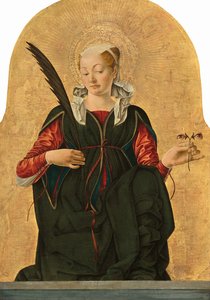
Saint Justina of Padua
 Oil On Canvas
- WallArt
- Renaissance
 1490
1490 50.0 x 38.0 cm
 Metropolitan Museum of Art
 Pročitaj više
Ručno rađena uljana reprodukcija
Ručno oslikano uljanim bojama na platnu u dimenzijama i okviru po vašem izboru, izrađeno po porudžbini od strane naših umetnika. ( Kupi print Kupi digitalnu sliku)




P118B $10

P118H $10

P118W $10

P438Z $10

P508JH $12

P508YH $12

P805H $10

P805Z $10

P919BZ $10

P919G $10

P919XJ $10

P959ZH $10

P968JZ $12

W106C $8

W218G $10

W218JH $8

W218Y $10

W307PJ $10

W316G $10

W316PJ $8

W316Y $10

W398PJ $8

W4111J $10

W500HY $15

W500JH $15

W692G $12

W849H $8

W940BG $15

W953PJ $8




Izaberite jednu od naših unapred definisanih veličina koje odgovaraju originalnim proporcijama umetničkog dela.

Можете унети сопствене димензије како бисте прилагодили дело одређеном оквиру или простору. Ако одабрана величина не одговара пропорцијама оригинала, слика ће бити исечена или проширена додатним елементима који се ручно насликавају. Дигитални prikaz ће вам бити послат на одобрење пре почетка производње.
Имајте на уму да преглед на екрану не одражава стварно исецање или проширење. Само приказ (mockup) ће тачно приказати коначну композицију.
Иако су доступне прилагођене величине, препоручујемо да одаберете димензију из дефинисане листе како бисте сачували оригиналне пропорције.
Nakon narudžbine, tim ArtsDot.com će klijentu putem e-pošte poslati uputstva i dostaviti prikaz predloženog rešenja
Isporuka širom sveta () za 3/4 nedelje umesto uobičajenih 5 nedelja. (23 август). Bez kompromisa po pitanju kvaliteta.

Besplatna ekspresna dostava širom sveta

Visokokvalitetno laneno platno

Kompletno osiguranje transporta

Garancija povraćaja carine i uvoznih dažbina

Garancija vernosti boja

Politika povrata u roku od 60 dana (samo u slučaju nedostataka)

Garancija povrata novca od 100%

Popust pri grupnoj kupovini
 Opcija sa staklom dostupna je samo za dimenzije manje od 110 cm

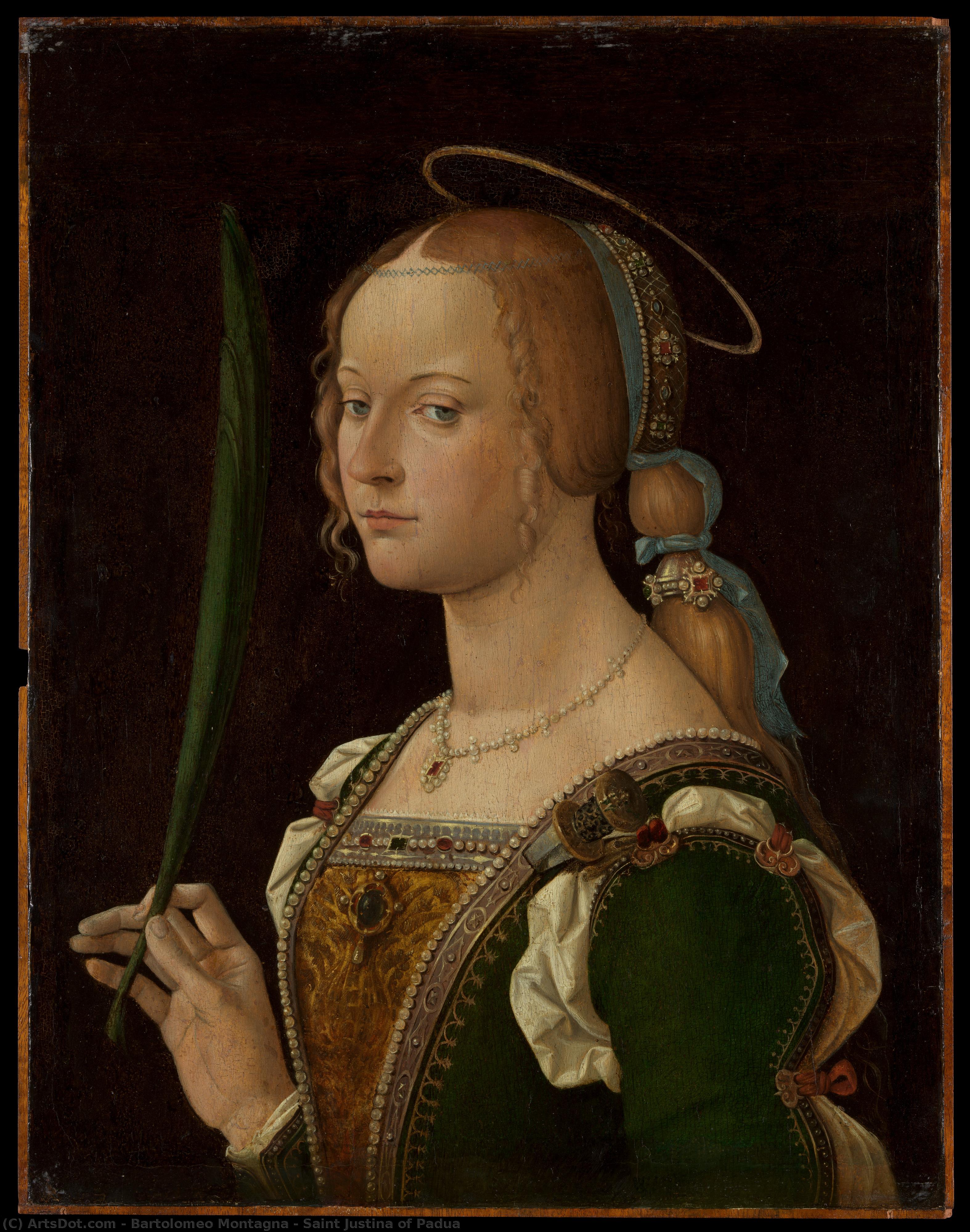
Saint Justina of Padua
Tehnika reprodukcije
Dimenzije reprodukcije
-


Konačna cena
$ 263
Opis umetničkog dela
A Renaissance Portrait of Faith and Virtue
Bartolomeo Montagna’s “Saint Justina of Padua,” painted in 1490, is more than just a devotional image; it's a captivating window into the artistic sensibilities of late fifteenth-century Venice. This exquisite work transcends simple religious representation, offering a nuanced portrait of a martyr and a compelling study of aristocratic beauty within the context of burgeoning humanist ideals. Montagna masterfully blends elements of strict iconography with a strikingly contemporary aesthetic, creating an artwork that continues to resonate with viewers centuries later.
The painting depicts Saint Justina, a Roman martyr who exemplified unwavering faith during the persecutions of Diocletian. Traditionally portrayed as holding a palm branch – symbolizing victory over death and eternal life – and bearing a sword (a potent emblem of her martyrdom), Montagna elevates the subject beyond a mere saintly figure. She is presented with an almost regal poise, her gaze direct and serious, engaging the viewer in a silent dialogue across time. The subtle suggestion of a high forehead, a fashionable trend during the period, subtly reinforces her idealization as a woman of noble bearing and virtue.
The Venetian Renaissance: A Synthesis of Tradition and Innovation
Montagna’s work is deeply rooted in the artistic traditions of Venice, yet he skillfully navigated these established forms with a distinctly personal vision. Heavily influenced by Giovanni Bellini – a master known for his atmospheric perspective and luminous color palettes – Montagna adopted a similar approach to rendering light and shadow, imbuing the scene with a palpable sense of depth and realism. However, unlike Bellini’s often ethereal figures, Montagna's Saint Justina possesses a remarkable solidity and presence, reflecting the growing emphasis on humanism within Venetian art.
The painting’s execution is equally noteworthy. Crafted on wood – a common medium during the Renaissance due to its durability and suitability for intricate detail – it measures 50 x 38 cm and now resides in The Metropolitan Museum of Art in New York. Montagna's meticulous attention to texture, particularly evident in the folds of her dress and the delicate details of her jewelry, showcases his mastery of technique. The use of a muted color palette—primarily greens, browns, and golds—contributes to the painting’s solemn and dignified atmosphere, further emphasizing Saint Justina’s virtue and unwavering faith.
Symbolism and the Language of Renaissance Portraiture
Beyond its devotional subject matter, “Saint Justina of Padua” is rich in symbolic meaning. The palm branch and sword are not merely decorative elements; they represent her triumph over earthly suffering and her ascension to eternal glory. Yet, Montagna subtly subverts traditional iconography by presenting Saint Justina as a figure of aristocratic beauty – a deliberate choice that reflects the prevailing artistic trends of the time. This juxtaposition of religious symbolism with contemporary fashion highlights Montagna’s innovative approach to art, demonstrating his ability to seamlessly blend spiritual and secular concerns.
A Timeless Masterpiece: Relevance for Today
“Saint Justina of Padua” remains a powerful testament to the enduring appeal of Renaissance art. Its serene composition, masterful technique, and profound symbolism continue to captivate viewers centuries after its creation. For those seeking inspiration or considering acquiring a high-quality reproduction, this painting offers a rare opportunity to connect with a pivotal moment in artistic history – a time when faith, beauty, and humanism converged to create some of the most enduring masterpieces ever conceived. Further exploration can be found through resources like The Metropolitan Museum of Art’s online collection and scholarly articles detailing Bartolomeo Montagna's life and work.
Srodna umetnička dela
Biografija umetnika
The Visionary of Vicenza: The Life and Legacy of Bartolomeo Montagna
In the heart of the Italian Renaissance, amidst the marble-rich landscapes of Vicenza and the shimmering canals of Venice, emerged a painter whose brush possessed the rare ability to marry sculptural solidity with ethereal grace. Bartolomeo Montagna stands as a cornerstone of the Vicenza School, an artist whose career bridged the gap between the meticulous precision of the early Quattrocento and the luminous atmospheric depth of the High Renaissance. Born around 1450, Montagna’s life was deeply intertwined with the humanist evolution of his era, a period where the rediscovery of classical antiquity breathed new life into religious iconography.
Montagna’s artistic identity was forged through a sophisticated blend of regional influences and direct exposure to the masters of the Venetian Republic. His early training in Brescia under Giovanni Battista Brustolo provided him with a foundation of rigorous detail, yet it was his subsequent journey to Venice that truly ignited his genius. Immersing himself in the vibrant workshops of the Serenissima, he absorbed the profound lessons of Giovanni Bellini and the sculptural intensity of Andrea Mantegna. This exposure allowed him to develop a signature style characterized by a restrained palette, an architectural sense of space, and a masterful command over light and shadow that gave his figures a palpable, three-dimensional presence.
A Mastery of Form and Devotion
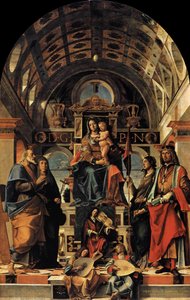
The oeuvre of Montagna is a testament to his ability to transform sacred subjects into moments of profound, quiet contemplation. His works are rarely characterized by frantic movement; instead, they offer a serene stillness that invites the viewer into a state of prayerful reflection. This is perhaps most evident in his depictions of the Madonna and Child, where the figures possess an aristocratic dignity paired with a tender, human vulnerability. In masterpieces such as The Virgin and Child with a Saint, one can observe how he utilizes sculpted forms and subtle naturalistic elements—such as the delicate presence of birds—to ground divine subjects within a tangible, earthly reality.
Beyond his Madonnas, Montagna excelled in portraying the solitary strength of saints and scholars. His St Jerome serves as a breathtaking example of his ability to capture the weight of intellectual and spiritual labor through meticulous texture and light. Similarly, his Saint Justina of Padua showcases a brilliant synthesis of devotional symbolism and the refined beauty typical of late fifteenth-century Venetian art. Through these works, Montagna demonstrated that religious painting could be both intellectually complex and visually captivating, utilizing architectural illusionism to create windows into a more divine realm.
Historical Significance and Artistic Triumph
The enduring significance of Bartolomeo Montagna lies in his role as a vital link in the evolution of Northern Italian painting. While often overshadowed by the larger-than-life personalities of Venice, his contribution to the development of the Vicenza School provided a necessary stylistic counterpoint to the more flamboyant Venetian trends. His ability to integrate the structural rigor of Mantegna with the soft, atmospheric light of Bellini created a unique aesthetic language that resonated throughout the region.
His major achievements are scattered across the most prestigious religious institutions of his time, from the monumental fresco cycles in the Certosa di Pavia to significant altarpieces in the Museo Civico di Vicenza. Even today, Montagna’s work continues to captivate art historians and enthusiasts alike, offering a window into a period of unparalleled creativity. His legacy remains etched in the very fabric of the Renaissance—a legacy of marble-like precision, spiritual depth, and an unwavering commitment to the beauty of the human form.
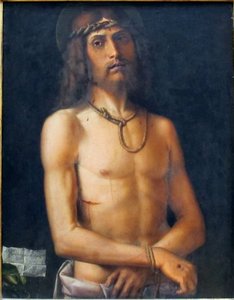
bartolomeo montagna
1450 - 1523 , Italy
Osnovne informacije
- Artistic Movement Or Style: Renaissance
- Artists Or Movements Influenced By This Artist: ['Mantegna']
- Artists Who Influenced This Artist: ['Giovanni Bellini']
- Date Of Birth: Vicenza, Italy (1450)
- Full Name: Bartolomeo Montagna
- Nationality: Italian
- Notable Artworks:
- Saint Justina of Padua
- Madonna and Child
- Place Of Birth: Vicenza
Povezani članci
Bartolomeo Pinelli: Neoclassical Linearity & Roman Topography of Memory
Explore the captivating world of Bartolomeo Pinelli, a master Italian engraver renowned for his evocative Roman scenes & historical narratives. Discover his art and legacy with ArtsDot.
Mario Sironi: A Poetic of Modern Italian Identity Through Symbolism & Social Commentary
Explore the profound works of Mario Sironi, a key figure in Italian Modernism. Discover his evolution from Futurism to Metaphysical painting and his powerful social commentary. Learn about his legacy at ArtsDot.
Giovanni Fattori: Realism, Identity & the Tuscan Landscape – A Macchiaioli Master
Explore the life & art of Giovanni Fattori, a leading figure of the Macchiaioli movement. Discover his revolutionary realism, captivating Tuscan landscapes, and lasting impact on Italian painting. Learn more at ArtsDot.
Carlo Carrà: Futurist Visions & Metaphysical Transformations in Early 20th-Century Italian Painting
Explore the artistic journey of Carlo Carrà, a pivotal figure in Italian Futurism & Metaphysical painting. Discover his dynamic compositions, collaborations with de Chirico, and lasting influence on modern art history.
Civic Virtue and Artistic Rivalry: Patronage and Innovation in the Italian Renaissance Republics, 1400–1600
Explore the Italian Renaissance! Discover how competitive patronage & humanist ideals fueled artistic innovation in republics like Florence & Venice. Expert insights for art lovers and collectors.

