
- Početna strana

- Reprodukcija uljane slike
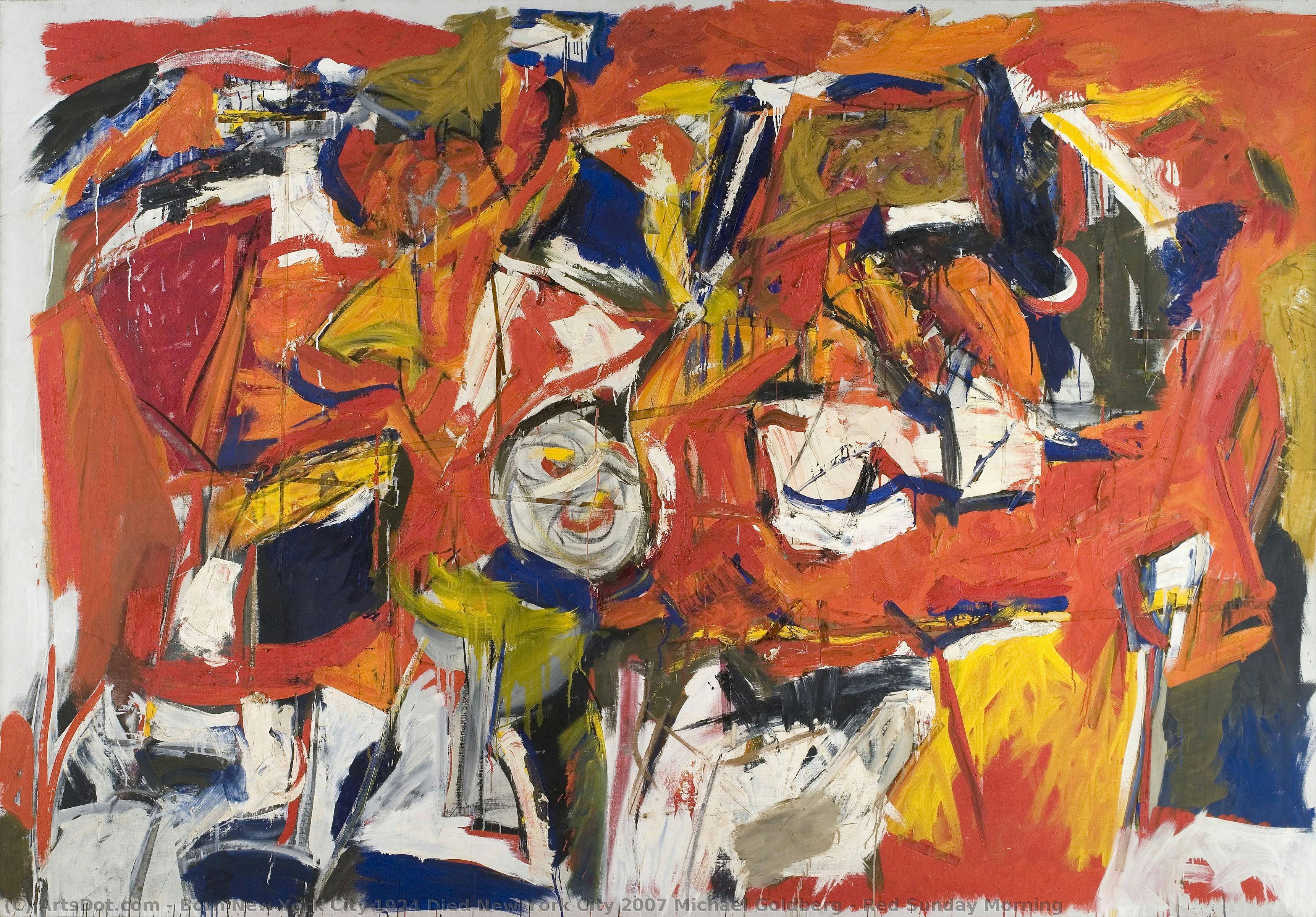
- born new york city 1924 died new york city 2007 michael goldberg
 Pregledaj u prostoru
 Pošalji
 Podeli
 Detalji o delu

 Преузми
 Slični predmeti
 Rendgenski snimak
 Slajdovi
Red Sunday Morning
 Oil On Canvas
- WallArt
- Abstract Expressionism
 Modern
 202.0 x 289.0 cm
 Chrysler Museum of Art
 Pročitaj više
Ručno rađena uljana reprodukcija
Ručno oslikano uljanim bojama na platnu u dimenzijama i okviru po vašem izboru, izrađeno po porudžbini od strane naših umetnika. ( Kupi print Kupi digitalnu sliku)




































Izaberite jednu od naših unapred definisanih veličina koje odgovaraju originalnim proporcijama umetničkog dela.

Можете унети сопствене димензије како бисте прилагодили дело одређеном оквиру или простору. Ако одабрана величина не одговара пропорцијама оригинала, слика ће бити исечена или проширена додатним елементима који се ручно насликавају. Дигитални prikaz ће вам бити послат на одобрење пре почетка производње.
Имајте на уму да преглед на екрану не одражава стварно исецање или проширење. Само приказ (mockup) ће тачно приказати коначну композицију.
Иако су доступне прилагођене величине, препоручујемо да одаберете димензију из дефинисане листе како бисте сачували оригиналне пропорције.
Nakon narudžbine, tim ArtsDot.com će klijentu putem e-pošte poslati uputstva i dostaviti prikaz predloženog rešenja
Isporuka širom sveta () za 3/4 nedelje umesto uobičajenih 5 nedelja. (5 септембар). Bez kompromisa po pitanju kvaliteta.

Besplatna ekspresna dostava širom sveta

Visokokvalitetno laneno platno

Kompletno osiguranje transporta

Garancija povraćaja carine i uvoznih dažbina

Garancija vernosti boja

Politika povrata u roku od 60 dana (samo u slučaju nedostataka)

Garancija povrata novca od 100%

Popust pri grupnoj kupovini
 Opcija sa staklom dostupna je samo za dimenzije manje od 110 cm

Red Sunday Morning
Tehnika reprodukcije
Dimenzije reprodukcije
-


Konačna cena
$ 263
A Symphony of Visceral Emotion
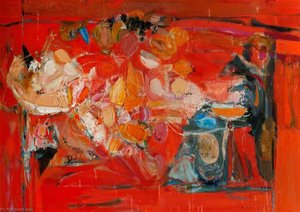
In the vast, evocative landscape of Abstract Expressionism, few works capture the raw, pulsating energy of the human psyche quite like Red Sunday Morning. This monumental canvas, measuring an imposing 202 x 289 cm, serves as a profound window into the turbulent beauty of the subconscious. At first glance, the viewer is met with a kaleidoscopic explosion of color—vibrant reds, sun-drenched yellows, and deep, melancholic blues that dance across the surface in a rhythmic, almost chaotic arrangement. The painting presents a complex tapestry of faces, some rendered with a haunting realism that pulls at the heartstrings, while others dissolve into abstract, distorted forms. This interplay between the recognizable and the ethereal creates a sense of profound psychological depth, inviting the observer to lose themselves in a dreamscape where identity is fluid and emotion is the only constant.
The technique employed in this masterpiece is a testament to the "action painting" legacy of the New York School. Each brushstroke feels deliberate yet spontaneous, carrying the weight of the artist's physical movement across the canvas. The application of paint creates a rich, tactile texture that catches the light differently depending on one's perspective, adding a three-dimensional quality to the composition. Through the masterful use of color theory, Michael Goldberg utilizes high-contrast hues to guide the eye through the labyrinthine arrangement of features. The warmth of the oranges and reds provides a visceral heat, contrasted sharply by the cooling presence of blues, mirroring the complex duality of human experience—the tension between passion and introspection, between the clarity of morning and the lingering shadows of the night.
The Legacy of a New York Master
To understand the soul of Red Sunday Morning, one must look to the fertile ground of post-war Manhattan from which it emerged. Michael Goldberg, a pivotal figure of the Second Generation Abstract Expressionists, was a student of the legendary Hans Hofmann. From this lineage, Goldberg inherited a profound respect for the expressive potential of color and the importance of spontaneous gesture. His work does not merely depict a scene; it performs an emotional event. This painting stands as a bridge between the structured lessons of his early training and the unbridled freedom of the New York School's most radical era. It embodies the historical moment when art moved away from representation toward a pure, unfiltered expression of the internal self.
For the discerning collector or interior designer, this artwork offers more than mere decoration; it provides a focal point of immense intellectual and aesthetic gravity. The sheer scale of the piece demands attention, making it an ideal centerpiece for grand galleries, sophisticated lofts, or curated museum-style residential spaces. A high-quality reproduction of such a work allows the dramatic interplay of light and shadow to transform a room, infusing a modern environment with historical significance and a sense of timelessness. Red Sunday Morning is not just a painting; it is an invitation to contemplate the beautiful complexity of existence, making it a profound acquisition for anyone seeking to surround themselves with art that speaks to the very essence of the human spirit.
Srodna umetnička dela
Biografija umetnika
Michael Goldberg: A Pioneer of Gesture and Color
Born in the Bronx in 1924, Michael Goldberg emerged from the vibrant, post-war crucible of New York City as a singular and powerful voice within the Abstract Expressionist movement. His artistic journey was marked by an early precocity; at just fourteen years old, he began enrolling in classes at the Art Students League of $\text{New York}$, setting the stage for a lifetime of profound exploration. This formative period placed him at the heart of a burgeoning modernism, where the boundaries of canvas and emotion were being radically redefined. His development was further shaped by his time studying under the legendary Hans Hofmann, a mentor whose teachings on spontaneity and the expressive potential of color would become the bedrock of Goldberg’s aesthetic language.
The trajectory of Goldberg's life was not without its interruptions, as the shadows of global conflict reached even the studios of Manhattan. A veteran of World War II, he served with distinction in North Africa and the China-Burma-India Theater, earning both a Purple Heart and a Bronze Star. This period of intense, real-world experience added a layer of psychological depth to his later work, perhaps informing the raw, visceral energy found in his compositions. Upon returning to New York, he found himself immersed in the legendary Eighth Street Club and the Cedar Bar, spaces where he engaged in spirited dialogues with titans such as Willem de Kooning, Jackson Pollock, and Lee Krasner. These interactions were not merely social; they were intellectual skirmishes that helped solidify his position within the "second generation" of the New York School.
The Language of Action and Abstraction
Goldberg’s mature style is best characterized by its rhythmic, gestural intensity. He was a master of action painting, a technique where the act of creation itself becomes visible through energetic brushstrokes and layered textures. His canvases often pulsate with a sense of movement, as if the paint were still in the process of settling upon the surface. This kinetic energy was frequently balanced by a sophisticated command of color. He utilized bold reds, deep blues, and luminous yellows to create compositions that felt both structurally sound and emotionally volatile. In many ways, his work sought to bridge the gap between the heavy traditions of Western European painting and the emerging, liberated spirit of post-war American abstraction.
While much of his fame rests upon his purely abstract works, Goldberg possessed a remarkable ability to infuse recognizable forms with an abstract sensibility. His still lifes and urban vistas serve as poignant reminders of his engagement with the tangible world. In these pieces, the distinction between subject and medium begins to blur; a stool or a cityscape becomes less a literal depiction and more a vessel for light, shadow, and texture. This duality allowed him to maintain a connection to the everyday experience while simultaneously pursuing the sublime heights of pure abstraction.
Legacy and Historical Significance
As the art world shifted toward Color Field painting, Hard-edge abstraction, and eventually Pop Art, Goldberg remained steadfast in his commitment to the gestural tradition. While some critics viewed this as a resistance to changing fashions, it can more accurately be seen as a dedicated pursuit of an authentic, expressive medium. His ability to maintain relevance through decades of stylistic upheaval is a testament to the enduring power of his visual language.
Today, the historical significance of Michael Goldberg is recognized through his presence in some of the world's most prestigious institutions. His contributions to the canon of American art are preserved in collections such as:
- The Museum of Modern Art (MoMA), New York
- The Whitney Museum of American Art, New York
- The Hirshhorn Museum and Sculpture Garden, Washington, D.C.
- The Cleveland Museum of Art, Ohio
- The Baltimore Museum of Art, Maryland
Through his prolific output and his role as a teacher at the School of Visual Arts, Goldberg helped sustain the flame of Abstract Expressionism long after its initial explosion. He remains a vital figure for anyone seeking to understand the profound emotional landscape of mid-century American modernism.
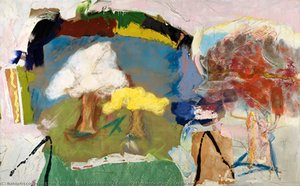
born new york city 1924 died new york city 2007 michael goldberg
1924 - 2007 , United States of America
Osnovne informacije
- Artistic Movement Or Style: Abstract Expressionism
- Artists Who Influenced This Artist:
- Joan Mitchell
- Alfred Leslie
- Helen Frankenthaler
- Willem de Kooning
- Date Of Birth: December 24, 1924
- Date Of Death: December 31, 2007
- Full Name: Michael Goldberg
- Nationality: American
- Notable Artworks:
- Sir Moses Gaster
- Untitled (stool)
- Hill 12
- Place Of Birth: The Bronx, United States
Povezani članci

Kandinsky's Masterpieces: 25 Paintings That Define Abstract Art | ArtsDot
Journey through Wassily Kandinsky's 25 most iconic abstract paintings. Explore his revolutionary use of color, form & spiritual expressionism. Find museum-quality Kandinsky reproductions and elevate your home decor with ArtsDot.com. Discover all masterpieces on ArtsDot.com!
Abstraktni Ekspresionizam: 10 Remek Dela Koja Su Definisala Pokret
Otkrijte 10 remek dela koja su definisala apstraktni ekspresionizam! Istražite dela Pola Krausa, Džejson Poloka i drugih. Saznajte priče iza umetnosti i inspirisanje za dekoraciju doma. Eksplorirajte kolekciju na ArtsDot.com!
Mark Rothko: 25 Remek-dela Apstraktne Ekspresije za Vaš Dom | ArtsDot
Istražite 25 remek-dela Marka Rothka – ikona apstraktne ekspresije. Otkrijte priče, tehnike i emocije iza ovih veličanstvenih slika. Reprodukcije vrhunskog kvaliteta za vaš dom na ArtsDot.com!

Top 10 dela geometrijske apstrakcije koje morate videti | ArtsDot.com
Istražite 10 remek-dela geometrijske apstrakcije – Mondrian, Malevič i Kandinski. Otkrijte priče iza ovih ikoničnih slika i pronađite inspiraciju za dekoraciju enterijera sa ArtsDot.com! Reprodukcije vrhunskog kvaliteta.
Beyond Representation: Exploring Gesturality, Emotion, and Philosophical Underpinnings of Contemporary Abstract Painting
Explore the evolution of abstract painting with ArtsDot. Discover key artists, historical context & investment insights. Find museum-quality reproductions and expert appraisal services.

