

 Pregledaj u prostoru
 Pošalji
 Podeli
 Detalji o delu

 Преузми
 Slični predmeti
 Rendgenski snimak
 Slajdovi
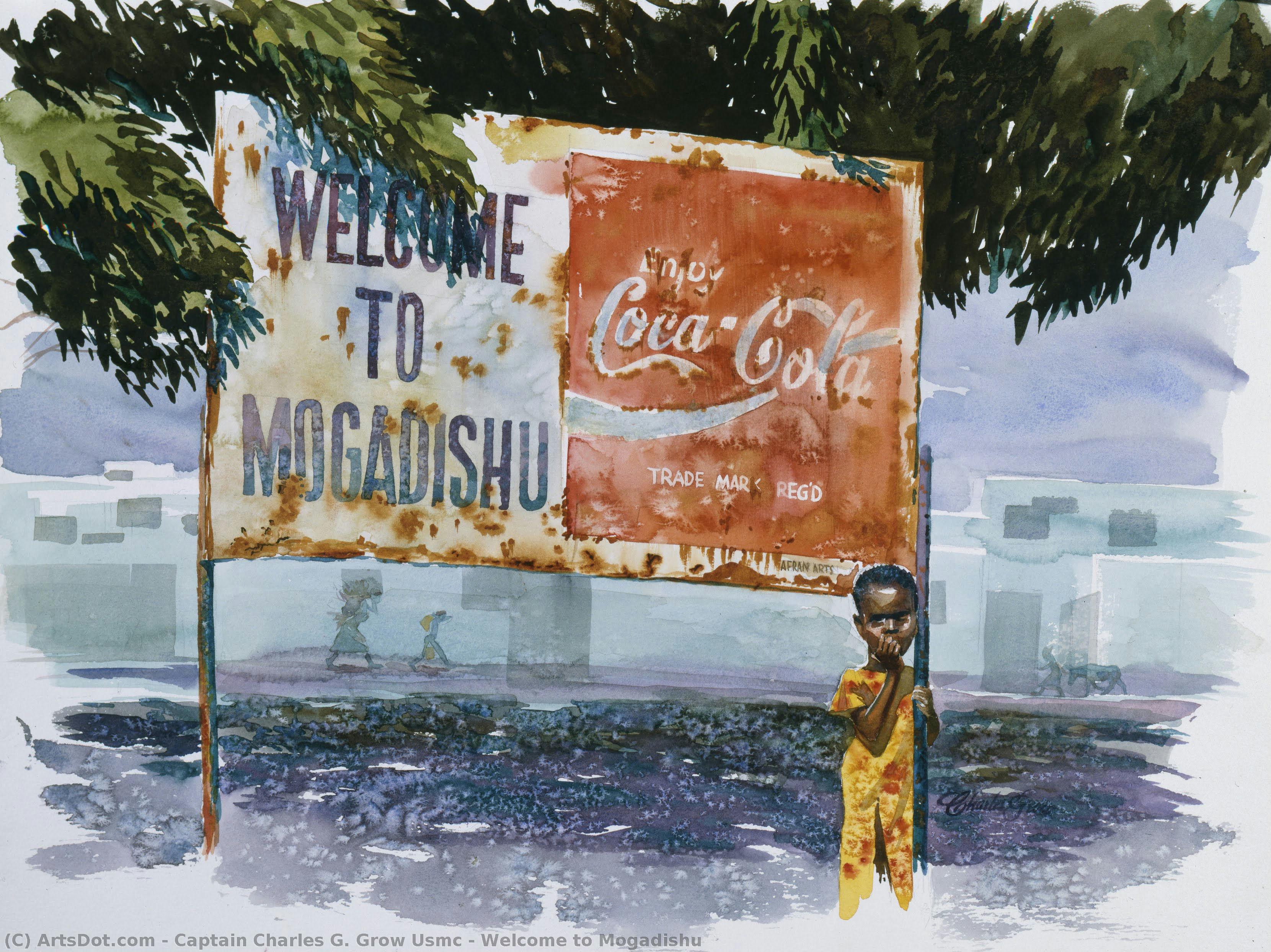
Welcome to Mogadishu


 Pročitaj više
Giclee štampa / Umetnički otisak
Giclée štampa ili print na platnu muzejskog kvaliteta uz brzu proizvodnju i fleksibilne opcije završne obrade. ( Kupi ručno naslikanu sliku Kupi digitalnu sliku)




P118B $10

P118H $10

P118W $10

P438Z $10

P508JH $12

P508YH $12

P805H $10

P805Z $10

P919BZ $10

P919G $10

P919XJ $10

P959ZH $10

P968JZ $12

W106C $8

W218G $10

W218JH $8

W218Y $10

W307PJ $10

W316G $10

W316PJ $8

W316Y $10

W398PJ $8

W4111J $10

W500HY $15

W500JH $15

W692G $12

W849H $8

W940BG $15

W953PJ $8




Izaberite jednu od naših unapred definisanih veličina koje odgovaraju originalnim proporcijama umetničkog dela.

Možete uneti sopstvene dimenzije kako biste umetničko delo prilagodili specifičnom okviru ili prostoru. Ako odabrani format ne odgovara proporcijama originalne slike, mi ćemo ili iscrtati deo dela ili proširiti sliku pomoću ogledane ivice ili jednobojnog popunjavanja. Digitalni prikaz će vam biti poslat na odobrenje pre početka proizvodnje.
Imajte na umu da pregled na ekranu ne odražava stvarno iscrtavanje ili proširivanje. Samo će prikaz (mockup) precizno pokazati finalnu kompoziciju.
Iako su prilagođene dimenzije dostupne, preporučujemo da odaberete dimenziju sa unapred definisane liste kako biste očuvali originalne proporcije.
Dostava širom sveta () za 2 nedelje umesto uobičajenih 4/5 nedelja. (28 август)

Besplatna ekspresna dostava širom sveta

Visokokvalitetno laneno platno

Kompletno osiguranje transporta

Garancija povraćaja carine i uvoznih dažbina

Garancija vernosti boja

Politika povrata u roku od 60 dana (samo u slučaju nedostataka)

Garancija povrata novca od 100%

Popust pri grupnoj kupovini
 Opcija sa staklom dostupna je samo za dimenzije manje od 110 cm

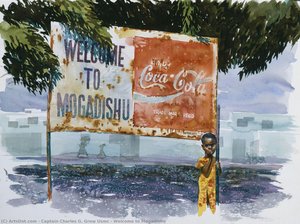
Welcome to Mogadishu
Giclee štampa / Umetnički otisak
Dimenzije reprodukcije
-


Konačna cena
$ 62
A Window into a Fading Era
In the evocative watercolor "Welcome to Mogadishu," created in 1993 by Captain Charles G. Grow, we are invited to witness a moment frozen in the amber of conflict and transition. The artwork presents a poignant scene of urban decay, where a weathered, dilapidated sign serves as the primary protagonist. This sign, bearing its welcoming message with a sense of faded grandeur, stands before a building that bears the scars of time and upheaval. Through Grow’s lens, the viewer is not merely looking at a street corner in Somalia; they are experiencing a profound sense of melancholy and the heavy atmosphere of a world caught in the throes of change. The composition utilizes an elevated perspective to draw the eye down a receding street toward a distant, hazy shoreline, creating a deep sense of atmospheric perspective that makes the far-off horizon feel both unreachable and hauntingly beautiful.
The emotional resonance of the piece lies in its delicate balance between destruction and endurance. While the primary subject matter focuses on the deterioration of the urban landscape, there is an underlying current of resilience. The presence of a small child figure within the scene acts as a powerful symbolic element, suggesting that even amidst the wreckage of war and the erosion of infrastructure, life persists with a quiet, stubborn strength. This juxtaposition between the crumbling man-made structures and the enduring human spirit provides a depth that makes the painting much more than a mere topographical record; it is a meditation on the cyclical nature of history and the persistence of hope in the most desolate of settings.
Mastery of Watercolor and Light
Technically, "Welcome to Mogadishu" showcases Grow’s sophisticated command over the watercolor medium. Utilizing a wet-on-wet technique, the artist achieves seamless transitions between tones, allowing colors to bleed into one another with a soft, organic fluidity. This method is particularly effective in rendering the hazy, diffused light that permeates the scene, contributing significantly to the subdued and somber mood. The texture of the work is rich and tactile, achieved through the careful layering of translucent washes that create a sense of depth and grit. Visible brushstrokes are not hidden but rather celebrated, adding an expressive, raw quality to the piece that mirrors the ruggedness of the subject matter.
The color palette is masterfully restrained, relying on muted earth tones—browns, oranges, and ochres—interspersed with subtle hints of blue and green. This limited range prevents the scene from feeling overly dramatic, instead fostering a sense of realism and quiet contemplation. For collectors and interior designers, this piece offers a sophisticated aesthetic; its tonal harmony allows it to integrate seamlessly into spaces that value understated elegance and historical depth. As a high-quality reproduction, the artwork retains the delicate nuances of Grow’s original brushwork, offering an opportunity to bring a piece of profound historical narrative and artistic mastery into any curated collection or thoughtfully designed interior.
Srodna umetnička dela

Biografija umetnika
A Life Etched in Conflict: The Art of Charles Grow
Charles Grow, born in Philadelphia in 1964, is an artist whose life has been inextricably linked to the realities of modern warfare. More than simply a recorder of events, Grow embodies the role of the combat artist – a witness translating the raw intensity and complex emotions of conflict into enduring visual narratives. His journey began with enlistment in the Marine Corps in 1982, where he served not as a traditional infantryman but as a photographer and graphics specialist. This early exposure to visual communication laid the foundation for his later artistic pursuits, providing him with both technical skills and an intimate understanding of military culture. Grow’s self-taught artistic inclinations were nurtured through classes at the Savannah College of Art and Design, bridging his practical experience with formal training.From Desert Storm to Curator: A Career Defined by Service
Grow's career took a defining turn during Operation Desert Storm, where he served as a combat artist. This deployment wasn’t merely an assignment; it was an immersion into the heart of conflict, demanding that he capture not just the physical landscape but also the psychological weight borne by those engaged in battle. He didn’t observe from a safe distance, but rather embedded himself within the units, documenting their experiences with watercolor and paper – materials chosen perhaps for their immediacy and vulnerability, contrasting sharply with the harshness of the environment. Following his service in Desert Storm, Grow continued to create art during subsequent conflicts, solidifying his reputation as a uniquely positioned chronicler of war. He retired from the Marine Corps in 2003 at the rank of Captain, but his dedication to preserving and interpreting military history didn’t end there. He transitioned into a curatorial role at the National Museum of the Marine Corps, eventually becoming Deputy Director in 2007 before retiring in 2020. This shift allowed him to shape how these stories were presented to the public, ensuring that the sacrifices and experiences of those he served with were not forgotten.The Power of Watercolor: Technique as Testimony
Grow’s artistic style is characterized by a masterful use of watercolor, a medium often associated with delicacy and subtlety. This choice is particularly striking given the subject matter he tackles – the brutal realities of war. The fluidity of watercolor allows him to capture fleeting moments, the shifting light and shadows of battlefields, and the emotional turbulence of combat. His works aren’t hyperrealistic depictions; instead, they convey a sense of atmosphere and immediacy, prioritizing feeling over precise detail. The use of watercolor also speaks to the ephemeral nature of memory and experience, suggesting that these events are constantly being re-evaluated and reconstructed. Welcome to Mogadishu, for example, is not simply a representation of an urban landscape but a poignant meditation on resilience in the face of decay. The washes of color evoke both the heat and dust of the environment and the underlying sense of loss and struggle.Beyond the Battlefield: A Legacy of Remembrance
While Grow’s work is most recognized for its depictions of Operation Desert Storm and the Gulf War, his contributions extend far beyond these specific conflicts. He has consistently sought to honor the experiences of Marines across generations, recognizing that each conflict leaves an indelible mark on those who serve. His role as curator at the National Museum of the Marine Corps was instrumental in expanding the museum’s collection and ensuring a more comprehensive representation of military history. He remains actively involved in the combat art community, mentoring emerging artists and advocating for the importance of visual storytelling in understanding war. His legacy is not simply one of artistic achievement but also of service – a commitment to preserving the memories and honoring the sacrifices of those who have defended their country.Historical Significance & Continuing Impact
Charles Grow’s work occupies a unique space within the broader context of military art. Unlike traditional war paintings commissioned by governments to glorify conflict, Grow's pieces offer a more nuanced and often sobering perspective. He doesn’t shy away from depicting the human cost of war, capturing the exhaustion, fear, and resilience of individual soldiers. This honesty resonates deeply with audiences, providing a powerful counterpoint to idealized representations of combat. His art serves as a vital historical document, offering insights into the realities of modern warfare that are often absent from official accounts.- Grow’s work provides invaluable primary source material for historians and researchers.
- He has helped to elevate the profile of combat art as a legitimate form of artistic expression.
- His mentorship of emerging artists ensures that this tradition will continue for generations to come.
captain charles g. grow usmc
1964 - , United States of America
Osnovne informacije
- Artistic Movement Or Style: Combat Art
- Current Status: Living
- Date Of Birth: 1964
- Full Name: Charles G. Grow
- Nationality: American
- Notable Artworks: ['Welcome to Mogadishu']
- Place Of Birth: Philadelphia, USA
Povezani članci

Watercolor Wonders: 10 Masterpieces That Redefined Art History | ArtsDot
Journey through 10 legendary watercolor masterpieces by Sargent, Turner & Homer! Explore iconic landscapes, portraits & floral art that redefined history. Find museum-quality reproductions and curated decor ideas at ArtsDot.com.

Ephemeral Visions: Exploring the Artistic Legacy & Contemporary Practice of Watercolor Painting
Explore the captivating world of watercolor painting! Discover its rich history, essential techniques, influential artists & collecting tips. A comprehensive guide for art enthusiasts from ArtsDot.
Ephemeral Visions: Exploring the History & Emotional Resonance of Watercolor Painting
Explore the captivating history of watercolor painting, from ancient techniques to modern masters like Kandinsky & Blake. Discover essential artists, collecting tips & the emotional power of this luminous medium. Expert insights for art enthusiasts.

Ephemeral Visions: Exploring the Artistic Legacy & Nuances of Watercolor Painting
Explore the captivating world of watercolor painting! Discover its rich history, essential techniques, influential artists & collecting tips from art experts. A comprehensive guide for enthusiasts.

Акварел кроз векове: Историјски развој, технике и савремена пракса
Истражите историју акварела, технике и савремене трендове уз стручне увиде ArtsDot-а. Сазнајте више о познатим уметницима и материјалима за сликање акварелом. Купите квалитетне репродукције или наручите персонализовани портрет!

