

 Pregledaj u prostoru
 Pošalji
 Podeli
 Detalji o delu

 Преузми
 Slični predmeti
 Rendgenski snimak
 Slajdovi
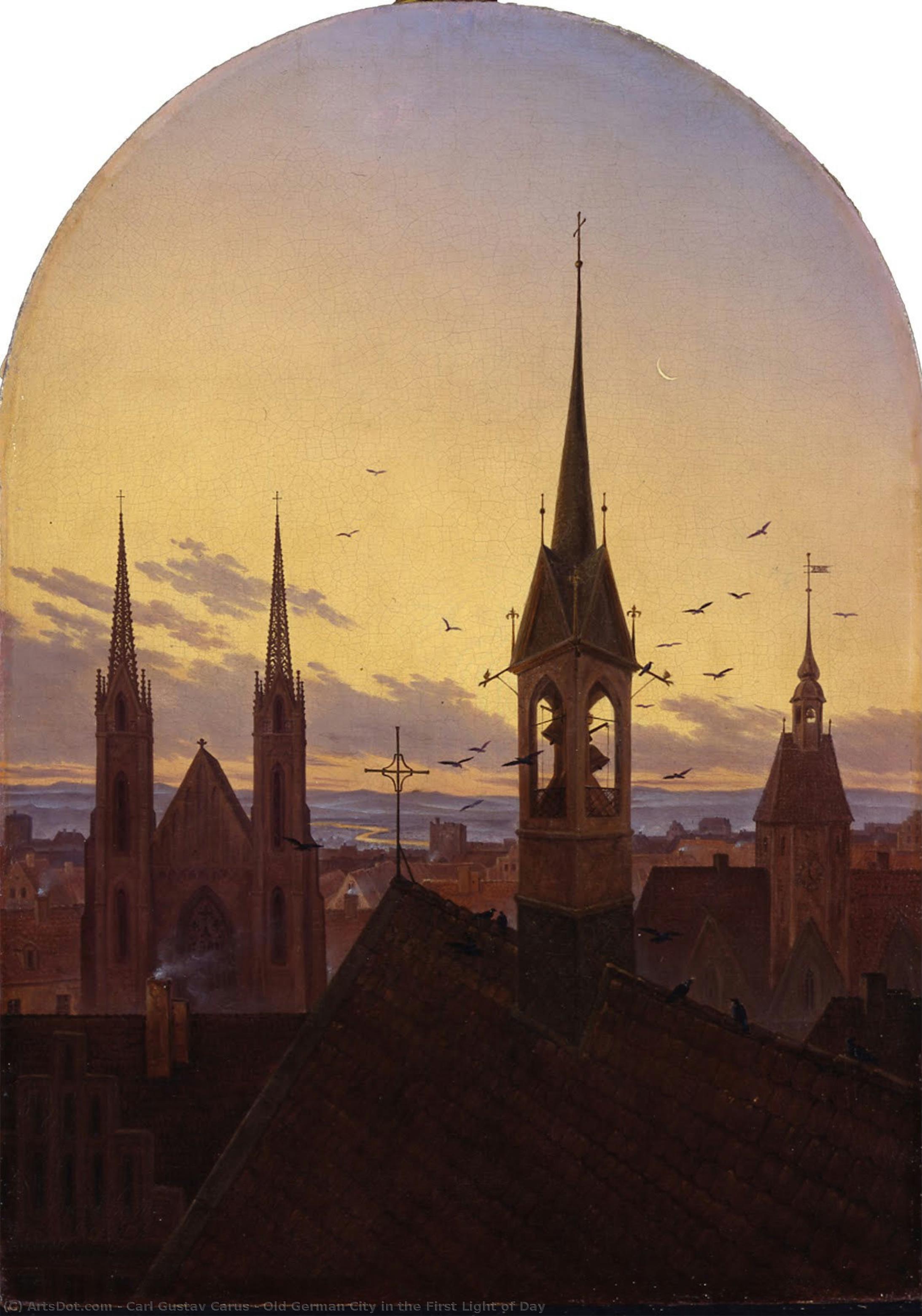
Old German City in the First Light of Day


 Pročitaj više
Giclee štampa / Umetnički otisak
Giclée štampa ili print na platnu muzejskog kvaliteta uz brzu proizvodnju i fleksibilne opcije završne obrade. ( Kupi ručno naslikanu sliku Kupi digitalnu sliku)




P118B $10

P118H $10

P118W $10

P438Z $10

P508JH $12

P508YH $12

P805H $10

P805Z $10

P919BZ $10

P919G $10

P919XJ $10

P959ZH $10

P968JZ $12

W106C $8

W218G $10

W218JH $8

W218Y $10

W307PJ $10

W316G $10

W316PJ $8

W316Y $10

W398PJ $8

W4111J $10

W500HY $15

W500JH $15

W692G $12

W849H $8

W940BG $15

W953PJ $8




Izaberite jednu od naših unapred definisanih veličina koje odgovaraju originalnim proporcijama umetničkog dela.

Možete uneti sopstvene dimenzije kako biste umetničko delo prilagodili specifičnom okviru ili prostoru. Ako odabrani format ne odgovara proporcijama originalne slike, mi ćemo ili iscrtati deo dela ili proširiti sliku pomoću ogledane ivice ili jednobojnog popunjavanja. Digitalni prikaz će vam biti poslat na odobrenje pre početka proizvodnje.
Imajte na umu da pregled na ekranu ne odražava stvarno iscrtavanje ili proširivanje. Samo će prikaz (mockup) precizno pokazati finalnu kompoziciju.
Iako su prilagođene dimenzije dostupne, preporučujemo da odaberete dimenziju sa unapred definisane liste kako biste očuvali originalne proporcije.
Dostava širom sveta () za 2 nedelje umesto uobičajenih 4/5 nedelja. (27 август)

Besplatna ekspresna dostava širom sveta

Visokokvalitetno laneno platno

Kompletno osiguranje transporta

Garancija povraćaja carine i uvoznih dažbina

Garancija vernosti boja

Politika povrata u roku od 60 dana (samo u slučaju nedostataka)

Garancija povrata novca od 100%

Popust pri grupnoj kupovini
 Opcija sa staklom dostupna je samo za dimenzije manje od 110 cm

Old German City in the First Light of Day
Giclee štampa / Umetnički otisak
Dimenzije reprodukcije
-


Konačna cena
$ 62
Opis predmeta
A Dawnscape of Serenity: Unveiling Carl Gustav Carus’s “Old German City”
Carl Gustav Carus's "Old German City in the First Light of Day" isn’t merely a painting; it’s a meticulously crafted distillation of Romantic ideals, a poignant meditation on time, and a breathtakingly beautiful evocation of a bygone era. Painted around 1830-1840 during his close collaboration with Caspar David Friedrich, this work transcends the simple depiction of a cityscape, offering instead a profound exploration of light, atmosphere, and the enduring spirit of a small German town.
The scene unfolds within a tightly framed composition—a narrow valley dominated by a towering church spire that pierces through a veil of nascent dawn. The city itself is rendered with an almost architectural precision, its sandstone buildings stacked upon one another, hinting at centuries of history and quiet resilience. Yet, Carus doesn’t present this as a static record; instead, he imbues the scene with a palpable sense of movement—a subtle breeze rustling through the trees, birds taking flight from the church tower, and figures going about their daily routines within the city walls. The artist masterfully employs atmospheric perspective, using cooler tones to recede into the distance, creating an illusion of depth that draws the viewer irresistibly into the heart of the scene.
The Romantic Palette: Technique and Artistic Influence
Carus’s technical skill is immediately apparent in his handling of light. He doesn't simply paint a sunrise; he captures its essence—the delicate blush of pink and gold spreading across the sky, the way it illuminates the textures of the buildings, and the subtle shadows that dance along their surfaces. The painting is executed with a remarkable level of detail, particularly in the rendering of the church spire and the intricate stonework of the city walls. This meticulousness reflects Carus’s scientific background—his deep understanding of geology and his desire to represent natural phenomena with accuracy and precision.
Crucially, “Old German City” is deeply rooted in the Romantic movement. Friedrich, Carus's mentor, profoundly influenced his approach, emphasizing the sublime beauty of nature and the importance of emotional experience. Carus’s work embodies this spirit—it’s not about documenting reality but about conveying a feeling—a sense of tranquility, contemplation, and connection to something larger than oneself. The painting echoes the core tenets of Romanticism: an appreciation for the power of nature, a fascination with the past, and a belief in the importance of individual experience.
Symbolism and Historical Context
The scene itself is rich in symbolic meaning. The towering church spire represents faith, tradition, and the enduring strength of the community. The bustling city below symbolizes human life—the rhythms of daily existence, the pursuit of happiness, and the interconnectedness of individuals. The early morning light suggests a new beginning, a sense of hope and renewal. Considering Carus’s background as a physician and his interest in psychology, one can interpret the scene as an invitation to find peace and serenity amidst the complexities of life.
Painted during a period of significant social and political change in Germany—a time marked by rising nationalism and growing industrialization—Carus's work offers a poignant reminder of a simpler, more contemplative way of life. It’s a testament to the enduring power of tradition and a celebration of the beauty of the natural world. The painting also reflects Carus’s own intellectual pursuits, blending scientific observation with artistic expression.
A Timeless Masterpiece: Reproduction and Beyond
Reproducing “Old German City in the First Light of Day” is more than simply creating a print; it's about preserving a significant work of art and sharing its beauty with a wider audience. ArtsDot’s meticulous reproduction process ensures that every detail—from the subtle nuances of light to the intricate textures of the buildings—is faithfully captured, offering an experience remarkably close to the original painting. Whether displayed in a grand hall or a cozy corner, this artwork will undoubtedly evoke feelings of peace, wonder, and connection to the past.
Srodna umetnička dela

Biografija umetnika
The Polymath of the Romantic Soul
Carl Gustav Carus stands as a singular, luminous figure in the tapestry of German history, a man whose intellect refused to be confined by the boundaries of a single discipline. Born in Leipzig in 1789, Carus was far more than a mere painter; he was a true polymath, navigating the intricate intersections of medicine, botany, geology, and psychology with equal mastery. His life unfolded during an era of profound intellectual ferment, a time when the scientific rigor of the Enlightenment began to dance with the emotional depth of Romanticism. To look upon a Carus landscape is to witness more than just scenery; it is to see the world through the eyes of a scientist who found the divine in the anatomical precision of a leaf and the spiritual sublime in the shifting mists of a riverbank.
His early education in Leipzig provided him with a formidable foundation in mathematics and the natural sciences, disciplines that would forever inform his artistic eye. This scientific grounding allowed him to approach the canvas with a unique clarity, observing the physical world not just as a subject for beauty, but as a complex, living organism. As he moved toward Jena University, he found himself immersed in the philosophical currents of his time, studying alongside the legendary Goethe. This connection was pivotal, as it placed Carus at the very heart of the German Romantic movement, where the contemplation of nature served as a gateway to understanding the human psyche and the infinite mysteries of the universe.
A Symbiosis of Science and Artistry
While his brush captured the ethereal, his hands practiced the healing arts. Carus established a distinguished medical career in Dresden, serving as a Professor of Obstetrics and the Director of the Maternity Clinic. This dual identity—physician and artist—created a fascinating tension in his work. His deep understanding of human anatomy and physiology lent an unparalleled realism to his depictions of the natural world; he understood the structural integrity of a tree trunk and the delicate translucency of light through fog as intimately as he understood the pulse of a living patient. This meticulous observation allowed him to bridge the gap between the tangible, physical reality of nature and its intangible, emotional resonance.
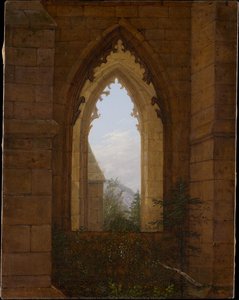
The trajectory of his artistic development was profoundly shaped by his close friendship and collaboration with Caspar David Friedrich. Together, these two masters of German Romanticism explored the concept of the sublime—that overwhelming sense of awe and terror inspired by the vastness of nature. While Friedrich often focused on the spiritual isolation of the individual, Carus brought a unique atmospheric precision to the movement. His works, such as the hauntingly beautiful Gothic Windows in the Ruins of the Monastery at Oybin, utilize light and shadow to evoke a sense of historical weight and melancholic beauty, capturing the way ruins become part of the organic landscape over time.
Legacy of Light and Thought
The enduring significance of Carl Gustav Carus lies in his ability to synthesize seemingly disparate worlds. His paintings are not merely static images but are imbued with a psychological depth that foreshadowed much of modern thought. His explorations into the relationship between the external environment and internal perception have drawn comparisons to the later psychological insights of figures like Carl Jung, and his scientific observations contributed to the broader intellectual climate that influenced Charles Darwin. He saw no conflict between the empirical study of the earth and the poetic interpretation of its beauty.
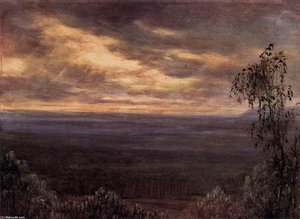
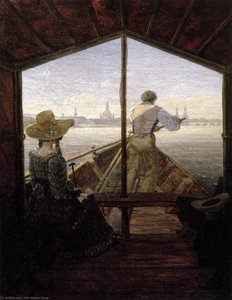
Even in his more tranquil compositions, such as Morning Fog or A Gondola on the Elbe near Dresden, one can sense this profound harmony. In these works, the subtle gradations of color and the soft, ethereal light evoke a sense of peace and cosmic connection. Carus leaves behind a legacy that challenges us to view the world with both a keen, analytical eye and an open, feeling heart. He remains a testament to the idea that true understanding comes from the marriage of observation and imagination, making him one of the most intellectually complete artists to ever grace the Romantic era.
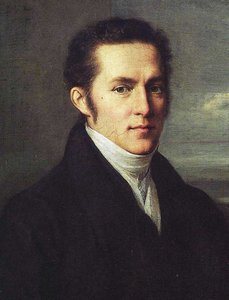
Carl Gustav Carus
1789 - 1869 , Germany
Osnovne informacije
- Artistic Movement Or Style: Romanticism
- Artists Or Movements Influenced By This Artist: ['Jung']
- Artists Who Influenced This Artist: ['Caspar David Friedrich']
- Date Of Birth: January 3, 1789
- Date Of Death: July 28, 1869
- Full Name: Carl Gustav Carus
- Nationality: German
- Notable Artworks:
- Morning Fog
- Gothic Windows in the Ruins of the Monastery at Oybin
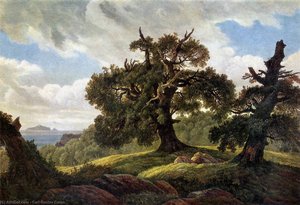
- Oaks at the Sea Shore
- Place Of Birth: Leipzig, Germany
Povezani članci

25 Remek-dela Džona Konstebla: Lepota Engleske na Platnu | ArtsDot
Uronite u svet Džona Konstebla! Otkrijte 25 remek-dela engleskog pejzaža, romantizma i seoske idile. Kupite reprodukcije slika vrhunskog kvaliteta za dekoraciju enterijera na ArtsDot.com.

Glavna dela koja su definisala Romantični pejzaž: 10 remek-dela za vaš dom
Otkrijte 10 remek-dela romantičnog pejzažnog slikarstva! Uronite u svet Claude Lorraina, Caspara David Friedricha i Turnera. Ispričane priče umetnosti, inspiracija za dekoraciju doma. Kvalitetne reprodukcije na ArtsDot.com – istražite celu kolekciju online!

Evocations of Place: A Historical Journey Through Landscape Art
Explore the rich history of landscape art with ArtsDot. Discover renowned artists, movements like Impressionism & Romanticism, and expert guidance for collecting timeless pieces. Find your perfect serene escape today!
Evoking Nature's Sublime: A Comprehensive Exploration of 19th-Century Landscape Painting
Explore the captivating world of 19th-century landscape painting! Discover renowned artists like Friedrich & Monet, key movements, and find the perfect artwork to bring nature's serenity into your home. Expert insights at ArtsDot.

Katsushika Hokusai: 25 Remek-dela Japanskog Umetnika za Vaš Dom | ArtsDot
Uronite u svet Katsushike Hokusaija! Otkrijte 25 remek-dela japanskog umetnika, uključujući čuveni 'Veliki talas'. Ukiyo-e štampe, pejzaži i istorija iza svakog dela. Pronađite inspiraciju za dekor enterijera i kupite reprodukcije slika vrhunskog kvaliteta na ArtsDot.com.

