

 Pregledaj u prostoru
 Pošalji
 Podeli
 Detalji o delu

 Преузми
 Slični predmeti
 Rendgenski snimak
 Slajdovi
 Stats
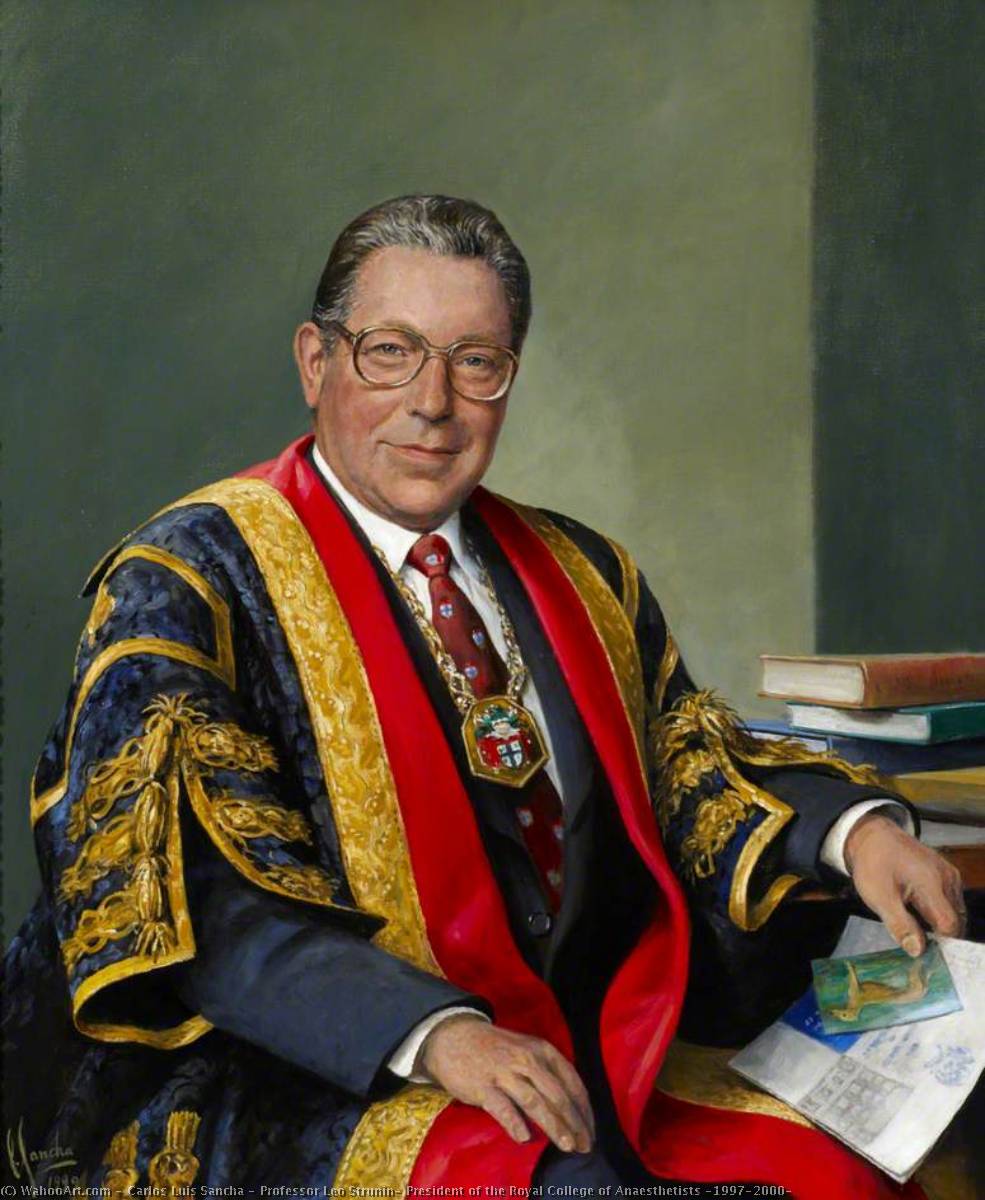
StatsProfessor Leo Strunin, President of the Royal College of Anaesthetists (1997–2000)
 2000
2000 75.0 x 62.0 cm
 Royal College of Anaesthetists
 Pročitaj više
Ručno rađena uljana reprodukcija
Ručno oslikano uljanim bojama na platnu u dimenzijama i okviru po vašem izboru, izrađeno po porudžbini od strane naših umetnika. ( Switch to Print Switch to Digital Image)




































Izaberite jednu od naših unapred definisanih veličina koje odgovaraju originalnim proporcijama umetničkog dela.

Можете унети сопствене димензије како бисте прилагодили дело одређеном оквиру или простору. Ако одабрана величина не одговара пропорцијама оригинала, слика ће бити исечена или проширена додатним елементима који се ручно насликавају. Дигитални prikaz ће вам бити послат на одобрење пре почетка производње.
Имајте на уму да преглед на екрану не одражава стварно исецање или проширење. Само приказ (mockup) ће тачно приказати коначну композицију.
Иако су доступне прилагођене величине, препоручујемо да одаберете димензију из дефинисане листе како бисте сачували оригиналне пропорције.
Nakon narudžbine, tim ArtsDot.com će klijentu putem e-pošte poslati uputstva i dostaviti prikaz predloženog rešenja
Isporuka širom sveta () za 3/4 nedelje umesto uobičajenih 5 nedelja. (8 септембар). Bez kompromisa po pitanju kvaliteta.

Besplatna ekspresna dostava širom sveta

Visokokvalitetno laneno platno

Kompletno osiguranje transporta

Garancija povraćaja carine i uvoznih dažbina

Garancija vernosti boja

Politika povraćaja u roku od 100 dana (isključivo u slučaju nedostataka)

Garancija povrata novca od 100%

Popust pri grupnoj kupovini
 Opcija sa staklom dostupna je samo za dimenzije manje od 110 cm

Professor Leo Strunin, President of the Royal College of Anaesthetists (1997–2000)
Tehnika reprodukcije
Dimenzije reprodukcije
-


Konačna cena
$ 263
Srodna umetnička dela










Biografija umetnika
A Baroque Visionary: The Soulful Realism of Carlos Luis Sancha
The history of portraiture is often a chronicle of status and lineage, yet in the hands of Carlos Luis Sancha, it became a profound exploration of the human spirit. Born in the culturally rich atmosphere of Genoa, Italy, in 1920, Sancha’s early life was steeped in the grandeur of the European Baroque tradition. This formative environment, characterized by dramatic light and deep emotional resonance, would later serve as the bedrock of his artistic identity. Although he is recognized as a Spanish painter, his roots in the Italian landscape provided him with a unique perspective—a way to view the subject not merely as a figure to be recorded, but as a vessel for spiritual and psychological depth.
Sancha’s formal journey into the mastery of the brush began at the Accademia di Belle Arti Pietro Consolare in Genoa. It was within these hallowed halls that he underwent rigorous training, absorbing the classical principles of anatomy, perspective, and color theory. His education was not merely technical; it was an immersion into a lineage of masters. He drew immense inspiration from the dramatic chiaroscuro techniques perfected by Baroque legends such as Domenichino and Lanfranco. By studying the way light dances across surfaces and retreats into shadow, Sancha learned to manipulate the canvas to evoke tension, dignity, and quiet contemplation, turning every portrait into a theatrical moment frozen in time.
The Art of Character and Command
As his career matured, Sancha became a sought-after chronicler of the era's most distinguished figures. His oeuvre is marked by an extraordinary ability to capture the essence of character through nuanced observation. Whether depicting the nobility, high-ranking clergy, or military officers, his work transcends simple likeness. A prime example of his mastery can be found in his portrait of Admiral Sir Andrew Lewis, a work that breathes with naval heritage and a sense of solemn duty. In such paintings, Sancha’s brushwork serves a higher purpose: to reveal the weight of responsibility and the quiet strength held within his subjects.
His technical prowess was equally evident in his more intimate depictions, such as his portrait of Peter Glynn Williams or even his own Self-Portrait from the year 2000. In these works, the artist utilizes rich textures and a traditional oil painting style to create a sense of permanence. The use of light in his later years remained deeply connected to his Baroque influences, using shadow to guide the viewer’s eye toward the psychological focal points of the face—the eyes, the set of a jaw, or the subtle tension in a brow. This dedication to meticulous realism ensured that his subjects possessed a lifelike vitality that felt both immediate and eternal.
A Lasting Legacy of Light and Shadow
The significance of Carlos Luis Sancha lies in his ability to bridge the gap between the classical past and the modern era. While many of his contemporaries moved toward abstraction, Sancha remained a steadfast guardian of the figurative tradition, proving that the old masters' techniques still possessed the power to move a contemporary audience. His work stands as a testament to the enduring relevance of Baroque sensibilities—the belief that light can reveal truth and that shadow can provide depth to the human experience.
Throughout his life, which concluded in 2001, Sancha’s contribution to portraiture remained focused on dignity and storytelling. His legacy is preserved not just in museums and private collections, but in the way he taught us to look at the faces of others—not as mere images, but as complex narratives of faith, duty, and existence. Through his masterful use of chiaroscuro and his profound respect for his subjects, Sancha ensured that his vision would continue to inspire awe and reflection for generations to come.
carlos luis sancha
1920 - 2001
Osnovne informacije
- Artistic Movement Or Style: Baroque Painting
- Date Of Death: 2001
- Full Name: Carlos Luis Sancha
- Nationality: Spanish
- Notable Artworks:
- Admiral Sir Andrew Lewis, KCB, JP, Lord Lieutenant of Essex (1978–1992)
- Peter Glynn Williams
- Place Of Birth: Spain