

 Pregledaj u prostoru
 Pošalji
 Podeli
 Detalji o delu

 Преузми
 Slični predmeti
 Rendgenski snimak
 Slajdovi
 Stats
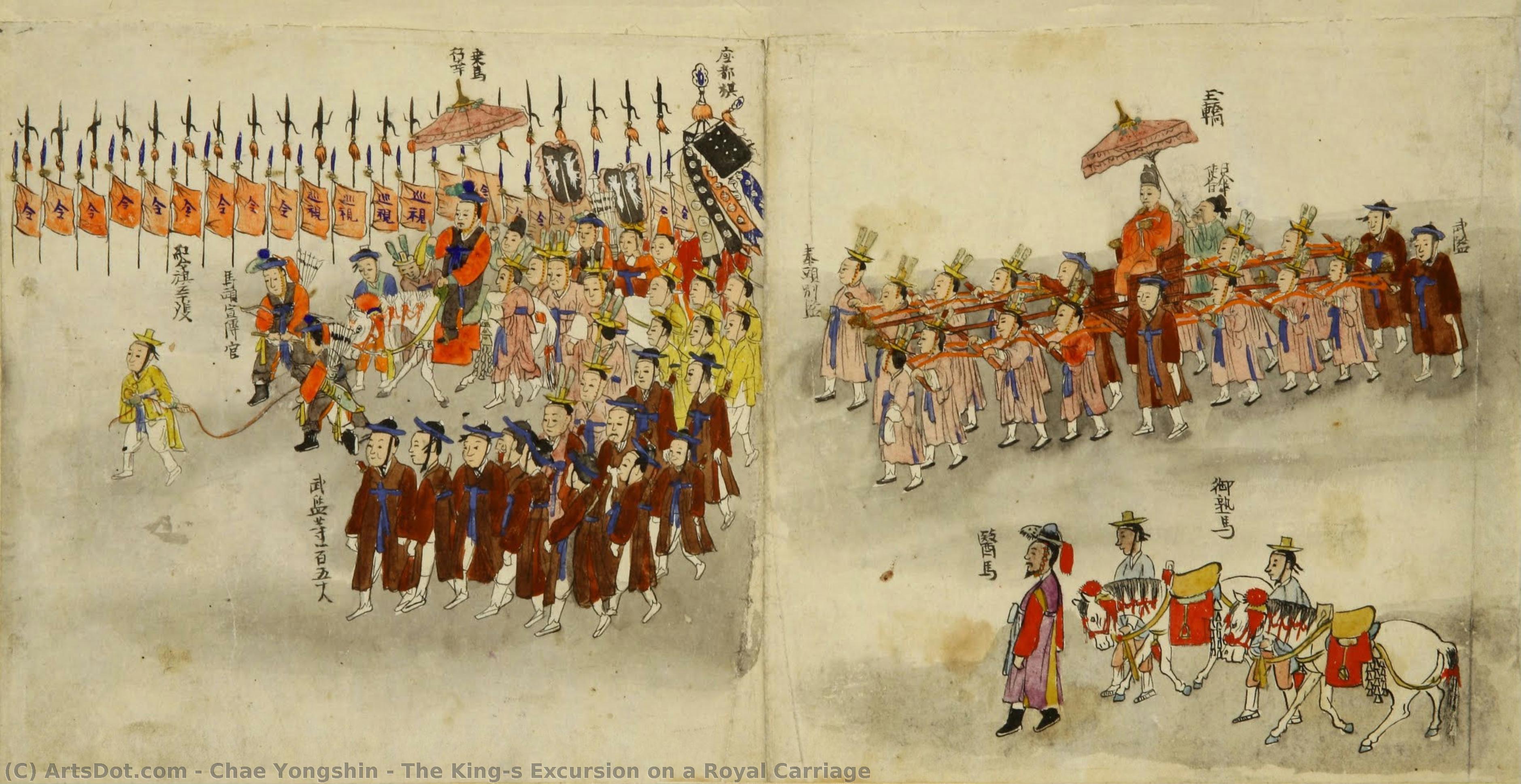
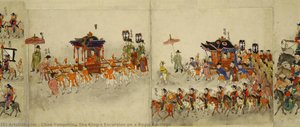
StatsThe King’s Excursion on a Royal Carriage


 Pročitaj više
Ručno rađena uljana reprodukcija
Ručno oslikano uljanim bojama na platnu u dimenzijama i okviru po vašem izboru, izrađeno po porudžbini od strane naših umetnika. ( Switch to Print Switch to Digital Image)




































Izaberite jednu od naših unapred definisanih veličina koje odgovaraju originalnim proporcijama umetničkog dela.

Можете унети сопствене димензије како бисте прилагодили дело одређеном оквиру или простору. Ако одабрана величина не одговара пропорцијама оригинала, слика ће бити исечена или проширена додатним елементима који се ручно насликавају. Дигитални prikaz ће вам бити послат на одобрење пре почетка производње.
Имајте на уму да преглед на екрану не одражава стварно исецање или проширење. Само приказ (mockup) ће тачно приказати коначну композицију.
Иако су доступне прилагођене величине, препоручујемо да одаберете димензију из дефинисане листе како бисте сачували оригиналне пропорције.
Nakon narudžbine, tim ArtsDot.com će klijentu putem e-pošte poslati uputstva i dostaviti prikaz predloženog rešenja
Isporuka širom sveta () za 3/4 nedelje umesto uobičajenih 5 nedelja. (8 септембар). Bez kompromisa po pitanju kvaliteta.

Besplatna ekspresna dostava širom sveta

Visokokvalitetno laneno platno

Kompletno osiguranje transporta

Garancija povraćaja carine i uvoznih dažbina

Garancija vernosti boja

Politika povraćaja u roku od 100 dana (isključivo u slučaju nedostataka)

Garancija povrata novca od 100%

Popust pri grupnoj kupovini
 Opcija sa staklom dostupna je samo za dimenzije manje od 110 cm

The King’s Excursion on a Royal Carriage
Tehnika reprodukcije
Dimenzije reprodukcije
-


Konačna cena
$ 263
Srodna umetnička dela




Biografija umetnika
Maurits Cornelis Escher: The Architect of Impossible Worlds
Born in Leeuwarden, Netherlands, in 1898, Maurits Cornelis Escher was a graphic artist whose singular vision transformed the world of printmaking. For most of his life, he remained largely unrecognized within the established art world, a quiet observer and meticulous craftsman working primarily for personal satisfaction. It wasn’t until the late twentieth century that his intricate and mathematically-driven creations – impossible constructions, tessellations, reflections, and metamorphoses – gained widespread acclaim, cementing his place as one of the most innovative and enduring artists of the 20th century. Escher's legacy lies not just in his stunning visual artistry but also in his profound engagement with fundamental concepts of geometry, perspective, and infinity.
Escher’s early life offered little indication of the extraordinary career that lay ahead. He initially pursued a path in architecture at the Haarlem School of Architecture, a decision influenced by his father's profession. However, he quickly realized his true passion resided in drawing and printmaking, abandoning architectural studies to dedicate himself fully to artistic pursuits. This shift was supported by Samuel Jesserun de Mesquita, a teacher who recognized Escher’s exceptional talent and encouraged him to follow his artistic inclinations. His formative years were marked by an intense study of nature – insects, landscapes, and plants – meticulously rendered in detailed drawings that would later serve as the foundation for his complex compositions.
A pivotal moment in Escher's career occurred during his travels through Italy and Spain in the 1920s. He was particularly captivated by the intricate tilework of the Alhambra palace in Granada and the Mezquita-Cathedral of Córdoba, marveling at their geometric patterns and repeating motifs. These experiences ignited a deep fascination with tessellations – the art of covering a surface with repeating shapes without gaps or overlaps – which would become a central theme throughout his work. He began experimenting with woodcuts and lithographs, translating these visual discoveries into tangible forms. The influence of Giorgio de Chirico’s surrealist paintings, particularly *The Song of Love*, introduced him to the concept of juxtaposing seemingly unrelated objects in unsettling yet intriguing ways – a technique he would masterfully employ throughout his career.
Mathematical Foundations and Artistic Innovation
Escher's art is inextricably linked to mathematics. He wasn’t a mathematician himself, but he cultivated close relationships with leading figures like George Pólya, Roger Penrose, and Donald Coxeter, seeking their insights into the underlying principles governing his creations. These collaborations fueled his exploration of concepts such as infinity, perspective, symmetry, and hyperbolic geometry. His work isn't simply decorative; it’s a rigorous investigation of mathematical possibilities, demonstrating how geometric rules can be manipulated to create illusions of depth, movement, and transformation.
Key elements in Escher’s artistic vocabulary include impossible objects – constructions that defy our intuitive understanding of three-dimensional space—such as *Hand with Reflecting Sphere* (1935) and *Drawing Hands* (1948). These works exploit the limitations of human perception, presenting visual paradoxes that challenge our assumptions about reality. His tessellations, exemplified by *Sky and Water I* (1937), demonstrate his mastery of repeating patterns and intricate arrangements. Escher’s use of perspective—often employing forced perspective to create dramatic illusions—further enhances the sense of disorientation and wonder in his images. The recurring motifs – birds, fish, animals, and human figures – are not merely decorative elements but contribute to the overall narrative and thematic complexity of his work.
Major Works and Recognition
Escher’s oeuvre is remarkably extensive, comprising over 300 prints, woodcuts, lithographs, and mezzotints. Some of his most celebrated works include *Relativity* (1953), a stunning depiction of gravity warping space; *Waterfall* (1961), which visually represents the flow of water through an impossible landscape; and *Metamorphosis I, II, and III* (1937-1938), showcasing his ability to transform one image into another through intricate geometric manipulations. His work gained significant recognition in the late 20th century, largely thanks to the efforts of Martin Gardner, a popular science writer who featured Escher’s art in his *Mathematical Games* column in *Scientific American*. This exposure sparked widespread interest and led to numerous exhibitions around the world.
Legacy and Influence
Maurits Cornelis Escher died in 1972, leaving behind a body of work that continues to fascinate and inspire. His art transcends categorization, blending elements of geometry, mathematics, surrealism, and printmaking into a uniquely captivating style. Escher’s influence can be seen in various fields, including architecture, graphic design, and computer animation. His exploration of impossible spaces and optical illusions has captivated artists and designers for decades, demonstrating the enduring power of his innovative vision. He remains an icon of artistic ingenuity, a testament to the boundless possibilities of human creativity when combined with rigorous intellectual inquiry.

chae yongshin
1898 - 1972 , South Korea
Osnovne informacije
- Artistic Movement Or Style: Graphic art, Printmaking
- Artists Or Movements Influenced By This Artist:
- Rene Magritte
- Martin Gardner
- Artists Who Influenced This Artist:
- George Arnold Escher
- Roger Penrose
- Date Of Birth: 17 June 1898
- Date Of Death: 27 March 1972
- Full Name: Maurits Cornelis Escher
- Nationality: Dutch
- Notable Artworks:
- Hand with Reflecting Sphere
- Drawing Hands
- Relativity
- Waterfall
- Ascending and Descending
- Place Of Birth: Leeuwarden, Netherlands